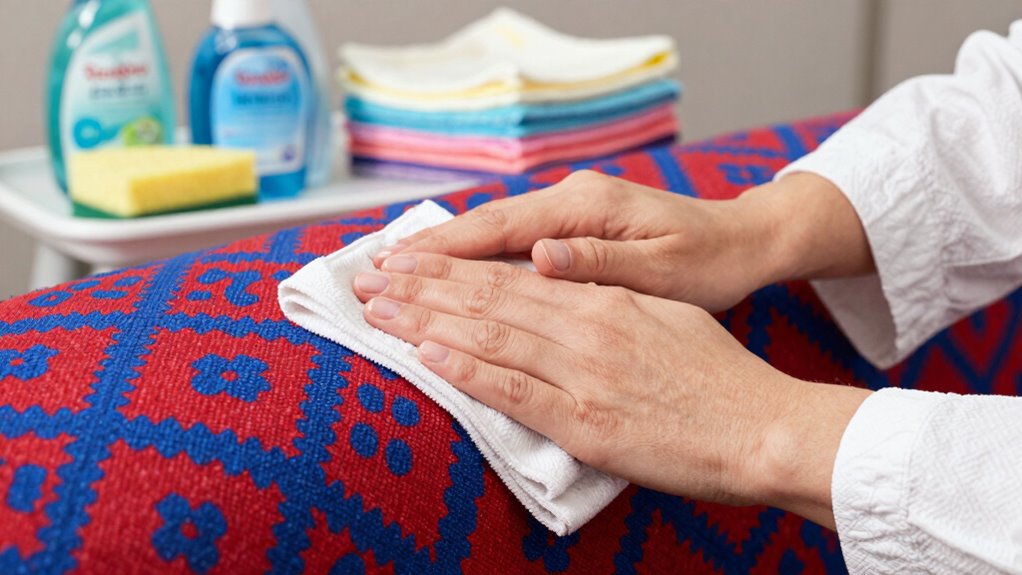

To prevent color transfer during spot cleaning, test a small hidden area with a damp, gentle cleaner first. Always use a mild, fabric-specific solution and work from the outside of the stain inward. Blot gently with a white cloth, avoiding vigorous rubbing, and keep your materials damp, not soaked. If you notice dye transfer, rinse immediately with clean water and stop cleaning. For more tips, you’ll find helpful strategies to keep your fabrics vibrant and safe.

Get furniture and decor delivered free — and shop member deals
- Fast, free delivery on millions of items
- Access to Prime Big Deal Days deals on October 6–7
- Prime Video, Amazon Music and more included
Key Takeaways
- Test a small, hidden area with a damp cloth before cleaning to check for dye bleeding.
- Use gentle, fabric-specific cleaners and avoid harsh chemicals or bleach.
- Work from the outside of the stain inward to contain dye transfer.
- Keep cleaning materials damp, not soaked, to prevent excess moisture penetration.
- Blot gently and monitor for dye transfer, stopping immediately if color bleeding occurs.

Accidents happen, but color transfer during spot cleaning can quickly ruin your fabrics or furniture if you’re not careful. When you’re trying to remove a stain, you might unknowingly cause dye bleeding, which occurs when the dye from one fabric or material transfers to another. To prevent this, understanding fabric compatibility is crucial. Not all fabrics react the same way to cleaning agents or moisture, so it’s essential to know what you’re working with before applying any solution. If you use the wrong cleaner or scrub too vigorously, you risk loosening the dye and causing unwanted color transfer.
Before you begin cleaning, always test a small, inconspicuous area of the fabric or furniture. Use a clean cloth dampened with water or a mild cleaner recommended for that specific material. If the color bleeds or the fabric shows any signs of dye transfer during the test, stop immediately and consider alternative cleaning methods. This step helps you determine whether your cleaning approach might cause dye bleeding, saving you from potential damage later. Being aware of fabric reactions to moisture and cleaning agents can help you select the safest method for your specific material.
Choosing the right cleaning solution is vital. Avoid harsh chemicals or bleach, especially on delicate or brightly colored fabrics. Instead, opt for gentle, fabric-specific cleaners that are formulated to prevent dye bleeding. When applying the cleaner, use a light touch, and avoid saturating the fabric. Excess moisture can penetrate deep into fibers, increasing the risk of dye migration. Keep your cleaning cloth damp rather than soaked, and avoid rubbing aggressively, which can disturb the dye and cause further bleeding. Being aware of how dyes interact with moisture and cleaning agents can help you choose the safest approach for your specific material. Additionally, understanding dye stability can help prevent accidental bleeding during cleaning.
Another tip is to work from the outside of the stain inward. This technique helps contain the stain and minimizes the spread of dye to clean areas. If you’re dealing with a colored fabric, consider using a white cloth or paper towel to monitor any dye transfer during cleaning. If you notice any color transfer onto the cloth, stop immediately and rinse the area with clean water to dilute any remaining dye. Blot gently to lift the stain without pushing the dye deeper into the fibers. Proper technique, patience, and gentle handling are essential to prevent accidental dye migration. Remember, patience and gentle handling are key to preserving the integrity of your fabrics.
fabric stain remover mild cleaner
As an affiliate, we earn on qualifying purchases.
As an affiliate, we earn on qualifying purchases.
Frequently Asked Questions
Can Certain Fabrics Resist Color Transfer Better Than Others?
Certain fabrics do resist color transfer better due to their fabric durability and dye stability. Natural fibers like wool and silk tend to hold dye more securely, reducing bleeding, whereas some synthetic fabrics like polyester often have higher dye stability, making them less likely to transfer color. To protect your items, always test a small area first and choose fabrics with proven durability and stable dyes for spot cleaning.
Does the Type of Cleaning Solution Affect Color Transfer Risk?
Yes, the type of cleaning solution you use can affect the risk of color transfer. Some cleaning agents contain harsh chemicals that can cause fabric dyes to bleed, especially on delicate or brightly colored fabrics. To minimize this, choose gentle, pH-balanced solutions formulated for your fabric type. Always test on a small, inconspicuous area first. Using the right cleaning agents helps preserve fabric dyes and prevents unwanted color transfer during spot cleaning.
How Long Should I Wait Before Cleaning a Stained Area?
Don’t rush in like a bull in a china shop—wait at least 10-15 minutes before cleaning a stained area. This pause allows the stain to set, making stain removal methods more effective. Use proper drying techniques afterward to prevent water from seeping into the fibers and causing color transfer. Patience is key; rushing could make things worse. Take your time, and you’ll see better results with less risk of damage.
Are There Specific Tools That Reduce Color Transfer During Spot Cleaning?
Yes, you can use tools like colorfast fabric cloths or white cloths to reduce dye transfer during spot cleaning. These tools help absorb excess dye and prevent it from spreading. Additionally, using a gentle, color-safe cleaning solution designed for dye transfer prevention can make a big difference. Always test a small, hidden area first. Proper tools and methods guarantee your fabrics stay vibrant and free from unwanted color transfer.
Can Pre-Treatment Treatments Prevent Color Bleeding During Cleaning?
Pre-treatment treatments can be your secret weapon against color bleeding, especially on fabric dyeing and colorfast fabrics. When applied correctly, they create a barrier that prevents dyes from leaching during cleaning. But beware—if you use the wrong product or skip testing, you might trigger unexpected color transfer. Always choose pre-treatments designed for your fabric type, and test first to make certain your cleaning process stays safe and effective.
Conclusion
By following these simple tips, you can keep your fabrics looking pristine and vibrant, no matter how many times you clean. Think of it as safeguarding your treasured possessions—like Aunt Martha’s vintage quilt—so it remains beautiful for generations to come. Remember, a little caution now prevents a laundry room tragedy later. With patience and care, you’ll avoid color transfer mishaps and keep your home’s charm alive, even in this fast-paced, modern era.
Fall Picks
fall essentials
As an affiliate, we earn on qualifying purchases.