Controlling humidity is vital for protecting your wooden furniture from cracks, warping, and other damage. Fluctuations cause wood to swell or shrink, weakening joints and distorting surfaces. Using the right products like sealants, conditioners, and moisture barriers helps stabilize moisture levels and prevents these issues. Combining these with proper humidity control devices maintains an ideal environment. Keep your furniture looking flawless by applying these tips and exploring effective crack-prevention techniques, which you’ll discover as you continue.

Get furniture and decor delivered free — and shop member deals
- Fast, free delivery on millions of items
- Access to Prime Big Deal Days deals on October 6–7
- Prime Video, Amazon Music and more included
Key Takeaways
- Maintaining indoor humidity between 40-60% prevents wood expansion and contraction, reducing crack formation.
- Using moisture-stabilizing treatments and sealants creates a protective barrier against humidity fluctuations.
- Regularly monitoring humidity levels with hygrometers helps in timely adjustments to prevent damage.
- Proper climate control devices like humidifiers or dehumidifiers support consistent moisture levels for wood furniture.
- Implementing a crack-prevention range minimizes structural damage, preserves appearance, and extends furniture lifespan.
As an affiliate, we earn on qualifying purchases.
How Humidity Damages Wooden Furniture and Why It Matters
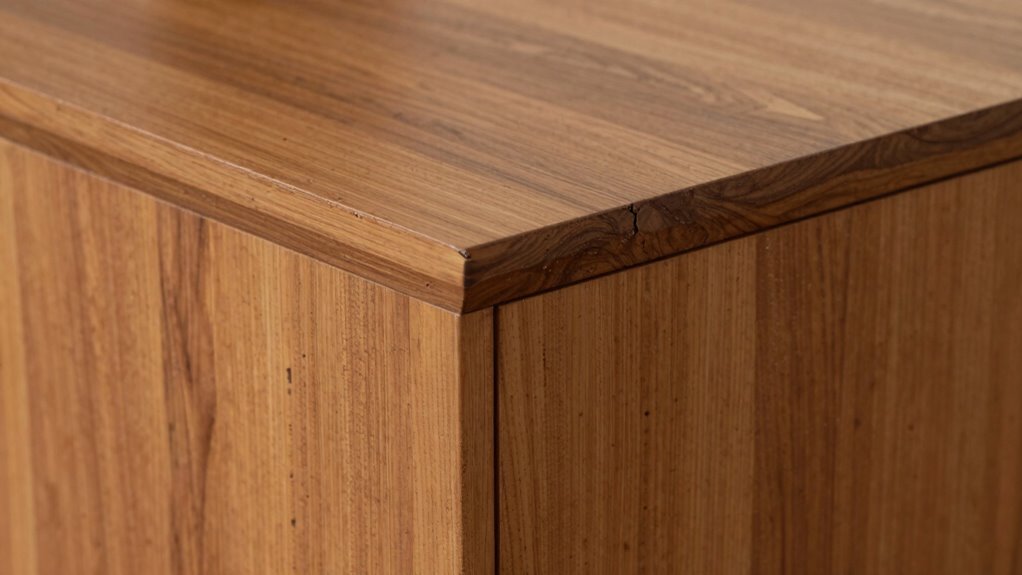
Since wooden furniture constantly reacts to changes in humidity, fluctuations can cause serious damage over time. When humidity rises, the wood absorbs moisture, causing the wood grain to swell and the furniture finish to soften or warp. Conversely, low humidity dries out the wood, leading to cracks and splintering. These moisture shifts compromise the integrity of your furniture, making it less stable and more prone to breakage. The wood grain becomes uneven, affecting both appearance and structural strength. Additionally, fluctuations can cause the furniture finish to peel or crack, exposing the wood beneath and accelerating deterioration. Protecting your furniture from humidity changes helps preserve its beauty, stability, and longevity, ensuring it remains a cherished part of your home for years to come. Being aware of climate-specific lists and proper humidity levels can help you maintain optimal conditions for wooden furniture.
Recognizing the Signs of Humidity-Related Damage in Your Furniture

You can spot humidity damage early by looking for visible cracks and gaps in your furniture. Warping and misshaping are also common signs that moisture levels have affected the wood. Catching these issues quickly helps prevent further damage and preserves your furniture’s beauty. Monitoring wood properties regularly allows for timely interventions to maintain its integrity.
Visible Cracks and Gaps
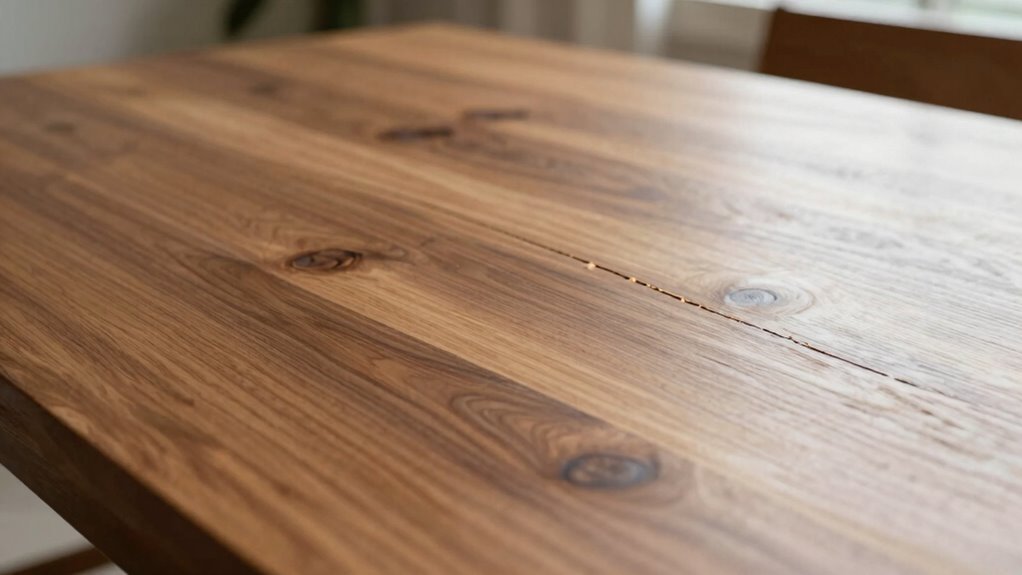
Visible cracks and gaps in your wood furniture often signal that humidity levels have fluctuated enough to cause the material to expand and contract. When humidity drops, wood shrinks, leading to visible separation. You might notice:
- Fine cracks along joints or panels, indicating wood shrinkage.
- Gaps between planks or pieces that seem to widen over time.
- Slight misalignments or loosened connections caused by furniture expansion and contraction.
These signs show your furniture is responding to changes in humidity, risking further damage. Recognizing these cracks early helps you take preventive steps. Maintaining stable humidity levels minimizes the expansion and contraction cycles that cause such visible damage. Keep an eye on these signs to protect your furniture’s integrity, especially as sustainable solutions can help regulate indoor moisture levels effectively.
Warping and Misshaping
Warping and misshaping are common signs that your furniture has been affected by fluctuating humidity levels. When humidity varies, wood expands or contracts, disrupting the wood grain and compromising the finish durability. Look for uneven surfaces, swollen panels, or gaps where the joints no longer align. These changes often occur gradually but can profoundly affect your furniture’s appearance and function.
| Sign | Cause | Effect |
|---|---|---|
| Warped surface | Excess moisture causing wood to swell | Distorted shape |
| Gaps between joints | Shrinking due to dry conditions | Loose or misaligned parts |
| Cracked finish | Repeated expansion and contraction | Reduced finish durability |
Stay vigilant to maintain your furniture’s integrity and appearance.
How to Choose the Right Products to Prevent Cracks and Warping
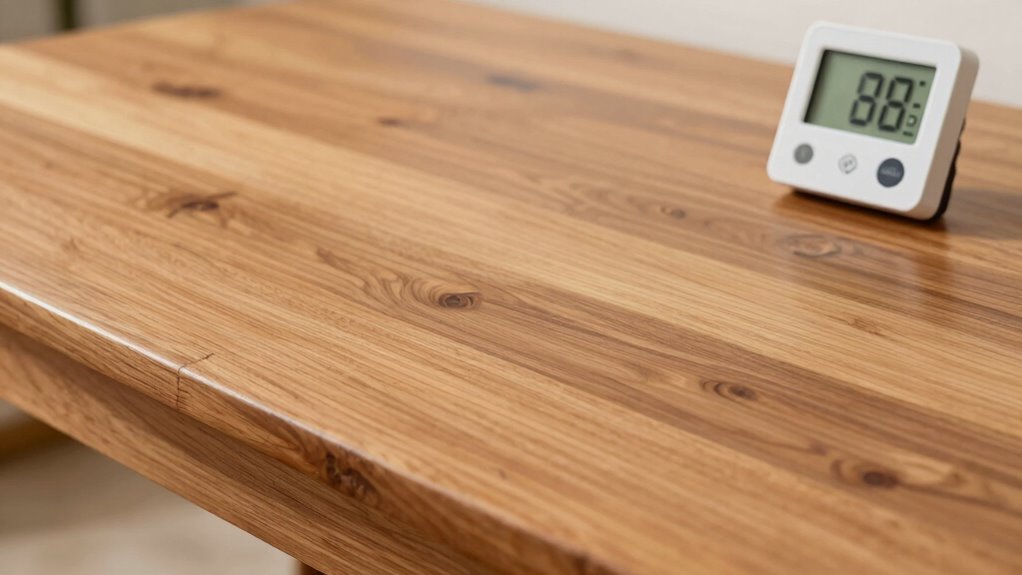
Choosing the right products is crucial for protecting your wood furniture from cracks and warping caused by humidity fluctuations. To do this effectively, consider these steps: 1. Use appropriate wood treatment options that stabilize moisture levels, such as sealants or conditioners, to prevent internal stresses. 2. Select quality furniture varnishing to create a protective barrier, reducing moisture exchange with the environment. 3. Regularly maintain and reapply these products as needed, especially in changing seasons, to ensure ongoing protection. Focusing on proper wood treatment helps control humidity within the wood, while good furniture varnishing preserves its surface integrity. Both are indispensable in preventing cracks and warping over time. When choosing these products, ensure they are compatible with your furniture’s type and finish for best results, and selecting simple maintenance routines can greatly extend the life of your furniture.
Top Crack-Prevention Products for Wooden Furniture
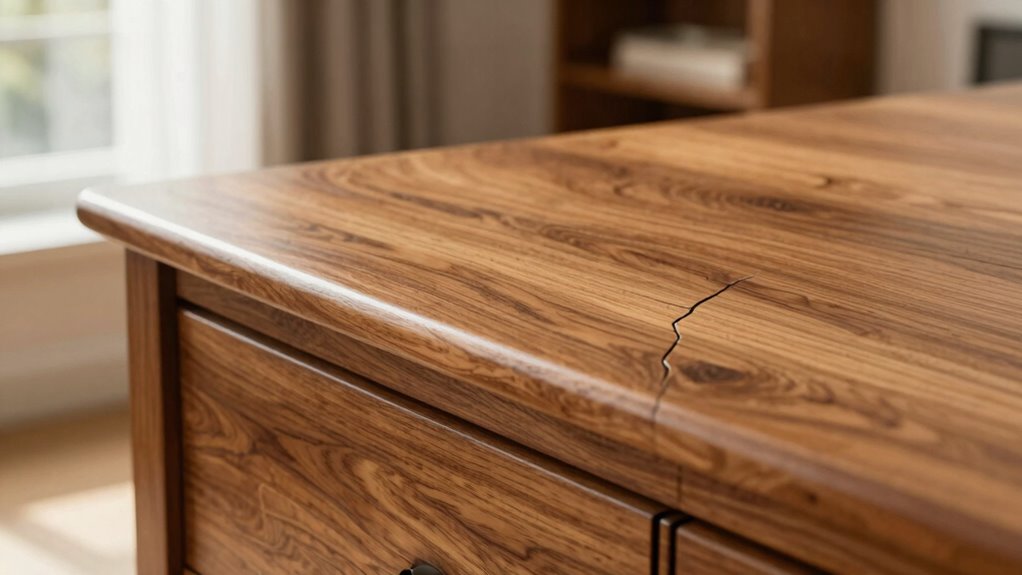
When it comes to preventing cracks in your wooden furniture, selecting effective products is essential. Wood treatment products help strengthen the wood and maintain its moisture balance, reducing the risk of cracking. Look for treatments that penetrate deeply and create a protective barrier, especially if your furniture is exposed to fluctuating humidity. Furniture polish is also a key product; it not only enhances the appearance but provides a layer of protection against dryness and environmental stress. Choose polishes formulated for wood, which contain nourishing oils and UV protectants. Regular use of these products keeps your furniture hydrated and resilient, preventing cracks caused by dryness and movement. Additionally, maintaining proper humidity levels in your environment can significantly reduce the risk of cracking in wooden furniture. Combining proper wood treatment with quality furniture polish is your best strategy for long-lasting, crack-free wooden furniture.
Tips for Maintaining Proper Humidity Levels at Home or in the Office
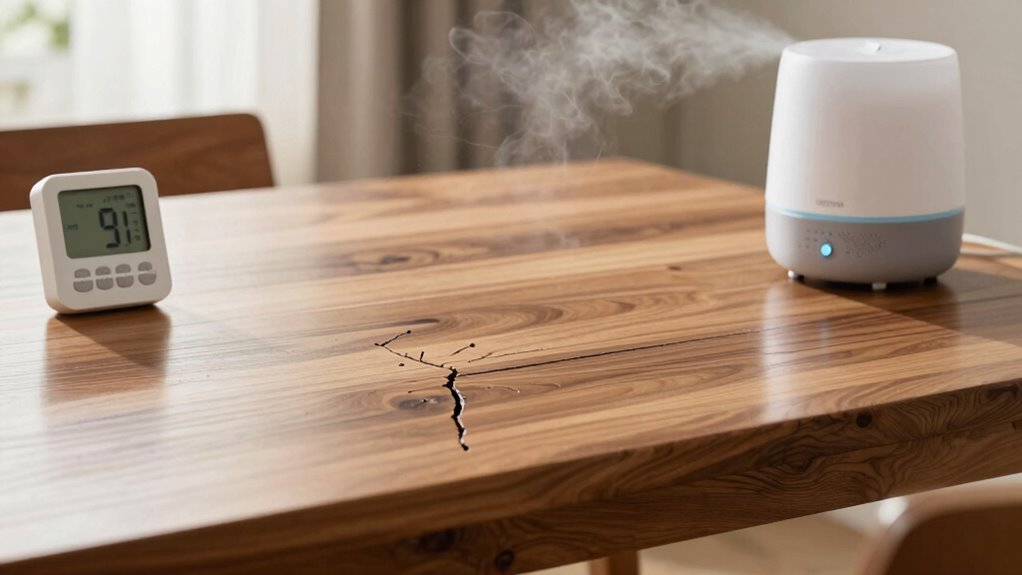
To keep your wooden furniture in top shape, start by using humidity monitors to track levels. You should also adjust your indoor climate with humidifiers or dehumidifiers as needed. Incorporating moisture barriers can help protect furniture from excessive dryness or dampness. Additionally, maintaining a consistent humidity level helps prevent cracks and warping over time.
Use Humidity Monitors
Using a humidity monitor is essential for maintaining the right moisture levels in your environment, especially if you have wood furniture. Humidity sensors help you track moisture levels accurately, preventing cracks caused by fluctuations. Here’s what you should do:
- Place the monitor in a central location to get an accurate reading.
- Regularly check the humidity levels, ideally keeping them between 40-60%.
- Adjust your environment as needed, using humidifiers or dehumidifiers to maintain consistent moisture levels.
- Understanding how filtration systems impact indoor air quality can also help in controlling humidity and protecting your wood furniture.
Adjust Indoor Climate
Maintaining proper humidity levels at home or in the office is essential for protecting your wood furniture from damage. You can achieve this by adjusting your indoor climate with simple steps. Use a humidifier or dehumidifier to keep humidity within the ideal range, preventing wood from expanding or contracting. Consistent temperature control also helps preserve your furniture’s finish and overall design. Avoid sudden changes in climate that could cause cracks or warping. Keep your space well-ventilated and position your furniture away from direct heat sources or drafts. Properly managing humidity not only safeguards your wood finish but also maintains the integrity of your furniture design, ensuring it remains beautiful and durable for years to come. Reliable backup power solutions can help maintain a stable indoor environment during outages, further protecting your belongings.
Incorporate Moisture Barriers
Incorporating moisture barriers is an effective way to regulate humidity levels and protect your wood furniture from moisture-related damage. These barriers help maintain the integrity of your furniture design and preserve the wood finish. To optimize results, consider these steps:
- Use breathable fabric covers or slipcovers that allow air circulation while blocking excess moisture.
- Install vapor barriers, such as plastic sheeting, behind or beneath furniture to prevent moisture seepage.
- Apply sealants or finishes designed to repel moisture, enhancing your furniture’s resistance to humidity fluctuations.
Installing and Using Humidity Control Products Effectively
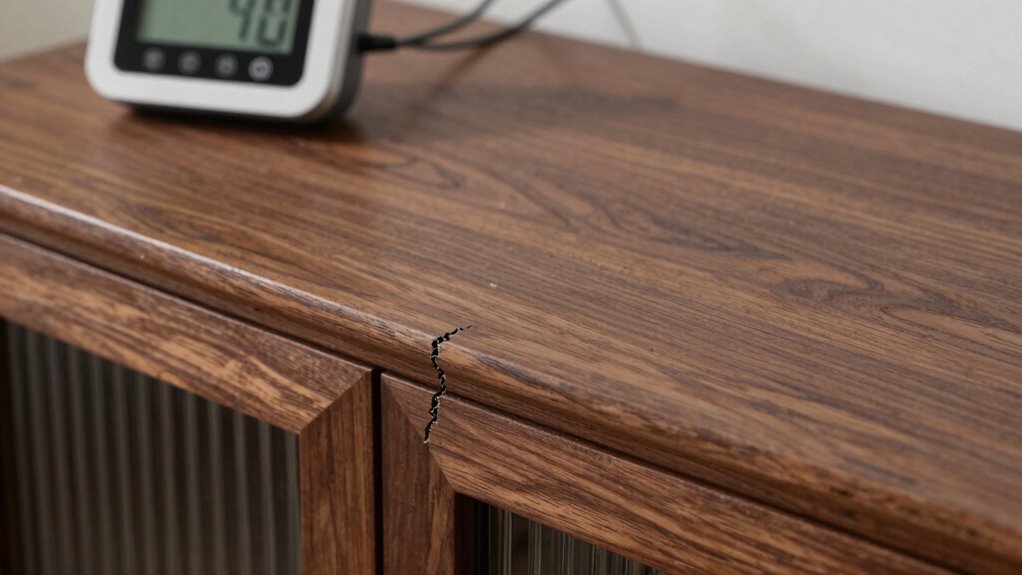
To guarantee your wood furniture stays in excellent condition, installing humidity control products correctly is essential. Begin by selecting the right product for your environment, whether a humidifier or dehumidifier, and ensure it’s compatible with your furniture’s specific needs. Follow manufacturer instructions closely during installation, paying attention to placement—avoid direct contact with wood surfaces to prevent moisture transfer. Regularly monitor humidity levels with a hygrometer, adjusting settings as needed. Proper humidity control supports effective wood treatment and enhances your furniture finishing, preventing cracks caused by fluctuations. Keep the devices clean and well-maintained for consistent performance. Understanding wood movement is crucial for choosing and maintaining the right humidity levels. By installing and using these products properly, you protect your furniture’s integrity and preserve its beauty over time.
Long-Term Benefits of Using a Crack-Prevention Range
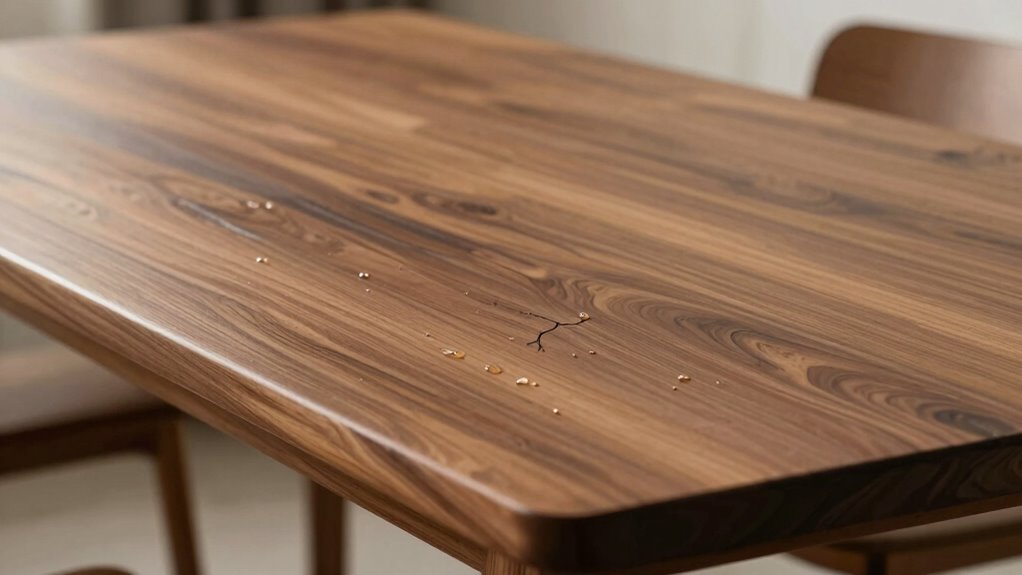
Using a crack-prevention range offers significant long-term benefits for your wood furniture by minimizing the risk of cracks and splits caused by fluctuating humidity levels. This protection helps preserve the integrity of your furniture finishes and maintains its aesthetic appeal. Over time, consistent use of a crack-prevention range can:
- Enhance the durability of your wood treatment, preventing damage that leads to costly repairs.
- Extend the lifespan of your furniture by reducing stress on joints and surfaces.
- Keep your furniture looking new longer, avoiding unsightly cracks that diminish value.
- Understanding climate control techniques can further optimize your furniture’s preservation.
Final Tips to Keep Your Wooden Furniture Flawless for Years

Maintaining your wooden furniture’s flawless appearance over the years requires consistent care and attention. To preserve the beauty of the wood grain and ensure finish protection, follow these final tips. Keep furniture away from direct sunlight and temperature fluctuations to prevent warping. Regularly dust with a soft cloth, avoiding harsh cleaners that can damage the finish. Use coasters and placemats to protect surfaces from spills and scratches. Applying a quality furniture wax or polish periodically enhances the finish protection, maintaining the wood’s natural luster.
| Tip | Why it matters |
|---|---|
| Avoid direct sunlight | Prevents fading and warping |
| Regular cleaning | Preserves wood grain and finish |
| Proper protection (coasters, wax) | Extends lifespan and maintains beauty |
Frequently Asked Questions
Can Humidity Control Products Be Used on Antique Furniture?
Yes, humidity control products can be used on antique furniture to aid in antique preservation. They help regulate humidity fluctuations that can cause cracks or warping over time. By maintaining a stable environment, you protect your antiques from damage caused by moisture changes. Just make certain you choose products specifically designed for delicate, valuable pieces and follow manufacturer instructions carefully to avoid over-humidifying or drying out your antiques.
How Often Should I Check Humidity Levels in My Home?
You should check humidity levels in your home at least once a week using humidity sensors or moisture meters. Regular monitoring helps you maintain ideal conditions, especially for wood furniture, by preventing cracks caused by fluctuations. Keep an eye on the readings, and adjust your humidity controls as needed to keep your environment stable. Consistent checks ensure your furniture stays in great shape and avoids damage over time.
Are There Natural Methods to Regulate Humidity Without Products?
Yes, you can use DIY humidity control methods for natural moisture regulation. Place bowls of water around your home, especially near heat sources, to add moisture to the air. Use houseplants, which naturally release humidity, and open windows regularly to improve airflow. These simple techniques help maintain balanced humidity levels without relying on products, protecting your wood furniture from cracks caused by dryness and fluctuations.
What Is the Ideal Humidity Range for Wooden Furniture?
Think of your wooden furniture as a delicate dance partner, needing just the right rhythm. The ideal humidity range is between 40-60%, where humidity levels support moisture absorption without causing cracks. Use humidification techniques like bowls of water or houseplants to maintain this balance. Keeping the environment steady prevents your furniture from swelling or shrinking, ensuring it stays beautiful and stable over time.
Do Crack-Prevention Products Require Professional Installation?
Crack-prevention products usually don’t require professional installation, making it easy for you to apply them yourself. However, for the best product effectiveness, following the manufacturer’s instructions carefully is vital. If you’re unsure or if the item is large or complex, seeking professional installation can ensure proper application. This helps maximize the product’s benefits and keeps your wooden furniture in excellent condition for years to come.
Conclusion
By using the right humidity control products, you can keep your wooden furniture looking flawless for years. Imagine noticing a small crack in your antique table, then installing a crack-prevention range that stabilizes humidity levels. Over time, the crack disappears, and your furniture remains beautiful. Don’t wait for damage to happen—take proactive steps today. Proper humidity management isn’t just about preservation; it’s about enjoying your furniture’s beauty for generations.
Fall Picks
fall essentials
As an affiliate, we earn on qualifying purchases.