To move furniture without stressing your rug, clear the area of small objects and use protective barriers like furniture sliders or cardboard under heavy pieces. Lift rather than drag furniture to prevent damage and place felt protectors under heavy items. Measure your furniture and space first to guarantee proper fit and avoid overcrowding. Be gentle and plan your layout to preserve the rug’s appearance. Keep these tips in mind to protect your rug—more helpful advice follows.
Key Takeaways
- Use furniture sliders or protective barriers to move furniture smoothly without dragging or damaging the rug.
- Measure furniture and space beforehand to ensure proper fit and avoid overhanging or curling edges.
- Lift heavy items rather than dragging them across the rug to prevent fraying and wear.
- Plan your layout carefully to balance aesthetics and minimize frequent shifting.
- Move furniture gently and gradually, avoiding force or tight squeezes that could stress the rug.

Rearranging furniture can be a straightforward task, but it often risks damaging your rugs if you’re not cautious. When you decide to change the layout of a room, you want to guarantee your rug stays intact while enhancing your decorating style and making the most of your space. This planning helps you avoid unnecessary movements that could cause wear and tear on your rug.
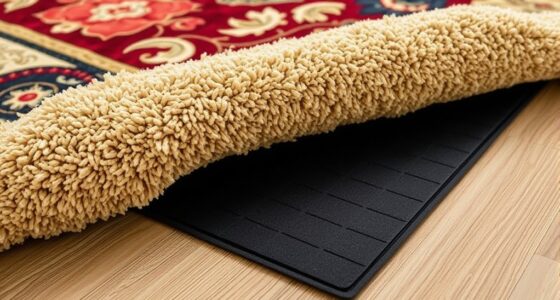
Before you begin moving furniture, clear the area of any small objects, decor, or accessories that could trip you up or get caught underneath. If your rug is delicate or has a plush pile, consider placing a protective barrier like a furniture slider or a piece of cardboard under heavy pieces. This way, you can glide furniture across the floor instead of dragging it, reducing the risk of pulling or tearing the rug fibers. Always lift heavy items when possible—dragging puts unnecessary stress on the rug and can cause distortion or fraying.
When repositioning furniture, pay attention to your rug’s placement relative to the room’s overall decorating style. If your rug features a bold pattern or vibrant colors, position furniture to highlight those design elements. Conversely, if your rug is more neutral, use furniture placement to add visual interest without overwhelming the space. Proper space optimization involves balancing furniture size and placement so that your rug remains a focal point and the room feels open and inviting.
If you’re rearranging to improve functionality or flow, measure the dimensions of your furniture and the room beforehand. This ensures pieces fit comfortably on the rug without overhanging or overcrowding, which can lead to uneven wear or accidental tripping hazards. Be mindful of the rug’s edges, especially if it’s smaller, to prevent curling or fraying over time. Use furniture pads or felt protectors under heavy or frequently moved items to distribute weight evenly and reduce friction.
Additionally, understanding the material of your rug can help guide the safest methods for moving and protecting it during rearrangement. A good understanding of rug care and maintenance can also extend the lifespan of your rug and keep it looking its best. Finally, take your time during the process. Rushing can cause accidental damage, especially if you’re forcing furniture into tight spaces or dragging it across the rug. With careful planning, gentle movements, and attention to your rug’s material, you can refresh your space without stressing or damaging your rug. Your efforts will pay off with a room that looks great, functions well, and preserves the beauty of your flooring investment.
furniture sliders for hardwood floors
As an affiliate, we earn on qualifying purchases.
As an affiliate, we earn on qualifying purchases.
Frequently Asked Questions
Can Rearranging Furniture Damage My Rug?
Rearranging furniture can potentially damage your rug if you’re not careful, especially with heavy or sharp-edged furniture. To prevent this, use furniture protectors or pads to reduce stress on the rug’s fibers. Also, avoid dragging furniture directly on the rug; lift it instead. After rearranging, consider rug cleaning to remove dirt and prevent wear. These steps help preserve your rug’s condition while giving your space a fresh look.
How Do I Prevent Slipping When Moving Furniture on a Rug?
Ever wonder how to keep your rug safe while moving furniture? To prevent slipping and guarantee furnishing safety, place furniture pads or non-slip pads under the legs. These protect your rug and keep everything steady. Use furniture sliders to make moving easier without damaging the rug’s surface. Are you ready to rearrange with confidence? These tips help you avoid slips, protect your rug, and make the process smooth and stress-free.
Are There Specific Tools to Ease Furniture Rearrangement on Rugs?
Yes, there are specific tools to make furniture rearrangement easier on rugs. Furniture sliders are perfect for gliding heavy pieces without damaging the rug or stressing yourself. Additionally, furniture pads can be placed under furniture legs to protect the rug and prevent slipping. Using these tools together simplifies moving furniture, reduces effort, and keeps your rug intact, making rearrangement a quicker and less stressful task.
How Often Should I Rearrange Furniture to Protect My Rug?
You should rearrange your furniture every 6 to 12 months to keep your rug protected and your space fresh. Regular changes prevent uneven wear and tear, saving your rug from becoming a battered battlefield. Use decorating tips to optimize your room layout, ensuring furniture is well-balanced and not concentrated in one spot. This proactive approach keeps your rug looking vibrant and extends its life, turning your space into a beautifully maintained haven.
What Are Quick Fixes for Accidental Rug Tears During Rearrangement?
If you accidentally tear your rug during rearrangement, don’t panic. For quick fixes, use rug repair tape or adhesive patch kits available at home improvement stores. Clean the area thoroughly before applying, then press firmly to secure the tear. These quick fixes help stabilize the rug temporarily until professional repair, ensuring your space remains safe and visually appealing. Always follow product instructions for the best results.
Conclusion
Remember, your rug is the foundation of your space, much like trust is to a relationship. When you rearrange furniture with care and patience, you’re nurturing that trust, allowing your home to evolve without damage or stress. Think of each careful move as a gentle dance—respecting the rhythm and balance. In doing so, you’ll preserve the heart of your space, creating a harmonious environment where every piece, and every moment, feels just right.