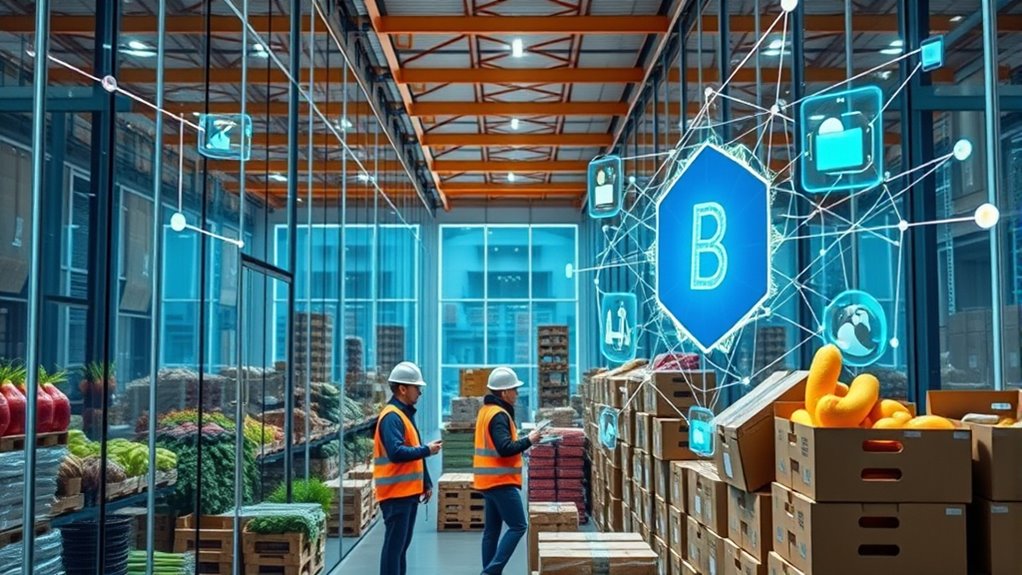

Blockchain technology enhances sustainable supply chains by providing transparent, tamper-proof records that verify ethical and environmental practices. It uses smart contracts to automatically enforce standards and creates an immutable ledger that tracks a product’s entire lifecycle, from raw materials to delivery. This reduces fraud, builds stakeholder trust, and guarantees claims like organic or conflict-free are verified. Keep exploring to discover how blockchain is revolutionizing transparency and accountability in the industry.

Get furniture and decor delivered free — and shop member deals
- Fast, free delivery on millions of items
- Access to Prime Big Deal Days deals on October 6–7
- Prime Video, Amazon Music and more included
Key Takeaways
- Blockchain creates an immutable, transparent ledger for tracking raw materials, manufacturing, and distribution stages in sustainable supply chains.
- Smart contracts automatically verify compliance with ethical and sustainability standards, reducing errors and disputes.
- Data provenance ensures traceability of products’ origins, promoting accountability and verifying sustainability claims like organic or conflict-free.
- Integration of blockchain enhances trust among stakeholders by providing a tamper-proof audit trail of supply chain activities.
- Blockchain adoption supports industry transparency, reduces fraud, and promotes responsible, ethical, and sustainable supply chain practices.

Blockchain technology is transforming how companies guarantee transparency in sustainable supply chains. When you leverage this technology, you gain a powerful tool to verify each step of a product’s journey, ensuring that ethical and environmental standards are met. One of the key features driving this change is the use of smart contracts. These self-executing agreements automatically enforce the terms encoded within them, reducing the need for intermediaries and minimizing errors or disputes. For example, a smart contract can automatically release payments once verified data confirms that a supplier adhered to fair labor practices or used sustainable materials. This automation not only accelerates processes but also builds trust among stakeholders, knowing that standards are enforced transparently and consistently.
Blockchain ensures transparent, automated supply chains by verifying ethical practices and enforcing standards through smart contracts.
Another essential aspect of blockchain’s contribution to supply chain transparency is data provenance. This refers to the ability to trace the origin and history of a product or material at every stage of its journey. With blockchain, you can record data from raw material extraction, manufacturing, transportation, and distribution, creating an immutable ledger that cannot be tampered with or altered. This record helps you verify claims about sustainability, such as whether a product is organic, conflict-free, or ethically sourced. Data provenance ensures that consumers and regulators can access reliable, detailed information about a product’s lifecycle, fostering accountability across the entire supply chain. It also helps companies identify points of inefficiency or unethical practices, enabling targeted improvements and reinforcing responsible sourcing.
By integrating smart contracts and data provenance into your supply chain management, you create a system that’s both transparent and efficient. Smart contracts automatically validate compliance with sustainability criteria, triggering actions or payments only when conditions are met. Meanwhile, data provenance provides a thorough, tamper-proof audit trail that stakeholders can access at any time. This combination not only enhances your ability to demonstrate sustainability commitments but also reduces the risk of fraud, counterfeiting, or misrepresentation. It empowers you to build stronger trust with consumers, investors, and regulators who increasingly demand transparency and ethical practices. Additionally, understanding emotional support strategies can be crucial for managing stress and building resilience in the face of industry challenges.
In essence, blockchain’s capabilities give you the confidence that every product’s story is accurate and verifiable. You can confidently share detailed, trustworthy information about your supply chain, knowing it’s protected by the integrity of blockchain technology. As more companies adopt these tools, the entire industry moves toward greater accountability, sustainability, and trust—making blockchain a key ally in the pursuit of transparent, responsible supply chains.
Frequently Asked Questions
How Does Blockchain Ensure Data Privacy in Supply Chain Transparency?
You can guarantee data privacy in supply chain transparency by leveraging blockchain’s data encryption, which protects sensitive information from unauthorized access. Additionally, implementing strict access controls allows you to restrict data visibility to only authorized parties. These measures work together to safeguard your supply chain data, maintaining privacy while still enabling transparency and trust across the network. Blockchain’s secure framework helps balance openness with necessary confidentiality.
What Are the Costs Associated With Implementing Blockchain in Supply Chains?
Imagine you’re implementing blockchain for your supply chain. You’ll face costs like software development, hardware upgrades, and staff training. A cost analysis shows initial investment can be high, and ongoing maintenance adds expenses. You might also encounter implementation challenges like technical complexity and resistance from your team. These factors make understanding the total costs crucial to plan effectively and guarantee your blockchain integration remains sustainable and beneficial long-term.
How Scalable Are Blockchain Solutions for Large Global Supply Networks?
Blockchain solutions can be scalable for large global supply networks, but you’ll face interoperability challenges that complicate integration across diverse systems. Additionally, energy consumption remains a concern, especially with proof-of-work protocols, which can hinder widespread adoption. To succeed, you need to optimize blockchain protocols for efficiency, promote standardization, and address these hurdles to guarantee seamless, sustainable scalability across your entire supply chain network.
What Are the Legal Implications of Blockchain-Recorded Supply Chain Data?
Imagine a company using blockchain to verify eco-friendly sourcing. You must guarantee legal compliance, as blockchain records are immutable and can be scrutinized in court. It raises questions about intellectual property rights, especially if proprietary data is stored on-chain. You could face legal challenges if data accuracy is disputed or if privacy laws are violated. Understanding these implications helps you navigate transparency while protecting your company’s legal and IP interests.
How Do Smaller Companies Adopt Blockchain Technology Effectively?
As a small business, you can adopt blockchain technology effectively by starting with clear goals, like improving transparency or traceability. You should seek user-friendly, scalable solutions tailored for small companies, and consider partnering with tech providers who offer support and training. Embracing technology adoption gradually helps you manage costs and complexity, ensuring you integrate blockchain smoothly into your supply chain processes for better accountability and trust.
Conclusion
By implementing blockchain, you can boost transparency in sustainable supply chains, ensuring ethical practices and accountability. Did you know that over 60% of consumers now prioritize sustainability when making purchases? This shift highlights how blockchain’s secure and immutable records can build trust and drive positive change. Embrace this technology to make your supply chain more transparent, ethical, and impactful—because your choices can truly influence a more sustainable future.
Fall Picks
fall essentials
As an affiliate, we earn on qualifying purchases.