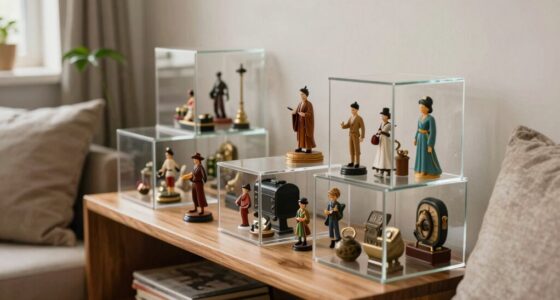

To build a better collector display with fewer objects, focus on selecting high-quality pieces that tell a story or create a strong visual impact. Arrange them strategically using varying heights and simple layouts that emphasize balance and harmony. Use lighting intentionally to highlight key items without overwhelming them, and incorporate negative space to give each piece room to stand out. Keep it clean and intentional—if you want to learn more, you’ll discover how to craft a truly mesmerizing display.

Get furniture and decor delivered free — and shop member deals
- Fast, free delivery on millions of items
- Access to Prime Big Deal Days deals on October 6–7
- Prime Video, Amazon Music and more included
Key Takeaways
- Select high-quality, meaningful objects to create a focused and impactful display.
- Use varying heights and orientations to add visual interest and guide viewer attention.
- Incorporate negative space to emphasize key pieces and maintain a clean, balanced look.
- Employ strategic lighting to highlight focal items and create depth within the display.
- Keep the layout simple and uncluttered, ensuring each object has room to breathe and stand out.
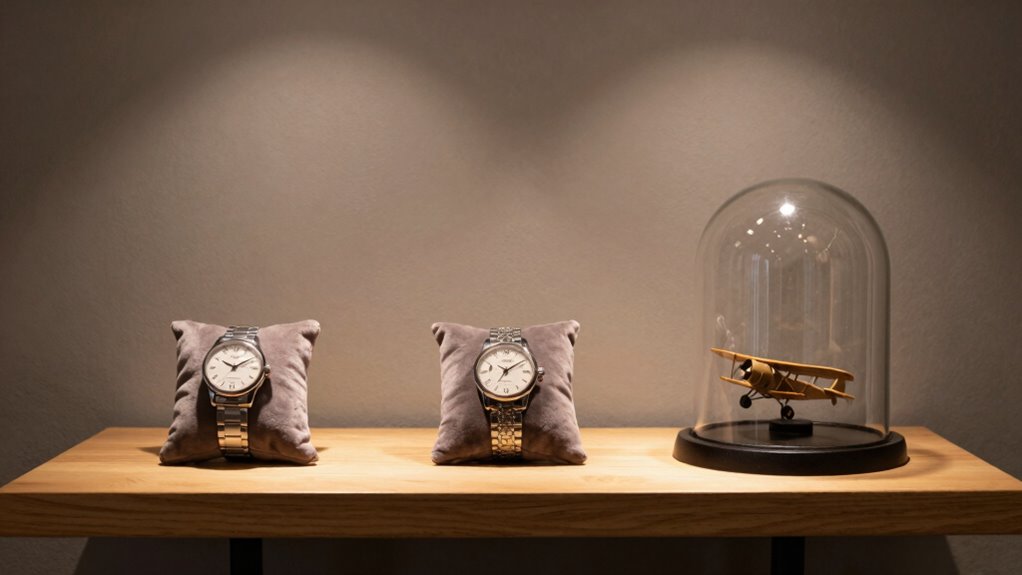
Creating a striking collector display doesn’t require filling every inch with objects. Instead, it’s about carefully choosing what to showcase and how to present it. When you focus on strategic placement and thoughtful design, fewer objects can make a stronger visual impact. One of your most powerful tools is lighting techniques. Proper lighting draws attention, highlights details, and creates mood. Use spotlights or directed LED lights to accentuate your key pieces, and avoid overly bright or harsh lighting that can wash out details. Soft, warm lighting can add a welcoming feel, while cooler tones can give a modern, sleek vibe. Experiment with different angles and intensities until you find what makes your objects stand out without overwhelming the space. Good lighting can also create depth and dimension, making your display more dynamic and engaging. Additionally, understanding the importance of visual balance helps ensure your display feels harmonious and inviting. Space optimization plays a crucial role as well. You want your display to feel balanced and uncluttered, which means being intentional about the size and arrangement of each object. Instead of cramming your shelves or display cases, give each piece room to breathe. Use vertical space by stacking or layering items, but keep a clear line of sight so each object remains visible and appreciated. Horizontal space can be managed with floating shelves or wall-mounted displays, freeing up surface area for focal points. Keep the overall layout simple and avoid overcrowding. Sometimes, less truly is more—limiting the number of objects allows each piece to shine and prevents the display from feeling chaotic. Another effective method is to use visual hierarchy by emphasizing the most important objects, guiding viewers’ attention naturally across your display. To further enhance visual interest, vary the height and orientation of your objects to add variety. Use risers, stands, or small platforms to elevate key pieces, ensuring they become focal points. Incorporate negative space intentionally—it gives your display room to breathe and emphasizes your most important objects. Paying attention to object preservation can also help maintain your collection’s integrity over time. Additionally, researching display techniques can provide inspiration for innovative ways to showcase your collection more effectively. For example, understanding how lighting techniques can influence perception helps you craft a more compelling narrative within your display. Furthermore, studying curation strategies can help you select the most meaningful objects to highlight. Ultimately, building a better collector display with fewer objects is about quality over quantity. By leveraging effective lighting techniques and space optimization, you emphasize the beauty and uniqueness of each piece. Your display becomes a curated, eye-catching showcase that feels intentional and sophisticated. With thoughtful arrangement and a strategic approach, you can create a memorable display that captivates viewers, all while keeping it simple and elegant.
LED display lighting for collectibles
As an affiliate, we earn on qualifying purchases.
As an affiliate, we earn on qualifying purchases.
Frequently Asked Questions
How Do I Choose the Best Display Materials for My Collection?
You should choose display materials that complement your collection’s material textures and enhance its visual appeal. Opt for display case styles that suit your items’ size and fragility, like glass for clarity or wood for warmth. Consider durability and ease of cleaning, ensuring your display materials protect while showcasing your collection. Matching the style of cases to your collection’s theme will create a cohesive, eye-catching display that highlights each piece effectively.
What Lighting Options Enhance the Appearance of Fewer Objects?
To enhance your collection with fewer objects, use accent lighting to highlight each piece’s details. LED strips are a great option because they provide even, adjustable illumination without overwhelming your display. Position the LED strips strategically to create contrast and draw attention to specific items. This setup makes your collection stand out, emphasizing its uniqueness while keeping the focus on fewer objects in a clean, sophisticated way.
How Can I Incorporate Personal Meaning Into Minimalist Displays?
You can incorporate personal meaning into minimalist displays by choosing objects that hold emotional connection or personal significance. Display items that tell your story or evoke memories, like a cherished gift or a meaningful souvenir. Keep the arrangement simple to highlight their importance, and use subtle lighting or framing to draw attention. This approach creates a space that feels authentic and emotionally resonant, even with fewer objects.
What Are Common Mistakes to Avoid When Reducing Display Objects?
Avoid turning your display into a cluttered jungle or a chaotic maze. Focus on visual balance, ensuring each object has space to breathe, like stars in a clear night sky. Don’t over-rely on quantity—less is more. Be mindful of clutter reduction, resisting the urge to cram in everything. Instead, select meaningful pieces that tell your story, creating harmony rather than chaos, allowing each item to shine without overwhelming the scene.
How Do I Ensure My Display Remains Organized Over Time?
To keep your display organized over time, regularly dust prevention is key—use soft cloths or brushes to keep objects clean and dust-free. Incorporate display rotation, swapping out pieces periodically to prevent clutter and maintain visual interest. This approach helps you stay engaged with your collection, reduces dust buildup, and keeps your display fresh and orderly, making it easier to enjoy and maintain over the long term.
Conclusion
Remember, less is often more—like a carefully curated gallery rather than a cluttered attic. By thoughtfully selecting and arranging your objects, you evoke the elegance of a Renaissance masterpiece, where every piece has purpose. Keep your display simple, highlighting each item’s story and beauty. In doing so, your collection becomes a timeless narrative, inviting viewers to appreciate the artistry behind every carefully chosen object—proving that restraint can be the ultimate form of sophistication.
Fall Picks
fall essentials
As an affiliate, we earn on qualifying purchases.