Designing wellness-focused landscaping involves creating inviting garden paths and meditation zones that promote relaxation and mental clarity. Use winding stone or gravel paths to guide you through calming spaces, connecting different areas seamlessly. Incorporate soft lighting to enhance ambiance and highlight features. Focus on natural materials for seating and add water features for tranquility. Surround zones with greenery to foster a peaceful environment. Keep spaces uncluttered and inviting—exploring these ideas further can help you craft a truly restorative outdoor retreat.
Key Takeaways
- Design winding, natural-looking paths with calming materials like gravel or stones to guide visitors through tranquil areas.
- Create secluded meditation zones using natural elements such as water features, lush greenery, and simple seating.
- Incorporate soft outdoor lighting along pathways and around zones to extend usability and enhance ambiance at night.
- Use natural materials like wood or stone for seating and borders to foster a grounding, peaceful environment.
- Connect paths and zones seamlessly to encourage slow, mindful movement and effortless flow within the landscape.
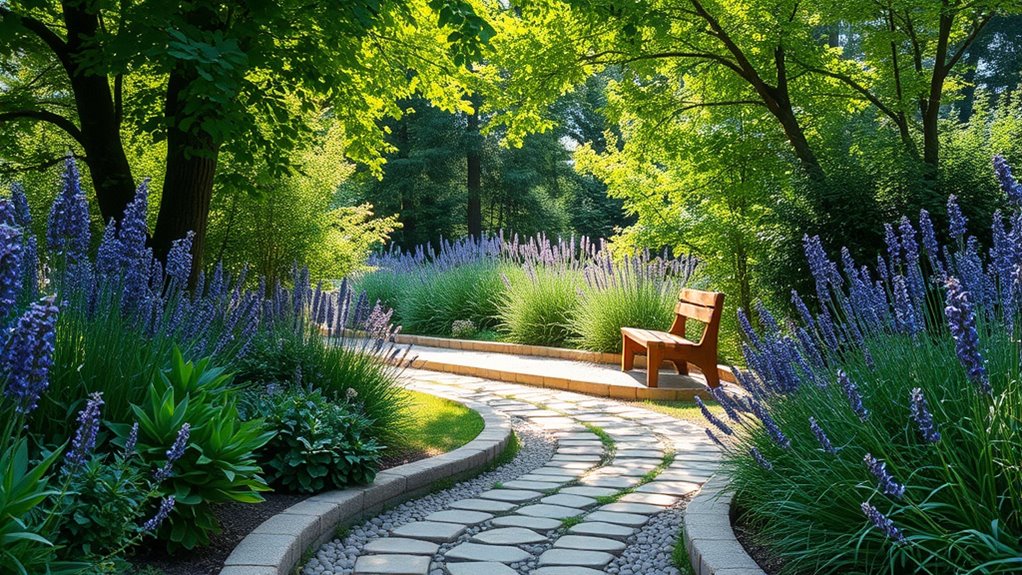
Have you ever noticed how a well-designed landscape can boost your mood and reduce stress? When you craft a garden with wellness in mind, every element plays a role in creating a peaceful haven. One of the most effective ways to do this is by designing inviting garden paths that guide you through calming spaces. These paths don’t have to be complicated; simple winding stones or gravel trails can lead you into areas where you can unwind and reconnect. As you walk along them, your senses become more alert, and your mind begins to relax. Incorporating a variety of plants along the path enhances the garden scent, filling the air with calming aromas like lavender, jasmine, or mint. These scents can trigger relaxation and improve your overall mood, making each walk a therapeutic experience. To make your outdoor space even more inviting, consider strategic outdoor lighting. Soft, warm lights along the pathways or around your meditation zone create a gentle glow that extends your garden’s usability into the evening hours. Proper outdoor lighting also adds a sense of security and highlights key features, encouraging you to spend more time in your wellness garden. Additionally, choosing the right sound recording equipment can help you capture the natural sounds of water and birds, adding to the tranquility of your space.
When designing meditation zones, focus on creating a space that encourages mindfulness and tranquility. Use natural materials like wood or stone for seating, and position it in a spot that feels secluded yet accessible. Surroundings should be lush with greenery, and if possible, incorporate water features like a small fountain or pond. The sound of water combined with the garden scent from nearby flowering plants can deepen your sense of calm. Keep the area clutter-free to promote clarity of mind and ensure that your meditation space feels like a true retreat.
Paths and zones should be connected seamlessly, forming a flow that invites you to move naturally from one area to the next. Add subtle outdoor lighting along the paths and around your meditation spot to create gentle ambiance, especially at dusk or night. This lighting not only enhances safety but also accentuates the natural beauty of your garden. Remember, the goal is to craft a space that encourages you to slow down, breathe deeply, and simply be present. With thoughtful design, your wellness-focused landscape becomes a sanctuary where every element—from garden scent to outdoor lighting—works together to nurture your mental and emotional health.
outdoor garden path gravel stones
As an affiliate, we earn on qualifying purchases.
As an affiliate, we earn on qualifying purchases.
Frequently Asked Questions
How Can I Incorporate Sensory Elements Into My Garden Path Design?
You can incorporate sensory elements into your garden path by adding soundscapes like wind chimes or water features, which create soothing sounds. Incorporate aromatic features such as fragrant plants or herbs along the path, so you enjoy pleasant scents as you walk. Use textured materials underfoot to enhance tactile experiences. These elements engage your senses, making your garden a calming retreat that fosters mindfulness and relaxation.
What Are the Best Plants for Creating a Calming Meditation Zone?
You should choose plants like lavender, jasmine, and snake plants for your calming meditation zone. These plants promote relaxation and have soothing scents that enhance your garden aesthetics. Opt for low-maintenance, soft-textured greenery that creates a tranquil atmosphere. By carefully selecting these calming plants, you’ll craft a peaceful space that encourages mindfulness and rejuvenation, transforming your garden into a perfect retreat for meditation and stress relief.
How Do I Choose the Right Materials for a Durable, Eco-Friendly Pathway?
Did you know that choosing the right materials can reduce your pathway’s environmental impact by up to 50%? To pick the best, focus on sustainable materials like recycled gravel, permeable pavers, or compacted soil. Guarantee proper soil selection for stability and drainage. These choices create a durable, eco-friendly pathway that blends seamlessly with your landscape, supporting both longevity and sustainability in your meditation zone.
What Lighting Options Enhance Relaxation in Wellness Gardens?
You should choose soft, warm lighting options like solar lanterns or LED fairy lights to enhance relaxation in wellness gardens. Incorporate garden art with gentle illumination to create calming focal points, and consider installing discreet watering systems that guarantee plants stay hydrated without disrupting the peaceful ambiance. These elements work together to foster tranquility, making your garden a perfect retreat for meditation and unwinding.
How Can I Maintain Privacy in a Wellness-Focused Landscape?
To maintain privacy in your wellness-focused landscape, you can install privacy screens like decorative panels or fencing. Incorporate hedging strategies with dense shrubs or tall grasses to create natural barriers that block views and add tranquility. Position these elements thoughtfully around meditation zones and garden paths, ensuring they blend seamlessly with your design. Regular trimming keeps hedges healthy and effective, giving you a peaceful, private space to relax and reconnect.
Conclusion
By designing garden paths and meditation zones with wellness in mind, you create a peaceful retreat that nurtures your mind and body. Did you know that spending just 20 minutes in nature can reduce stress levels by up to 50%? Incorporate calming elements into your landscape, and you’ll enjoy a sanctuary that refreshes your spirit daily. Start transforming your outdoor space today—your well-being will thank you every time you step outside.