
Strategic rug placement can markedly improve the visual flow between connected rooms by guiding your eye smoothly from one space to another. When rugs are thoughtfully placed, they create seamless pathways that connect different areas while defining zones without walls. Coordinating colors and textures enhances harmony, making shifts feel natural. Proper proportions and furniture alignment prevent clutter and anchor the space. Keep exploring to discover how these tips can transform your home’s flow and cohesion.

Get furniture and decor delivered free with Prime
- Fast, free delivery on millions of items
- Prime Video, Amazon Music and more included
- Member-only deals all year
Key Takeaways
- Guides the eye smoothly between connected spaces, creating a seamless visual transition.
- Connects different areas by aligning rugs with furniture, enhancing overall space cohesion.
- Uses color coordination and texture contrast to establish a unified, inviting environment.
- Defines zones without walls, maintaining openness while visually organizing the space.
- Shapes visual pathways, encouraging natural movement and preventing disjointed room appearances.
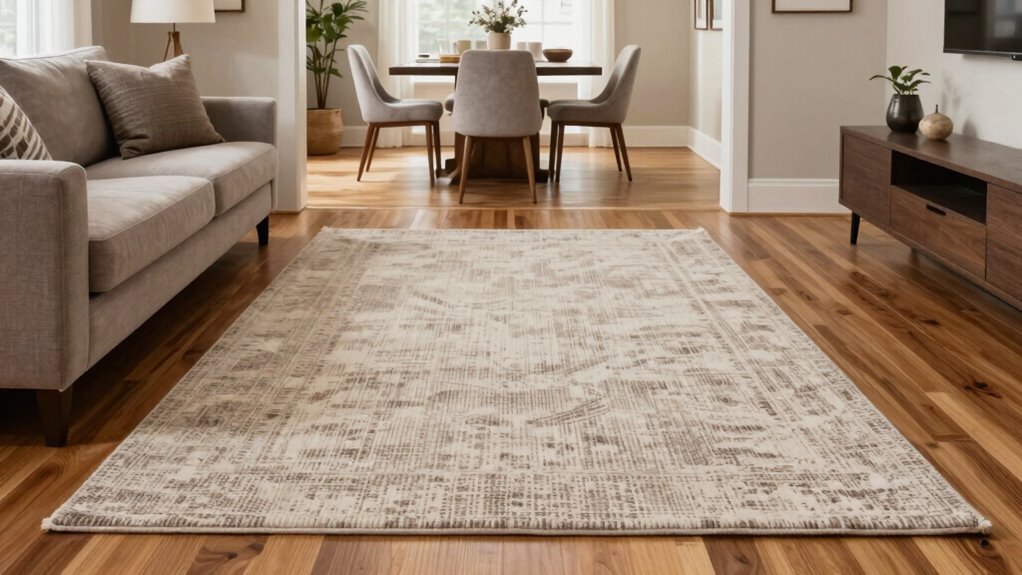
Rug placement plays a crucial role in guiding the visual flow of a room, shaping how your space feels and functions. When you position a rug thoughtfully, you create a visual pathway that connects different areas seamlessly, making your home feel more cohesive. This is especially important when you’re working with connected rooms, like a living room flowing into a dining area. Proper placement helps prevent the spaces from feeling disjointed, and it encourages your eye to move smoothly from one zone to another.
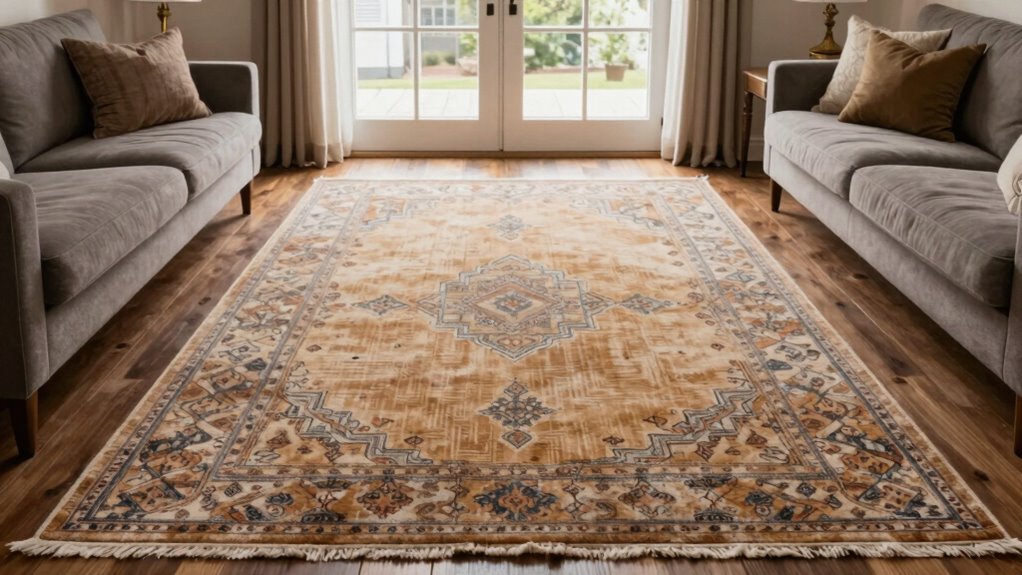
One of the most effective ways to enhance this flow is through color coordination. When your rug’s color palette complements the neighboring room’s decor, it creates a harmonious transition. For example, if your living room features warm earth tones, choosing a rug with similar hues or subtle accents allows the spaces to feel linked rather than separate islands. This doesn’t mean everything has to match exactly; instead, look for complementary shades that echo the colors in adjacent areas. This intentional color coordination guides your eye naturally across spaces, making the entire area feel unified and inviting.
Texture contrast is another key element that improves visual flow. When you vary textures between connected rooms, you add depth and interest without disrupting the overall harmony. For instance, pairing a plush, soft rug in the living room with a sleek, smooth flooring in the dining area creates a tactile transition that subtly signals a change in function while maintaining visual continuity. The contrast in textures draws attention to the different zones without breaking the flow. It also adds a layer of sophistication, making each space feel intentional and well-designed. Incorporating biodiversity-inspired textures and patterns can further enhance the connection between spaces by introducing natural elements that evoke a sense of harmony with the environment. Recognizing the importance of visual harmony can help you make more informed choices about how to design the flow between rooms. Additionally, paying attention to furniture placement can significantly enhance the overall visual flow, ensuring that each piece contributes to a cohesive pathway.
The placement of your rug can also highlight the flow by anchoring furniture and defining zones without the need for walls or barriers. When you position a rug so that the front legs of your furniture rest on it, you visually connect pieces within a space. Extending this idea between rooms, aligning rugs or ensuring they’re proportionate to the furniture helps establish a visual link. Properly scaled rugs also help balance the space and prevent visual clutter. The goal is to create a pathway that your eyes follow naturally, leading from one room to the next smoothly.
Ultimately, your rug’s placement, along with thoughtful use of color coordination and texture contrast, shapes how your connected rooms relate to each other. It’s not just about aesthetics but about creating a seamless experience that feels both purposeful and inviting. When you pay attention to these details, your home’s visual flow becomes a guiding thread that unites your spaces beautifully.
Products Worth Considering

Shark HydroVac MessMaster Corded Wet/Dry Vacuum, Mop & Self-Clean (WD161)

Dyson V8 Cordless Vacuum

TCL T7 Series 85-Inch 4K 144Hz QLED Smart Google TV
As an affiliate, we earn on qualifying purchases.
Frequently Asked Questions
How Do Rug Sizes Affect Room Proportions?
You’ll find that rug sizes considerably influence room proportions by defining space and creating balance. A larger rug anchors the room, making it feel cozy and unified, while smaller rugs can highlight specific areas. Consider color coordination to match the rug with your décor, and use texture contrast to add visual interest. Properly sized rugs enhance the flow between connected rooms, ensuring a harmonious and inviting atmosphere.
Can Multiple Rugs Create a Cohesive Look?
Yes, multiple rugs can create a cohesive look when you coordinate colors and contrast textures. Use complementary or matching colors to tie the spaces together, and vary textures to add visual interest without overwhelming the room. Place the rugs strategically to define different areas while maintaining a flow. This approach enhances visual harmony, making your connected rooms feel more unified and inviting.
What Materials Are Best for Connecting Rugs?
You’ll want to choose durable materials like wool or polypropylene for connecting rugs; they handle rug maintenance and wear exceptionally well. These materials resist stains, shedding, and fading, making them perfect for layered or high-traffic areas. Wool adds a luxurious feel, while polypropylene is budget-friendly and practical. By selecting the right materials, you guarantee your rugs stay beautiful and cohesive for years, creating a seamless visual flow that’s both stylish and resilient.
How Do Rug Patterns Impact Visual Flow?
Rug patterns notably impact visual flow by guiding your eye smoothly across connected rooms. When you choose rugs with coordinated colors, it creates a seamless shift, enhancing harmony. Incorporating texture contrast in patterns adds depth and interest without disrupting flow. You can mix subtle and bold designs, but guarantee the color scheme ties everything together. This approach keeps the space feeling unified and visually appealing, making your rooms feel connected and inviting.
Should Rugs Be Aligned or Offset Between Rooms?
Think of your rugs as bridges connecting two worlds. You should align them or keep them offset based on your furniture placement and color coordination. Aligned rugs create a seamless flow, like a continuous path, emphasizing unity. Offsetting can introduce visual interest and define separate zones. Consider your space’s function and style, then choose the arrangement that best complements your furniture and enhances the overall harmony between rooms.
Conclusion
By carefully placing rugs, you weave a visual thread that gently guides the eye from one space to the next, much like a masterful conductor guiding an orchestra. This subtle choreography transforms disconnected rooms into a harmonious symphony of design, where each rug acts as a stepping stone, leading effortlessly through your home. Embrace this simple touch, and watch as your living spaces flow together with elegance, turning your house into a seamless, inviting masterpiece.