Using colored lights through chromotherapy can boost your mood by harnessing their psychological and physiological effects. Blue light helps you feel calmer and reduces anxiety, while red energizes and increases alertness. Adjusting hues in your environment lets you create relaxing, energized, or focused spaces easily. Customizing your lighting with simple controls supports emotional well-being naturally. To discover how to personalize your mood lighting for better mental health, keep exploring these vibrant possibilities.
Key Takeaways
- Chromotherapy uses specific colors of light to promote emotional balance and physical healing.
- Blue light induces calmness, reducing anxiety, while red light boosts energy and alertness.
- Adjustable LED lighting allows personalized mood enhancement through easy color changes.
- Strategic lighting in homes or workplaces can improve focus, reduce stress, and elevate mood naturally.
- Thoughtful color selection and contrast optimize visual comfort and maximize emotional and mental benefits.
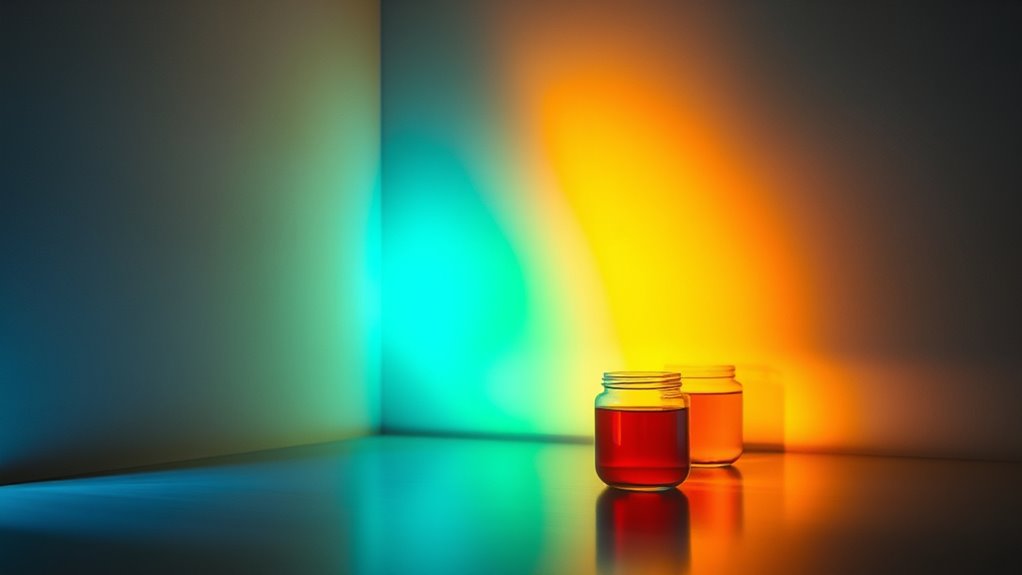
Chromotherapy, also known as color therapy, leverages the power of light and color to promote healing and balance in the body. When you use color therapy, you’re harnessing the psychological and physiological effects that different colors can have on your mood and overall well-being. One popular way to incorporate this into your environment is through mood lighting, which involves strategically using colored lights to create specific emotional states or enhance certain feelings. You might find yourself feeling more relaxed, energized, or focused simply by adjusting the hue of the lights in your space.
Color therapy works by stimulating specific areas of your brain that are associated with emotions and physical responses. For example, blue light is often used to promote calmness and reduce anxiety, making it ideal for spaces where you want to unwind or sleep better. On the other hand, red light can increase energy levels, helping you feel more alert and motivated. When you incorporate mood lighting into your daily routine, you’re actively influencing your mental state in a subtle yet powerful way. Whether you want to boost your mood during a workout or wind down after a stressful day, changing the color of your lighting can have immediate effects.
Blue light fosters calmness; red light boosts energy—simple mood lighting shifts your mental state effortlessly.
Using color therapy as part of your environment allows you to create spaces tailored to your emotional needs. For instance, you might install adjustable LED lights that change colors with the touch of a button, giving you control over your mood through simple lighting adjustments. As you experiment with different hues, you’ll discover which colors resonate most with your personal needs. Bright yellow lighting can foster optimism and creativity, while softer pinks may evoke feelings of comfort and compassion. By selecting and customizing your mood lighting, you’re actively participating in your emotional self-care.
Moreover, color therapy isn’t just about aesthetics; it’s a practical approach to enhancing your mental health. When you pay attention to the colors surrounding you, you can influence your mood naturally without relying on medication or other interventions. Whether it’s in your home, office, or meditation space, integrating color therapy through thoughtfully chosen lighting can lead to improved mood, increased focus, and a greater sense of harmony. Additionally, understanding the contrast ratio of your lighting setup can help maximize the visual comfort and effectiveness of your mood lighting. When you consciously use mood lighting, you’re taking an active role in shaping your emotional landscape and fostering a more balanced, vibrant life.

EZVALO 80RGB Color Changing Under Cabinet Lighting, Led Shelf Lights
- Manual Control Only: Remote and button control, no motion sensor
- 80 Lighting Options: 16 colors, 5 brightness levels, 3 color temps
- Rechargeable Battery: Built-in 1800mAh battery, 10-hour runtime
As an affiliate, we earn on qualifying purchases.
As an affiliate, we earn on qualifying purchases.
Frequently Asked Questions
Can Chromotherapy Replace Conventional Medical Treatments?
No, chromotherapy can’t replace conventional medical treatments. While it may serve as a complementary therapy to enhance your well-being, scientific evidence supporting its effectiveness is limited. You shouldn’t rely solely on colored lights or chromotherapy for serious health issues. Always consult healthcare professionals for proper diagnosis and treatment. Use chromotherapy as an addition to, not a substitute for, proven medical care.
Are There Any Safety Concerns With Colored Lighting?
Yes, there are safety concerns with colored lighting. You should watch the light intensity to avoid discomfort or eye strain, especially with bright or prolonged exposure. Verify the lighting setup is eye-safe by avoiding direct, intense beams into your eyes. If you experience headaches, dizziness, or eye discomfort, stop using colored lights and consult a professional. Properly adjusted, colored lighting can be safe and beneficial for mood enhancement.
How Long Should Each Color Be Used for Optimal Effects?
In the age of the Renaissance, precision was prized, and now, so is effective lighting. For ideal effects, follow duration guidelines of 15-30 minutes per color, allowing your mood to adapt without overstimulation. Implement a color rotation to prevent desensitization, switching colors every few minutes. This approach helps you reap the benefits of chromotherapy, enhancing your emotional balance while keeping your experience safe and comfortable.
Is Chromotherapy Suitable for Children or Pregnant Women?
Yes, chromotherapy can be suitable for children and pregnant women, but you should prioritize child safety and pregnancy precautions. Always consult a healthcare professional before use, especially for children or during pregnancy. Make certain the lighting is gentle and the environment safe. Avoid prolonged exposure and monitor for any adverse reactions. With proper guidance, chromotherapy can be a safe complementary option for mood enhancement in these groups.
Can Colored Lights Improve Mental Health Conditions Long-Term?
Think of colored lights as a guiding compass on your mental health journey. While light therapy and color psychology can boost mood temporarily, they aren’t proven to create long-term change. Using colored lights may help manage symptoms, but they shouldn’t replace professional treatment. Keep exploring holistic approaches, and consider consulting a mental health expert for sustained support. Your mental wellness deserves consistent care and attention.
Conclusion
Embracing colored lighting in your space is like painting your mood with a vibrant palette—each hue has the power to uplift, calm, or energize you. By intentionally using chromotherapy, you become the artist of your emotional landscape, turning your environment into a sanctuary of balance and well-being. Remember, just as a rainbow brightens the sky, the right lighting can illuminate your life with positivity and harmony. Let colors be your guide to a happier, healthier you.