
A detailed condition report helps you spot hidden damage, repairs, or flaws that might not be obvious at first glance. It provides an honest assessment of an item’s state, preventing surprises and costly repairs later on. By confirming the true condition, you can negotiate fairly and plan your budget accordingly. Protecting your investment is essential, and knowing more about the item’s care and maintenance needs ensures you’re better prepared for future costs. Keep exploring to learn how these reports build your confidence in every purchase.
Key Takeaways
- Condition reports reveal hidden damage or flaws not evident in photos or descriptions, preventing unexpected repair costs.
- They provide a detailed assessment to ensure the item’s condition matches seller claims, avoiding overpayment.
- Accurate documentation helps buyers obtain precise repair estimates and budget for restoration expenses.
- Clear condition details build trust, reducing the risk of disputes and costly misunderstandings after purchase.
- They guide proper preservation and maintenance, safeguarding the item’s value and longevity over time.
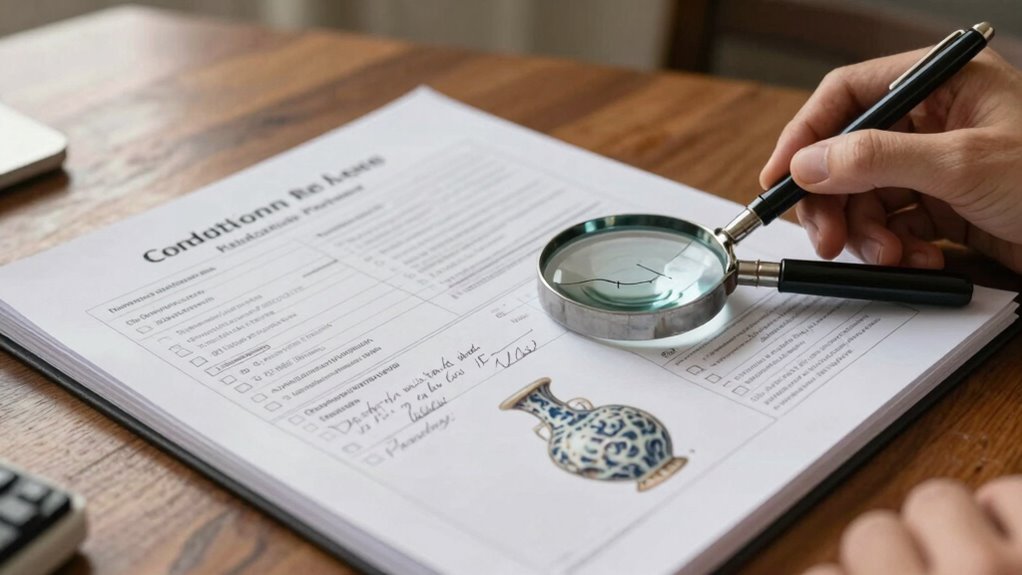
Have you ever purchased artwork or collectibles only to discover hidden flaws later? It’s frustrating and can lead to unexpected costs that drain your budget and diminish your enjoyment of the piece. That’s where detailed condition reports come into play, acting as a safeguard to protect you from costly surprises down the line. These reports provide an extensive assessment of an item’s current state, documenting any damage, repairs, or flaws that might not be immediately obvious. By having this information upfront, you’re better equipped to make an informed decision and avoid surprises after the purchase.
One of the main ways condition reports help protect you is by clarifying potential appraisal discrepancies. When you buy art or collectibles, their value hinges heavily on their condition. If a seller claims an item is in excellent shape but the condition report reveals hidden damage or wear, you’ll know to negotiate or reconsider the purchase. Conversely, if the report confirms the item’s condition matches the description, you gain confidence in your investment. This transparency helps prevent misunderstandings that could lead to disputes or disappointment later, ensuring you’re paying a fair price based on accurate condition details.
Condition reports also play an essential role in managing repair estimates. When flaws are documented, you can get precise repair estimates from conservators or restorers before committing financially. If the report uncovers issues like fading, tears, or previous restorations, you’ll have a clear picture of what it takes to restore the item to its best condition. This foresight allows you to budget appropriately and avoid unexpected expenses that might emerge after the sale. It also helps you decide whether the repair costs are worth the investment, especially if the item is valuable or holds sentimental significance. Additionally, understanding water chemistry and maintenance is crucial for preserving items like collectibles or artwork that might be sensitive to environmental factors, further safeguarding your investment. Being aware of conservation techniques can also help extend the life of your collection or artwork, preventing future issues. Properly understanding condition assessment processes ensures you can better evaluate the true state of your purchases and plan for their ongoing care. Moreover, recognizing the importance of environmental controls can significantly impact the longevity and preservation of valuable items over time.

QWIK-Code Report Writing Template
- Purpose: Report writing template for law enforcement
As an affiliate, we earn on qualifying purchases.
As an affiliate, we earn on qualifying purchases.
Frequently Asked Questions
Can Condition Reports Be Trusted for All Types of Property?
Condition reports can generally be trusted for property valuation, but their accuracy varies depending on the inspector’s expertise. For all types of property, inspection accuracy is vital, so you should guarantee the report is thorough and detailed. While they help identify potential issues, no report is infallible. Always consider supplementary inspections or expert opinions, especially for complex or unique properties, to make well-informed decisions and avoid surprises.
How Often Should a Condition Report Be Updated?
You should update a condition report at least once a year to keep up with property maintenance and avoid surprises. Think of it as a health check-up for your property—regular inspections catch issues early. Skipping updates can lead to costly repairs down the line. So, don’t wait until something breaks; schedule routine inspections to guarantee your property stays in top shape and your investment remains protected.
Are Condition Reports Legally Binding for Sellers?
Condition reports are generally not legally binding for sellers, but they can have legal implications if false or misleading information is provided. As a seller, you have obligations to be honest and transparent about the property’s condition. If you neglect these duties, you could face legal action or financial penalties. Consequently, while not strictly binding, condition reports play an essential role in fulfilling your legal obligations and avoiding potential disputes.
What Details Are Typically Included in a Condition Report?
Property inspection details dominate condition reports, including structural stability, surface scratches, and system functionality. You’ll find information about interior and exterior elements, from walls and windows to roofs and appliances. Accurate reports emphasize report accuracy, offering detailed descriptions and photographs. This thorough documentation helps you understand the property’s true condition, reducing surprises. By reviewing these details, you gain confidence in your investment and can negotiate repairs or price adjustments with clarity and certainty.
Who Is Responsible for Paying for the Condition Report?
You’re usually responsible for paying for the condition report, especially if you’re the buyer. Payment responsibilities vary depending on the agreement, but buyers often cover this cost to guarantee report accuracy before finalizing a purchase. This upfront payment helps verify the details and condition of the item, giving you confidence in your decision. Making sure the report is accurate minimizes surprises and protects you from unexpected costs later.
Conclusion
Think of a condition report as your lighthouse in a stormy sea—guiding you safely to shore and helping you avoid hidden dangers. It’s your shield against unexpected costs and disappointments, illuminating every detail before you commit. By trusting this beacon, you embrace confidence and peace of mind, knowing you’re steering clear of unseen rocks beneath the surface. Let the condition report be your steady light, guiding you safely to a wise, secure purchase.