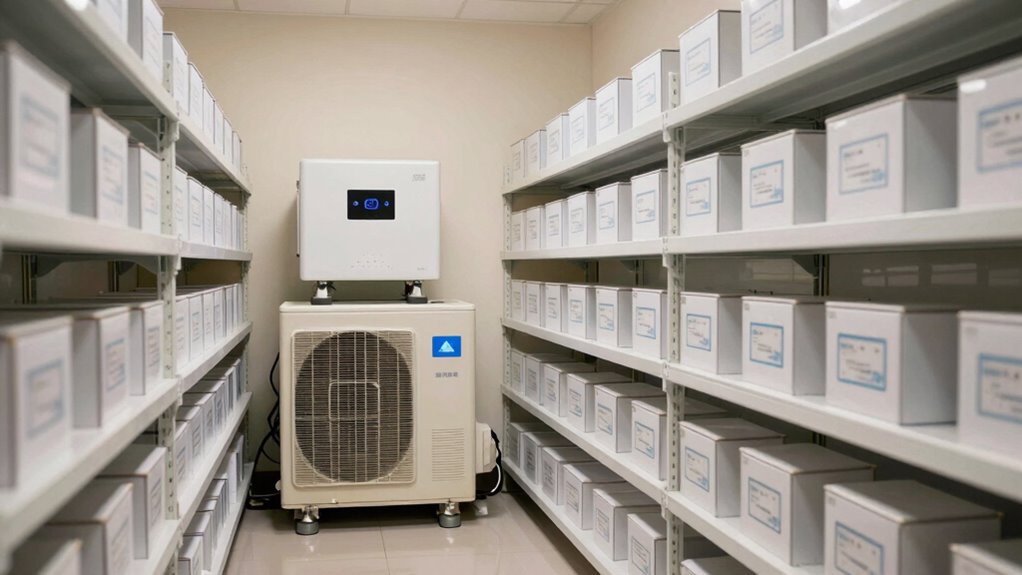

To prevent damage in your storage room, focus on balancing the climate triangle—temperature, humidity, and air circulation. Keep temperatures stable to avoid warping or fading, control humidity to prevent mold and rust, and ensure good airflow to prevent stale air and moisture buildup. Regular monitoring and adjustments help maintain these elements within safe ranges. Maintaining this balance is key, and you’ll find simple strategies to protect your items as you explore further.

Get furniture and decor delivered free with Prime
- Fast, free delivery on millions of items
- Prime Video, Amazon Music and more included
- Member-only deals all year
Key Takeaways
- The climate triangle—temperature, humidity, and air quality—must be balanced to prevent storage damage.
- Proper monitoring and control of these elements extend the lifespan of stored items.
- Stable temperatures prevent warping, mold, and material degradation in storage environments.
- Regulating humidity levels inhibits mold growth, rust, and wood warping.
- Good air circulation and ventilation maintain environment stability and prevent moisture buildup.
storage room climate control dehumidifier
As an affiliate, we earn on qualifying purchases.
As an affiliate, we earn on qualifying purchases.
What Is the Climate Triangle: And Why Is It Key to Good Storage?
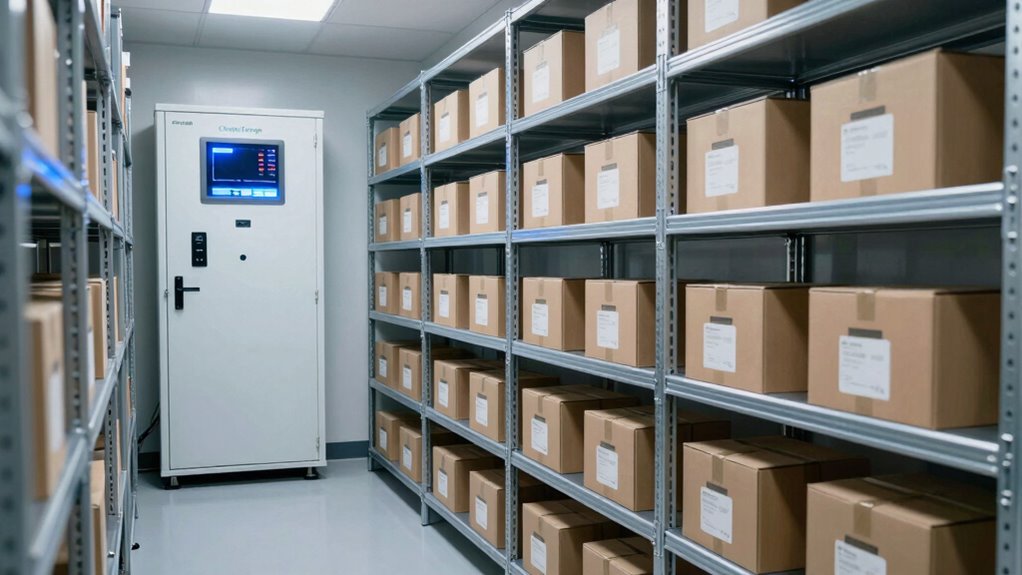
Understanding the Climate Triangle is essential for effective storage because it highlights the interconnected factors that influence preservation. The Climate Triangle involves temperature, humidity, and air quality—three elements that must stay balanced for ideal storage conditions. Maintaining climate stability means keeping these factors within specific ranges to prevent damage. Storage monitoring plays a vital role here, allowing you to track changes and respond promptly. When one element shifts, it can affect the others, leading to deterioration or spoilage. By understanding the relationships within the Climate Triangle, you can implement better control measures, ensuring your stored items remain safe and intact. Properly managing these factors helps prevent damage and prolongs the lifespan of your stored possessions. Additionally, climate control technology can automate adjustments, maintaining optimal conditions more efficiently.
How Temperature Affects Your Stored Items and How to Control It
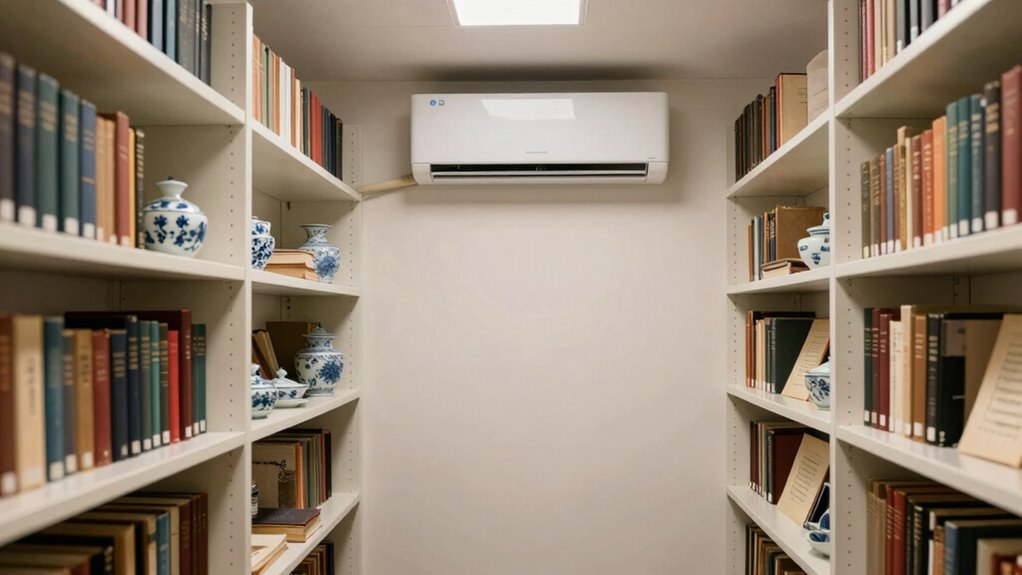
Temperature plays a vital role in preserving your stored items; too high or low can cause damage or deterioration. You need to maintain an ideal climate to prevent issues like warping, mold, or fading. Learning how to control your storage environment ensures your belongings stay in good condition over time. Proper ventilation is also essential for maintaining consistent indoor air quality and preventing moisture buildup that can harm stored items.
Temperature’s Effect on Items
When stored in environments that are too hot or too cold, your items can suffer damage or deterioration over time. Extreme temperatures can warp, crack, or fade materials, especially in sensitive storage containers. Temperature fluctuations accelerate these effects, causing expansion and contraction that weaken items and their packaging. To prevent this, keep storage areas consistent and within a stable range. For example, sudden shifts can cause delicate objects to crack or mold to develop. Use insulation and climate control to maintain steady conditions. Maintaining a storage environment with steady temperature helps prolong the lifespan of your stored items.
Maintaining Optimal Climate Conditions
Maintaining a stable climate in your storage area is essential to prevent damage caused by temperature fluctuations. Proper storage unit ventilation helps regulate humidity and airflow, reducing the risk of mold, mildew, and deterioration. Climate control devices, such as heaters, coolers, or dehumidifiers, allow you to set and maintain consistent temperatures, protecting sensitive items like electronics, documents, and artwork. Regular monitoring ensures these devices function correctly and keeps your storage environment stable. Avoiding extreme temperature swings minimizes expansion, contraction, and material stress that can damage your belongings. Understanding airflow and filtration is crucial for creating an optimal environment and preventing dust and pollutants from settling on your stored items. By combining good ventilation with reliable climate control devices, you create an ideal environment that preserves your stored items and extends their lifespan. Consistent conditions are key to preventing costly damage and ensuring peace of mind.
Why Humidity Matters: Preventing Mold, Warping, and Rust
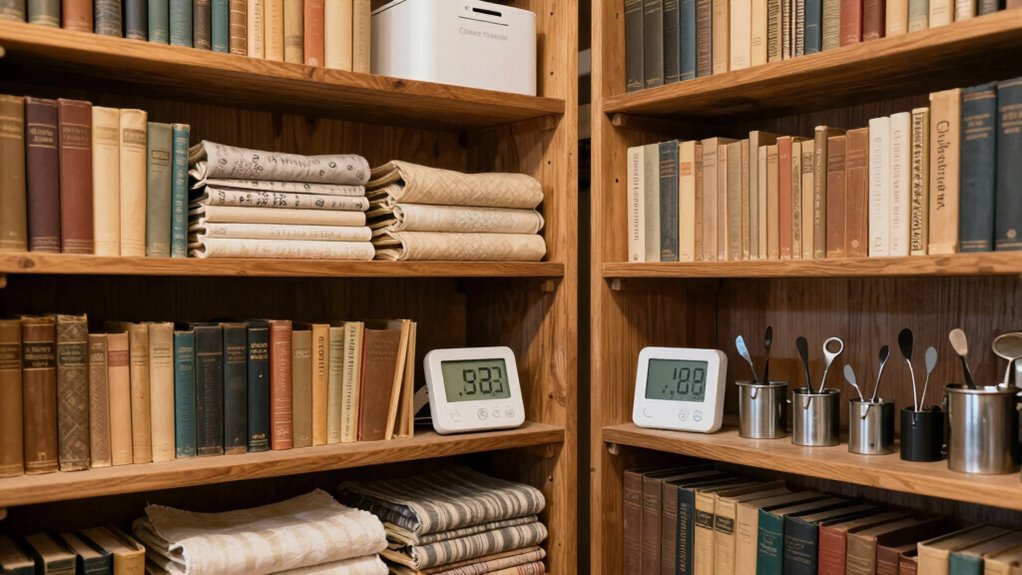
High humidity can lead to mold growth on your belongings and damage wooden items through warping. It also promotes rust formation on metal tools and surfaces. Keeping humidity in check helps protect your storage and prolongs the life of your stored items. Proper ventilation and dehumidification are essential components of effective climate control in storage rooms.
Mold Growth Prevention
Humidity levels play a crucial role in preventing mold growth in storage rooms. When humidity is too high, mold thrives; too low, and other issues like dryness can occur. To combat this, maintaining consistent humidity helps inhibit mold spores from settling and growing. Temperature fluctuations can cause condensation, creating damp spots ideal for mold development. Proper storage insulation minimizes these fluctuations, keeping temperature and humidity stable. Insulation prevents cold drafts and hot spots, reducing moisture buildup. Regularly monitoring humidity levels and adjusting your climate controls ensures mold spores don’t find the perfect environment to grow. Using humidity sensors can help you track conditions more accurately. By controlling humidity and stabilizing temperature fluctuations through effective insulation, you create an inhospitable environment for mold, preserving your stored items and maintaining a healthy storage space.
Wooden Item Preservation
If the environment isn’t properly controlled, wooden items in your storage room can easily suffer from damage caused by excessive moisture. High humidity can lead to warping, mold growth, and loss of finish protection, compromising the wood grain’s appearance and integrity. To prevent this, maintain a consistent humidity level, ideally between 40-50%. Proper ventilation helps regulate moisture and preserves your wooden belongings. Consider the following factors:
| Factor | Ideal Range | Impact |
|---|---|---|
| Humidity | 40-50% | Prevents warping and mold growth |
| Temperature | 60-70°F | Maintains wood stability |
| Ventilation | Good airflow | Reduces excess moisture |
| Finish Condition | Intact | Shields wood grain from damage |
| Storage Materials | Breathable | Minimizes moisture buildup |
Ensuring proper climate control in your storage space is essential for long-term preservation.
Rust Formation Control
Ever wondered why rust appears on metal tools and equipment stored in your basement or garage? The culprit is excess humidity, which accelerates oxidation. To control rust formation, focus on proper dehumidifier selection; choose one with the right capacity for your space to keep moisture levels low. Additionally, insulation techniques play a key role—adding insulation reduces temperature fluctuations that cause moisture buildup. Proper insulation also prevents condensation on metal surfaces, decreasing rust risk. Keep humidity below 50% to inhibit rust development effectively. Regularly monitor humidity levels, and consider using a dehumidifier to maintain consistent dryness. Understanding moisture control strategies can help you create a climate that protects your tools and equipment from rust, extending their lifespan and preserving their functionality.
How to Keep Air Moving and Maintain a Stable Environment
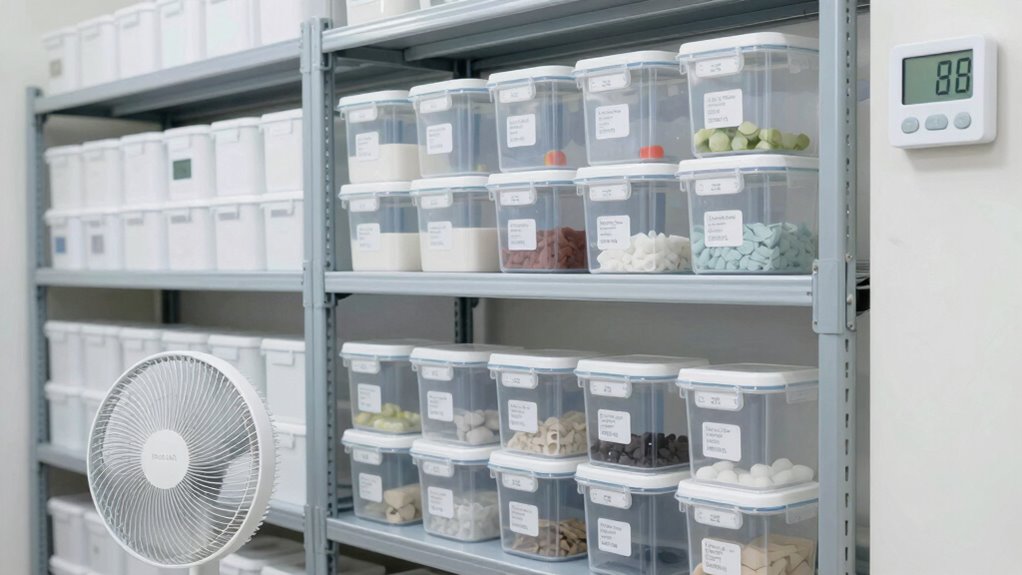
To keep air moving and maintain a stable environment in storage rooms, you need to guarantee proper ventilation and airflow. Effective ventilation strategies help prevent moisture buildup and stagnant air, reducing the risk of mold and deterioration. Use air circulation techniques such as installing vents, exhaust fans, or air purifiers to promote continuous movement. Regularly check and clean ventilation systems to ensure they work efficiently. Keep doors and windows open when possible to allow fresh air in and stale air out. Proper airflow helps maintain consistent temperature and humidity levels, protecting your stored items. Additionally, monitoring air quality can help identify issues early and ensure your environment remains safe and stable.
Simple Tips to Balance Temperature, Humidity, and Airflow
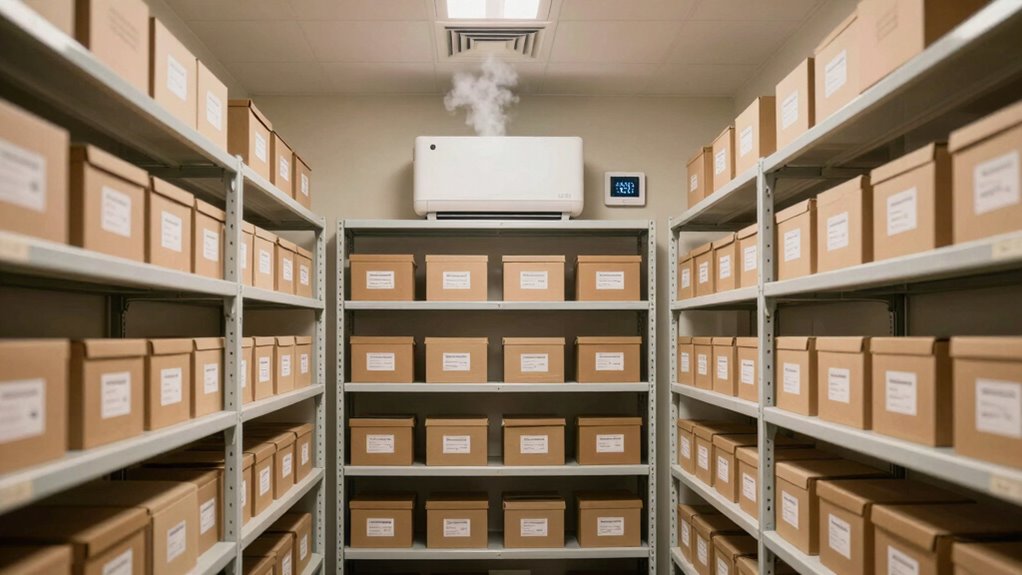
Balancing temperature, humidity, and airflow is essential for preserving your stored items and preventing damage. Start by choosing proper storage containers that help regulate moisture and protect contents from temperature fluctuations. Use breathable containers for items sensitive to humidity, and airtight ones for materials needing dryness. Lighting control also plays a role; keep lights dim or off to prevent heat buildup and avoid temperature spikes. Position storage containers away from direct light sources and vents to maintain a stable environment. Regularly monitor temperature and humidity levels with a reliable sensor, adjusting ventilation or dehumidifiers as needed. Small changes, like sealing gaps or using thermostats, can make a significant difference in maintaining a balanced climate. Additionally, understanding the climate triangle—temperature, humidity, and airflow—can help you implement more effective preservation strategies. Keeping these factors in check helps ensure your belongings stay safe and well-preserved.
Common Mistakes That Disrupt Your Storage Climate: And How to Avoid Them
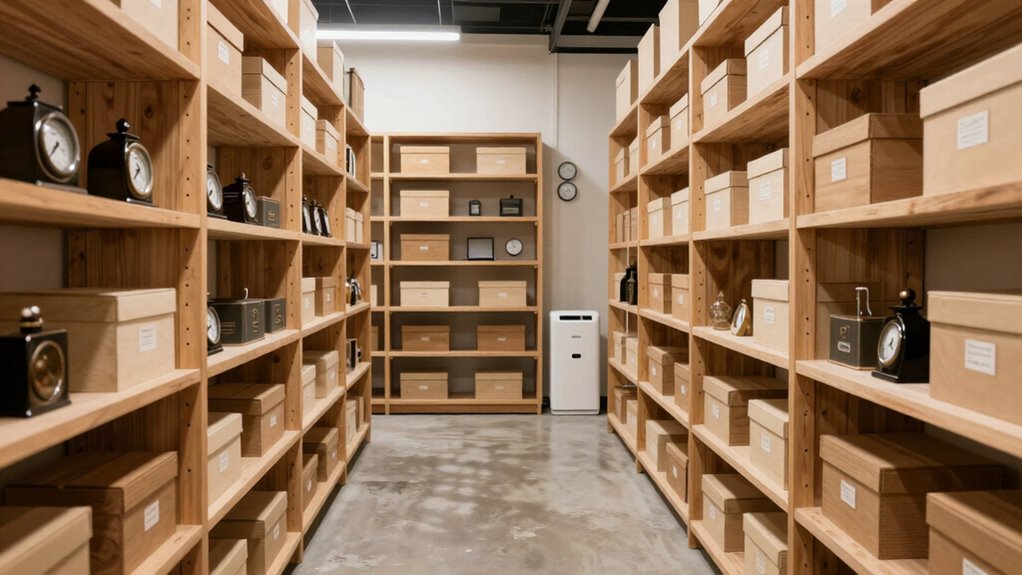
One common mistake is neglecting to regularly check and adjust your storage environment, which can lead to significant climate disruptions. Without consistent climate monitoring, you might miss fluctuations that harm your items. Failing to prioritize ventilation essentials can cause stale air and excess humidity, risking mold and deterioration. To avoid this, verify your ventilation systems are functioning properly and checked often. Also, neglecting routine inspections can result in unnoticed temperature or humidity spikes. Here are some tips:
- Regularly update your climate monitoring tools
- Keep ventilation systems clean and maintained
- Adjust temperature and humidity settings as needed
- Stay alert to changes and address them promptly
Frequently Asked Questions
How Does External Weather Influence My Storage Environment?
External weather directly impacts your storage environment by affecting temperature and humidity levels. Weather patterns like rain, snow, or heat can cause fluctuations that threaten your stored items. To counter this, you should use proper insulation techniques, which help stabilize internal conditions regardless of outside changes. Regularly monitoring and adjusting your climate control systems ensures your storage remains protected from external weather influences, maintaining the ideal conditions for your valuables.
What Are the Signs of an Unbalanced Storage Climate?
You notice musty odors, warped materials, or mold creeping along shelves—these are signs of an unbalanced storage climate. When humidity control falters, condensation forms like tiny lakes, and temperature stability wavers, causing damage. You might see paint peeling or items sticking together. These clues tell you that your climate isn’t steady, risking deterioration. Act quickly to restore balance, ensuring your storage environment stays safe and preserved.
Can Specific Storage Items Require Special Climate Conditions?
Yes, some storage items require specific climate conditions. You need to focus on humidity control and temperature stability to protect delicate materials like artwork, photographs, or sensitive documents. For example, high humidity can cause mold, while fluctuations in temperature can lead to warping or cracking. By maintaining consistent temperature and humidity levels within the climate triangle, you guarantee your items stay safe and preserved over time.
How Often Should I Monitor My Storage Room’s Climate?
Think of your storage room as a delicate dance, where humidity control and temperature stability keep everything in harmony. You should check your climate conditions at least once a week, ensuring no fluctuations threaten your items. Regular monitoring helps catch issues early, preventing damage. Use reliable gauges, stay vigilant, and adjust as needed—your proactive approach keeps your storage environment balanced and your valuables safe.
Are There Recommended Tools to Measure Climate Variables Accurately?
You should use reliable temperature sensors and humidity control tools to measure climate variables accurately in your storage room. Look for digital sensors with calibration options for precise readings, and consider devices that log data over time for trend analysis. Incorporating these tools helps you maintain the ideal climate, preventing damage and preserving your stored items. Regularly check and calibrate your equipment to guarantee continued accuracy.
Conclusion
Mastering the climate triangle turns your storage room into a fortress, guarding your treasures like a vigilant sentinel. By balancing temperature, humidity, and airflow, you create a harmonious environment where damage fears fade away. Think of it as tuning an instrument—each element must be in perfect pitch. When you get these in sync, your stored items stay pristine, like stars shining bright in a clear night sky, protected and preserved for years to come.
Halloween Picks
halloween
As an affiliate, we earn on qualifying purchases.