
VOC sensors detect volatile organic compounds, which are chemicals that evaporate from household products like paints, cleaning supplies, and furniture. They measure changes in electrical signals caused by these airborne chemicals, helping you monitor indoor air quality. However, they don’t detect pollutants like radon, dust, pollen, or nitrogen dioxide. To get a complete picture of your air quality, it’s helpful to understand what VOC sensors can and can’t do—you’ll find more details ahead.

Get furniture and decor delivered free — and shop member deals
- Fast, free delivery on millions of items
- Access to Prime Big Deal Days deals on October 6–7
- Prime Video, Amazon Music and more included
Key Takeaways
- VOC sensors detect volatile organic compounds that evaporate into indoor air from products like paints and cleaning supplies.
- They measure changes in electrical properties caused by VOC molecules, providing readings of airborne chemical levels.
- VOC sensors primarily detect certain organic chemicals; they do not identify gases like radon or particulates.
- Proper calibration is essential to ensure accurate detection and avoid sensor drift over time.
- They help monitor indoor air quality but should be complemented with other sensors for comprehensive pollutant detection.
What Are Volatile Organic Compounds: and Why Should You Care?
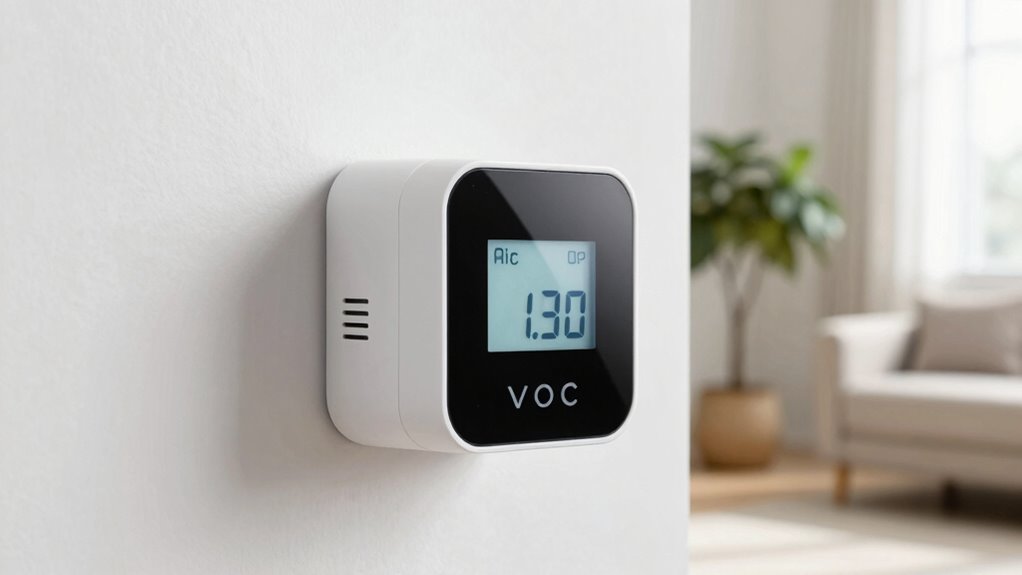
Volatile Organic Compounds (VOCs) are chemicals that easily evaporate into the air from everyday products and materials in your home. These VOC sources include paints, cleaning supplies, air fresheners, furniture, and even certain fabrics. When VOCs are released, they can accumulate indoors, especially in poorly ventilated spaces. The health implications of exposure range from eye and throat irritation to more serious issues like headaches, dizziness, and respiratory problems. Long-term exposure may even contribute to more severe health conditions, including liver, kidney, or central nervous system damage. Understanding where VOCs come from and how they affect your health is crucial for maintaining clean indoor air. Being aware of VOC sources helps you take steps to reduce your exposure and improve your overall well-being. Monitoring VOC levels with sensors can help detect these emissions early and protect indoor air quality.
How Do VOC Sensors Detect Airborne Chemicals and Pollutants?
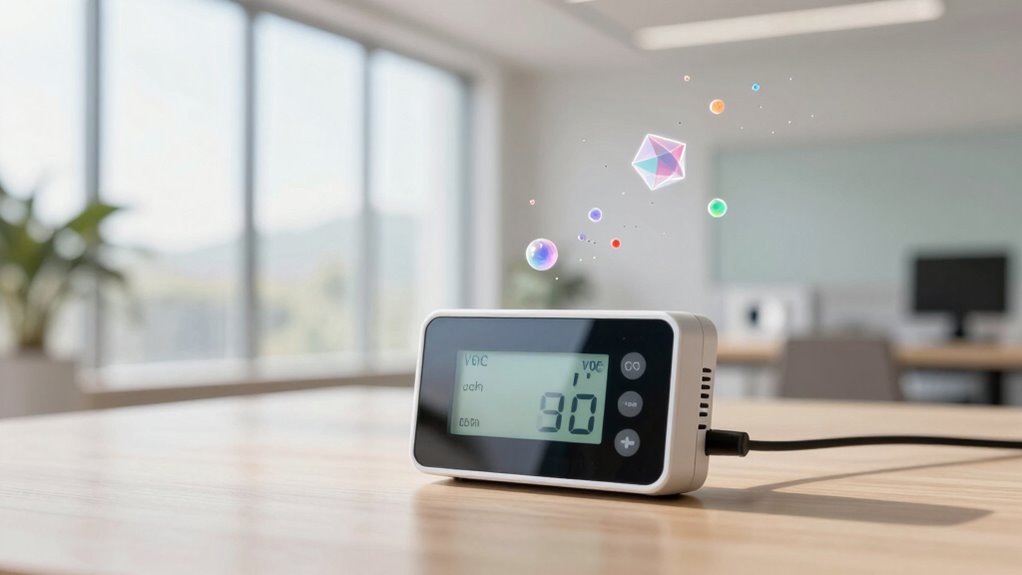
VOCs in your indoor air can be challenging to identify without the right tools, which is where VOC sensors come into play. These sensors detect airborne chemicals by measuring changes in electrical properties caused by VOC molecules. Proper sensor calibration is essential to guarantee accurate readings, aligning the sensor’s response with known concentrations. Detection limits define the lowest concentration of VOCs the sensor can reliably identify, helping you understand the sensitivity of your device. When VOC levels rise, the sensor’s response triggers alerts or displays readings, enabling you to take action. Regular calibration maintains accuracy over time, preventing drift that could lead to false readings. Additionally, understanding the Free Floating nature of some VOCs can help interpret sensor data more accurately. Ultimately, VOC sensors translate airborne chemical presence into understandable data, empowering you to monitor indoor air quality effectively.
What Indoor Air Pollutants Are Missed by VOC Sensors?
While VOC sensors are effective at detecting many airborne chemicals, they can miss certain indoor pollutants that don’t easily emit volatile compounds. Radon, for example, isn’t detected by VOC sensors because it’s a radioactive gas with no strong odor or volatility. Similarly, particulate matter like dust, pollen, and smoke particles aren’t gases and aren’t captured by VOC detection methods. These pollutants can substantially impact your indoor air quality without triggering alarms. Additionally, some chemical pollutants like formaldehyde or nitrogen dioxide may be missed if they’re at low levels or don’t volatilize quickly. To guarantee thorough air quality monitoring, consider sensors that specifically detect radon and particulate matter alongside VOC sensors. This approach helps you identify pollutants that VOC sensors alone might overlook. Innovative detection technologies are continuously being developed to improve comprehensive indoor air quality assessment.
How to Choose an Indoor Air Quality Monitor : What VOC Sensors Can and Can’t Do
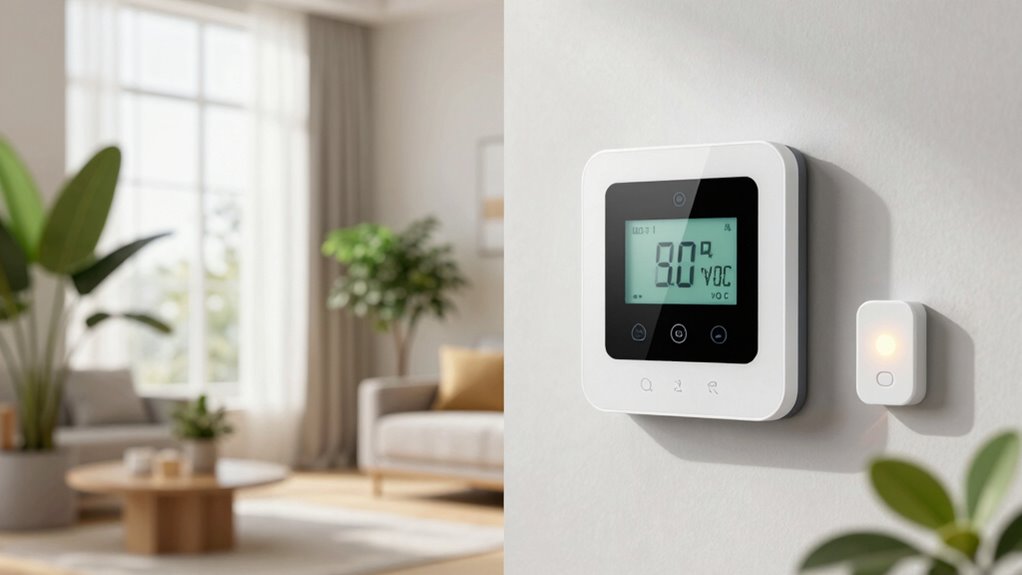
Choosing the right indoor air quality monitor requires understanding what VOC sensors can detect and their limitations. VOC sensors measure volatile organic compounds, but their accuracy depends heavily on proper sensor calibration. Regular calibration ensures that data interpretation remains reliable, preventing false readings or missed pollutants. Keep in mind that VOC sensors can’t detect every airborne pollutant, especially particles or gases outside their detection range. When selecting a monitor, verify that it offers clear guidelines for sensor calibration and understands what specific VOCs it measures. Knowing these limits helps you interpret data correctly and avoid overestimating or underestimating air quality issues. Ultimately, understanding what VOC sensors can and can’t do empowers you to choose a monitor that best fits your indoor environment. Sensor calibration is a crucial factor that directly impacts the reliability of the data collected.
How to Improve Indoor Air Quality Beyond Just Using VOC Sensors
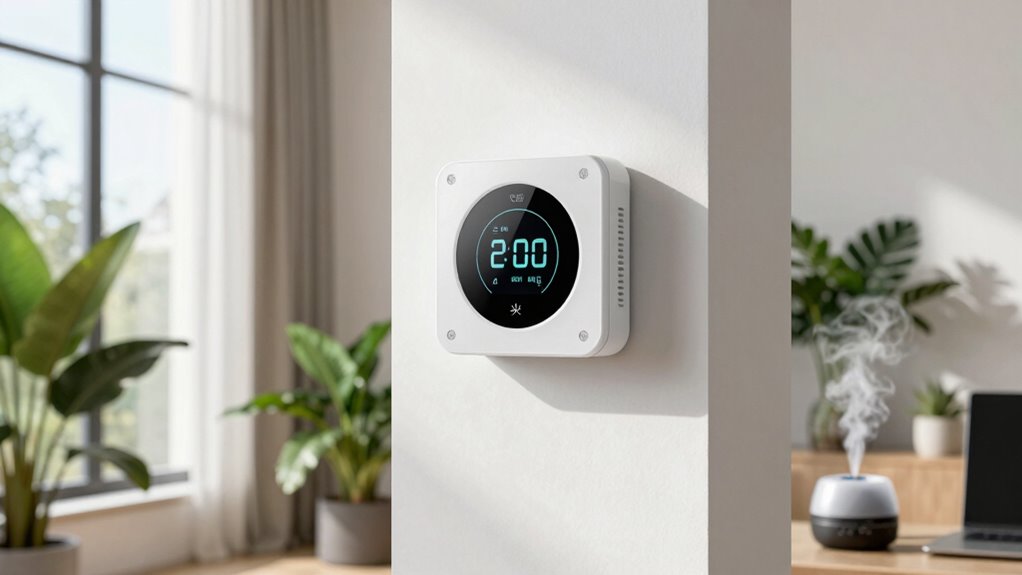
Improving indoor air quality involves more than just relying on VOC sensors; it requires an all-encompassing approach that addresses various sources of pollution. You can enhance air quality by implementing effective air filtration and ventilation strategies. Air filtration systems, like HEPA filters, trap airborne particles and diminish harmful VOCs. Proper ventilation ensures fresh air enters your space while stale air exits, diluting indoor pollutants. Regularly maintaining and upgrading HVAC filters helps maintain air purity. Additionally, increasing natural ventilation by opening windows or using exhaust fans can considerably improve air quality. Consider integrating air purifiers with advanced filtration capabilities for added protection. These steps work together to create a healthier indoor environment, reducing pollutants that VOC sensors might not detect alone. Understanding indoor pollutants is crucial to developing a comprehensive air quality improvement plan.
Frequently Asked Questions
How Accurate Are VOC Sensors in Detecting Specific Chemicals?
VOC sensors have limited accuracy in detecting specific chemicals due to sensor limitations and chemical specificity. They can generally indicate the presence of volatile organic compounds but often struggle to identify particular chemicals precisely. Factors like sensor calibration, environmental conditions, and overlapping chemical signatures affect their reliability. So, while they’re useful for overall air quality monitoring, don’t rely on them for exact chemical identification.
Can VOC Sensors Identify the Source of Pollutants?
Think of a VOC sensor as a detective with a keen nose, but it can’t follow every trail. It can’t pinpoint the exact source of pollutants, only alert you to their presence. Sensor limitations mean it detects the whiff of chemicals but not where they originate. To truly identify pollutant sources, you’ll need additional tools or investigations, as sensors alone just hint at trouble lurking in the air.
Do VOC Sensors Detect Allergens Like Pollen or Mold Spores?
No, VOC sensors don’t detect allergens like pollen or mold spores directly. They focus on volatile organic compounds, which are chemicals emitted by products and pollutants. For allergen detection and mold monitoring, you need specialized sensors or air quality tests designed specifically for allergens. While VOC sensors help identify chemical pollutants, they are not a reliable tool for monitoring allergens such as pollen or mold spores.
How Often Should VOC Sensors Be Calibrated?
Think of VOC sensors like clocks that need regular winding. You should calibrate your sensor every 6 to 12 months to guarantee accuracy. Regular sensor maintenance and proper calibration frequency help detect VOC levels precisely, preventing false readings. Staying consistent with calibration is like tuning an instrument, keeping it in harmony so your indoor air quality stays safe and healthy.
Are VOC Sensors Influenced by Humidity or Temperature Changes?
Yes, VOC sensors are influenced by humidity interference and temperature effects. Changes in humidity can cause false readings or reduce accuracy, as moisture interacts with sensor materials. Similarly, temperature fluctuations can affect sensor sensitivity, leading to inconsistent results. To guarantee reliable data, you should place your VOC sensors in environments with stable humidity and temperature levels, and consider calibrating them regularly to account for these environmental influences.
Conclusion
Think of VOC sensors as your home’s vigilant guardians, constantly sniffing the air for sneaky chemicals. While they catch many pollutants, some hide in shadows, like unseen specters. To truly breathe easy, don’t rely on them alone—think of your indoor air as a garden needing diverse care. By understanding their limits, you become the gardener, nurturing a space where fresh, clean air blooms, turning your home into a sanctuary of purity and peace.
Evergreen bestsellers Picks
bestsellers
As an affiliate, we earn on qualifying purchases.