The design of your rug, including its size, color contrast, and texture, plays a big role in how spacious or cozy your room feels. A larger rug can make a small space seem more grounded, while a smaller one keeps a large room feeling open. Bold colors and varied textures create energy and definition, impacting perceived size and atmosphere. If you want to understand how these elements work together, keep exploring—there’s much more to discover.

Get furniture and decor delivered free with Prime
- Fast, free delivery on millions of items
- Prime Video, Amazon Music and more included
- Member-only deals all year
Key Takeaways
- Rug size and placement influence perceived room dimensions by framing or extending visual space.
- Large rugs can make small rooms feel cozier and more grounded, while small rugs in large rooms prevent overwhelming the space.
- Color contrast in rug design creates focal points, impacting the room’s perceived size and energy.
- Texture variation adds tactile interest, affecting how spacious or confined a room feels visually.
- The combination of color and texture manipulates visual perception, altering the perceived size and harmony of a room.

Choosing the right rug size and design depends heavily on your room’s dimensions, as an appropriately scaled rug can enhance the space’s layout and overall harmony. When you select a rug that fits well, it influences how large or cozy the room feels. But beyond size, the design elements—like color contrast and texture variation—play a crucial role in shaping your perception of the space.
Choosing the right rug size and design enhances your space’s harmony and perceived size through color contrast and texture.
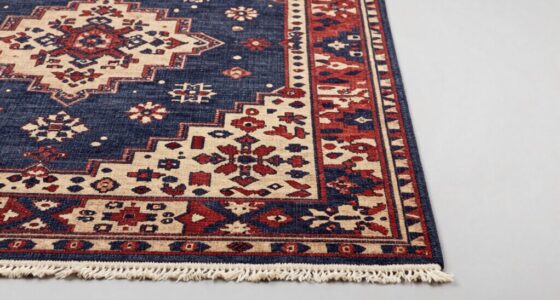
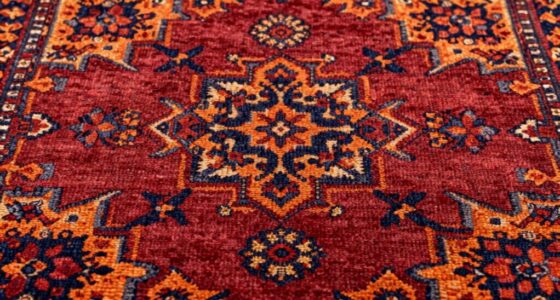
Color contrast is a powerful tool in rug field design. When you opt for a rug with bold, contrasting colors, you create focal points that draw the eye, making the room feel more dynamic and lively. High contrast can also define specific areas, making a space feel more segmented or structured. Conversely, if you choose a rug with subtle or monochromatic tones, the room appears more open and seamless, giving an illusion of greater size. By balancing contrasting shades with softer hues, you can control the room’s visual weight, impacting how spacious or intimate it feels.
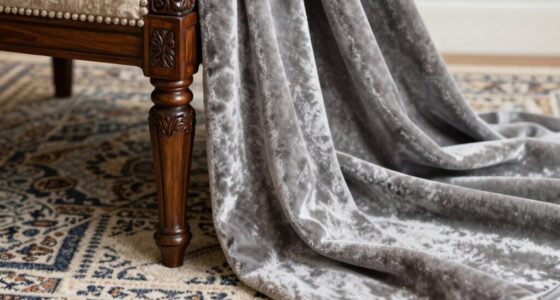
Texture variation adds another layer of influence. When you incorporate rugs with different textures—think plush pile, flatweave, or shag—you introduce tactile interest that affects spatial perception. A rug with a rich, textured surface can anchor a room, making it feel grounded and cozy, especially in smaller spaces. On the other hand, a sleek, smooth texture, especially in larger rooms, can create a sense of openness and airiness, preventing the space from feeling crowded. Mixing textures intentionally can also guide your eye across the room, emphasizing certain zones or features, which influences how you experience the space’s proportions.
The interplay between color contrast and texture variation is key to how large a room feels. A rug with high contrast colors paired with varied textures can make a small room seem more energetic and visually interesting, but it might also feel more confined if overdone. Conversely, a rug with soft colors and uniform texture can make a large room feel more inviting and less overwhelming. You want to balance these elements carefully: bold contrasts and rich textures for smaller spaces to enhance character without overwhelming, and subtle, harmonious designs for larger rooms to foster a sense of expansiveness.
Additionally, understanding the visual perception of space through design elements can help you manipulate a room’s atmosphere more effectively. Ultimately, your choice in rug field design—how you combine color contrast and texture variation—directly impacts how the size and feel of your room are perceived. When you understand and manipulate these elements thoughtfully, you can create a space that feels perfectly balanced, whether you want it to seem bigger, cozier, or more integrated.
Products Worth Considering

Levoit Vital 200S-P Smart Air Purifier for Large Rooms

Philips Hue Large Smart Light Tube, Black – White and Color Ambiance LED Color-Changing Light – 1 Pack

Sonos Era 100 Wireless Smart Speaker, Black
As an affiliate, we earn on qualifying purchases.
Frequently Asked Questions
How Does Rug Placement Influence Perceived Room Height?
You can influence perceived room height through rug placement by choosing rugs with high color contrast against your walls, drawing attention upward. Placing a rug closer to the ceiling or hanging it lower can also create a sense of taller space. Opt for durable materials like wool or nylon to maintain the rug’s appearance, ensuring the visual effect lasts. Proper placement and material choices work together to make your room feel more spacious and elevated.
Can Rug Patterns Alter the Perception of Room Size?
Yes, rug patterns can alter how large a room feels. You can create a sense of spaciousness with rugs that have simple, less complex patterns and subtle color contrasts. Busy, intricate patterns and bold contrasts tend to make a room feel smaller because they draw attention and create visual clutter. Choosing a rug with a more streamlined design helps open up the space, making it seem larger and more airy.
Does Rug Texture Affect the Feeling of Spaciousness?
Yes, rug texture affects how spacious a room feels. Thinner fibers create a sleek, less bulky appearance, making the room seem larger. Conversely, thick or plush textures add warmth but can make a space feel smaller. Additionally, high color contrast in the rug’s fibers can draw attention to specific areas, impacting perceived room size. Opt for low contrast and fine fibers for a more open, airy feel.
Are There Specific Rug Sizes That Maximize Room Openness?
Go big or go home when choosing rug sizes to maximize room openness. Large rugs that cover most of the floor make the space feel bigger by creating a seamless look. Opt for rugs with high color contrast to add depth, and consider durable materials like wool or nylon for longevity. These choices help the room seem more expansive, making a small space feel much larger and inviting.
How Does Lighting Interact With Rug Design to Change Room Perception?
Lighting interacts with rug design by highlighting color contrast and emphasizing textures, which can make a room feel larger or cozier. Bright, natural light showcases vibrant colors and intricate patterns, creating an open feel, while softer lighting emphasizes material durability and subtle tones, making the space more intimate. Your choice of lighting affects how the rug’s color contrast and textures are perceived, ultimately shaping your room’s overall perception and ambiance.
Conclusion
Think of your rug as the heartbeat of your room, setting the rhythm and energy that shape how large it feels. When you choose the right rug field design, you’re not just adding style—you’re painting a canvas that breathes life into the space. Like a compass guiding your journey, it defines boundaries and expands horizons. Embrace the power of your rug, and watch your room transform into a boundless horizon of comfort and personality.