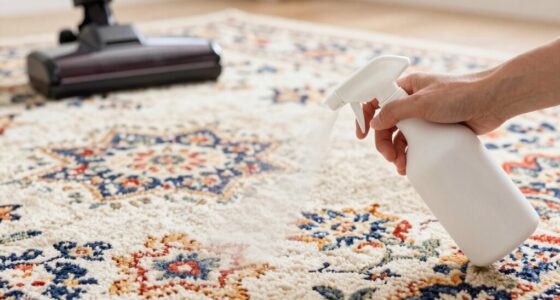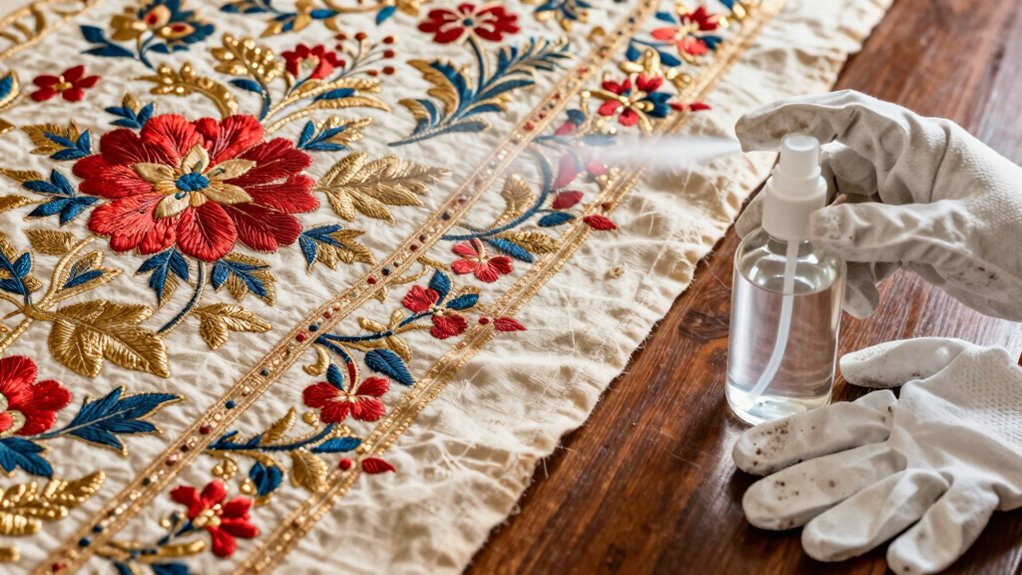
To preserve decorative textiles, you should develop a regular cleaning routine using gentle vacuuming or light dusting with a soft brush attachment. Store them in a clean, dry space with stable humidity and temperature, avoiding direct sunlight and moisture buildup. Handle textiles carefully with clean hands and support them properly during display or storage. Incorporate natural repellents and inspect regularly for pests. Continuing will reveal more essential habits to keep your textiles looking beautiful.

Get furniture and decor delivered free with Prime
- Fast, free delivery on millions of items
- Prime Video, Amazon Music and more included
- Member-only deals all year
Key Takeaways
- Regularly clean textiles with gentle vacuuming or light dusting to prevent dirt buildup and fiber degradation.
- Store textiles in a cool, dry environment with controlled humidity to inhibit mold and pest activity.
- Use airtight containers or breathable fabric bags to protect textiles from pests and environmental damage.
- Keep textiles away from direct sunlight and UV exposure to prevent fading and color deterioration.
- Handle fabrics carefully with clean hands and proper support to avoid stretching, tearing, or distortion.
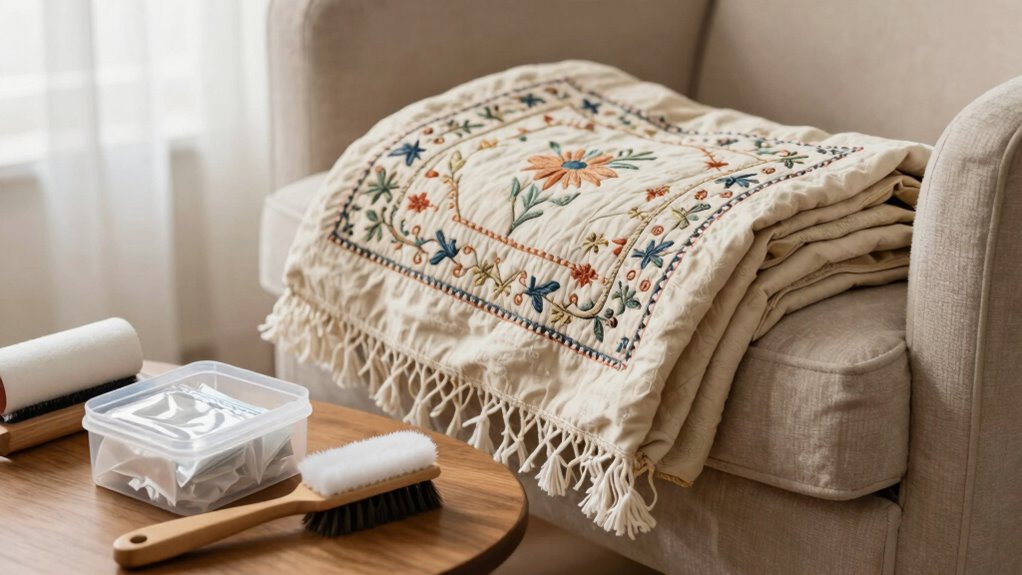
Have you ever wondered how to keep your decorative textiles looking pristine for years to come? The key lies in adopting simple yet effective preventive habits. Regular fabric cleaning is crucial. Instead of waiting until your textiles look dull or dirty, develop a routine of gentle vacuuming or light dusting. Use a soft brush attachment to remove surface dirt and dust that can degrade fibers over time. When necessary, opt for professional cleaning services that specialize in fabric care, ensuring deep cleaning without damaging delicate materials. This proactive approach helps maintain the color, texture, and overall integrity of your textiles.
Another critical aspect is pest control. Pests like moths, beetles, and silverfish love to feast on natural fibers, causing irreversible damage. To prevent infestations, keep your textiles in a clean, dry environment. Regularly inspect stored fabrics for signs of pest activity, such as small holes or larvae. Using airtight storage containers or breathable fabric bags can considerably reduce the risk of pests settling in. Incorporate natural repellents like cedar blocks or lavender sachets, which deter pests without introducing chemicals that could harm your textiles. If you notice even a hint of pest activity, act quickly by cleaning the affected area thoroughly and employing safe pest control methods. Avoid over-massing textiles in cramped spaces, as crowded conditions trap moisture and create an inviting environment for pests. Maintaining proper storage conditions is essential for long-term preservation. Additionally, controlling environmental factors like humidity levels can significantly reduce the risk of mold growth and pest attraction. It’s also helpful to understand how fabric composition influences a textile’s vulnerability to pests and environmental damage. Proper ventilation and air circulation can further prevent the buildup of moisture and reduce pest activity, contributing to a healthier storage environment.
In addition, controlling environmental factors plays a crucial role. Keep humidity levels low, ideally between 40-50%, to prevent mold growth and pest attraction. Maintain a consistent temperature, avoiding extremes that can weaken fibers or cause fading. Direct sunlight can also fade colors, so position your textiles away from direct exposure or use UV-protective window treatments. Moreover, environmental control can significantly extend the lifespan of your textiles by reducing the factors that lead to deterioration. Regularly monitoring and adjusting these conditions helps ensure your textiles remain in optimal condition over time.
Finally, handling your textiles with care prevents unnecessary damage. Always wash your hands before touching delicate fabrics, and avoid pulling or tugging when moving or adjusting them. When storing or displaying, support the textiles properly to prevent stretching or distortion. Implementing these habits consistently ensures your decorative textiles remain vibrant and intact for years to come. With a focus on fabric cleaning, pest control, and environmental management, you’ll create an environment where your cherished textiles are protected and preserved, allowing their beauty to shine through for generations.
Products Worth Considering

Shark Rocket Pet Plus Corded Stick Vacuum, Bordeaux, HV322

Dyson Ball Animal 2 Plus Corded Vacuum

Sonos Era 100 SL Compact Microphone-Free Speaker, Black
As an affiliate, we earn on qualifying purchases.
Frequently Asked Questions
How Often Should I Clean Decorative Textiles to Prevent Damage?
You should clean decorative textiles regularly to prevent damage, typically every 6 to 12 months, depending on use and exposure. Regular cleaning maintains textile maintenance and removes dust, dirt, and allergens that can weaken fibers over time. For high-traffic areas or items prone to stains, more frequent cleaning is advisable. Always follow manufacturer instructions for specific care, and consider professional cleaning for delicate or valuable textiles to guarantee their preservation.
Are There Specific Storage Materials Best for Preserving Textiles?
You should store textiles in acid-free materials to prevent deterioration. Use sturdy, acid-free storage containers or boxes to protect against dust, light, and pests. Avoid plastic bags that can trap moisture; instead, opt for breathable, acid-free tissue paper for wrapping delicate items. Proper storage materials help maintain the fabric’s integrity over time, ensuring your decorative textiles stay vibrant and undamaged for years to come.
Can Sunlight Exposure Permanently Fade Decorative Textiles?
Sunlight fading can cause permanent damage to decorative textiles, reducing their vibrancy over time. While some fading might seem reversible, the truth is that prolonged exposure weakens fibers and pigment stability, impacting textile longevity. You should limit direct sunlight, use UV-protective coverings, or display textiles in shaded areas. By taking these precautions, you preserve their beauty and extend their lifespan, ensuring your textiles remain stunning for years to come.
What Are Safe Cleaning Products for Delicate Textiles?
You should opt for safe cleaning products like gentle, chemical alternatives and eco-friendly solutions to care for delicate textiles. Avoid harsh chemicals that can weaken fibers or cause discoloration. Instead, choose mild detergents, natural soap, or specialized cleaners designed specifically for delicate fabrics. These options help preserve the textile’s appearance and integrity over time, ensuring your decorative pieces stay beautiful and well-maintained without risking damage.
How Do I Identify Early Signs of Textile Deterioration?
If you notice fraying or discoloration on your textile, you’re likely seeing early signs of fiber degradation. For example, a vintage quilt with thinning areas and tiny holes might indicate pest infestation or deterioration over time. Regularly inspect for brittleness, fading, or mold, and check for pest droppings or webbing. Catching these signs early helps prevent further damage, ensuring your textile remains beautiful and intact.
Conclusion
By blending best practices, you’ll bolster your textiles’ beauty and bolster their lifespan. Be vigilant with vacuuming, vigilant with ventilation, and vigilant with vigilant handling. Consistent care creates a lasting legacy, keeping your decorative textiles dazzling for decades. Remember, regular routines reinforce resilience, ensuring your cherished pieces stay stunning and sound. So, stay savvy, stay sharp, and safeguard your textiles with simple, smart habits that make a significant difference!