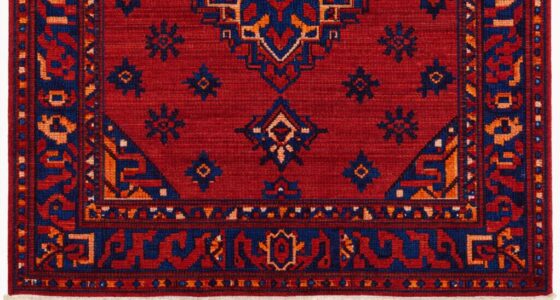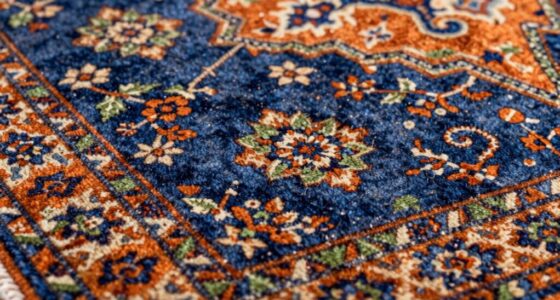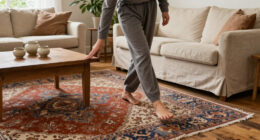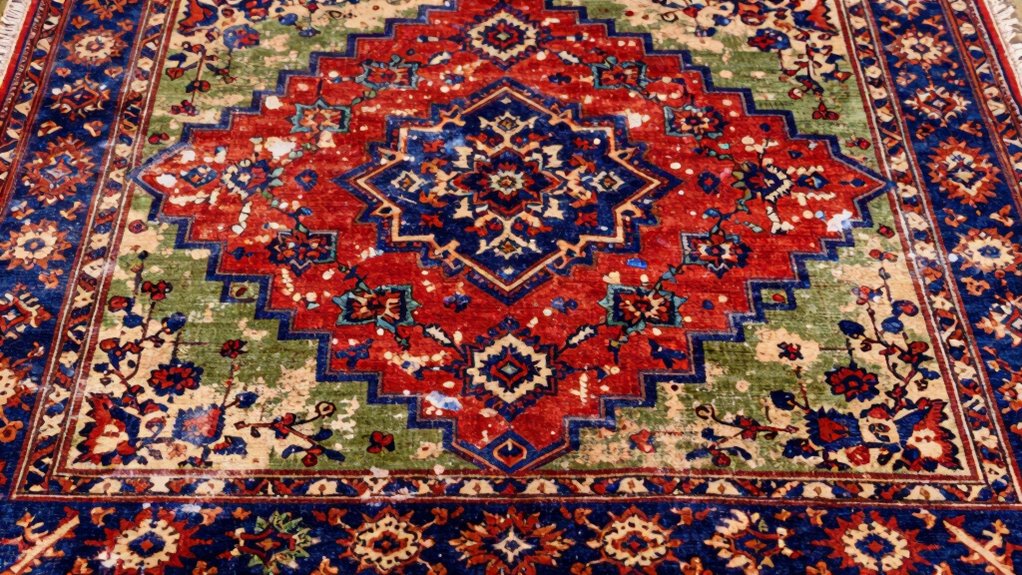
Dye saturation in historic rugs markedly influences their mood and how you perceive their ambiance. Vibrant, deeply saturated colors evoke feelings of power, energy, and warmth, making the rug a bold statement piece. Lighter, muted tones foster calmness and nostalgia, creating a cozy, serene environment. By understanding how dye saturation affects these emotional tones, you can better appreciate the mood each rug sets. If you want to explore how these details shape the atmosphere further, keep exploring.

Get furniture and decor delivered free with Prime
- Fast, free delivery on millions of items
- Prime Video, Amazon Music and more included
- Member-only deals all year
Key Takeaways
- High dye saturation in historic rugs creates bold, vibrant moods that evoke energy and confidence.
- Low saturation produces softer, muted tones, fostering a sense of nostalgia and tranquility.
- The intensity of color influences emotional responses, from excitement to calmness.
- Saturation levels help distinguish periods or regions, impacting historical and aesthetic perception.
- Proper dye saturation enhances the rug’s visual appeal and contributes to the room’s overall ambiance.

Dye saturation plays a essential role in setting the mood of a rug, influencing how a space feels and how you perceive it. When the colors are rich and deeply saturated, they create a bold statement that commands attention. High dye saturation enhances color intensity, making hues more vivid and striking. This heightened vibrancy can evoke strong emotions, such as excitement or warmth, transforming a room into a lively, energetic space. Conversely, rugs with lower dye saturation often feature softer, more muted tones, which lend a calm, understated elegance. These subdued colors tend to produce a tranquil, soothing environment, ideal for spaces meant for relaxation or contemplation.
Dye saturation influences mood, with rich colors creating energy and muted tones fostering calm and elegance.
The emotional impact of a rug hinges considerably on its dye saturation. Bright, intensely colored rugs draw immediate focus, setting a lively or passionate tone that energizes the room. For example, a deep red or royal blue with high dye saturation can evoke feelings of power, confidence, or warmth. These bold colors can uplift the mood, making a space feel more inviting and vibrant. On the other hand, a rug with less saturated colors—think pastel or earth tones—can create a sense of serenity and balance. Such subtle shades often evoke nostalgia or comfort, making the space feel cozy and welcoming. Additionally, understanding how dye saturation affects perception can help in harmonizing a room’s overall design.
Color intensity is a key element in how dye saturation influences the overall atmosphere. When colors are highly intense, they amplify the emotional impact, making the rug a focal point. This can be especially effective in rooms where you want to make a statement or add a burst of energy. In contrast, softer, less saturated colors tend to blend more seamlessly into the background, fostering a harmonious and restful environment. The choice between high and low dye saturation depends on the mood you want to cultivate and the feelings you aim to evoke in your space.
Ultimately, understanding how dye saturation affects the emotional impact of a rug helps you select pieces that align with your desired ambiance. Whether you’re after a vibrant, lively statement or a peaceful retreat, the depth of color saturation guides the mood you create. By paying attention to color saturation, you can influence how people feel in the space and how they interact with your decor. The right balance of dye saturation ensures your rug enhances the room’s atmosphere, making it both visually compelling and emotionally resonant.
Products Worth Considering

Philips Hue Large Smart Light Tube, Black – White and Color Ambiance LED Color-Changing Light – 1 Pack

Philips Hue Bridge Pro Smart Lighting Hub

Levoit Vital 200S-P Smart Air Purifier for Large Rooms
As an affiliate, we earn on qualifying purchases.
Frequently Asked Questions
How Does Dye Saturation Influence the Durability of Historic Rugs?
Dye saturation impacts the durability of historic rugs by making colors more prone to fading over time, especially with exposure to light and cleaning. Higher saturation can weaken fibers, increasing their sensitivity to damage. If you notice intense colors, be mindful of UV exposure and handling, as these factors can accelerate color fading and fiber deterioration, ultimately reducing the rug’s lifespan and preserving its vibrant appearance for longer.
Can Dye Saturation Levels Be Restored in Faded Antique Rugs?
Yes, dye saturation levels can often be restored in faded antique rugs through professional dye restoration techniques. You can achieve color revival by carefully reapplying dyes that match the original hues, enhancing the rug’s vibrancy without damaging its integrity. Skilled restoration preserves the rug’s historic charm while improving its appearance. Keep in mind, consulting an expert guarantees the process maintains authenticity and prevents further fading or damage.
What Are the Environmental Factors Affecting Dye Saturation Over Time?
Have you ever wondered what causes dyes to fade in your cherished antique rug? Environmental pollution introduces harmful chemicals that break down dye molecules, while prolonged light exposure, especially sunlight, accelerates fading. These factors diminish dye saturation over time, dulling the rug’s vibrant mood. You can protect your rug by limiting direct sunlight and minimizing exposure to pollutants, helping preserve its rich colors and historic charm.
Does Dye Saturation Impact the Cultural Value of Historic Rugs?
Yes, dye saturation impacts the cultural value of historic rugs by influencing their perceived authenticity and artistic expression. When colors are vibrant or faded, it reflects traditional techniques and the cultural significance of the region. You can see how rich, well-preserved dyes showcase craftsmanship, enhancing the rug’s historical importance. Conversely, faded or uneven saturation might diminish its perceived value, but still tell a story of age and cultural heritage.
How Do Different Dyeing Techniques Affect Saturation and Mood?
Imagine walking into a room where vibrant reds and deep blues glow with natural dyes, their color intensity rich and inviting. Different dyeing techniques, like mordanting or layering, influence saturation levels and mood dramatically. Natural dyes often produce softer, more nuanced shades, creating a calming atmosphere. Conversely, dip-dyeing or resist methods yield bold, intense hues that energize a space, shaping the overall emotional impact of historic rugs.
Conclusion
Imagine walking into a room where a historic rug’s vibrant colors seem to whisper stories of the past. When dye saturation is just right, it’s like hearing a song at the perfect volume—everything feels alive and balanced. Too bold, and it’s overwhelming; too faded, and it loses its soul. By understanding dye saturation, you’re not just preserving a rug—you’re keeping the mood and history alive, like a treasured memory woven into every fiber.