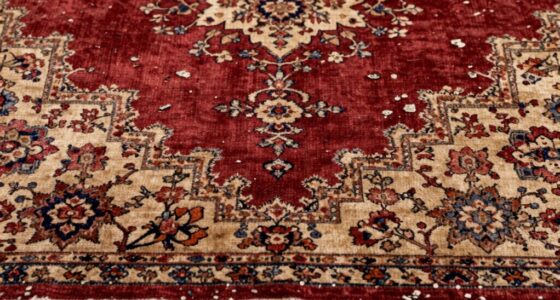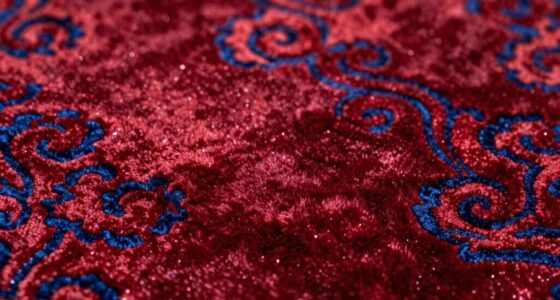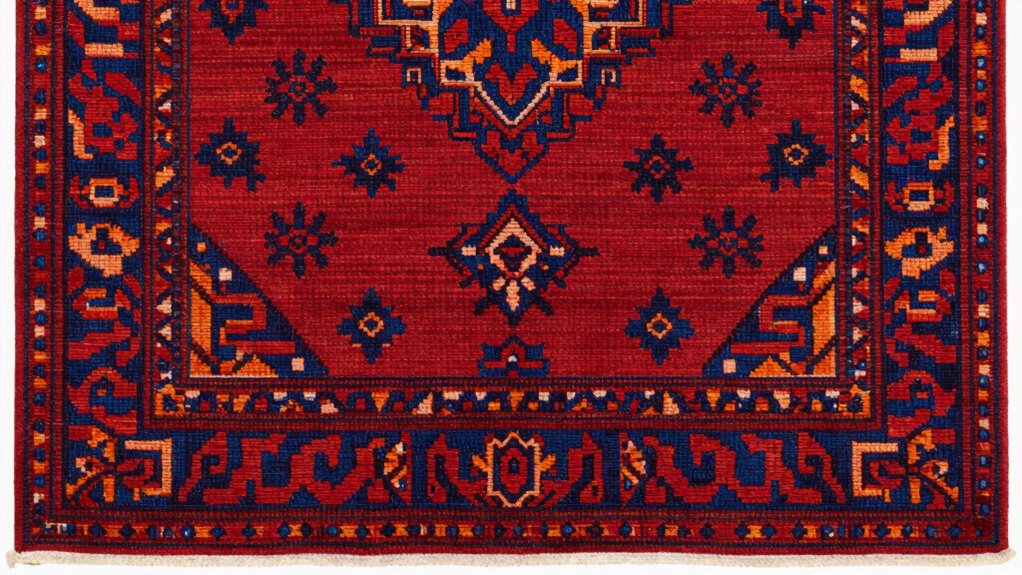
To spot a machine-made rug at a glance, look for uniform patterns and even edges, which are signs of automated production. Check the backing; machine-made rugs typically have a consistent, grid-like pattern, while handcrafted ones are irregular. Fringes are often sewn or glued on separately rather than being an extension of the warp threads. If you notice perfect symmetry and repetitive designs, you’re likely looking at a machine-made piece—keep exploring to learn more tips.

Get furniture and decor delivered free with Prime
- Fast, free delivery on millions of items
- Prime Video, Amazon Music and more included
- Member-only deals all year
Key Takeaways
- Examine the backing; machine-made rugs have a uniform, grid-like pattern, unlike the irregular backing of handmade rugs.
- Check the fringe; machine-made fringes are often sewn on or glued, while handmade fringes are an extension of warp threads.
- Look for pattern consistency; machine-made rugs display perfect, repetitive patterns with precise edges.
- Feel the fibers; synthetic fibers felt stiffer and less natural compared to the softer, varied textures of natural fibers.
- Observe imperfections; machine-made rugs are highly uniform, whereas slight irregularities suggest handcrafted origin.
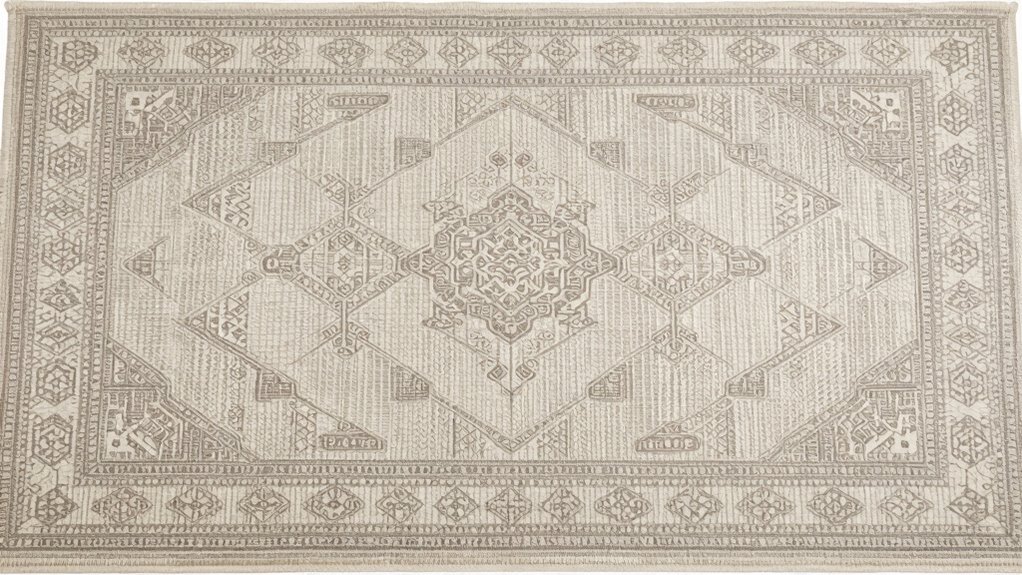
Ever wondered how to tell if a rug is machine-made or handcrafted? It’s a common question, especially when you’re shopping for quality or trying to understand the value of a piece. One of the first clues lies in examining the rug’s construction. Hand knotting techniques are a hallmark of handcrafted rugs. These techniques involve tying individual knots onto the warp threads, creating a dense, intricate pile. If you look closely at the back of the rug, you’ll see a pattern of knots that often appears irregular or uneven, reflecting the artisan’s personal touch. Machine-made rugs, on the other hand, usually have a uniform, grid-like backing because they’re produced with automated processes, such as power looms, that replicate patterns quickly and consistently. Additionally, the rug’s backing pattern can often reveal whether it’s handmade or machine-made, as handmade rugs tend to have a more complex and less perfect pattern on the reverse side. Another key indicator is the natural fiber differences. Handcrafted rugs tend to use natural fibers like wool, silk, or cotton, which give them a distinctive texture and appearance. Wool rugs, for instance, often have a softer, more plush feel, while silk rugs are smooth and shiny. In contrast, machine-made rugs may incorporate synthetic fibers like polyester or polypropylene, which are less expensive and easier to produce in large quantities. These fibers tend to feel stiffer and may lack the subtle variations you see in natural fibers. Performing a fiber burn test can be a simple way to differentiate fibers, as natural fibers tend to burn slowly and produce a smell similar to burning hair or paper, whereas synthetic fibers melt quickly and give off a chemical odor. Additionally, the overall look and finish of the rug can also reveal its origins. Hand knotted rugs usually have slight imperfections or asymmetries, which add to their character and authenticity. Machine-made rugs are more precise, with perfectly uniform patterns and edges. The fringe can be another giveaway: in handcrafted rugs, the fringe is typically an extension of the warp threads, woven directly into the rug. In machine-made rugs, the fringe is often sewn on separately, or it may be a flat braid that’s glued or stitched in place. Recognizing these features can help you quickly distinguish between handmade and machine-made rugs for better purchasing decisions. Being familiar with these details can also help identify the quality and authenticity of a rug at a glance.
machine-made rug detection tools
As an affiliate, we earn on qualifying purchases.
As an affiliate, we earn on qualifying purchases.
Frequently Asked Questions
Are Machine-Made Rugs More Affordable Than Hand-Made Ones?
Yes, machine-made rugs are generally more affordable than hand-made ones. This price difference stems from manufacturing processes; machines produce rugs faster and with less labor, reducing costs. In a price comparison, you’ll notice machine-made rugs offer a budget-friendly option without sacrificing style, making them a popular choice for many. However, hand-made rugs tend to be more expensive due to intricate craftsmanship and time-intensive techniques.
Can Machine-Made Rugs Have Unique or Intricate Designs?
You might be surprised, but machine-made rugs can feature stunning, intricate designs. Thanks to advanced technology, they can mimic the complexity of hand-woven patterns, offering a vast variety of designs. Pattern variety is impressive, and some machine-made rugs even boast unique, detailed motifs that seem handcrafted. So, don’t assume simplicity—these rugs can be just as elaborate, proving that design complexity isn’t exclusive to handmade pieces.
How Durable Are Machine-Made Rugs Compared to Handmade Rugs?
Machine-made rugs tend to be highly durable, often more so than handmade rugs, thanks to their textile composition and manufacturing techniques. You’ll find that the synthetic fibers or blended materials used in machine-made rugs resist wear and stain better. Their manufacturing process guarantees consistent quality and tight weaving, making them suitable for high-traffic areas. While they may lack the unique charm of handmade pieces, their durability makes them a practical choice for busy households.
Do All Machine-Made Rugs Use Synthetic Materials?
Not all machine-made rugs use synthetic materials, but many do, thanks to their unbeatable durability and cost-effectiveness. You’ll find synthetic fibers like nylon, polyester, and polypropylene dominating these rugs, offering incredible design versatility. These materials allow for vibrant colors and intricate patterns, making your space pop without breaking the bank. So, while some machine-made rugs use natural fibers, synthetic options are the most common and versatile choice for modern decor.
Can Machine-Made Rugs Be Customized or Altered Easily?
Yes, you can customize or alter machine-made rugs, but it’s generally easier with manual customization and alteration techniques. You might add borders, change colors, or even cut sections if needed. However, since these rugs are produced with precision machinery, some alterations may affect their appearance or structure. For best results, consult a professional who specializes in manual customization and alteration techniques to guarantee the rug maintains its quality.
Conclusion
By paying attention to the details, examining the back, feeling the texture, and observing the pattern, you can easily distinguish machine-made rugs from handmade ones. Recognize the signs, trust your intuition, and develop your eye for craftsmanship. Spot the differences, understand the clues, and make confident choices. With practice, identifying machine-made rugs becomes second nature. So, stay curious, stay observant, and let your knowledge guide you in every rug you encounter.
Halloween Picks
halloween
As an affiliate, we earn on qualifying purchases.