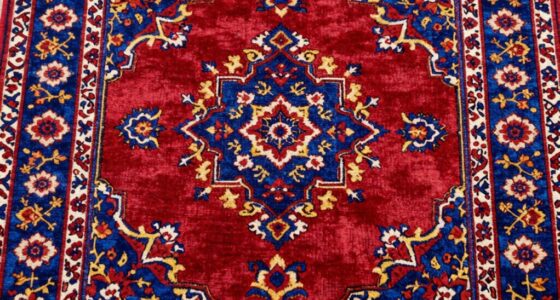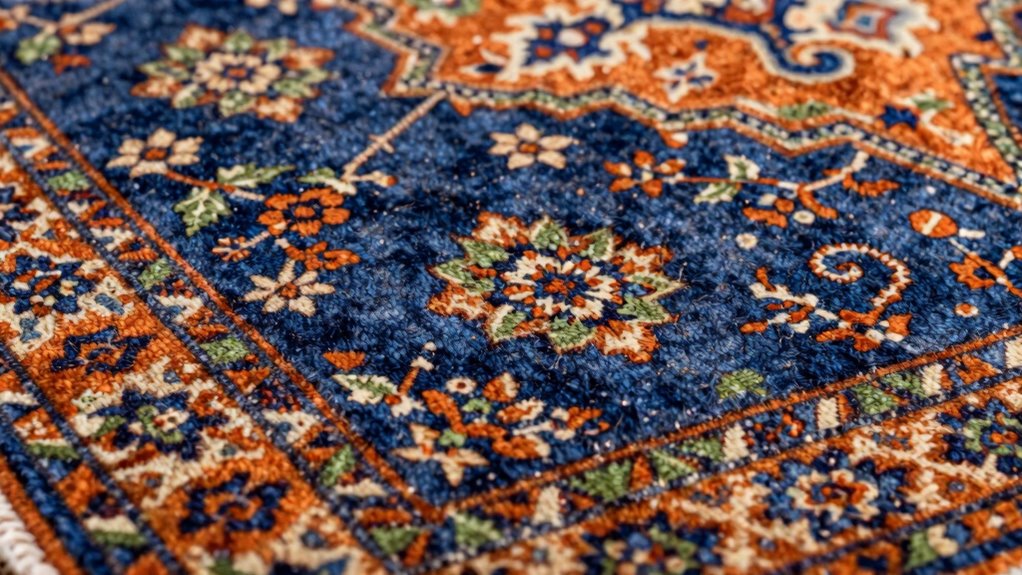
To assess color balance in antique and vintage rugs, pay close attention to hue variations and how colors blend harmoniously. Look for subtle gradations and tonal shifts, which indicate natural dyeing and authentic aging. Uneven fading or overly vibrant areas might suggest artificial enhancement or recent dyeing. Notice how colors interact across the design, revealing craftsmanship and condition. If you keep exploring, you’ll discover more tips to understand the story behind every hue and pattern.

Get furniture and decor delivered free with Prime
- Fast, free delivery on millions of items
- Prime Video, Amazon Music and more included
- Member-only deals all year
Key Takeaways
- Examine the overall harmony and distribution of colors to assess authenticity and age.
- Look for subtle gradations and tonal variations indicative of natural dyeing techniques.
- Identify uneven color saturation or fading patterns that suggest genuine aging.
- Detect unnatural vibrancy or uniformity that may point to synthetic dyes or artificial enhancement.
- Observe color shifts or discrepancies in restored areas to understand restoration history and condition.
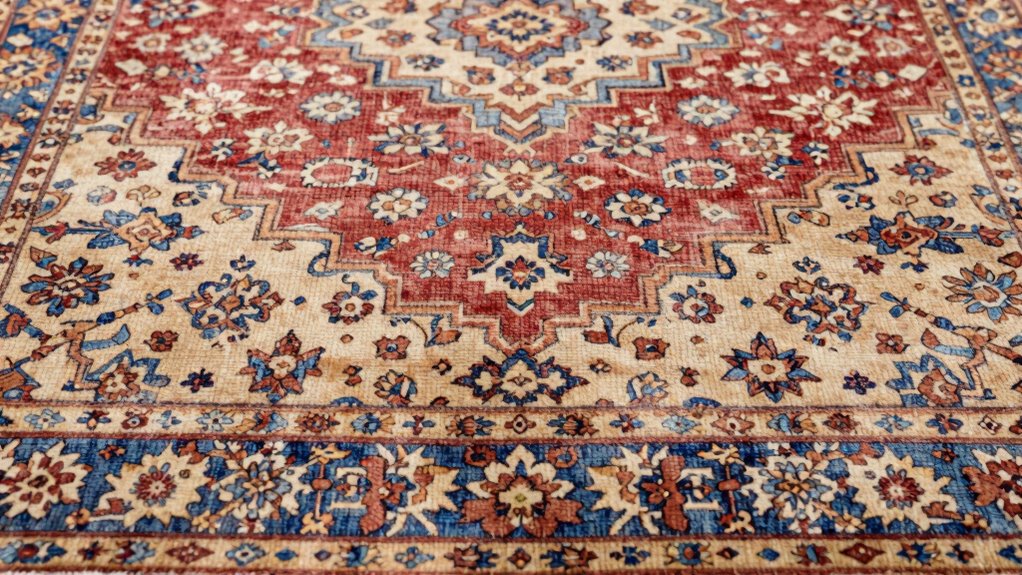
Understanding color balance in antique and vintage rugs can notably enhance your appreciation and ability to evaluate their authenticity and condition. When examining a rug’s color palette, you’re looking at more than just aesthetic appeal; you’re uncovering stories about its origins, craftsmanship, and history. One key aspect to shift is how the dyeing techniques used influence the rug’s overall color harmony. Traditionally, natural dyes derived from plants, insects, and minerals created subtle, nuanced hues that age beautifully over time. These dyes often produce uneven color saturation, which can be a sign of authentic craftsmanship. Conversely, synthetic dyes tend to produce more uniform and vibrant colors, sometimes signaling a more recent or mass-produced piece. Recognizing these differences helps you determine whether a rug is genuinely antique or vintage, or if it has been artificially colored or restored.
The impact of restoration is another critical factor when analyzing color balance. Many antique rugs have undergone repair or restoration to preserve their beauty and value. Restorers often attempt to match the original dye colors, but subtle discrepancies can reveal a restoration attempt. For example, areas with slightly different hues or unnatural color shift may indicate patched or re-dyed sections. Being attentive to these nuances allows you to assess the rug’s condition accurately and decide how much restoration has influenced its appearance. This insight is especially when considering purchase options or appraisals, as restoration can both preserve and alter the original color balance. Additionally, understanding dyeing techniques offers insight into the cultural and historical context of the rug’s creation. A deeper knowledge of restoration impact can help distinguish between genuine aging and artificial interventions, which is essential for accurate appraisal. Furthermore, familiarity with color fading patterns can assist in assessing how a rug may have been exposed to environmental factors over time.
As you examine the rug, pay close attention to the harmony of the colors. A well-balanced rug typically exhibits a cohesive color scheme, with hues complementing each other rather than clashing or appearing overly bright. Look for natural gradations and tonal variations that suggest the use of traditional dyeing techniques. If certain areas seem unnaturally faded or excessively vibrant compared to the rest, it could indicate uneven dye application or recent dyeing efforts. These clues help you piece together the rug’s history—whether it’s a genuine antique shaped by time or a vintage piece that has been artificially enhanced. Recognizing color harmony is crucial for appreciating the aesthetic qualities and authenticity of the piece.
Ultimately, understanding the interplay between dyeing techniques and restoration impact empowers you to read a rug’s color balance more accurately. This knowledge not only enriches your appreciation but also becomes a valuable tool in evaluating the rug’s authenticity and condition. When you become skilled at noticing these subtle details, you gain a deeper connection to each piece’s story, making your collection or purchase all the more meaningful.
antique rug color analysis tools
As an affiliate, we earn on qualifying purchases.
As an affiliate, we earn on qualifying purchases.
Frequently Asked Questions
How Does Lighting Affect the Perception of Rug Colors?
Lighting profoundly influences how you perceive rug colors. Natural light reveals true hues, making colors appear vibrant and authentic. In contrast, artificial lighting can distort colors, sometimes making them look warmer or cooler than they are. When examining a rug, view it under different lighting conditions, especially natural light, to get the most accurate sense of its color balance. This helps you appreciate the rug’s true beauty and craftsmanship.
What Are Common Signs of Dye Fading in Antique Rugs?
Ever wonder if your antique rug’s charm is fading? Common signs of dye fading include uneven color patches, a dull or washed-out appearance, and loss of vibrancy in natural dyes. You might notice areas that seem lighter or less saturated than others. Natural dyes tend to fade gracefully over time, but excessive fading indicates that the rug’s original vibrancy is diminishing. Keep an eye out to preserve its beauty!
How Can I Identify Original Colors Versus Repairs?
To identify original colors versus repairs, look for inconsistencies in dye stability and color tone. Original antique rugs often have subtle, uneven color variations due to natural dyes and age, while repairs might show fresher, more uniform hues. Color restoration attempts can alter the original look, so examine areas with abrupt color changes or unnatural shades. Use a magnifier and UV light to detect differences, helping you distinguish authentic colors from repairs.
Are Certain Colors More Valuable in Vintage Rugs?
Certain colors in vintage rugs can skyrocket their value, especially if they hold deep color symbolism or are created with rare dyeing techniques. Rich reds, vibrant indigos, and golden yellows often command higher prices because they reflect sophisticated craftsmanship. You should look for authentic, vivid hues that showcase traditional dyeing methods. These colors tell stories and symbolize powerful meanings, making your rug not just beautiful, but a valuable cultural treasure.
How Do Different Weaving Techniques Influence Color Appearance?
Different weaving techniques considerably influence how colors appear in vintage rugs. When you use natural dyes, the weaving patterns can affect color vibrancy and depth. For example, tight weaves may make colors look more saturated, while looser patterns can create a softer, more muted effect. Variations in dye application and weaving methods also impact how colors blend and age over time, giving each rug its unique character.
Conclusion
By understanding color balance, you connect more deeply with each rug’s history, its craftsmanship, and its story. You see the subtle shifts, the layers of meaning, and the artistry behind every hue. You appreciate the harmony, the contrast, and the emotion woven into every thread. Embrace this knowledge, trust your eye, and let each rug’s colors reveal their hidden language. In doing so, you’ll find yourself more enchanted, more inspired, and more connected to timeless beauty.
Halloween Picks
halloween
As an affiliate, we earn on qualifying purchases.