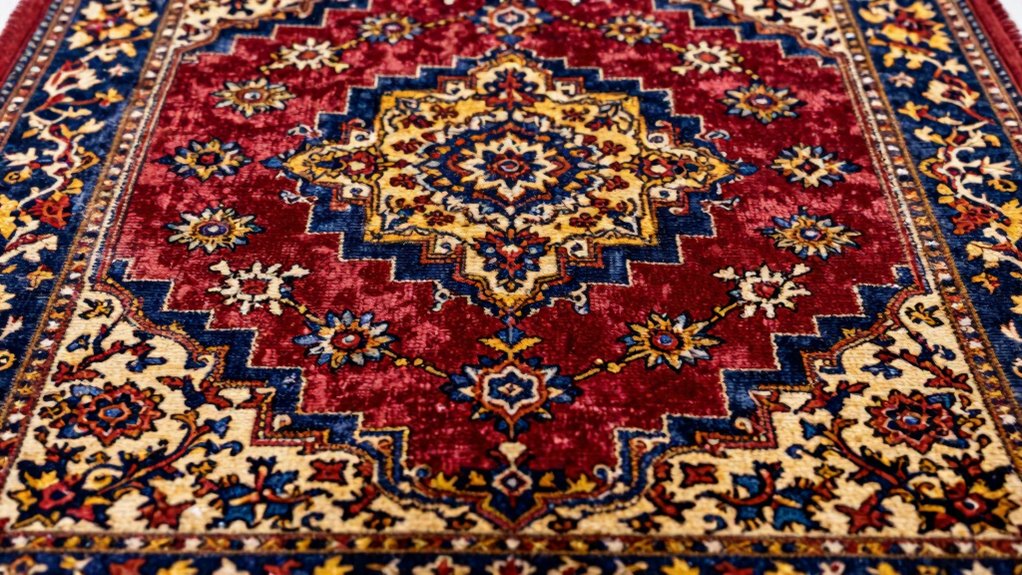

When you look at a fine rug listing, you first notice its colors, pattern details, and overall craftsmanship. Bright, vibrant hues or muted, natural tones catch your eye and suggest whether the rug is modern or antique. You also observe the design and any irregularities, which reveal if it’s handmade or machine-produced. These initial impressions can tell you a lot about the rug’s authenticity and value, and there’s much more to understand if you keep exploring further.

Get furniture and decor delivered free — and shop member deals
- Fast, free delivery on millions of items
- Access to Prime Big Deal Days deals on October 6–7
- Prime Video, Amazon Music and more included
Key Takeaways
- The overall visual impression, including color vibrancy and motif style, indicating authenticity and age.
- The quality and consistency of dye colors, suggesting natural or synthetic dyes.
- Pattern symmetry and irregularities, revealing whether the rug is handmade or machine-made.
- Traditional design elements and cultural motifs, pointing to historical significance.
- Signs of craftsmanship, such as slight imperfections and dye application, confirming hand-weaving techniques.

When it comes to evaluating fine rugs, collectors often notice the details that speak to the piece’s authenticity and quality first. One of the first things you’ll observe is the rug’s color patterns. These patterns aren’t just about aesthetics; they reveal a lot about the rug’s origin, age, and craftsmanship. Traditional antique rugs typically feature rich, muted hues created with natural dyes, giving them a warm, aged appearance. Modern rugs, on the other hand, often showcase brighter, more vibrant colors achieved through synthetic dyes, which can make their patterns stand out more sharply. You’ll want to consider how these colors interact with the design—whether they blend seamlessly or look deliberately bold. The way the colors are applied, their consistency, and their fading over time can all hint at whether a rug is genuine antique or a contemporary piece. Recognizing natural dyes is a key indicator of authenticity in antique rugs. Additionally, the subtle variations in dye color can further attest to their handmade, traditional origins, since slight inconsistencies are typical of hand-dyeing techniques. These variations often reflect the craftsmanship and traditional methods used by artisans, setting authentic pieces apart from imitations.
Traditional antique rugs feature muted, natural dyes and intricate designs, while modern pieces often display vibrant synthetic colors and bold patterns.
As you examine the rug’s design, you’ll also notice the distinction between antique and modern styles. Antique rugs often display intricate, traditional motifs passed down through generations—think floral patterns, medallions, or geometric borders that reflect cultural symbolism. These designs tend to have a sense of age and history, with some irregularities or slight imperfections that testify to hand-weaving techniques used long ago. Modern designs, however, tend to be more experimental, featuring abstract patterns, bold shapes, or minimalist aesthetics. They might lack the detailed craftsmanship of antique pieces but make up for it with contemporary flair.
You should also pay attention to the overall symmetry and precision in the pattern. Antique rugs, especially those handmade, often show slight asymmetries or irregularities, which are signs of craftsmanship rather than flaws. Modern machine-made rugs typically exhibit perfect symmetry, which can sometimes lessen their perceived authenticity. The difference in design and color patterns helps you distinguish whether a rug is a genuine antique or a modern reproduction. Recognizing these design elements can significantly influence your assessment of a rug’s authenticity.
Lastly, your initial impression of the rug’s color and pattern will guide your deeper inspection. When you see the natural, subdued hues and traditional motifs, you’ll instinctively sense the rug’s age and origin. Conversely, bright colors and innovative designs signal a more recent creation. Recognizing these elements quickly helps you assess quality and authenticity, making your evaluation process more confident and efficient.
As an affiliate, we earn on qualifying purchases.
Frequently Asked Questions
How Do I Verify a Rug’s Authenticity Before Purchasing?
To verify a rug’s authenticity, start by examining its weaving technique; genuine rugs often have tight, consistent knotting. Check the dye identification—natural dyes usually fade gracefully, unlike synthetic ones. Look closely at the patterns and craftsmanship, which reflect traditional styles. Research the rug’s origin and compare it with reputable sources or experts. Authenticity hinges on these details, so take your time to scrutinize the weaving and dyes carefully before making a purchase.
What Is the Typical Price Range for Rare Fine Rugs?
Rare fine rugs typically range from several thousand to hundreds of thousands of dollars. You’ll notice that vivid rug colors and intricate design patterns elevate their value markedly. While bold, unique color combinations attract attention, detailed motifs and craftsmanship showcase rarity. Remember, the more distinctive and well-preserved a rug’s color and pattern, the higher its price. So, focus on these features when considering investment or collection.
How Does Age Affect a Rug’s Value and Appeal?
Age considerably impacts a rug’s value and appeal, especially as vintage patterns become more sought after. You notice that older rugs often feature unique craftsmanship and material authenticity, making them more desirable. As a rug ages, its history and patina add character, boosting its appeal. However, you also assess the condition carefully, since wear can affect value. Ultimately, a well-preserved antique with authentic materials and vintage patterns stands out to collectors.
What Are Common Signs of a Restored or Repaired Rug?
About 40% of vintage rugs show signs of restoration, so spotting repair indicators is essential. Look for uneven stitching, color inconsistencies, or areas with different pile heights, which signal restoration signs. You might also notice new knots or patches that stand out from the original design. These repair indicators help you determine a rug’s true condition and value, ensuring you make an informed, confident purchase.
How Important Is Provenance in Fine-Rug Collecting?
Provenance is essential in fine-rug collecting because it adds historical significance and enhances the rug’s cultural context. When you know a rug’s origin or previous ownership, it boosts its authenticity and value. You’ll find that collectors prize pieces with a clear provenance, as it tells a story and connects you to a specific tradition or era. This background can greatly influence your appreciation and the rug’s overall worth.
Conclusion
When you’re evaluating a fine rug, what catches your eye first—its intricate patterns, vibrant colors, or flawless craftsmanship? You notice the details that tell its story, the qualities that set it apart, and the craftsmanship that speaks volumes. You look for authenticity, value, and beauty. You seek the story behind the rug, the quality within the weave, and the passion in every detail. Ultimately, you notice what makes it uniquely yours.
Halloween Picks
halloween
As an affiliate, we earn on qualifying purchases.