
To judge rug color from online photos more realistically, pay attention to lighting conditions—photos in natural or neutral light are more accurate. Adjust your device’s brightness and contrast to better see true hues, and compare images across different screens. Look for close-up shots and photos that showcase the rug in various lighting to gauge true color. Check for seller descriptions about color calibration, and explore reviews for real-life perspectives. If you want to master these tips, keep exploring further.
Key Takeaways
- Compare multiple images taken under natural or neutral lighting for consistent color representation.
- Adjust your device’s brightness and contrast settings to see colors more accurately.
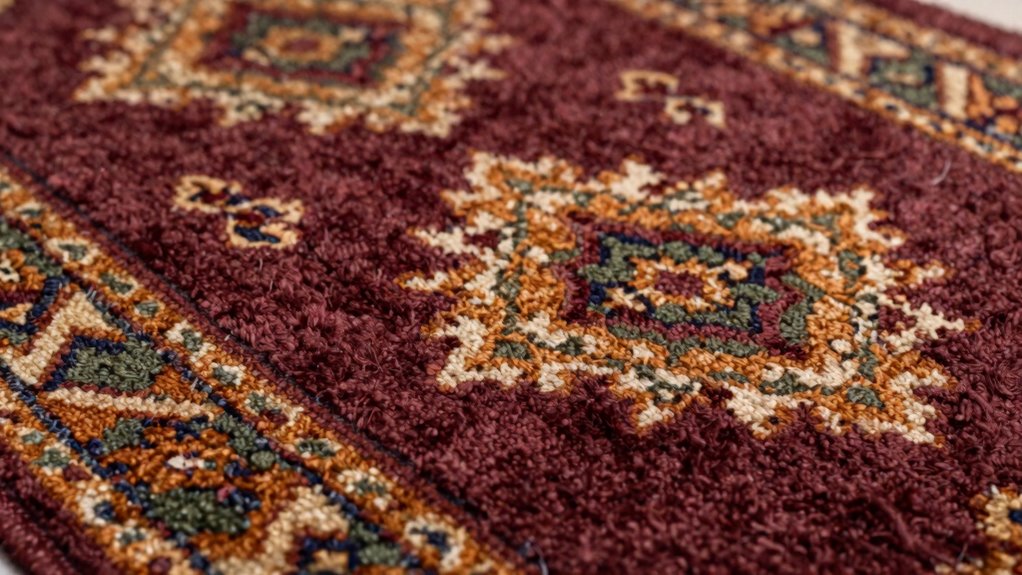
- Focus on close-up shots that reveal fiber and dye details for better color assessment.
- Read reviews or ask sellers about the actual rug color to confirm online photos.
- Be aware of lighting conditions in photos—yellowish tones indicate warm lighting, bluish tones suggest cool or fluorescent lighting.
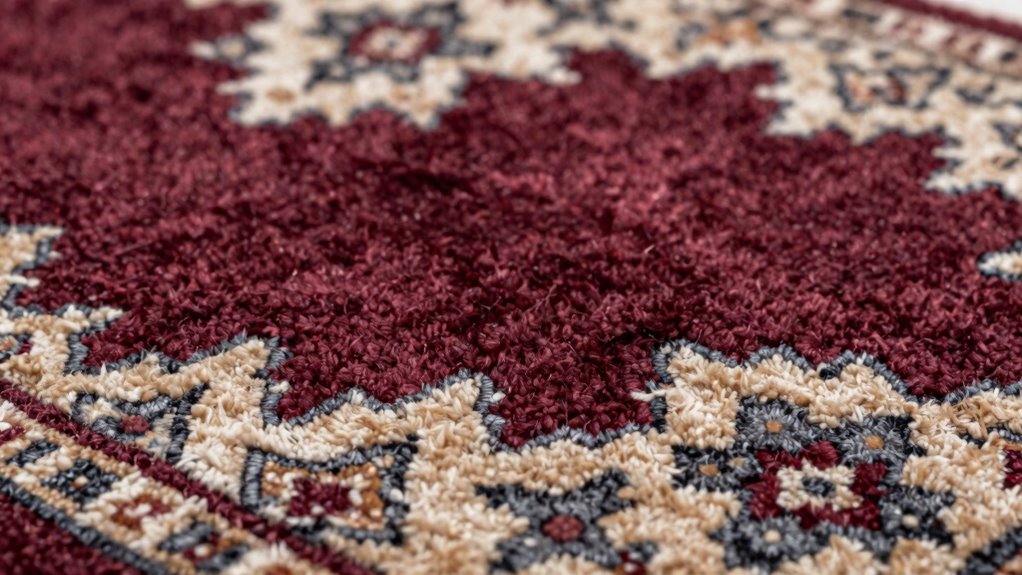
When shopping for a rug online, accurately judging its color from photos can be challenging but is essential for making a confident purchase. The key to getting a true sense of the rug’s color lies in understanding how digital images can distort or misrepresent actual hues. To improve your judgment, pay close attention to color calibration. Many websites don’t update or standardize their images for color accuracy, so what you see might not reflect the real color. Look for product descriptions that mention color calibration or ask sellers about how their photos are adjusted. If possible, compare multiple images of the same rug across different platforms—this can help you identify consistent color patterns and avoid misleading photos.
Lighting conditions play a significant role in how a rug appears online. Photos taken under bright, natural light tend to be more accurate, whereas those shot in artificial or uneven lighting can cast unnatural hues or shadows. When viewing images, consider the lighting setup—if the photo has a yellowish tint, it might be taken under incandescent lighting; a bluish tint could result from fluorescent lights. Some sellers provide images shot in daylight or under neutral lighting, which generally offer the most reliable view. If the lighting seems off, try to find additional photos or reviews from other buyers, as they might mention how the rug’s color looks in real life. Additionally, understanding the importance of color calibration can help you better interpret how the actual color might appear outside of the digital image. Being aware of different lighting conditions can also help you assess whether the photo accurately represents the rug’s true hue.
Lighting greatly impacts online rug color; natural light images are usually most accurate.
You can also use your device’s tools to better interpret the images. Adjust your screen’s brightness and contrast to see if the colors appear more true to life. Some smartphones and monitors have color calibration settings or apps that can help you view the images more accurately. Remember, digital screens can vary greatly in how they display colors, so viewing the same photo on different devices might give you a broader perspective on the rug’s true hue.
Finally, consider the context of the rug in the photos. Look for close-up shots that showcase the fiber and dye details, which can reveal more about the true color. Read reviews or ask the seller specific questions about the rug’s color, especially if it’s a crucial element of your decor. By paying attention to color calibration, lighting conditions, and using your device wisely, you can make a more informed and realistic judgment about a rug’s color from online photos, reducing surprises when it arrives at your door.
rug color calibration tools
As an affiliate, we earn on qualifying purchases.
As an affiliate, we earn on qualifying purchases.
Frequently Asked Questions
Can Lighting Conditions Distort the True Rug Color in Photos?
Yes, lighting conditions can distort the true rug color in photos. Poor lighting, excessive brightness, or shadows affect color saturation, making the rug appear different than it truly is. Photo angles also play a role, as they can reflect light differently and alter perceptions. To get a more accurate idea, look at multiple images taken in various lighting conditions and angles, helping you better judge the true color of the rug.
How Do Different Screen Calibrations Affect Color Perception?
Imagine your screen as a window into a vibrant world—if its color calibration isn’t set right, you might see shades that aren’t true to life. Different screen settings, like brightness and contrast, can distort how rug colors appear, making them seem warmer, cooler, or duller. To get an accurate view, adjust your screen’s color calibration regularly, ensuring your device displays the true hues and helps you judge rug colors more realistically.
Are There Tools to Analyze Rug Color Accurately Online?
Yes, there are tools for accurate rug color analysis online. You can use color matching apps or software that analyze photos through photo editing features, helping you compare the rug’s color with standard palettes. These tools often adjust for lighting and calibration issues, giving you a clearer view of the true color. Incorporating photo editing techniques enhances your assessment, ensuring you select a rug that matches your space perfectly.
Does the Rug’s Material Influence How Its Color Appears in Photos?
Yes, the rug’s material affects how its color appears in photos. You might think photos show true colors, but fiber sheen and dye absorption can distort that. Shiny fibers reflect more light, making colors look brighter or different, while dense dye absorption can deepen or mute hues. So, understanding a rug’s material helps you interpret online photos better, as these factors influence how the color is perceived.
How Can I Compare Online Rug Colors With Physical Samples Effectively?
To compare online rug colors with physical samples effectively, focus on color matching by viewing your samples under natural light. Place the physical sample next to your screen while browsing to assess similarities. Use consistent lighting and angles for sample comparison, and avoid relying solely on screen brightness. This approach helps you accurately judge how online rug images relate to real-world colors, ensuring you select a rug that matches your expectations.
digital color calibration monitor
As an affiliate, we earn on qualifying purchases.
As an affiliate, we earn on qualifying purchases.
Conclusion
Remember, judging a rug’s color from photos is like trying to see the true colors of a rainbow through a cloud—there may be some distortion, but with the right tools and patience, you can get a clearer picture. Trust your intuition, compare multiple images, and consider lighting conditions. By doing so, you’ll navigate the digital color maze with confidence, revealing the rug’s true hue as if uncovering a hidden gem beneath a layer of mist.
smartphone screen brightness adjustment app
As an affiliate, we earn on qualifying purchases.
As an affiliate, we earn on qualifying purchases.
natural light photography for rugs
As an affiliate, we earn on qualifying purchases.
As an affiliate, we earn on qualifying purchases.