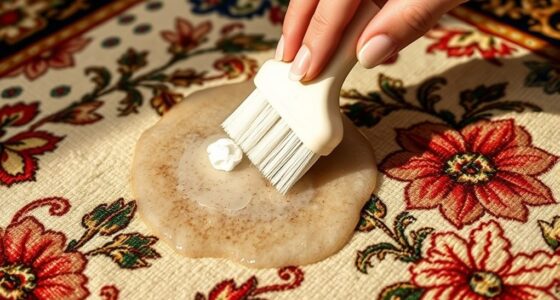
To clean around rug fringes without distortion, use a damp cloth with just enough moisture to spot clean. Avoid pouring water directly on the fringes, as this can cause stretching or fraying. Gently dab stains from outside inward to prevent spreading, and regularly brush the fringes with a soft brush or wide-tooth comb to keep them untangled and neat. For more tips on maintaining your rug’s delicate fibers, keep exploring these best practices.

Get furniture and decor delivered free with Prime
- Fast, free delivery on millions of items
- Prime Video, Amazon Music and more included
- Member-only deals all year
Key Takeaways
- Use a lightly damp cloth to clean the rug body, avoiding direct water on fringes.
- Gently dab around fringes with a soft cloth, steering clear of vigorous scrubbing.
- Keep fringes dry during cleaning, and do not pour water directly onto them.
- Brush fringes regularly with a soft brush to prevent matting and maintain shape.
- Ensure fringes are thoroughly dried after cleaning to prevent distortion or fraying.
Cleaning around rug fringes can be tricky, but with the right techniques, you can keep them looking fresh without damaging the fibers. The key is approaching fringe maintenance with care, especially when it comes to stain removal and preserving their appearance. Fringes are delicate and can easily fray or distort if you’re not gentle during cleaning. To start, avoid harsh chemicals or vigorous scrubbing, as these can weaken the fibers and cause the fringes to lose their shape.
When tackling stains near the fringes, your first move should be to identify the type of stain. For most common spills, like coffee or juice, a mild solution of dish soap and cold water works well. Use a soft cloth or sponge to gently dab the stain, working from the outside inward to prevent spreading. Never pour water directly onto the fringes; instead, dampen a cloth and carefully clean the affected area. This targeted approach minimizes the risk of water seeping into the rug’s fibers and causing distortion. Remember, patience is essential—avoiding aggressive rubbing preserves the integrity of the fringes and maintains their natural look.
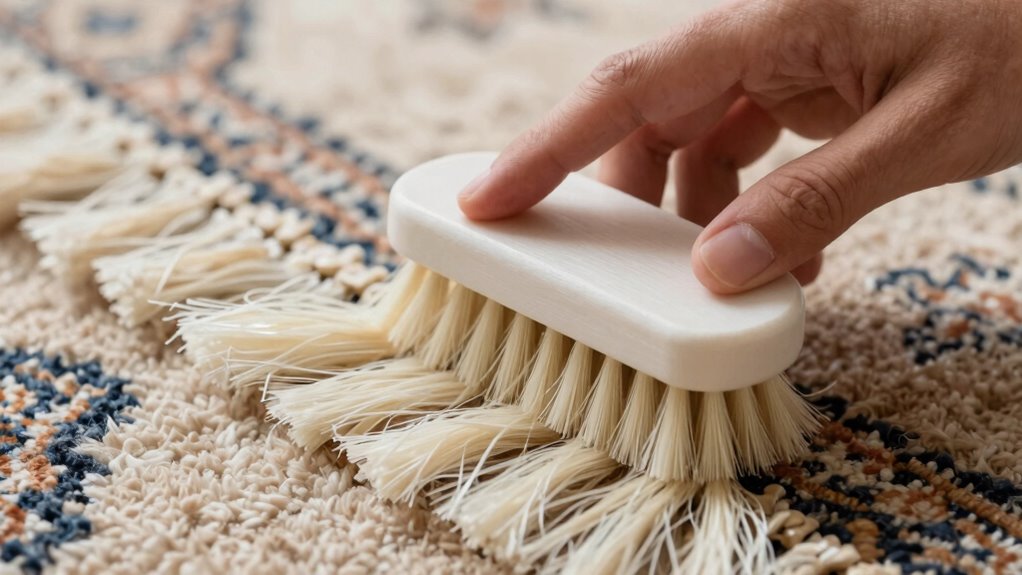
For fringe maintenance, regular gentle brushing helps keep the fibers untangled and looking neat. Use a soft-bristled brush or a wide-tooth comb and work carefully along the length of the fringes. This not only prevents matting but also helps remove dust and debris that can settle into the fibers over time. When cleaning the entire rug, avoid soaking the fringes with excess water. Instead, clean the main body of the rug with a damp mop or cloth, leaving the fringes dry or only lightly dampened. This prevents stretching or fraying that can occur if the fibers are left wet for long periods. Additionally, understanding caffeine science can help you realize how certain substances might stain or affect the fibers if not cleaned properly. Regular inspections and gentle cleaning techniques are crucial for maintaining the fringes’ shape and preventing damage. Incorporating proper drying methods after cleaning can also help avoid distortion and preserve the fibers’ integrity. Using protective treatments designed for delicate fibers can add an extra layer of defense against stains and fraying. Moreover, employing proper storage can prevent damage and keep fringes from becoming tangled or frayed over time. Routine maintenance is your best defense against stubborn stains and fraying. By regularly inspecting and gently cleaning your fringes, you preserve their shape and prolong their lifespan. With patience and proper technique, you’ll keep your rug looking pristine without risking distortion or damage, ensuring your fringes stay as elegant as when they were first laid out.
Products Worth Considering

Philips Hue Essential Starter Kit – Bridge and 4 E26 Smart Bulbs

eufy Security SoloCam E42 4-Camera Kit, 4K Solar Security Cameras with HomeBase 3

Philips Hue Starter Kit with Bridge Pro and 4 A19 E26 Smart Bulbs
As an affiliate, we earn on qualifying purchases.
Frequently Asked Questions
Can I Use a Vacuum on Delicate Fringes?
Yes, you can use a vacuum on delicate fringes, but you need to be gentle. For fringe maintenance, switch to a handheld vacuum or use the upholstery attachment with a low suction setting. Use delicate vacuum techniques by avoiding direct, aggressive contact, and hold the fringes in place as you clean. This way, you prevent distortion or damage, ensuring your rug’s fringes stay neat and intact.
What Cleaning Products Are Safe for Rug Fringes?
For safe fringe stain removal, opt for gentle cleaning techniques with mild, pH-neutral detergents or specially formulated rug cleaners. Avoid harsh chemicals that can damage or discolor the fringes. Test any product on a small, hidden area first. Use a soft cloth or sponge to lightly dab the cleaner, then rinse with clean water. These steps help preserve your rug’s fringes while effectively cleaning without distortion or damage.
How Often Should I Clean Around Rug Fringes?
Think of your rug’s fringes as delicate whispers needing gentle care. You should clean around the fringes every 1 to 2 months to prevent dirt buildup, which can lead to damage and the need for fringe repair or even fringe replacement. Regular, careful cleaning keeps your rug looking fresh and extends its lifespan. For stubborn stains or frayed fringes, consider professional help to preserve your rug’s beauty and integrity.
Is It Better to Hand Wash Fringes or Dry Clean?
You should hand wash your rug fringes for better fringe maintenance, as it allows gentler cleaning and prevents distortion. Use soft cleaning tools like a gentle brush or cloth to carefully remove dirt without damaging the fibers. Dry cleaning is an option but might be too harsh or expensive. Hand washing with mild soap and cold water preserves the fringes’ texture and shape, keeping your rug looking fresh and well-maintained.
How Can I Prevent Fringes From Fraying Further?
Imagine your rug’s fringes as delicate silk threads, vulnerable to fraying with every tug. To guarantee further fraying, handle the fringes gently, avoiding aggressive pulling or brushing. Use fringe preservation techniques like knotting loose ends or applying a fabric sealant to strengthen fibers. Regularly inspect for wear and keep them clean, but always with a gentle touch. This careful approach ensures your fringes stay intact, maintaining their elegant appearance over time.
Conclusion
Now that you know how to clean around rug fringes without distortion, you can keep your rug looking pristine without risking a mess like in the days of the Titanic. Just be gentle, use the right tools, and avoid harsh chemicals. Remember, patience is your best ally—like a wise old owl in a fairy tale. With these tips, your rug’s fringes will stay charming and intact, turning your space into a cozy haven that even the most discerning Victorian would admire.