
TL;DR

Get furniture and decor delivered free with Prime
- Fast, free delivery on millions of items
- Prime Video, Amazon Music and more included
- Member-only deals all year
Electric fireplaces create a flame effect with lights or video and can provide supplemental warmth without burning fuel or needing a chimney. Choose one by checking the room’s heating needs, the unit’s electrical requirements, its appearance from your seating area, and its installation clearances. A fireplace can make a living room feel warmer and more inviting, but it will not automatically lower your energy bills or replace your main heating system.
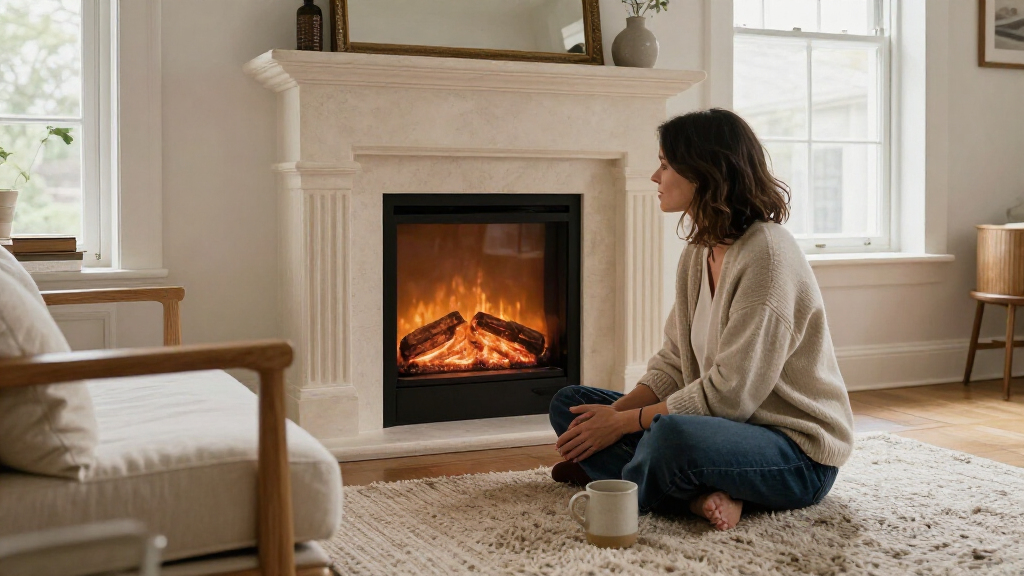
A fireplace can change the feel of a living room in seconds: a soft orange glow on the wall, a little warmth across your hands, and no wood smoke clinging to your sweater. Electric fireplaces for living rooms offer that visual focal point without burning logs or needing a chimney.
This guide will help you sort out what the flame effect actually does, how much heat to expect, and which installation style fits your room. You’ll also learn what to check before buying, from outlet access to hot surfaces near a curious pet. The goal is simple: choose a fireplace that looks right on a quiet Tuesday and works safely when you switch the heater on.
Think of an electric fireplace as room décor with supplemental heat, rather than a guaranteed replacement for central heating. That distinction matters when you compare models, estimate running costs, and decide whether a compact plug-in unit or a professionally fitted built-in design belongs in your home.
Electric fireplaces use a visual flame effect and may provide supplemental room heat; many can run the flames without heat, but check the specific model.
Treat room-coverage claims as estimates because insulation, ceiling height, windows, and layout affect warmth.
Compare freestanding, wall-mounted, insert, and built-in models against your room measurements, lease or renovation plans, and electrical access.
Follow the manual for clearances and electrical requirements; hire a qualified electrician for hardwired work.
Estimate running costs from the model’s power use, hours of operation, and your local electricity rate.
How an Electric Fireplace Creates a Fire Effect Without Burning Fuel
An electric fireplace creates the appearance of a fire with LED lighting, video, or other visual effects, while a separate heating element can add warmth to the room. The “flames” are not burning fuel, so the unit does not need a flue to carry away combustion gases. That makes it a practical option for a living room where a wood or gas fireplace would be difficult to install.
Effects vary widely. One model may show steady, single-color flames above a basic ember bed; another may let you adjust flame speed, brightness, and color. These controls influence whether the fireplace feels like a convincing room feature or a bright display that competes for attention. Room lighting changes what you see, too. A vivid display that looks convincing in a dim showroom may seem washed out beside a sunny window, so check how the effect looks from your actual sofa and at different times of day.
Imagine you rent an apartment with no chimney and a blank wall opposite the couch. A freestanding or suitable plug-in unit can add a focal point without turning that wall into a construction project. That convenience comes with a tradeoff: a portable unit can be moved, but it occupies floor space and still needs a suitable outlet and clear airflow. If you want a fire using only the visual effect on a mild evening, check that the model allows flame-only operation; many do, but features differ by manufacturer.
Newer product ranges often emphasize adjustable colors, richer ember-bed effects, slim wall-mounted profiles, and app or voice controls. Each can improve the experience in a specific way, but it can also add cost or complexity. For example, app controls matter most if you routinely adjust the unit remotely; they do little for flame realism if the display itself looks flat. Compare what you can see and use, not just the product description.
The flame is a visual effect; the heater is a separate function. That separation lets many electric fireplaces create atmosphere in summer and warmth in winter, but it also means the look of a fire and the room-heating performance need to be judged separately.
Products Worth Considering

Ring Alarm 14-Piece Wireless Security System Kit

Dyson V8 Cyclone Cordless Vacuum

Philips Hue Smart LED Candle Bulbs, B39, E12, 2-Pack
As an affiliate, we earn on qualifying purchases.
Choose a Fireplace That Suits Your Room and Installation Plans
The right electric fireplace fits your wall, opening, and electrical setup as well as your decorating style. Freestanding stoves can work in a corner or in a rental; wall-mounted units save floor space; inserts fit some existing fireplace openings; and built-in models create a more integrated look. Those visual differences also affect effort and flexibility: a freestanding unit is easier to reposition, while a built-in appearance usually depends on a fixed location and more involved work.
Start by measuring the intended space, then stand or sit where you’ll usually watch the fireplace. A unit that looks substantial in a product photo can appear tiny above a long sofa. As a real-world example, a 36-inch model centered on a narrow wall might feel balanced, while the same model could look lost above a wide media console. Check dimensions and recommended viewing distance, and consider how the fireplace looks when switched off. This matters because the unit occupies the room even when the flame effect is not in use.
Placement affects more than appearance. A screen, artwork, or tall furniture can compete with the fire effect, while daylight may cause glare. Poor placement can also block the heater’s airflow or put warm air too close to nearby objects. Keep the air intake and heat outlet clear, and follow the model’s required mounting instructions and clearances. Built-in installations may involve framing and electrical work; have a qualified professional handle electrical work and follow local code and permit requirements where they apply.
If you live in a rental, a freestanding model may be simpler, but check your lease and building rules before adding a wall-mounted or built-in unit. A fireplace can be visually portable and still need approval for its installation or electrical demand. Confirming this up front helps avoid buying a model whose best location or required wiring the home cannot accommodate.
Get the Right Amount of Heat Without Expecting a Whole-Home Heater
Most electric fireplaces are designed to provide supplemental heat for a single room, not to heat an entire home. Whether one warms your living room depends on the unit’s stated output and coverage, plus insulation, ceiling height, window drafts, and the room’s layout. These factors affect how quickly heat escapes and whether warm air reaches the places people use. Treat manufacturer coverage claims as estimates rather than promises, since room shape and household habits are not captured by a simple area figure.
Picture a 15-by-18-foot living room with high ceilings and older windows. A model may be advertised for a room of a particular size, but cold air leaking around the windows and an open doorway to the hall can make the seating area feel cooler than that number suggests. In practice, the heater may still make the area near the sofa more comfortable without bringing the whole room to an even temperature. Check the manufacturer’s heat specifications and electrical requirements, then judge whether the unit can add comfort where you sit.
Electric fireplaces can let you warm the seating area instead of raising the thermostat for the whole home. That can be useful if you spend the evening in one part of the room, because it may avoid heating unused spaces. But targeted heat does not automatically reduce energy bills: savings depend on whether you lower the main thermostat, how long the fireplace runs, and the unit’s power use relative to your heating system. Cost depends on power use, hours of operation, and your local electricity rate. Use the model’s specifications and your utility bill to estimate your own cost.
Before switching on the heat, confirm the model is appropriate for the available circuit and keep its intake and outlet unobstructed. Do not assume a fireplace will replace a home’s main heating system during a cold spell. It can take the chill off near a favorite chair; it cannot fix inadequate insulation or reliably warm every connected room. If you need dependable whole-home heat, treat the fireplace as a comfort supplement and plan around the primary heating system.
Compare Fireplace Styles Before You Commit to One
Installation style tells you how the fireplace sits in the room, while the room and electrical access determine which style makes sense. A freestanding model is often easier to place, but it takes floor space. A built-in can look seamless, but it may require construction and professional electrical work. The choice is a tradeoff between flexibility now and a more integrated finish, with the latter making future room changes harder. Compare the practical tradeoffs before you choose based on a product photo.
| Style | Best fit | What to check |
|---|---|---|
| Freestanding | Rentals, flexible layouts, or a movable accent | Floor space, outlet access, and room around the unit |
| Wall-mounted | A clean focal point where floor space is tight | Wall suitability, mounting instructions, and safe clearances |
| Insert | An existing fireplace opening | Opening dimensions, electrical supply, and model fit |
| Built-in | A planned renovation or integrated feature wall | Framing, wiring, installation requirements, and any permits |
For instance, someone with an unused masonry fireplace might first look at inserts, while a renter with a small living room may prefer a compact freestanding stove. An insert reuses an existing focal point, but the opening still needs to match the model and provide the required electrical connection. A freestanding stove avoids construction, but its footprint may reduce usable floor area. Neither choice is automatically better: the opening, lease, available circuit, and amount of floor space all matter. Measure before ordering, and verify that the exact model fits its intended location.
Also compare controls and warranties. Remote controls, timers, thermostats, touch panels, and smart-home options appear on some models, but the features and reliability differ. Choose controls that make the fireplace easier to use in your routine; a feature you rarely use does not necessarily justify a higher price. Check the actual heat output and electrical requirements alongside the warranty rather than treating brand claims about coverage as directly comparable.
Check Safety and Electrical Details Before You Switch It On
Electric fireplaces avoid an open fuel fire and combustion gases, but their heaters, outlets, and surrounding surfaces still need care. The heater moves warm air into the room, so blocked airflow can interfere with operation, while nearby surfaces can become hot. Follow the owner’s manual for clearances, mounting, and electrical requirements. Keep the heater’s air intake and outlet open, and supervise children and pets around surfaces that may become hot.
Portable models commonly plug into a standard outlet, but requirements vary by unit. The relevant question is whether the outlet and circuit can support the model’s specified load without being shared with too many other devices. Do not overload a circuit, and avoid extension cords unless the manufacturer explicitly permits their use. If a model needs hardwiring or changes to the home’s electrical system, use a qualified electrician; switch off power as directed and follow applicable electrical codes and permit rules. Never improvise wiring to make a unit fit.
Consider a household with a crawling toddler and a cat that likes warm spots. Place the fireplace where neither can press controls or settle against a hot outlet area, and use the safety features described in the manual. A cool-looking flame effect does not mean the heater’s nearby surfaces stay cool. If the unit offers a timer or thermostat, those controls can help manage operation, but they do not replace safe placement or supervision. The practical goal is to make safe use easy: keep the unit out of a narrow traffic path and leave enough room to notice if something is obstructing it.
Electric units do not burn fuel on site, so they produce no on-site combustion emissions. The electricity they use can still have an emissions footprint depending on how the power is generated. That distinction is useful when comparing fireplace types: avoiding combustion at home removes the need to vent those gases, while the unit still draws electricity and depends on a suitable electrical setup.
Keep the airflow clear, use the correct electrical supply, and follow the manual. Those checks address the main practical issues whether the unit is a simple plug-in stove or part of a renovated wall.
Use This Five-Step Checklist to Pick a Model You’ll Enjoy
Choose an electric fireplace by checking fit, heat, appearance, power, and daily use in that order. A little planning can save you from a beautiful unit that blocks a walkway or cannot go where you planned. The order matters: there is little value in comparing flame colors if the model will not fit the space or meet its electrical requirements. Work through these checks before placing an order.
- Measure the location. Note the wall or opening width, available depth, nearby furniture, and the space needed for clearances.
- Match heat to the room. Check the manufacturer’s output and intended coverage, then account for drafts, ceiling height, and open doorways.
- Inspect the effect in context. Compare brightness, flame movement, and ember details from your likely viewing spot and under your room’s lighting.
- Confirm the electrical supply. Read the model’s requirements. Ask a qualified electrician about hardwired installation or any uncertain wiring.
- Check the details you’ll use. Look for flame-only mode, a thermostat, timer, remote, or smart controls only if those features fit your routine.
Say you want a fireplace for movie nights but live in a bright, south-facing apartment. Seeing the display in a dim showroom is not enough: ask about brightness settings and look for an effect that remains visible in daylight. If you mainly want extra warmth beside the sofa, prioritize heat settings and safe placement over voice control. Thinking through your main use first helps you spend on the qualities you will notice most.
Finally, read the instructions for maintenance and operation. Dusting and occasional component replacement may be all that’s needed, but exact upkeep depends on the model. A shorter feature list can be a smart choice if it gives you the look, controls, and heating performance you actually want; fewer extras can also mean fewer controls to learn and maintain.
Make the Fireplace Feel Like Part of the Living Room
An electric fireplace works best when its scale and position support the way you use the room. Decide whether you want it to be the main focal point or a quiet accent. Align it with a sofa, media console, or existing architectural feature, and check that the flame remains visible from your favorite seat without turning the rest of the layout into an obstacle course. This helps the fireplace feel intentional while keeping its everyday use from disrupting how people move through the room.
In a narrow room, a wall-mounted unit may free the floor for chairs, while a freestanding stove can make an empty corner feel deliberate and cozy. But the same unit can overwhelm a small wall or compete with a television. Take a photo of the room and mark the proposed unit’s dimensions with tape; the outline helps you see scale before you commit. It also reveals whether the fireplace crowds a doorway, seating area, or another feature you want to keep prominent.
Lighting changes the mood and the effect. Bright afternoon sun can wash out a flame display, while a lamp reflected in a glossy screen can create glare at night. Try viewing the fireplace with the curtains open and the lamps on. If you want a fire effect in warm weather, confirm that the flames can run without heat so the room does not become uncomfortably warm. Checking these conditions before buying helps avoid a display that only looks appealing in one lighting setup.
Look at the fireplace when it is off as carefully as when it is on. Dark glass, decorative logs, or a visible screen may remain part of the room all day. A model that looks convincing in motion should also feel at home against your wall when the glow disappears. That balance matters because the fireplace is a permanent visual object even if you use its flame effect only occasionally.
Frequently Asked Questions
Can an electric fireplace heat my living room?
Often, an electric fireplace can add warmth if your room fits the model’s intended coverage and your electrical supply supports it. Insulation, windows, ceiling height, and layout affect real performance, so treat coverage as an estimate. Most models work best as supplemental heat.
How much does an electric fireplace cost to run?
Cost depends on the unit’s power use, how many hours you run it, and your electricity rate. Use the manufacturer’s specifications and a current utility bill to estimate your own cost. Flame-only mode usually uses less power than the heater, though actual consumption varies by model.
Can I use the flames without turning on the heat?
Many electric fireplaces let you run the visual effect without heat, which can suit a cool summer evening. Confirm flame-only operation in the specifications for the exact model before buying, since controls and features vary.
Are electric fireplaces safe around children and pets?
They do not burn fuel or produce combustion gases, but the heater and nearby surfaces can get hot. Follow the manual’s clearance and placement instructions, keep airflow openings unobstructed, and supervise children and pets around the unit.
Do electric fireplaces need a chimney or vent?
Electric models generally do not need a chimney or a combustion vent because they burn no fuel. They still need a suitable electrical connection, and hardwired or built-in models may need professional installation. Check local requirements and the manufacturer’s instructions.
Can I install an electric fireplace in an apartment or rental?
A freestanding or plug-in model may work in an apartment, depending on its electrical needs and the building’s rules. Check your lease and building requirements before installing a wall-mounted or built-in unit, since those options may involve permanent work or approval.
Do electric fireplaces look realistic?
Realism varies from one model to another. Look at the flame movement, ember-bed detail, brightness settings, and how the effect appears from your usual viewing distance. Room lighting and viewing angle can change the result, so a showroom display may not match a sunny living room.
Conclusion
Choose an electric fireplace by matching the room, the electrical setup, and the kind of warmth you expect. Measure the space, check the model’s heat and power specifications, and see how its flame effect looks from your sofa before buying.
Then let the glow do what it does best: make a living room feel like a place you want to linger, even when there’s no wood crackling behind the glass.