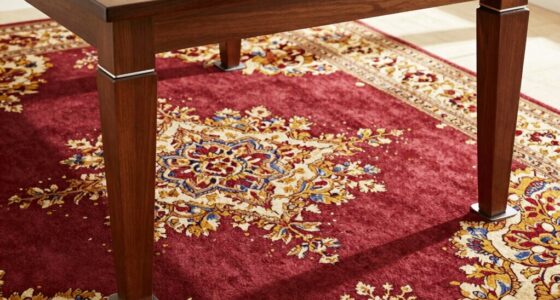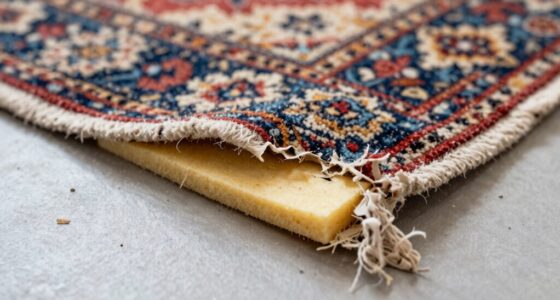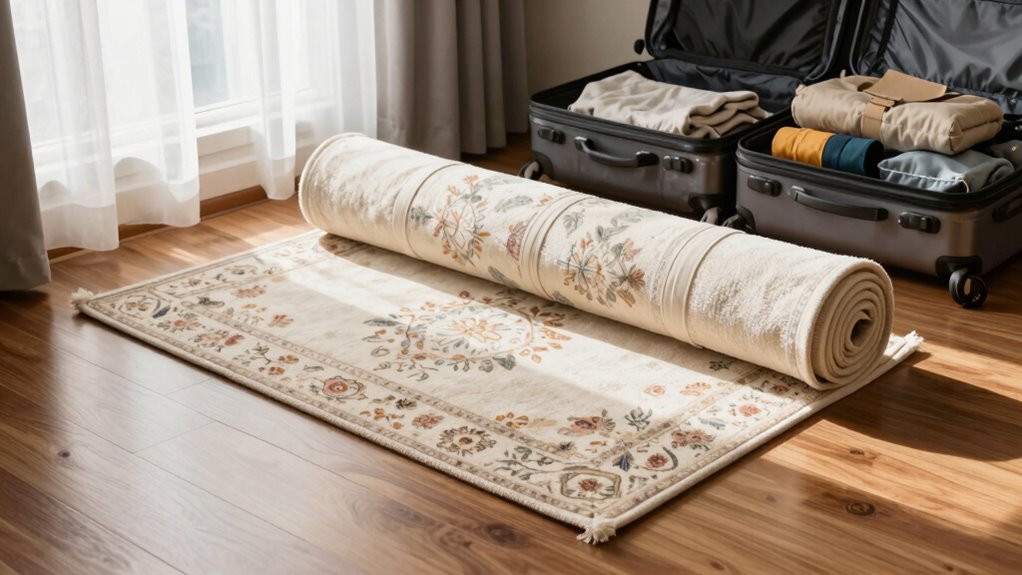
To protect your rugs during seasonal home closures or travel, start by thoroughly vacuuming and steam cleaning them to remove dirt, odors, and bacteria. Make certain they’re completely dry to prevent mold or pests. Store rugs in a cool, dry, and well-ventilated area, wrapping delicate pieces in breathable fabrics like cotton or muslin and rolling them instead of folding. Use natural pest deterrents and block access points to keep pests out. To discover all essential tips, keep exploring these helpful strategies.

Get furniture and decor delivered free with Prime
- Fast, free delivery on millions of items
- Prime Video, Amazon Music and more included
- Member-only deals all year
Key Takeaways
- Clean and thoroughly vacuum rugs, then deep clean with steam to remove dirt, dust, and odors before departure.
- Use breathable covers or wrap rugs in cotton or muslin to protect them during storage.
- Store rugs in a cool, dry, and well-ventilated area to prevent moisture buildup and pest infestation.
- Apply natural pest deterrents and block access points to keep pests away during your absence.
- Seal entry points around the home and ensure proper moisture control to maintain optimal storage conditions.
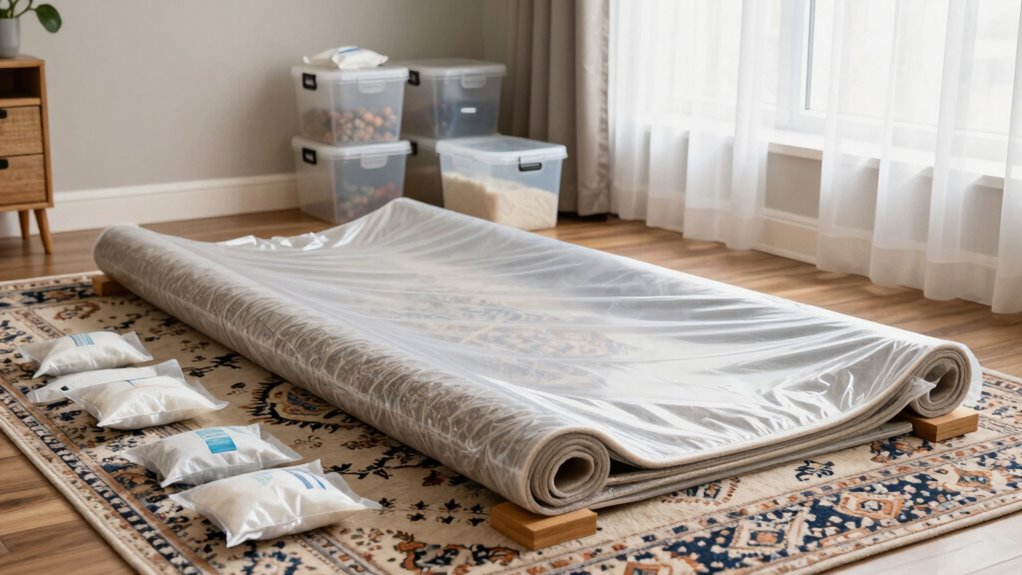
Are you preparing to close up your home for the season? If so, it’s essential to take steps to protect your rugs from damage during your absence. Properly safeguarding your carpets ensures they stay clean, fresh, and intact until you return. A key part of this process involves pest prevention and moisture control, both of which can significantly extend the life of your rugs and prevent costly issues.
Start by thoroughly cleaning your rugs before you leave. Vacuum every inch to remove dirt, dust, and any debris that might attract pests or cause stains if left unattended. Consider deep cleaning with a steam cleaner to eliminate bacteria and odors, which can make your home less appealing to pests and preserve the rug’s fibers. After cleaning, allow the rugs to dry completely. Moisture left on or in the fibers can lead to mold, mildew, or even attract insects like carpet beetles or moths, so ensure that your rugs are entirely dry before covering or storing them. Proper drying and moisture control are essential in preventing mold and pest issues.
Thoroughly clean and dry your rugs to prevent mold, pests, and damage during storage or absence.
To prevent pests during your absence, take additional measures such as applying natural pest deterrents or using pest-repellent sprays designed for home use. You might also consider placing mothballs or cedar blocks around the room, but be cautious with scent-heavy products if you have sensitivities or pets. Covering your rugs with breathable fabric or removing them altogether and storing them in a sealed container can also help keep pests at bay. If you’re planning to store your rugs, ensure the storage area is cool, dry, and well-ventilated to prevent pest infiltration and moisture buildup. Using proper storage conditions can make a significant difference in maintaining their quality. Additionally, choosing storage options that prevent pest infestation by blocking access points is crucial.
Ensuring proper storage conditions is crucial for maintaining the quality of your rugs during long-term storage. Moisture control is equally vital. Before closing your home, check for any leaks or areas where humidity might accumulate, such as bathrooms or basements. Use dehumidifiers or fans to reduce excess moisture, especially in the rooms where your rugs are located. When covering your rugs for storage or protection, opt for breathable covers that allow airflow and prevent condensation, which can cause mold or rot. Additionally, wrapping delicate or valuable rugs in cotton or muslin can offer extra protection from dust and environmental factors. If your rugs are especially valuable or delicate, consider rolling them instead of folding, and wrap them in cotton or muslin to prevent dust buildup. Proper wrapping helps maintain the rug’s shape and quality over time.
Finally, make sure your home is well-sealed to prevent pests from sneaking in through small cracks or gaps. Seal any openings around windows, doors, and vents, and check that screens are intact. By combining thorough cleaning, pest prevention, and moisture control, you’ll protect your rugs from damage and keep them looking their best until you return. Proper preparation not only preserves your investment but also gives you peace of mind during your time away.
rug storage cover breathable cotton
As an affiliate, we earn on qualifying purchases.
As an affiliate, we earn on qualifying purchases.
Frequently Asked Questions
Can I Use Commercial Pest Control Products on My Rugs?
You shouldn’t use commercial pest control products directly on your rugs. These products often contain strong chemical treatments that can damage fibers or cause health issues. Instead, apply pest deterrents specifically designed for textiles or consult a professional. Always read labels carefully and follow safety guidelines. Protect your rugs effectively by choosing appropriate pest deterrents that are safe for home use and avoid risking damage from harsh chemical treatments.
How Often Should I Rotate Rugs During Long Absences?
You should rotate your rugs at least once every three to six months during long absences to prevent uneven wear and maintain their appearance. Incorporate a consistent rotation schedule into your rug maintenance routine, turning the rug 180 degrees or shifting its position. This helps distribute foot traffic evenly, reduces fading from sunlight, and keeps your rugs in good condition, ensuring they look fresh when you return home.
Are There Specific Materials That Require Special Protection?
Natural fibers like wool or silk need special protection because they’re more susceptible to moisture and pests. You should use synthetic treatments, such as moth repellents or waterproof sprays, to safeguard these delicate materials. While some believe all rugs can just be stored away, natural fibers require extra care to prevent mold, fading, or insect damage. Properly treating and protecting these materials guarantees your rugs stay in pristine condition during your absence.
How Do I Prevent Mold Growth in Humid Climates?
To prevent mold growth in humid climates, you should regularly maintain your dehumidifier to keep humidity levels below 50%. Use mold-resistant sprays on your rugs to inhibit mold spores. Guarantee proper airflow by opening windows when possible and avoid placing rugs in damp areas. Consistent cleaning and monitoring humidity help keep your rugs dry and mold-free during seasonal absences or travel.
Is Professional Cleaning Necessary Before Storage?
Did you know that properly maintained rugs can last up to 20 years? You should definitely consider professional cleaning before storage, as it guarantees your rug is free from dirt, allergens, and pests. This is an essential part of storage preparation because it helps prevent mold, odors, and damage. Professional cleaning not only extends your rug’s lifespan but also keeps it fresh and ready for use when you return.
Conclusion
Remember, a stitch in time saves nine. By taking these simple steps to clean, elevate, and cover your rugs, you’ll protect them from dust, pests, and damage during your seasonal home closure. Regular maintenance now means your rugs will stay fresh, vibrant, and ready to enjoy when you return. Don’t leave things to chance—your home and rugs will thank you for your foresight and care. Safe travels and happy decorating!
Halloween Picks
halloween
As an affiliate, we earn on qualifying purchases.