
When tackling wine or coffee stains on fine rugs, act quickly by gently blotting the spill with a clean, dry cloth to prevent the stain from setting. Avoid rubbing, which can push the stain deeper. Use a mild, pH-balanced solution—like cold water with a small amount of gentle detergent or a vinegar-water mix—applied carefully. Always test a small area first. For best results and to protect delicate fibers, consider professional advice if needed. Keep learning to preserve your rug’s beauty.
Key Takeaways
- Act immediately by blotting the stain with a clean, dry cloth to prevent setting.
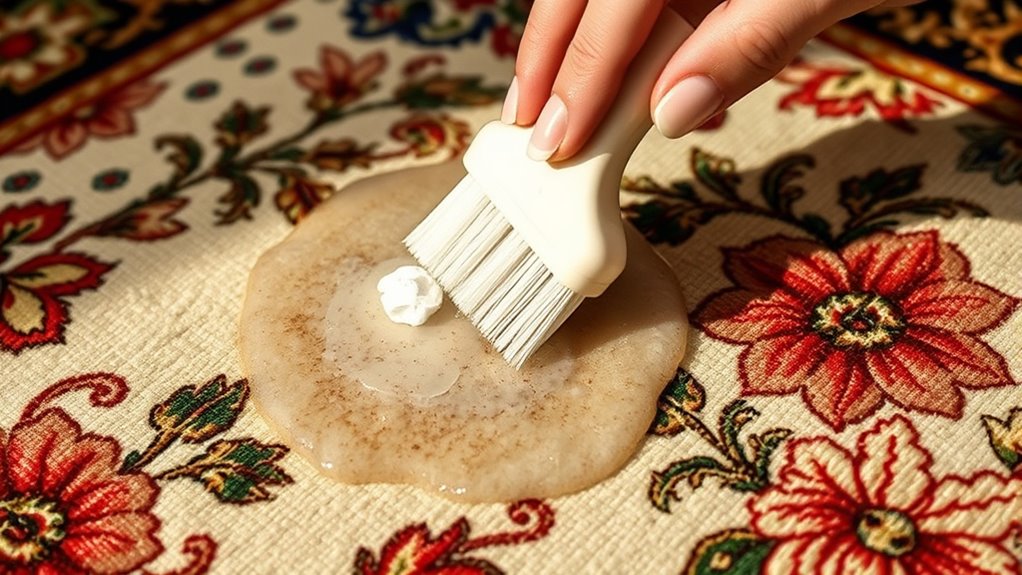
- Use a gentle mixture of cold water and mild detergent to dab the stain softly.
- For organic stains, apply a solution of white vinegar and water carefully.
- Test cleaning solutions on a small, hidden area to avoid discoloration or fiber damage.
- Consult a professional if the stain persists or if you’re unsure about your rug’s fiber type.

Wine and coffee stains can be stubborn, but acting quickly can make all the difference. When it comes to removing these stubborn marks from your fine rug, understanding stain prevention and rug material care is essential. The key to maintaining your rug’s beauty is to be proactive and gentle, especially if you want to avoid permanent damage. Stain prevention starts with being mindful of spills; placing coasters under glasses and avoiding eating or drinking near your rug can considerably reduce the risk of accidents. If you do spill, quick action is your best ally. Blot the spill immediately with a clean, dry cloth or paper towel—never rub, as that can push the stain deeper into the fibers.
Knowing your rug material care is critical. Different fibers react differently to cleaning agents, so it’s important to identify what your rug is made of before attempting any stain removal. For delicate materials like silk or wool, use gentle, pH-balanced cleaners specifically formulated for those fibers. For sturdier materials like nylon or polyester, you may have more leeway, but always test a small, inconspicuous area first. This helps prevent discoloration or fiber damage. If the stain is recent, a simple solution of cold water and a mild detergent can often be effective. Dabbing gently and repeatedly with this solution can lift the stain without soaking the fibers too deeply.
Identify your rug’s fibers before cleaning to prevent damage and ensure effective stain removal.
For more stubborn stains, you might consider using a mixture of white vinegar and water, which is gentle yet effective at breaking down organic stains without harming delicate rug fibers. Remember to use a minimal amount of solution and always blot rather than scrub. If you’re unsure about your rug’s material care, consulting a professional cleaner is a safe bet. They can recommend the right cleaning techniques and products tailored to your rug’s specific fibers. Additionally, some rugs may contain dyes that react adversely to certain cleaning solutions, so knowing the fiber composition of your rug can prevent unintended damage.
Prevention is always better than cure, especially with fine rugs. Regular vacuuming prevents dirt buildup that can embed stains more deeply. Using protective pads under furniture and avoiding direct sunlight can also help maintain your rug’s integrity and color. When spills happen, acting quickly and knowing how to care for your rug’s material can save you time, money, and the expense of replacing a damaged piece. By combining prompt action with proper rug material care, you’ll keep your fine rug looking pristine and extend its lifespan.

Wine Away Red Wine Stain Remover, 12oz – Removes Wine Spots, Perfect Fabric Upholstery and Carpet Cleaner Spray Solution, Spray on Stain Wash and Resolve Laundry to Vanish Stain, Citrus Scent
- Proven Effectiveness: Removes fresh and dried wine stains
- Versatile Stain Removal: Eliminates coffee, blood, ink, and more
- Safe and Gentle: Safe for clothes, carpets, and upholstery
As an affiliate, we earn on qualifying purchases.
As an affiliate, we earn on qualifying purchases.
Frequently Asked Questions
Can Homemade Remedies Permanently Damage Delicate Rug Fibers?
Homemade remedies can pose DIY risks and potentially damage delicate rug fibers if you’re not careful. Using harsh or inappropriate ingredients might weaken or discolor fibers, causing permanent harm. To protect fiber safety, always test any solution on a small hidden area first. Stick to gentle, recommended techniques, and avoid aggressive scrubbing or strong chemicals, ensuring your fine rug stays beautiful without risking damage from DIY attempts.
How Long Should I Wait Before Attempting to Clean a Fresh Stain?
Think of stain delay as the ticking clock in a race—you don’t want to let it run too long. You should wait no more than 5 minutes before attempting to clean a fresh stain. Timing patience is essential; the quicker you act, the easier it is to lift the stain without damaging delicate fibers. So, don’t delay—act fast to preserve your rug’s beauty and integrity.
Are Commercial Stain Removers Safe for All Fine Rug Types?
Commercial stain removers aren’t safe for all fine rug types because they may contain chemicals that damage delicate fibers. Always check the product’s label for chemical safety warnings and test it on a small, hidden area first. Using gentle, natural solutions helps prevent stains and preserves your rug’s quality. Remember, proper stain prevention and cautious cleaning protect your rug’s beauty and longevity.
Is It Necessary to Hire a Professional for Stubborn Stains?
You might wonder if you should hire a pro for stubborn stains, and sometimes, DIY solutions just aren’t enough. If your efforts to remove wine or coffee stains aren’t working, it’s a sign to call in an expert. They prevent further damage and guarantee your rug’s longevity. Stain prevention starts with careful cleaning, but for those persistent marks, a professional’s touch assures your rug stays beautiful and protected.
What Precautions Should I Take to Prevent Color Bleeding During Cleaning?
To prevent color bleeding during cleaning, you should perform a colorfastness test first by applying a small amount of water to an inconspicuous area. Use protective coverings like plastic sheets or towels to shield surrounding areas. Avoid over-wetting the rug, and use gentle, pH-balanced cleaning solutions. These precautions help safeguard your rug’s colors and ensure a safe, effective cleaning process.
Conclusion
Just as a master painter restores a faded masterpiece, your gentle, prompt action can revive your fine rug’s beauty. Remember, patience and care are your greatest allies—like a skilled alchemist transforming stain into clarity. With these safe techniques, you’re not just removing marks; you’re preserving a timeless piece of art. Trust in your ability to restore, and let each stain be a reminder of your quiet mastery and renewed appreciation for your cherished rug.