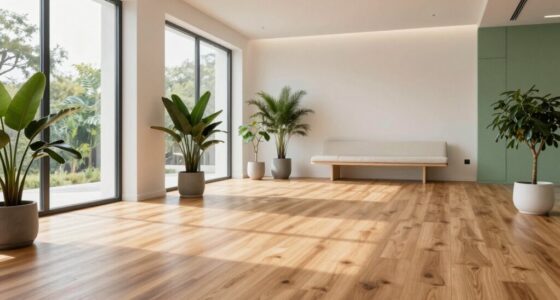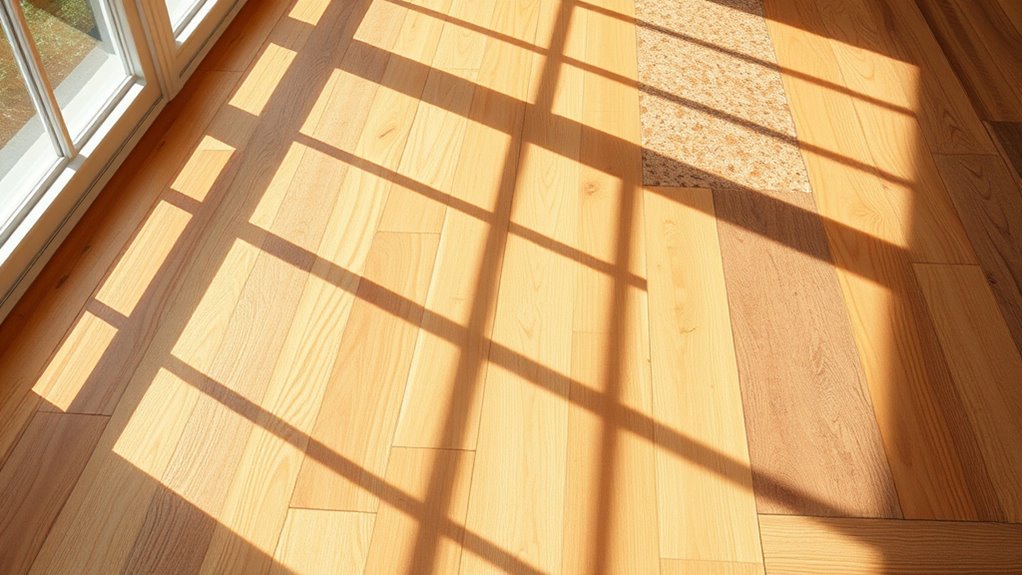

Eco-friendly flooring options like bamboo, cork, and reclaimed wood are excellent choices for anyone aiming to reduce environmental impact. Bamboo grows quickly and regenerates easily, while cork is harvested without harming trees, making both sustainable. Reclaimed wood reuses materials, cutting down on waste and deforestation. These options also improve indoor air quality and offer durability. If you want to learn more about how these materials support a healthier, greener home, keep exploring the details.

Get furniture and decor delivered free — and shop member deals
- Fast, free delivery on millions of items
- Access to Prime Big Deal Days deals on October 6–7
- Prime Video, Amazon Music and more included
Key Takeaways
- Bamboo, cork, and reclaimed wood are renewable, eco-friendly flooring options that promote sustainable harvesting practices.
- These materials grow quickly or are repurposed, reducing demand for virgin resources and preventing deforestation.
- Eco-friendly flooring options emit fewer VOCs, improving indoor air quality and supporting healthier living environments.
- Cork provides natural insulation, enhancing energy efficiency, while reclaimed wood offers durability with historic appeal.
- Choosing these sustainable materials minimizes environmental impact and aligns with health-conscious, eco-responsible priorities.

Eco-friendly flooring options are gaining popularity as more homeowners seek sustainable choices for their spaces. When you opt for materials like bamboo, cork, or reclaimed wood, you’re making a conscious decision to reduce your environmental impact. These materials are not only renewable but also promote sustainable harvesting practices, ensuring that their use doesn’t deplete natural resources or harm ecosystems. For example, bamboo grows quickly and can be harvested in just a few years, unlike traditional hardwoods that take decades to mature. This rapid regrowth makes bamboo a highly sustainable option, allowing you to enjoy beautiful flooring without contributing to deforestation.
In addition to supporting sustainable harvesting, eco-friendly flooring can considerably improve indoor air quality. Many traditional flooring materials release volatile organic compounds (VOCs), which can cause respiratory issues and other health problems. By choosing options like bamboo, cork, or recycled wood, you help minimize these emissions. These materials are often processed with low-VOC adhesives and finishes, meaning they emit fewer harmful chemicals into your home environment. As a result, you can breathe easier and enjoy a healthier living space for yourself and your family.
Bamboo flooring is especially appealing because it combines durability with sustainability. Its fast growth cycle means you don’t have to worry about depleting natural resources, and it can be harvested without damaging the plant’s root system, promoting regrowth. Cork flooring, made from the bark of cork oak trees, is harvested without harming the tree itself, encouraging ongoing growth and a continuous supply. Cork also acts as a natural insulator, helping to regulate indoor temperatures and reduce energy costs. Reclaimed wood, on the other hand, involves repurposing wood from old buildings, barns, or furniture, giving new life to materials that would otherwise end up in landfills. Using reclaimed wood reduces the demand for new lumber, conserving forests and reducing environmental degradation.
When you select eco-friendly flooring, you’re not just choosing a sustainable material—you’re also prioritizing indoor air quality. These options tend to emit fewer VOCs, making your home safer and more comfortable. Plus, they often require less chemical treatment during manufacturing, further reducing potential health risks. Additionally, selecting sustainable materials like bamboo supports sustainable harvesting practices, helping to protect ecosystems for future generations. Overall, by opting for bamboo, cork, or reclaimed wood, you’re making a positive impact on the environment while creating a healthier indoor environment for yourself. This combination of sustainability and health benefits makes eco-friendly flooring a smart, responsible choice for your home.
As an affiliate, we earn on qualifying purchases.
Frequently Asked Questions
How Long Does Eco-Friendly Flooring Typically Last?
Eco-friendly flooring typically lasts 20 to 50 years, depending on durability factors like material quality and maintenance. Bamboo can last around 20-30 years, cork about 25-30 years, and reclaimed wood often surpasses 40 years with proper care. Your flooring’s lifespan comparison mainly hinges on these durability factors, so choosing high-quality options and maintaining them well guarantees you enjoy eco-friendly floors for decades.
Are Bamboo, Cork, and Reclaimed Wood More Expensive?
You’ll find that bamboo, cork, and reclaimed wood can be more expensive upfront compared to traditional options, but their cost comparison varies based on quality and sourcing. Bamboo is generally durable and affordable, while reclaimed wood might cost more due to its unique character and eco-friendly appeal. Cork tends to be mid-range in price. When considering material durability, investing a bit more can pay off with longer-lasting, eco-conscious flooring that benefits the environment.
What Maintenance Is Required for Eco-Friendly Flooring?
Maintaining eco-friendly flooring means mastering minimal maintenance. You should regularly clean with gentle routines like sweeping and damp mopping to prevent dirt buildup. Refinishing techniques, such as light sanding or resealing, help preserve its beauty and durability. Avoid harsh chemicals, and promptly clean spills to prevent stains. By adopting simple, sustainable strategies, you guarantee your bamboo, cork, or reclaimed wood floors stay stunning and long-lasting for years to come.
Can These Floors Be Installed in Wet Areas?
Yes, you can install eco-friendly floors in wet areas, but you should consider their moisture resistance. Bamboo and reclaimed wood may need special treatments to withstand humidity, and cork can be more susceptible to water damage. Be aware of installation challenges, like ensuring proper sealing and ventilation, to prevent warping or mold. Consulting a professional helps you choose the best options and guarantees a durable, eco-friendly installation.
Are Eco-Friendly Floors Suitable for High-Traffic Zones?
Eco-friendly floors can be suitable for high-traffic zones, but durability concerns differ among options. Bamboo, especially strand-woven, offers high durability and resists scratches, making it a good choice. Cork provides comfort and resilience but may show dents over time. Reclaimed wood varies in color consistency and may need more maintenance. To guarantee longevity, choose high-quality materials, and consider protective finishes to handle the wear and tear of busy areas.
Conclusion
Choosing eco-friendly flooring options like bamboo, cork, or reclaimed wood helps you reduce your environmental footprint. Did you know that bamboo grows up to 3 feet in just 24 hours, making it one of the fastest renewable resources? By selecting sustainable materials, you’re not only creating a stylish space but also supporting conservation efforts. Make an eco-conscious choice today—your home and the planet will thank you for it.
Halloween Picks
halloween
As an affiliate, we earn on qualifying purchases.