For a smart dehumidifier for a high-capacity basement, I’d start with the DREO 110-Pint for its listed moisture-removal capacity and drain-hose setup. The Bufanli 100-Pint is another strong fit for large areas, while the DuraComfort 50-Pint stands out for buyers who want Wi-Fi and a built-in pump. The main tradeoff is that a higher pint rating may mean more capacity than a smaller or mildly damp basement needs, while a lower-capacity unit may struggle with persistent moisture. Drainage, verified coverage, controls, and the right unit type matter as much as headline capacity. Read on for the full comparison and guidance on matching a model to your basement.

Get furniture and decor delivered free with Prime
- Fast, free delivery on millions of items
- Prime Video, Amazon Music and more included
- Member-only deals all year
Complete the kit


Key Takeaways
- The DREO 110-Pint has the highest stated capacity among the listed room-style models, making it the clearest first choice when heavy moisture removal is the priority.
- Capacity claims vary widely: this lineup ranges from 32 to 110 pints per day, so matching capacity to actual basement conditions matters more than choosing by floor-area claims alone.
- Drainage can determine day-to-day convenience: several models list a drain hose, while the DuraComfort adds a pump—useful when gravity drainage is unavailable.
- Smart controls are not the same across the group: Wi-Fi or app control appears on selected models, but the product names do not establish that every option has remote monitoring.
- The AlorAir Sentinel HD55S fills a different role: its crawl-space designation makes it a purpose-built alternative rather than a direct substitute for a portable basement unit.
| hOmeLabs Wi-Fi Dehumidifier, 50 Pint, for Spaces up to 7,000 Sq Ft | 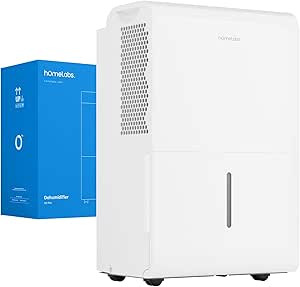 | Best for the Widest Basement Coverage | Standard dehumidification capacity: 50 pints per day at 80°F and 60% RH | Maximum stated capacity: Up to 120 pints per day at 95°F and 90% RH | Coverage area: Up to 7,000 sq ft | VIEW ON AMAZON | See Our Full Breakdown |
| DREO 110-Pint Smart Dehumidifier with Drain Hose, White |  | Best for Heavy Moisture Loads | Moisture removal capacity: 50–110 pints per day | Recommended floor area: Up to 4,500 sq ft | Tank volume: 2 gallons (8 liters) | VIEW ON AMAZON | See Our Full Breakdown |
| DREO Smart Dehumidifier, 75-Pint, for Rooms up to 4,500 Sq. Ft. |  | Best for Quiet, App-Monitored Operation | Moisture removal capacity: Up to 75 pints per day at 95°F and 95% RH | Coverage area: Up to 4,500 sq ft | Water tank: 1.85 gallons (7 L) | VIEW ON AMAZON | See Our Full Breakdown |
| KNKA Energy Star Certified 80-Pint Dehumidifier for Basements and Large Spaces (Up to 5500 Sq. Ft.) |  | Best for Larger Basements with Energy Certification | Maximum capacity: 80 pints per day | Coverage area: Up to 5,500 sq ft | Noise level: 40–45 dB | VIEW ON AMAZON | See Our Full Breakdown |
| 4500 Sq.Ft Dehumidifier with Drain Hose, Humidity Control, and Auto Shut-off |  | Best for Simple, Quiet Basement Control | Coverage area: Up to 4,500 sq ft | Dehumidification capacity: 45–80 pints | Noise level: 40 dB | VIEW ON AMAZON | See Our Full Breakdown |
| Dehumidifier for Home, 4,500 Sq. Ft., with Drain Hose |  | Best for Adjustable Airflow | Coverage: Up to 4,500 sq. ft. | Dehumidification capacity: 45–80 pints per day | Water tank: 1.72 gallons | VIEW ON AMAZON | See Our Full Breakdown |
| DuraComfort 50-Pint DOE Dehumidifier with Pump and WiFi |  | Best for Pumped Basement Drainage | DOE dehumidification capacity: 50 pints per day | Maximum capacity: Up to 129 pints per day under high-temperature, high-humidity conditions | Recommended floor area: Up to 4,500 sq. ft. | VIEW ON AMAZON | See Our Full Breakdown |
| Bufanli 100-Pint Energy Star Dehumidifier for Areas up to 6,000 Sq. Ft. |  | Best for Very Large, Humid Basements | Coverage: Up to 6,000 sq. ft. | Moisture removal: Up to 100 pints/day at 95°F and 90% RH; 60 pints/day at 86°F and 80% RH | Water tank: 1.45 gallons | VIEW ON AMAZON | See Our Full Breakdown |
| DREO Energy Star 2025 Smart Dehumidifier for Basement, 1.85 Gal Water Tank |  | Best for Energy Monitoring | Moisture removal: Up to 73 pints per day at 95°F and 90% RH | Energy certification: Energy Star 2025 certified | Water tank: 1.85 gallons (7 L) | VIEW ON AMAZON | See Our Full Breakdown |
| Midea 50 Pint Dehumidifier for Basement, 4,500 Sq. Ft, Energy star |  | Best for Straightforward Smart Control | Coverage: Up to 4,500 sq. ft. | Dehumidification capacity: 50 pints per day | Tank capacity: 1.6 gallons | VIEW ON AMAZON | See Our Full Breakdown |
| DR.PREPARE 65-Pint Smart Dehumidifier with Wi-Fi App Control, Drain Hose, and Sleep Mode for Large Spaces |  | Best Balanced High-Capacity Pick | Capacity: 65 pints per day | Coverage area: Up to 3,500 sq. ft. | Tank volume: 4.5 liters (1.19 gallons) | VIEW ON AMAZON | See Our Full Breakdown |
| 6000 Sq.Ft. Energy Star Dehumidifier for Basement, Max 100Pint/Day Smart WiFi Dehumidifier with Drain Hose, Voice & APP Control, Adjustable Humidistat for Home, Bedroom, Bathroom, Garage, RV(White) |  | Best for Very Large Basements | Maximum capacity: 100 pints per day at 95°F, 90% RH | Coverage area: Up to 6,000 sq. ft. | Energy certification: ENERGY STAR certified | VIEW ON AMAZON | See Our Full Breakdown |
| 32 Pint Dehumidifier for Basement and Home, 2600 Sq Ft with Drain Hose |  | Best for Moderate Basement Dampness | Capacity: 32 pints per day at 95°F, 90% RH | Coverage area: Up to 2,600 sq. ft. | Modes: DEHU, CONT, DRY | VIEW ON AMAZON | See Our Full Breakdown |
| AlorAir Sentinel HD55S Wi-Fi Crawl Space Dehumidifier |  | Best for Crawl Spaces and Tough Installations | Capacity at saturation: 120 pints per day | AHAM capacity: 55 pints per day | Coverage area: Up to 1,300 sq. ft. | VIEW ON AMAZON | See Our Full Breakdown |
| Manastin 2500 sq.ft Dehumidifier for Basement, Update Smart APP WiFi Control,35 Pint Dehumidifiers for Home with Drain Hose, 24H Timer & Child Lock, Quiet & Eco, Ideal for Large Rooms, Bedroom |  | Best Quiet Smart Pick for Smaller Basements | Capacity: 35 pints per day at 95°F, 95% RH | Coverage area: Title claims up to 2,500 sq. ft.; product information lists 1,000 sq. ft. | Tank volume: 0.8 gallons | VIEW ON AMAZON | See Our Full Breakdown |
| smart dehumidifier for basement high capacity | Coverage area | Drainage |
|---|---|---|
| hOmeLabs Wi-Fi Dehumidifier | Up to 7,000 sq ft | — |
| DREO 110-Pint Smart Dehumidifi | — | Tank or drain hose |
| DREO Smart Dehumidifier | Up to 4,500 sq ft | Manual emptying or continuous drainage with 25 mm hose |
| KNKA Energy Star Certified 80- | Up to 5,500 sq ft | — |
| 4500 Sq.Ft Dehumidifier with D | Up to 4,500 sq ft | Drain hose or removable tank |
| Dehumidifier for Home | — | Tank with automatic shutoff or included drain hose |
| DuraComfort 50-Pint DOE Dehumi | — | Built-in pump, gravity drain, or removable tank |
| Bufanli 100-Pint Energy Star D | — | Manual tank, continuous hose, or garden drainage connection |
| DREO Energy Star 2025 Smart De | — | Manual tank or hose for continuous drainage |
| Midea 50 Pint Dehumidifier for | — | Removable tank or continuous drainage through a hose connection; hose not included |
| DR.PREPARE 65-Pint Smart Dehum | Up to 3,500 sq. ft. | — |
| 6000 Sq.Ft. Energy Star Dehumi | Up to 6,000 sq. ft. | — |
| 32 Pint Dehumidifier for Basem | Up to 2,600 sq. ft. | — |
| AlorAir Sentinel HD55S Wi-Fi C | Up to 1,300 sq. ft. | — |
| Manastin 2500 sq.ft Dehumidifi | Title claims up to 2,500 sq. ft.; product information lists 1,000 sq. ft. | — |
More Details on Our Top Picks
hOmeLabs Wi-Fi Dehumidifier, 50 Pint, for Spaces up to 7,000 Sq Ft
I rank the hOmeLabs first for buyers whose main challenge is covering a broad basement: its stated 7,000-square-foot coverage is the largest in this group, paired with Wi-Fi control and up to 50 pints per day under standard conditions. The app makes it easier to check and adjust humidity without walking down to the unit, while wheels and handles help when you need to reposition it. Compared with the DREO 110-Pint, this model lists a larger coverage area but a lower stated daily capacity, so it is the stronger fit for wide spaces rather than the most intense moisture loads. Its tradeoff is hands-on drainage: the 1.6-gallon tank can fill quickly in damp conditions, and the hose is not included. Choose continuous drainage if you want less frequent emptying.
Pros:- Largest stated coverage area in this five-product group at up to 7,000 square feet
- Wi-Fi control allows remote humidity adjustments
- Continuous-drain outlet can reduce tank-emptying chores
- Wheels and handles make the 40-pound unit easier to move
Cons:- The 1.6-gallon tank may require frequent emptying during heavy operation
- Drainage hose is not included
- Its 50-pint standard-condition capacity is below the DREO 110-Pint model’s stated maximum
Best for: Owners of wide, open basements who want Wi-Fi monitoring and can set up a separate continuous-drain hose.
Not ideal for: Buyers with severe, persistent dampness who need the highest listed moisture-removal capacity, or anyone who wants a drain hose included.
- Standard dehumidification capacity:50 pints per day at 80°F and 60% RH
- Maximum stated capacity:Up to 120 pints per day at 95°F and 90% RH
- Coverage area:Up to 7,000 sq ft
- Tank capacity:1.6 gallons
- Airflow:165 CFM
- Controls and features:Wi-Fi control, timer, Turbo mode, automatic defrost and restart
- Dimensions and weight:11 × 15.4 × 24.3 in; 40 lbs
Our verdict“Choose the hOmeLabs if broad coverage and app control matter more than maximum moisture removal or an included hose.”
DREO 110-Pint Smart Dehumidifier with Drain Hose, White
The DREO earns its place for basements where moisture removal takes priority over maximizing the floor area listed on the box. Its stated range of 50–110 pints per day is the highest peak capacity among these five, and the 2-gallon tank or continuous-drain setup gives owners two ways to manage collected water. App scheduling and Alexa or Google Home control add useful remote operation, while three modes let you tailor the unit to different conditions. Compared with the hOmeLabs Wi-Fi Dehumidifier, the DREO lists less coverage—4,500 rather than 7,000 square feet—but greater peak extraction and a larger tank. The 110-pint figure applies under warm, very humid conditions, so it should not be treated as an everyday baseline. Without the hose, tank emptying may still interrupt operation.
Pros:- Highest listed peak capacity in this group at up to 110 pints per day
- App, Alexa, and Google Home controls support remote operation
- Continuous drainage is available alongside a 2-gallon tank
- Three operating modes and three speeds offer adjustment options
Cons:- The 110-pint maximum is specified for warm, very humid conditions
- Its stated 4,500-square-foot coverage is below the hOmeLabs model’s 7,000 square feet
- Tank operation can require frequent emptying during sustained dehumidification
Best for: Owners of very damp basements who want high peak extraction, smart-home control, and a continuous-drain option.
Not ideal for: Buyers focused on covering the broadest possible floor area, or those who plan to rely on the tank without frequent emptying.
- Moisture removal capacity:50–110 pints per day
- Recommended floor area:Up to 4,500 sq ft
- Tank volume:2 gallons (8 liters)
- Operating modes:Comfort, Auto, Continuous
- Airflow:210 CFM
- Controls:DREO app, Alexa, and Google Home
- Drainage:Tank or drain hose
- Dimensions and weight:11.3 × 15.4 × 24.4 in; 12.37 kg
Our verdict“Pick the DREO when a damp basement calls for the highest listed extraction capacity and you can use continuous drainage.”
DREO Smart Dehumidifier, 75-Pint, for Rooms up to 4,500 Sq. Ft.
This DREO is the more measured smart pick for buyers who want to track energy use and keep basement noise down, rather than chase the lineup’s highest peak capacity. It removes up to 75 pints per day under the stated 95°F and 95% RH conditions, covers up to 4,500 square feet, and adds app energy monitoring and scheduling. Its listed 41 dB noise level and sleep mode make it a more comfortable choice near a finished basement room than the high-capacity DREO 110-Pint, although that model has a higher peak rating. The 1.85-gallon tank is useful for temporary or hose-free operation, but heavy moisture loads can still mean frequent emptying. Continuous drainage needs a hose, so buyers should plan the route before placing the unit.
Pros:- App includes humidity targets, scheduling, and energy monitoring
- Listed 41 dB noise level and sleep mode suit quieter household spaces
- Continuous drainage and a 1.85-gallon tank provide two water-management options
- Features include auto shutoff, auto defrost, and a full-tank alert
Cons:- Its 75-pint maximum is below the DREO 110-Pint model’s stated 110-pint peak
- The 1.85-gallon tank may need frequent emptying under heavy use
- Continuous drainage requires a separately routed hose
Best for: Households with a finished basement who want app scheduling, energy-use visibility, and quieter operation.
Not ideal for: Owners of exceptionally damp basements seeking the highest peak capacity, or buyers unwilling to connect a drainage hose or empty a tank.
- Moisture removal capacity:Up to 75 pints per day at 95°F and 95% RH
- Coverage area:Up to 4,500 sq ft
- Water tank:1.85 gallons (7 L)
- Listed noise level:41 dB
- Tank runtime:Up to 15 hours
- Controls:DREO app with humidity target, scheduling, and energy monitoring
- Drainage:Manual emptying or continuous drainage with 25 mm hose
- Certification:ENERGY STAR 2025
Our verdict“Choose this DREO if quiet operation and app-based energy monitoring matter more than the group’s highest extraction capacity.”
KNKA Energy Star Certified 80-Pint Dehumidifier for Basements and Large Spaces (Up to 5500 Sq. Ft.)
The KNKA sits between the broad-coverage hOmeLabs and the more app-centered DREO models: it pairs an 80-pint maximum with stated coverage up to 5,500 square feet and ENERGY STAR certification. For a large basement, that mix favors substantial moisture removal without choosing the group’s highest stated peak. Its color-changing humidity indicator and real-time display make conditions easier to read at the unit, while the 6.56-foot drain hose supports continuous operation. The 40–45 dB noise claim also makes it a plausible option near living areas. Unlike the DREO 75-Pint, the supplied details emphasize on-unit humidity feedback rather than app energy monitoring. The built-in tank holds 1.45 gallons; the larger 2.64-gallon external tank is optional, adding a separate purchase and setup step.
Pros:- 80-pint maximum and stated coverage up to 5,500 square feet suit larger spaces
- ENERGY STAR certified
- Included 6.56-foot hose supports continuous drainage
- Real-time display and color-changing indicator show humidity conditions
Cons:- Built-in tank capacity is 1.45 gallons; the larger external tank is optional
- Product details do not list app or voice-assistant controls
- Requires a 24-hour upright standing period before first use
Best for: Owners of large basements who want ENERGY STAR certification, clear on-unit humidity feedback, and included hose drainage.
Not ideal for: Buyers who want app or voice control, or those who need a larger tank without buying an optional external reservoir.
- Maximum capacity:80 pints per day
- Coverage area:Up to 5,500 sq ft
- Noise level:40–45 dB
- Built-in tank capacity:1.45 gallons
- Optional external tank:2.64 gallons
- Drain hose:6.56 ft (2 m)
- Modes and humidity setting:Auto, Dry, and Setting; 30%–80% RH
- Certification:ENERGY STAR certified
Our verdict“The KNKA is a strong fit for a large basement when certification and included hose drainage outweigh app-based control.”
4500 Sq.Ft Dehumidifier with Drain Hose, Humidity Control, and Auto Shut-off
This model is a practical choice for buyers who want quiet operation and flexible drainage without making app control the deciding factor. Its 45–80-pint capacity range and stated 4,500-square-foot coverage put it in the same broad footprint class as the DREO 75-Pint, while 40 dB operation and five selectable modes suit a basement used for more than storage. The ENERGY STAR 2026 certification is another point in its favor for shoppers comparing efficiency credentials. Compared with the KNKA 80-Pint, it lists the same upper capacity but less coverage and no stated humidity display; in return, its product details call out a 24-hour timer and child lock. The listed information does not specify tank volume or smart-app features, so buyers should verify those needs before choosing it.
Pros:- 45–80-pint capacity range covers adjustable moisture-control needs
- Listed 40 dB operation suits quieter household spaces
- Dual drainage supports hose use or removable-tank operation
- ENERGY STAR 2026 certification, five modes, and a 24-hour timer
Cons:- Coverage is listed at 4,500 square feet, below the KNKA and hOmeLabs figures
- Product details do not specify tank capacity
- No app or voice-assistant control is listed
Best for: People using a finished or occupied basement who value quiet running, selectable modes, and either tank or hose drainage.
Not ideal for: Buyers who need app or voice control, a stated tank size, or broader coverage than 4,500 square feet.
- Coverage area:Up to 4,500 sq ft
- Dehumidification capacity:45–80 pints
- Noise level:40 dB
- Certification:ENERGY STAR 2026
- Drainage:Drain hose or removable tank
- Working modes:5 selectable modes
- Timer:24-hour programmable
- Safety features:Auto shutoff, child lock, and auto defrost
Our verdict“Choose this model for quiet, flexible basement dehumidification if smart-app features and a specified tank size are not priorities.”
Dehumidifier for Home, 4,500 Sq. Ft., with Drain Hose
I’d shortlist this model for a basement where directing airflow matters as much as automatic humidity control. Its 90-degree adjustable outlet can aim dry air toward a damp zone, while the included hose supports continuous drainage instead of relying on the 1.72-gallon tank. The stated capacity spans 45–80 pints per day, so I’d check which operating conditions apply before comparing it directly with the DuraComfort’s clearly stated 50-pint DOE capacity or the Bufanli’s 100-pint maximum under hot, humid conditions. Energy Star certification, defrost protection, and a sleep mode add useful operating safeguards. The tradeoff is less certainty around real-world capacity, and the tank may require frequent emptying if a drain hose is impractical. Its listed 10-pound weight is also unusually low for a compressor unit, so I’d verify the product details before planning placement.
Pros:- Adjustable 90-degree air outlet helps direct airflow toward a damp area.
- Included hose allows continuous drainage; the tank also has automatic shutoff.
- Energy Star certification plus automatic defrost and overload protection.
- Sleep mode, child lock, timer, and washable filter add useful controls.
Cons:- The 45–80-pint capacity range makes comparison with single-rated models less straightforward.
- The 1.72-gallon tank may need frequent emptying during sustained moisture removal.
- The listed 10-pound weight is unusually low for this stated capacity, so verify specifications before buying.
Best for: Basement owners who want adjustable airflow, automatic humidity control, and a nearby floor drain for continuous operation.
Not ideal for: Buyers who need a clearly comparable capacity rating or intend to rely on the tank in a very damp basement.
- Coverage:Up to 4,500 sq. ft.
- Dehumidification capacity:45–80 pints per day
- Water tank:1.72 gallons
- Drainage:Tank with automatic shutoff or included drain hose
- Noise level:40 dB
- Humidity setting:30%–80%
- Air outlet:90-degree adjustable
- Dimensions:8.6 x 14.6 x 23.8 in.
- Features:Energy Star certified, auto defrost, overload protection, sleep mode, child lock, 24-hour timer, washable filter, and four swivel wheels
Our verdict“Choose it if adjustable airflow and hose drainage suit your basement, but favor a model with a clearer capacity rating if moisture load is your main concern.”
DuraComfort 50-Pint DOE Dehumidifier with Pump and WiFi
The DuraComfort is the most practical pick here when the basement has no convenient floor drain. Its built-in pump lifts water up to 16.4 feet, giving it a drainage advantage over the Midea 50 Pint, which offers a hose connection but no listed pump. App control over 2.4 GHz Wi-Fi lets me check and adjust operation remotely, while auto restart can restore settings after a power interruption. The 50-pint DOE rating is a more useful baseline for comparison than its separate 129-pint maximum, which applies under high-temperature, high-humidity conditions. Its 12-pint tank is available as a fallback, but it is not large enough to make manual emptying carefree during heavy moisture removal. At 44 pounds, this is also a substantial unit to move between rooms.
Pros:- Built-in pump with up to 16.4-foot lift suits basements without a floor-level drain.
- Offers pump, gravity-drain, and removable-tank drainage options.
- Wi-Fi app control, auto restart, auto defrost, and a 24-hour timer.
- 50-pint DOE capacity and stated coverage up to 4,500 sq. ft.
Cons:- Wi-Fi setup requires a 2.4 GHz network.
- The 12-pint tank may need regular emptying when continuous drainage is not used.
- At 44 pounds, moving it between floors or rooms takes effort.
Best for: Basement owners without a nearby drain who need app control and a pump to route condensate to a higher drain or sink.
Not ideal for: Buyers who want a lightweight unit, do not use a 2.4 GHz Wi-Fi network, or expect the 129-pint maximum to represent typical operation.
- DOE dehumidification capacity:50 pints per day
- Maximum capacity:Up to 129 pints per day under high-temperature, high-humidity conditions
- Recommended floor area:Up to 4,500 sq. ft.
- Tank capacity:12 pints
- Drainage:Built-in pump, gravity drain, or removable tank
- Pump lift:Up to 16.4 ft.
- Connectivity:2.4 GHz Wi-Fi
- Airflow:150 CFM
- Dimensions and weight:11 x 15 x 24 in.; 44 lb
Our verdict“Pick the DuraComfort when a built-in pump solves your basement’s drainage problem; choose the Midea instead if a gravity-drain hose is enough and you prefer simpler drainage.”
Bufanli 100-Pint Energy Star Dehumidifier for Areas up to 6,000 Sq. Ft.
For a very large basement or a persistently damp lower level, the Bufanli offers the broadest stated coverage in this group: up to 6,000 sq. ft. Its headline 100-pint figure is tied to 95°F and 90% relative humidity; at 86°F and 80% RH, the stated removal rate is 60 pints per day. That distinction matters when comparing it with the DREO 73-Pint, whose listed maximum uses the hotter, more humid test condition. Wi-Fi, app, Alexa, and Google Assistant control make remote adjustments convenient, while three drainage approaches provide flexibility. The tradeoff is a relatively small 1.45-gallon tank: for sustained basement use, I’d plan on hose drainage rather than frequent manual emptying. Its strongest case is capacity for a broad area, not tank convenience.
Pros:- Rated for areas up to 6,000 sq. ft., the largest stated coverage among these five models.
- Provides capacity figures for both very hot, humid conditions and a less extreme test condition.
- Supports Wi-Fi app control and Alexa and Google Assistant voice control.
- Offers tank, hose, and garden-connection drainage options with automatic restart and defrost.
Cons:- The 100-pint maximum applies at 95°F and 90% RH, not all basement conditions.
- The 1.45-gallon tank can require frequent emptying during manual operation.
- Its large-area capacity may be unnecessary for smaller basements.
Best for: Owners of expansive, humid basements who can use continuous drainage and want app or voice control.
Not ideal for: People who will rely on manual tank emptying, or buyers whose space is modest and does not need its larger stated coverage.
- Coverage:Up to 6,000 sq. ft.
- Moisture removal:Up to 100 pints/day at 95°F and 90% RH; 60 pints/day at 86°F and 80% RH
- Water tank:1.45 gallons
- Drainage:Manual tank, continuous hose, or garden drainage connection
- Connectivity:Wi-Fi, iOS and Android app, Alexa, and Google Assistant
- Sleep mode noise:36 dB
- Timer:24 hours
- Protection features:Auto shutoff, automatic restart, power-off memory, overload protection, child lock, and auto defrost
Our verdict“Choose the Bufanli for a large, damp basement with continuous drainage; the DREO 73-Pint is a more measured fit when its stated coverage and lower capacity better match the job.”
DREO Energy Star 2025 Smart Dehumidifier for Basement, 1.85 Gal Water Tank
The DREO’s clearest distinction is the combination of a 73-pint daily maximum and app-based energy monitoring. The app can show energy use and let me adjust humidity remotely, which is useful for keeping track of a unit running for long stretches in a basement. Its Energy Star 2025 certification and stated claim of using 30% less energy than standard DOE models add an efficiency angle that the product data for the Midea 50 Pint does not spell out in the same way. The listed 73-pint capacity applies at 95°F and 90% RH, so it should not be treated as a typical basement rate. A 1.85-gallon tank is larger than the Bufanli’s, but frequent emptying can still be a nuisance; a hose is the better choice for continuous operation.
Pros:- Up to 73 pints/day of removal under the stated 95°F and 90% RH conditions.
- App control includes real-time energy-use monitoring and remote humidity adjustment.
- Energy Star 2025 certified, with a stated energy-use reduction claim.
- 1.85-gallon tank, hose drainage, auto shutoff, auto defrost, and water-level detection.
Cons:- The stated 73-pint maximum is tied to very hot, humid conditions.
- No coverage-area figure is provided in the supplied product data.
- No built-in pump is listed, and the tank can still need frequent emptying without hose drainage.
Best for: Basement owners who want app-based energy tracking alongside a high-capacity unit and can connect a drain hose.
Not ideal for: Buyers who need a built-in pump, a fully specified coverage area, or a capacity figure measured under ordinary basement conditions.
- Moisture removal:Up to 73 pints per day at 95°F and 90% RH
- Energy certification:Energy Star 2025 certified
- Water tank:1.85 gallons (7 L)
- Noise level:41 dB
- Connectivity:DREO app with remote control and energy-use monitoring
- Drainage:Manual tank or hose for continuous drainage
- Timer:Timer included; duration not specified in supplied data
- Protection features:Full-tank alert, auto shutoff, auto defrost, water-level detection, and child lock
Our verdict“Pick the DREO if energy monitoring and app controls matter more than pumped drainage or a stated coverage-area rating.”
Midea 50 Pint Dehumidifier for Basement, 4,500 Sq. Ft, Energy star
The Midea makes sense for buyers who want a familiar 50-pint class unit with Wi-Fi and voice control, without paying for a built-in pump they may not need. It covers a stated 4,500 sq. ft. and removes up to 50 pints per day, while its 1.6-gallon bucket or standard hose connection gives two basic drainage paths. Compared with the DuraComfort, it lacks a pump for lifting water to a higher outlet; compared with the DREO, its supplied details do not include app energy monitoring. Its strengths are a 470-watt rating, three fan speeds, and four wheels for moving it around a home. Low-mode sound is listed as 49 dBA, but another sound figure is 54 dBA, so I would not choose it primarily for quiet operation.
Pros:- 50-pint daily capacity and stated coverage up to 4,500 sq. ft.
- Wi-Fi app control works with Alexa and Google Assistant.
- Offers a 1.6-gallon bucket or continuous drainage through a standard hose connection.
- Four wheels, handles, digital controls, and three fan speeds support flexible placement and operation.
Cons:- No built-in pump is listed, so drainage depends on gravity or tank emptying.
- The 1.6-gallon bucket may need regular emptying during sustained high-moisture use.
- Listed sound figures vary between 49 dBA on low mode and 54 dBA elsewhere in the supplied details.
Best for: Homeowners with a 4,500-square-foot basement area, a nearby floor drain, and a preference for app or voice control.
Not ideal for: Buyers who need a pump to move water upward, want a larger tank, or prioritize the quietest operation.
- Coverage:Up to 4,500 sq. ft.
- Dehumidification capacity:50 pints per day
- Tank capacity:1.6 gallons
- Drainage:Removable tank or continuous drainage through a hose connection; hose not included
- Connectivity:Wi-Fi, SmartHome app, Alexa, and Google Assistant
- Power:470 watts
- Airflow and fan speeds:223.7 CFM; 3 speeds
- Noise:49 dBA on low mode; 54 dBA also listed
- Dimensions and weight:11.1 x 15.43 x 24.25 in.; 41.2 lb
Our verdict“Choose the Midea for app-controlled 50-pint dehumidification when gravity drainage works; opt for the DuraComfort if your basement needs a pump.”
DR.PREPARE 65-Pint Smart Dehumidifier with Wi-Fi App Control, Drain Hose, and Sleep Mode for Large Spaces
I’d place the DR.PREPARE between smaller room-focused units and the biggest basement machines: its 65-pint daily capacity and stated 3,500-square-foot coverage suit a sizeable basement without moving up to a 100-pint model. Wi-Fi control through Smart Life lets me check or adjust operation remotely, while the included hose supports continuous drainage instead of frequent tank emptying. Its 38 dB sleep mode is a useful advantage if the basement connects to a bedroom or living area. Compared with the 100-pint 6,000-square-foot model in this group, it offers less stated extraction and coverage, but its listed footprint is relatively compact. The tradeoffs are a 1.19-gallon tank if hose drainage is unavailable and a required 24-hour standing period before first use; it also depends on closed doors and windows for best performance.
Pros:- 65-pint daily capacity and stated coverage up to 3,500 square feet suit many large basements.
- Wi-Fi control through the Smart Life app supports remote adjustments.
- Included drain hose enables continuous water removal.
- 38 dB sleep mode is quieter than a typical high-output operating setting.
Cons:- The 1.19-gallon tank fills quickly during heavy moisture removal if continuous drainage is not used.
- Requires 24 hours standing before first use.
- Performance depends on keeping doors and windows closed.
Best for: Homeowners with a medium-to-large, enclosed basement who want app control, hose drainage, and a quieter mode for nearby living spaces.
Not ideal for: Owners of very large or persistently wet basements who need the higher stated capacity and coverage of the 100-pint 6,000-square-foot model.
- Capacity:65 pints per day
- Coverage area:Up to 3,500 sq. ft.
- Tank volume:4.5 liters (1.19 gallons)
- Connectivity:Wi-Fi / Smart Life App
- Modes:Auto, Continuous, Sleep
- Sleep-mode noise:38 dB
- Dimensions:9.6 in D × 12 in W × 19.5 in H
Our verdict“Choose the DR.PREPARE if your enclosed basement needs substantial moisture removal and smart controls without the scale of a 100-pint unit.”
6000 Sq.Ft. Energy Star Dehumidifier for Basement, Max 100Pint/Day Smart WiFi Dehumidifier with Drain Hose, Voice & APP Control, Adjustable Humidistat for Home, Bedroom, Bathroom, Garage, RV(White)
For a basement where broad coverage and high extraction matter more than a small footprint, this model makes the strongest capacity case in this set: it lists up to 100 pints per day and coverage up to 6,000 square feet. The rating is condition-dependent—60 pints per day is stated at 86°F and 80% RH—so I wouldn’t treat the maximum as a promise for every basement. Its Basement mode targets about 40% RH, while app and Alexa control make adjustments easier when the unit sits out of the way. Compared with the DR.PREPARE 65-pint, it offers more stated capacity and coverage, plus Energy Star certification, but it is larger and heavier. A 4.28-liter tank is modest for a high-output machine, so the included hose is the practical choice for long unattended runs.
Pros:- Up to 100 pints per day and stated coverage up to 6,000 square feet address large-area needs.
- Energy Star certification and 275-watt listed power draw support an efficiency-focused choice.
- Basement mode targets about 40% relative humidity, with custom settings from 30% to 80%.
- Tuya or Smart Life app control and Amazon Alexa compatibility offer remote operation.
Cons:- The 100-pint maximum is specified at 95°F and 90% RH; the stated rate falls to 60 pints at 86°F and 80% RH.
- The 4.28-liter tank is small for a machine intended for high-output, extended use.
- At 30.9 pounds and roughly 13.62 × 10.47 × 19.57 inches, it is less compact than the DR.PREPARE.
Best for: Owners of large, damp basements who want high stated extraction, a basement-specific humidity mode, and remote or voice control.
Not ideal for: Buyers with a compact basement, limited drainage access, or a preference for a larger water tank instead of continuous hose drainage.
- Maximum capacity:100 pints per day at 95°F, 90% RH
- Coverage area:Up to 6,000 sq. ft.
- Energy certification:ENERGY STAR certified
- Power:275 watts
- Tank volume:4.28 liters (1.13 gallons)
- Connectivity:Tuya / Smart Life app; Amazon Alexa compatible
- Dimensions and weight:13.62 in D × 10.47 in W × 19.57 in H; 30.9 lb
Our verdict“Pick this model for a large basement where its broad stated coverage, smart controls, and hose drainage outweigh the small tank and larger body.”
32 Pint Dehumidifier for Basement and Home, 2600 Sq Ft with Drain Hose
This 32-pint model is the restrained choice in a roundup centered on high-capacity basement control. Its stated reach of up to 2,600 square feet can suit a moderately damp basement or an open lower level, but its extraction rate is well below the DR.PREPARE’s 65 pints and the 100-pint 6,000-square-foot unit. I’d favor it when the basement has a manageable moisture load and the buyer also wants DEHU, CONT, and laundry-drying modes. The 39–42 dB operating range and auto-restart add useful day-to-day convenience, and a 39.4-inch hose supports continuous gravity drainage. The main compromise is the 2-liter tank, which can call for frequent emptying if the hose cannot drain freely. Its listed capacity is measured at 95°F and 90% RH, so actual extraction may vary with basement conditions.
Pros:- Three modes include adjustable dehumidification, continuous operation, and laundry drying.
- 39.4-inch gravity hose allows continuous drainage.
- Auto-restart resumes settings after a power interruption.
- 39–42 dB listed operating range and child lock suit shared household spaces.
Cons:- 32-pint capacity is notably below the DR.PREPARE 65-pint and 100-pint alternatives.
- The 2-liter tank is small for prolonged use without the drain hose.
- The capacity rating is specified at 95°F and 90% RH, so it may not reflect cooler basement conditions.
Best for: Households with a moderately damp basement or open lower level who want humidity and laundry-drying modes without needing a 65- or 100-pint machine.
Not ideal for: Owners facing persistent heavy dampness or a large basement who need greater extraction capacity than 32 pints per day.
- Capacity:32 pints per day at 95°F, 90% RH
- Coverage area:Up to 2,600 sq. ft.
- Modes:DEHU, CONT, DRY
- Humidity setting range:30%–80%
- Tank volume:2 liters
- Drain hose:39.4-inch gravity tube
- Noise level:39–42 dB
- Additional features:24-hour timer, auto-restart, auto-defrost, child lock
Our verdict“Choose this unit for moderate basement moisture and useful drying modes, but step up to a higher-capacity model for a persistently wet or expansive space.”
AlorAir Sentinel HD55S Wi-Fi Crawl Space Dehumidifier
The Sentinel HD55S differs from the portable room-style units here: it is built for crawl spaces and similar installations, with corrosion protection, automatic defrost, and restart features that suit less accessible locations. Its rating needs careful reading: the headline 120 pints per day is at saturation, while its AHAM capacity is 55 pints per day. For a basement buyer, that AHAM figure is the more useful comparison against the DR.PREPARE’s 65-pint rating; this is not the clear capacity upgrade its maximum number might suggest. Coverage is listed at 1,300 square feet, also far below the 6,000-square-foot 100-pint model. The payoff is a specialized build, Wi-Fi humidity control, ETL listing, and a six-year limited warranty. I’d skip it for a finished basement where portable placement and broader coverage matter more.
Pros:- Corrosion protection is suited to damp crawl-space and basement environments.
- Wi-Fi app control provides remote humidity monitoring and adjustment.
- Automatic defrost and restart support operation in less accessible installations.
- ETL listed and backed by a six-year limited warranty.
Cons:- The 120-pint figure is at saturation; the listed AHAM capacity is 55 pints per day.
- Coverage is limited to a stated 1,300 square feet, below the large-area portable models.
- The six-year warranty includes only two years of full coverage.
Best for: Homeowners or property managers installing a dehumidifier in a crawl space, utility area, or smaller basement where corrosion protection and remote monitoring matter.
Not ideal for: Buyers seeking broad coverage for a large finished basement or comparing capacity solely by the 120-pint saturation figure.
- Capacity at saturation:120 pints per day
- AHAM capacity:55 pints per day
- Coverage area:Up to 1,300 sq. ft.
- Dimensions:19.2 × 12.2 × 13.3 in
- Weight:41.7 lb
- Controls and protection:Wi-Fi app control, adjustable humidity, automatic defrost and restart, corrosion protection
- Safety listing:ETL listed
- Warranty:Six-year limited warranty; two years of full coverage
Our verdict“Choose the Sentinel HD55S for a crawl space or damp utility installation where its specialized protection matters more than broad basement coverage.”
Manastin 2500 sq.ft Dehumidifier for Basement, Update Smart APP WiFi Control,35 Pint Dehumidifiers for Home with Drain Hose, 24H Timer & Child Lock, Quiet & Eco, Ideal for Large Rooms, Bedroom
The Manastin favors quieter, room-friendly operation over the raw extraction of the largest basement units. It removes up to 35 pints per day under the listed 95°F, 95% RH conditions and advertises coverage up to 2,500 square feet, placing it closer to the 32-pint model than to the DR.PREPARE or 100-pint option. Its Smart Life app, adjustable humidity range, auto-defrost, and included drain hose make it well equipped for routine control. The claimed 30 dB low-noise figure may appeal when the basement is used as a bedroom or family room, though it is not a substitute for higher capacity when moisture is severe. One data mismatch deserves attention: the title claims 2,500-square-foot coverage, while the product information lists 1,000 square feet. I’d verify fit before choosing it for a large basement.
Pros:- Smart Life app and touch controls allow remote adjustments and humidity monitoring.
- Includes a 39-inch drain hose and a 0.8-gallon tank with automatic shutoff.
- Auto-defrost, 24-hour timer, and child lock add practical operating controls.
- Claims operation as low as 30 dB for spaces where noise is a concern.
Cons:- 35-pint capacity is far below the 65-pint DR.PREPARE and 100-pint large-area option.
- Coverage information conflicts: the title claims 2,500 square feet while product data lists 1,000 square feet.
- App pairing requires a 2.4 GHz Wi-Fi network; 5 GHz is not supported.
Best for: Buyers with a smaller or moderately damp basement who prioritize Wi-Fi scheduling and quiet operation near bedrooms or living areas.
Not ideal for: Owners of large or heavily damp basements who need dependable high-capacity extraction or clear confirmation of coverage beyond 1,000 square feet.
- Capacity:35 pints per day at 95°F, 95% RH
- Coverage area:Title claims up to 2,500 sq. ft.; product information lists 1,000 sq. ft.
- Tank volume:0.8 gallons
- Connectivity:Wi-Fi / Smart Life App; 2.4 GHz network required
- Humidity range:30%–80% RH
- Modes:Auto, Manual, Drying
- Noise claim:As low as 30 dB
- Dimensions and weight:9.21 in D × 12.18 in W × 20.21 in H; 22.4 lb
Our verdict“Choose the Manastin for a quieter, app-controlled smaller basement, but verify its conflicting coverage figures before relying on it for a large area.”

How We Picked
I ranked these options around the needs behind this search: sustained moisture removal in a basement, convenient drainage, and usable smart controls. Capacity claims and stated coverage were weighed together rather than treated as interchangeable, since the product names provide no shared test conditions for comparing square-foot figures. I gave extra weight to products whose listed capacity and basement or large-space positioning suggest a stronger fit for demanding spaces, while distinguishing pump-assisted drainage from a standard drain-hose setup.
The ranking also accounts for usability and fit. Wi-Fi features, energy certification, sleep mode, tank details, and purpose-built crawl-space design can change which model suits a buyer, but they do not outweigh capacity and practical drainage for a persistently damp basement. Where a listing gives limited detail—such as the generic 4,500-square-foot models—I treat that uncertainty as a reason to rank it below options with clearer stated specifications, not as proof of poor performance.
Factors to Consider When Choosing Smart Dehumidifier For Basement High Capacity
Choosing a basement dehumidifier is less about finding the biggest number and more about getting reliable moisture removal without creating a maintenance chore. I’d check the moisture source, drainage route, and the space’s layout before comparing app features. These factors help separate a sensible high-capacity purchase from an oversized unit—or one that cannot drain where you need it.
Match capacity to moisture load, not just square footage
Floor-area figures are useful for an initial shortlist, but they do not tell the whole story. A basement with wet walls, frequent seepage, or humid air from outdoors can demand more drying capacity than a similarly sized finished space. Look for a capacity rating as well as a coverage claim, then compare those details across models rather than assuming every square-foot figure uses the same conditions. If the listing leaves its test basis unclear, treat its coverage number as a rough guide. Buying extra capacity can help with a persistent moisture load, but a much larger unit may add operating noise and energy use without solving water entry. Address leaks and drainage problems at their source instead of asking a dehumidifier to handle standing water.
Plan the drain before choosing between a hose and pump
A continuous-drain hose reduces bucket emptying, but gravity drainage works only when the outlet sits below the unit and the hose can maintain a clear downward path. If the drain is higher than the dehumidifier or far away, a model with a pump may fit the space better. Measure the route and check where discharged water can go before ordering; a hose connection alone does not mean the appliance can lift water uphill. A condensate pump may add flexibility, but it also adds a component that needs power and occasional upkeep. If you rely on the tank, consider how often you can empty it during humid weather. Drainage that fits the room is often more useful than a small advantage in rated capacity.
Treat smart features as a control tool, not a moisture fix
App control can help you check settings or adjust operation when you are away, which is handy for a basement that is not visited daily. It does not replace a suitable capacity rating, a functioning drain, or a stable Wi-Fi connection in a below-grade room. Check whether the model’s listing clearly identifies the controls you want, such as remote humidity adjustment, scheduling, or voice support; a product labeled smart does not automatically promise every feature. Think about who will manage the unit: a simple humidity setting and automatic restart may matter more than a long feature list. If the router signal is weak downstairs, local controls should still be straightforward. Prioritize app features that solve a real monitoring or access problem.
Check the whole-room fit: noise, clearance, and airflow
Basements often double as offices, bedrooms, laundry rooms, or storage areas, so a unit’s placement affects comfort as well as drying. A high-capacity model may be bulky, and it needs open space around its air intake and outlet to circulate air effectively. Check the dimensions and recommended clearances before choosing a location, especially near shelving or walls. If people spend time in the room, sleep or quiet modes can matter, though they may change how the unit runs. Keep the appliance on a level surface and avoid blocking airflow with stored items. A model that fits its intended spot is more likely to operate consistently than one chosen from capacity figures alone.
Separate a basement appliance from a crawl-space system
A portable dehumidifier for an accessible basement room is not necessarily the right tool for a low, enclosed crawl space. Crawl-space units are designed for a different installation context, where access, airflow, and discharge routing can differ from a finished basement. The AlorAir Sentinel HD55S is explicitly identified as a crawl-space model, so compare it on that basis rather than treating it as a direct replacement for a room unit. Before buying for a crawl space, check installation requirements, operating temperature limits, and drainage details in the full product documentation. For a normal basement, a portable model with accessible controls and a practical tank or hose arrangement is often easier to place and service. Choosing by room type helps avoid a mismatch even when capacity numbers look appealing.
Weigh energy use and maintenance against headline capacity
A higher pint-per-day rating does not by itself reveal how much electricity the unit uses during your normal operation. Energy certification can help narrow choices, but compare the full appliance details and consider how many hours per day it may run. Filter access, tank handling, hose cleaning, and restart behavior all affect the effort of long-term ownership. A model with a large capacity but awkward drainage can become more work than a slightly smaller unit that drains continuously. Check how the unit responds when its tank fills and whether its controls make humidity settings easy to maintain. I’d pay more for capacity or a pump when the basement’s moisture burden or drain layout calls for it, not simply because the specification is larger.
Frequently Asked Questions
Is a 100-pint or 110-pint model always better for a basement?
No. A higher stated pint capacity is a stronger starting point for a large or persistently damp basement, but it does not guarantee a better fit for every space. Compare the capacity and coverage claims, then account for how wet the basement gets and how often the unit will run. A smaller model may suit a moderately humid area and be easier to place or live with. If water is entering through a leak or seepage, fix that source rather than relying on extra capacity alone.
Should I choose a pump-equipped dehumidifier or one with a drain hose?
Choose based on where the water needs to go. A standard drain hose is a straightforward option when the outlet sits below the unit and the hose can slope continuously downward. A built-in pump can help when the drain is higher or farther away, but it adds another part that needs power and may need maintenance. Before deciding, map the path from the appliance to the drain and check the model’s pump and hose instructions. If the route is simple, a pump may offer little practical benefit.
Will Wi-Fi control work reliably in a basement?
It depends on the strength of your home network where the dehumidifier will sit. Concrete walls, distance from the router, and the basement layout can weaken the signal, so check connectivity in the planned location before relying on remote control. Confirm which functions the product listing actually supports through its app; Wi-Fi does not automatically include every scheduling or voice feature. Local controls remain important if the connection drops. If app access is a priority, a mesh node or access point near the basement may improve reliability.
Can I use a crawl-space dehumidifier in a finished basement?
Sometimes a crawl-space model may physically operate in a basement, but it is designed for a different setting and should not be treated as a like-for-like room appliance. Check its installation instructions, operating conditions, service access, and drainage setup before using it in a finished space. A portable basement model may be easier to reposition and control for a room used by people. The AlorAir Sentinel HD55S is specifically identified as a crawl-space unit, which makes it a more natural match for that application. Let installation needs and intended use guide the choice, not capacity alone.
How should I compare dehumidifiers when their coverage claims differ?
Do not rank them by square footage alone, since product listings may use different assumptions about humidity and conditions. Compare stated pint-per-day capacity, intended use, drainage options, and any energy certification alongside the coverage figure. Then consider your basement’s dampness, ceiling height, room divisions, and whether doors stay open. A single unit may not circulate air through separated rooms effectively, even if its advertised coverage sounds sufficient. If the listing gives little detail about the claim, treat it as less certain and check the manufacturer’s specifications before purchase.
Conclusion
For the broadest high-capacity basement use, I’d start with the DREO 110-Pint, which has the largest stated capacity in this lineup and includes a drain-hose setup. The Bufanli 100-Pint is my alternative for buyers seeking a large stated capacity with Energy Star certification, while the DuraComfort 50-Pint with pump and Wi-Fi is the more practical pick when drainage must move water uphill. For buyers who want an app-controlled model with a more moderate stated capacity, compare the DREO 75-Pint and DR.PREPARE 65-Pint listings. A first-time buyer can start with the model whose controls and drainage fit the room, rather than paying for the biggest capacity by default. For crawl spaces, the AlorAir Sentinel HD55S serves a more specific purpose; for a smaller basement, the 32-pint option may be a closer fit. My final choice would hinge on measured moisture, a workable drain route, and whether the unit’s stated capacity matches the basement’s actual demand.