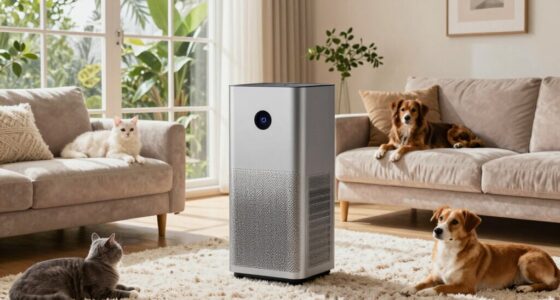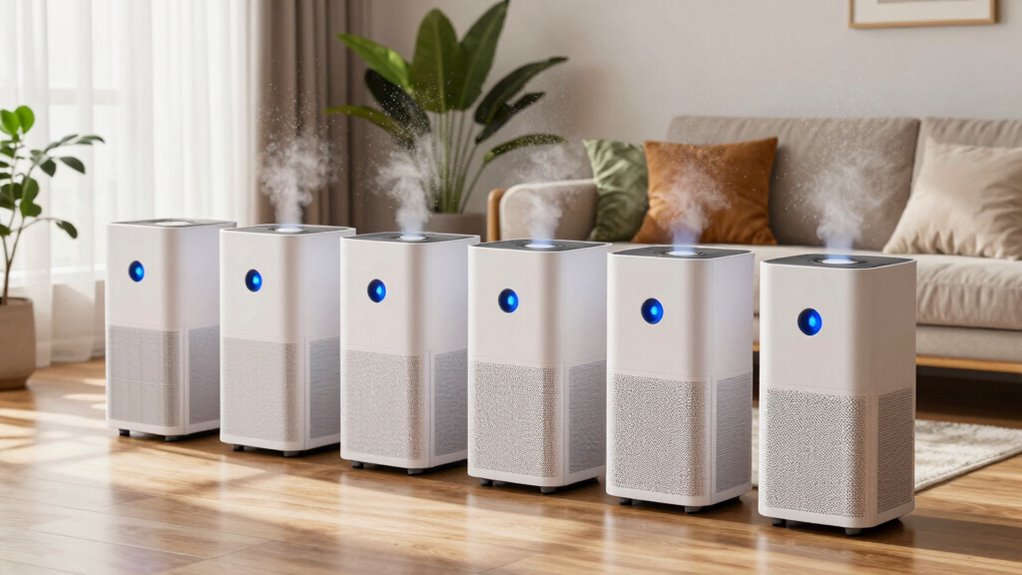
For an air purifier for allergies with True HEPA filtration, I rank the Coway Mighty AP-1512HH as the best overall choice for balancing everyday room use and practical features. The Blueair Blue Pure 211i Max stands out for large spaces, while the Levoit Core 300-P is a straightforward fit for smaller rooms. The main tradeoff is between strong air-moving capacity and the footprint, noise, and filter upkeep that can come with it. Coverage claims also need context: a purifier’s performance depends on how often it cycles room air, not just the largest stated area. Read on for the full comparison and guidance on matching a purifier to your rooms and allergy routine.

Get furniture and decor delivered free — and shop member deals
- Fast, free delivery on millions of items
- Access to Prime Big Deal Days deals on October 6–7
- Prime Video, Amazon Music and more included
Complete the kit


Key Takeaways
- The Coway Mighty AP-1512HH ranks first because it offers a balanced fit for regular home use rather than relying on an especially large coverage claim.
- The Blueair Blue Pure 211i Max is the large-room standout, but its stated coverage is not a substitute for checking air changes per hour at the room size you need.
- The Levoit Core 300-P and GermGuardian AC4825E suit smaller, simpler setups; they are less suitable when one unit must serve a large open-plan area.
- Two PuroAir 240 units offer placement flexibility, while a single large-room model may be easier to manage in one connected space.
- Filter design and replacement planning separate allergy-focused choices: washable or long-life claims can reduce upkeep, but buyers should still check what each filter captures and how replacement parts are handled.
| Shark NeverChange Air Purifier HP152, Charcoal |  | Best for Low-Maintenance Ownership | Model: HP152 | Color: Charcoal | Coverage: Up to 650 sq. ft. in one hour | VIEW ON AMAZON | See Our Full Breakdown |
| Levoit Core 300-P Air Purifier |  | Best Compact Pick for Bedrooms | Model: Core 300-P | Filtration: 3-in-1 filtration | Filtration efficiency: 99.97% for 0.1–0.3 μm airborne particles | VIEW ON AMAZON | See Our Full Breakdown |
| Blueair Blue Pure 211i Max Air Purifier for Large Rooms up to 3,235 ft² |  | Best for Very Large Rooms | Coverage: Up to 3,235 sq. ft. per hour | Filtration: HEPASilent dual-filtration technology | Particle capture: 99.97% down to 0.1 microns | VIEW ON AMAZON | See Our Full Breakdown |
| PuroAir 240 HEPA Air Purifier – Black, 1000 ft² |  | Best Three-Stage Filtration | Coverage area: Up to 1,000 sq. ft. | Filter stages: Pre-filter, HEPA, and activated carbon | Filtration claim: Up to 99.9% of stated pollutants | VIEW ON AMAZON | See Our Full Breakdown |
| KNKA APH4000 Air Purifier for Home, White |  | Best for Measurable High-Refresh Coverage | Model: APH4000 | Maximum coverage: 1,695 sq. ft. at 1 air refresh per hour | Coverage at 4.8 refreshes per hour: 350 sq. ft. | VIEW ON AMAZON | See Our Full Breakdown |
| PuroAir 240 HEPA Air Purifiers for Home, 2-Pack, Black |  | Best for Multi-Room Coverage | Model: PuroAir 240 | Quantity: 2 | Color: Black | VIEW ON AMAZON | See Our Full Breakdown |
| Blueair Signature SP1i Air Purifier |  | Best for Quiet, Connected Bedrooms | Room coverage: Up to 248 sq ft in 12.5 minutes; up to 1,190 sq ft per hour | Filtration: 7-stage HEPASilent | Particle capture: 99.97% down to 0.1 microns | VIEW ON AMAZON | See Our Full Breakdown |
| GermGuardian AC4825E 22-Inch HEPA Tower Air Purifier, Gray |  | Best for Straightforward Small-Room Filtration | Model: AC4825E | Height: 22 inches | Color: Gray | VIEW ON AMAZON | See Our Full Breakdown |
| Clorox Large Room HEPA Air Purifier |  | Best for Frequent Cleaning in a Medium Room | Filter system: Three-stage 360° filtration | Filter type: True HEPA and active carbon | Particle capture: 99.97% of particles as small as 0.1 microns | VIEW ON AMAZON | See Our Full Breakdown |
| Ambersky HEPA Air Purifier for Rooms up to 2,500 Sq. Ft. |  | Best for Large Spaces on Low Power | Coverage: Up to 2,500 sq ft | Filtration: Pre-filter, H13 true HEPA, and activated carbon | Modes: Auto, ECO, and Sleep | VIEW ON AMAZON | See Our Full Breakdown |
| Coway Mighty Air Purifier AP-1512HH(W), White |  | Best for Automatic Everyday Allergy Control | Model: AP-1512HH(W) | Color: White | Coverage: Up to 1,748 sq. ft. in 60 minutes | VIEW ON AMAZON | See Our Full Breakdown |
| Winix 5520 Air Purifier for Large Rooms |  | Best for Large-Room Allergy Filtration | Room coverage: Up to 1,882 sq. ft. in 1 hour | Filtration: Four-stage system with True HEPA, carbon filter, and washable fine mesh pre-filter | Particle capture: Claims 99.99% capture of airborne allergens as small as 0.01 microns | VIEW ON AMAZON | See Our Full Breakdown |
| AirHub Air Purifier for Home, Up to 1,092 sq. ft. |  | Best for Quiet Bedroom Use with Included Filter Spares | Coverage: Up to 1,092 sq. ft. at 1 air change per hour | Air changes: 4.8 ACH in a 209 sq. ft. room | Filtration: Washable pre-filter, True HEPA filter, and activated carbon filter | VIEW ON AMAZON | See Our Full Breakdown |
| ECOSELF Air Purifier for Large Rooms up to 2,400 sq. ft. |  | Best for Broad Coverage with Simple Air-Quality Automation | Coverage area: Up to 2,400 sq. ft. | Filtration: True HEPA | Particle capture: Captures 99.97% of airborne particles | VIEW ON AMAZON | See Our Full Breakdown |
| air purifier for allergies true hepa premium | Filtration | Particle capture |
|---|---|---|
| Shark NeverChange Air Purifier | — | 99.98% from 0.2 microns, based on IEST-RP-CC007 |
| Levoit Core 300-P Air Purifier | 3-in-1 filtration | — |
| Blueair Blue Pure 211i Max Air | HEPASilent dual-filtration technology | 99.97% down to 0.1 microns |
| PuroAir 240 HEPA Air Purifier | — | — |
| KNKA APH4000 Air Purifier for | Dual three-stage filters with washable pre-filters, high-efficiency filters, and activated carbon | — |
| PuroAir 240 HEPA Air Purifiers | Pre-filter, HEPA filter, and activated carbon | — |
| Blueair Signature SP1i Air Pur | 7-stage HEPASilent | 99.97% down to 0.1 microns |
| GermGuardian AC4825E 22-Inch H | — | 99.97% of particles as small as 0.1 microns |
| Clorox Large Room HEPA Air Pur | — | 99.97% of particles as small as 0.1 microns |
| Ambersky HEPA Air Purifier for | Pre-filter, H13 true HEPA, and activated carbon | — |
| Coway Mighty Air Purifier AP-1 | Washable pre-filter, deodorization filter, bipolar device, and HEPA filter | — |
| Winix 5520 Air Purifier for La | Four-stage system with True HEPA, carbon filter, and washable fine mesh pre-filter | Claims 99.99% capture of airborne allergens as small as 0.01 microns |
| AirHub Air Purifier for Home | Washable pre-filter, True HEPA filter, and activated carbon filter | Up to 99.97% of particles as small as 0.3 microns |
| ECOSELF Air Purifier for Large | True HEPA | Captures 99.97% of airborne particles |
More Details on Our Top Picks
Shark NeverChange Air Purifier HP152, Charcoal
I’d choose the Shark HP152 for allergy-prone households that want a clear view of particle levels without frequent replacement of the main HEPA filter. Its stated capture rate is 99.98% of particles from 0.2 microns, and the washable debris screen catches larger material before it reaches that filter. Real-time readings, filter-life information, and Eco mode also make routine operation easier to track. Compared with the Levoit Core 300-P, Shark puts more emphasis on a washable pre-filter and longer-lasting HEPA element, while Levoit publishes CADR figures for pollen, dust, and smoke. The tradeoff is that the Shark’s air-quality display reflects what its sensor detects, not every pollutant, and its odor cartridge releases a scent that may bother scent-sensitive users. Its stated 650-square-foot coverage is also less compelling for large open rooms.
Pros:- Stated capture rate of 99.98% for particles from 0.2 microns
- Washable debris screen helps limit buildup on the main filter
- Real-time air-quality and filter-life displays simplify monitoring
- Quiet operation and dimmable lights suit bedroom use
Cons:- Odor Neutralizer cartridge releases a scent that may not suit sensitive users
- Air-quality readings reflect the sensor’s limits and do not certify pollutant-free air
- Coverage is more limited than the Blueair Blue Pure 211i Max for very large spaces
Best for: Allergy sufferers who want visible air-quality feedback, a washable debris screen, and less frequent replacement of the main HEPA filter.
Not ideal for: Scent-sensitive households or buyers who need a purifier for a large open-plan area; the odor cartridge adds fragrance, and its stated coverage is smaller than the Blueair Blue Pure 211i Max’s.
- Model:HP152
- Color:Charcoal
- Coverage:Up to 650 sq. ft. in one hour
- Particle capture:99.98% from 0.2 microns, based on IEST-RP-CC007
- Filter system:Washable Debris Defense filter and NeverChange HEPA filter
- Odor control:Odor Neutralizer Technology cartridge
- Controls and display:Real-time air quality, filter life, fan speed, and Eco mode
- Other features:CleanSense IQ, dimmable lights, and ultra-quiet performance
Our verdict“Choose the Shark HP152 if low-maintenance filtration and readable air-quality feedback matter more than fragrance-free odor control or maximum room coverage.”
Levoit Core 300-P Air Purifier
The Levoit Core 300-P is a straightforward fit for a bedroom or smaller dedicated allergy zone: its compact body, 24 dB Sleep Mode, and lights-off option make overnight operation less intrusive. Its published particle-filtration efficiency is 99.97% for airborne particles from 0.1 to 0.3 microns, and separate CADR figures for pollen, dust, and smoke give buyers a useful way to compare its performance. Against the Shark HP152, Levoit is smaller and provides more specific CADR data, but it lacks the Shark’s real-time air-quality display and washable debris screen. It also does not have Auto Mode or smart connectivity, so users must choose the fan setting themselves. The recommended filter replacement interval of six to eight months adds ongoing upkeep, and the stated 1,073-square-foot coverage should not be confused with frequent air cleaning at that maximum area.
Pros:- Quiet 24 dB Sleep Mode with lights that can be turned off
- Published pollen, dust, and smoke CADR figures aid comparison
- Compact 8.7 × 8.7 × 14.2-inch body weighs 7.9 pounds
- Touch controls, timer, and check-filter indicator provide simple operation
Cons:- No Auto Mode or smart connectivity
- Filter replacement is recommended every six to eight months
- 120 V model is specified for use in the United States
Best for: Bedroom users who want a compact purifier with quiet sleep operation and published pollen, dust, and smoke CADR figures.
Not ideal for: Buyers who want automatic fan adjustments, app control, or infrequent filter changes; the Core 300-P has no Auto Mode or smart connectivity and calls for filter replacement every six to eight months.
- Model:Core 300-P
- Filtration:3-in-1 filtration
- Filtration efficiency:99.97% for 0.1–0.3 μm airborne particles
- CADR:Smoke 143 CFM; dust 153 CFM; pollen 167 CFM
- Coverage area:Up to 1,073 sq. ft.
- Noise level:24 dB in Sleep Mode
- Dimensions and weight:8.7 × 8.7 × 14.2 in; 7.9 lb
- Controls and timer:Touch controls; 2, 4, 6, or 8-hour timer
- Filter replacement interval:Every 6 to 8 months
Our verdict“Pick the Levoit Core 300-P for a quiet, compact bedroom purifier if manual controls and scheduled filter upkeep are acceptable.”
Blueair Blue Pure 211i Max Air Purifier for Large Rooms up to 3,235 ft²
For a large shared living area, the Blueair Blue Pure 211i Max has the strongest stated coverage in this group: up to 3,235 square feet per hour. Its HEPASilent system is listed as capturing 99.97% of particles down to 0.1 microns, while smart sensors and app control can adjust the fan without constant manual changes. That makes it a different proposition from the PuroAir 240, whose stated coverage is 1,000 square feet but which combines pre-filter, HEPA, and activated carbon stages. The Blueair’s 23 dB noise figure also makes its capacity less of a compromise for quiet rooms. Still, it is a 16-pound, 14.4-inch-wide unit, and its cord limits placement. The product data lists activated carbon and HEPASilent, so buyers seeking a conventional true-HEPA filter should verify the filter construction before purchase.
Pros:- Stated coverage of up to 3,235 sq. ft. per hour suits very large rooms
- HEPASilent system is listed to capture 99.97% of particles down to 0.1 microns
- Smart sensors and app control support automatic fan adjustments
- 23 dB noise level is suited to quieter rooms
Cons:- Bulky 16-pound body is less convenient to move between rooms
- Corded design restricts placement flexibility
- Listed HEPASilent filtration is not described as a conventional true-HEPA filter
Best for: Households with a large open-plan living space that want app control, automatic fan adjustments, and broad stated coverage.
Not ideal for: Buyers with limited floor space, frequent room-to-room moving, or a firm requirement for a conventional true-HEPA filter; the unit is bulky, corded, and described with HEPASilent filtration.
- Coverage:Up to 3,235 sq. ft. per hour
- Filtration:HEPASilent dual-filtration technology
- Particle capture:99.97% down to 0.1 microns
- Filter type listed:Activated carbon
- Noise level:23 dB
- Controls:App and button control; compatible with Amazon Alexa, Android, and iOS
- Power:46 W; corded electric
- Dimensions and weight:14.4 × 14.4 × 22.7 in; 16 lb
Our verdict“Choose the Blueair Blue Pure 211i Max for a very large room and app-led operation, but verify the filter type if true HEPA is a strict requirement.”
PuroAir 240 HEPA Air Purifier – Black, 1000 ft²
The PuroAir 240 earns its place for buyers who want an explicit sequence of pre-filter, HEPA, and activated carbon stages rather than a simpler filter description. The product claims up to 99.9% filtration of dust, pollen, smoke, pet dander, and VOCs in rooms up to 1,000 square feet, with a particle sensor that adjusts fan speed and a sleep mode for continuous use. Compared with the KNKA APH4000, PuroAir gives a clearer three-stage filter breakdown and lists a two-year warranty; KNKA, however, provides CADR figures and a more detailed high-refresh coverage figure. PuroAir’s broad coverage claim comes without a stated air-change rate here, so I would not treat it as equivalent to the KNKA’s 350-square-foot figure at 4.8 refreshes per hour. Its size and possible replacement-filter expense also matter in routine use.
Pros:- Three-stage setup combines pre-filter, HEPA, and activated carbon
- Claims up to 99.9% filtration for dust, pollen, smoke, pet dander, and VOCs
- Particle sensor automatically adjusts fan speed
- Two-year warranty and quiet sleep mode are listed
Cons:- No CADR figures are supplied in the product data
- Coverage is stated without an air-change rate, making room sizing harder
- May be bulkier than a compact bedside purifier, with replacement-filter expense possible
Best for: Buyers who want a clearly described pre-filter, HEPA, and carbon setup with automatic fan adjustment for a large room.
Not ideal for: Shoppers who need a stated CADR or a clear high-frequency air-change figure to size the purifier for allergies; those details are not provided here.
- Coverage area:Up to 1,000 sq. ft.
- Filter stages:Pre-filter, HEPA, and activated carbon
- Filtration claim:Up to 99.9% of stated pollutants
- Listed pollutants:Dust, pollen, smoke, pet dander, and VOCs
- Particle size description:700× smaller than a human hair
- Controls:Smart particle sensor with automatic fan-speed adjustment
- Certifications:CARB, ETL, ISO, and UL
- Warranty:2 years
Our verdict“Choose the PuroAir 240 if you value a defined three-stage filter system and automatic operation more than detailed CADR and air-change specifications.”
KNKA APH4000 Air Purifier for Home, White
The KNKA APH4000 is a useful choice when allergy relief depends on sizing for repeated air cleaning rather than the biggest headline coverage number. It is rated for 350 square feet at 4.8 air refreshes per hour, a more informative figure for a frequently used room than its maximum 1,695-square-foot claim at one refresh per hour. Dual three-stage filters, washable pre-filters, and separate pollen and smoke/dust/PM2.5 CADR figures give buyers more practical detail than the PuroAir 240 listing provides. Four modes, including PET and Auto, add flexibility, and Sleep mode is rated at 22–24 dB. The tradeoff is upkeep: filter replacement is recommended every three to six months, sooner than the Levoit Core 300-P’s stated interval. Its 1,695-square-foot headline should not be read as high-frequency cleaning across that entire area.
Pros:- States 350-square-foot coverage at 4.8 air refreshes per hour
- Provides pollen CADR and smoke/dust/PM2.5 CADR figures
- Dual filters include washable pre-filters and activated carbon
- Sleep mode is rated at 22–24 dB, with Auto and PET modes available
Cons:- Maximum 1,695-square-foot coverage corresponds to only one air refresh per hour
- Filter replacement is recommended every three to six months
- High-refresh coverage is much smaller than the headline maximum area
Best for: Allergy sufferers who want CADR figures and a stated 4.8-refresh-per-hour room size for a frequently used room, plus washable pre-filters.
Not ideal for: Buyers seeking a low-upkeep purifier or frequent air cleaning across a very large space; filters are recommended every three to six months, and maximum coverage is only one refresh per hour.
- Model:APH4000
- Maximum coverage:1,695 sq. ft. at 1 air refresh per hour
- Coverage at 4.8 refreshes per hour:350 sq. ft.
- CADR:Smoke/dust/PM2.5: 226 CFM; pollen: 244 CFM
- Filtration:Dual three-stage filters with washable pre-filters, high-efficiency filters, and activated carbon
- Modes and fan speeds:PET, ECO, Auto, and Sleep modes; 4 fan speeds
- Sleep noise level:22–24 dB
- Air-quality monitoring:Real-time AQI display with color-coded lights
- Filter replacement interval:Every 3–6 months
Our verdict“Pick the KNKA APH4000 if you want explicit high-refresh sizing and CADR data, provided you are comfortable replacing filters every few months.”
PuroAir 240 HEPA Air Purifiers for Home, 2-Pack, Black
For allergy control across more than one room, this two-unit bundle has a practical advantage over single purifiers such as the Clorox Large Room HEPA Air Purifier: you can place one unit where you sleep and another in a living area. Each PuroAir 240 pairs a pre-filter, HEPA filter, and activated carbon layer to target pollen, dust, pet dander, and some odors, while its particle sensor adjusts operation as air conditions change. Sleep mode and a two-year warranty add useful support for ongoing use. The stated coverage is up to 1,000 square feet per hour per unit, not rapid, repeated cleaning across that entire area. The source also omits noise measurements and replacement-filter details, making upkeep and bedroom quietness harder to judge.
Pros:- Two units allow separate placement in different rooms
- Three-layer filtration targets particles and some odors
- Particle sensor adjusts cleaning power automatically
- Sleep mode and a two-year warranty support regular use
Cons:- The 1,000-square-foot coverage figure is based on one room cleaning per hour
- Noise levels are not specified
- Replacement-filter details are not provided
Best for: Households that want separate allergy-focused filtration in two rooms and value automatic fan adjustment.
Not ideal for: Buyers who need documented fast air changes across a large open room or want clear noise and filter-replacement specifications before choosing.
- Model:PuroAir 240
- Quantity:2
- Color:Black
- Coverage:Up to 1,000 sq ft per hour per unit
- Filtration:Pre-filter, HEPA filter, and activated carbon
- Features:Particle sensor, sleep mode, designed for 24/7 use
- Certifications:CARB, ETL, ISO, and UL
- Warranty:2 years
Our verdict“Choose this two-pack when you want to cover two rooms with sensor-adjusted filtration, but not when you need precise performance and maintenance details.”
Blueair Signature SP1i Air Purifier
The Blueair Signature SP1i is a strong fit for allergy-sensitive sleepers who want air-quality feedback without adding much operating noise: its listed minimum is 19 dB, and the app, Auto Mode, and five-color indicator make it easier to monitor changing conditions. Its seven-stage HEPASilent filtration is rated to capture 99.97% of particles down to 0.1 microns, with OdorFence Technology aimed at odors and gases. Compared with the taller GermGuardian AC4825E, the SP1i offers more connected controls and a lower stated noise floor, while the GermGuardian adds optional UV-C. The tradeoff is room fit: the SP1i is described for 248 square feet in 12.5 minutes, so its large hourly coverage figure should not be read as equally fast cleaning throughout a big space. Interchangeable pre-filters are sold separately.
Pros:- Quiet operation listed as low as 19 dB
- Seven-stage filtration captures particles down to 0.1 microns
- App controls, schedules, and Auto Mode
- Five-color indicator provides real-time air-quality feedback
Cons:- Fast room-cleaning specification is limited to 248 sq ft
- Interchangeable pre-filters are available separately
- Its broad hourly coverage figure does not describe repeated cleaning at that scale
Best for: Light sleepers with allergies who want app scheduling, automatic operation, and real-time air-quality cues in a small bedroom or office.
Not ideal for: People seeking fast, repeated filtration in a large open-plan area or who do not want to rely on app-enabled features.
- Room coverage:Up to 248 sq ft in 12.5 minutes; up to 1,190 sq ft per hour
- Filtration:7-stage HEPASilent
- Particle capture:99.97% down to 0.1 microns
- Noise level:As low as 19 dB
- Odor control:OdorFence Technology
- Controls:Blueair app, schedules, fan speed, and Auto Mode
- Air-quality indicator:Five colors
Our verdict“Pick the SP1i for a quiet, connected small-room purifier, rather than for rapid allergy-particle removal across a large space.”
GermGuardian AC4825E 22-Inch HEPA Tower Air Purifier, Gray
The GermGuardian AC4825E keeps the allergy-focused setup simple: a True HEPA filter captures listed fine particles, while an activated-carbon pre-filter helps with everyday cooking and pet odors. Three fan speeds, including sleep mode, give buyers basic control without the app features found on the Blueair Signature SP1i. The GermGuardian also offers optional UV-C, though that is an added feature rather than the core reason to choose it for allergy particles. Its room rating is more modest for frequent cleaning—153 square feet every 12.5 minutes—so the 743-square-foot hourly figure suits less frequent circulation, not the same cleaning pace across a large room. The 22-inch tower is a compact-style format, but filter and bulb replacements add ongoing maintenance that a buyer should factor into ownership.
Pros:- True HEPA filtration targets dust, pollen, and pet dander
- Activated-carbon pre-filter helps reduce household odors
- Three fan speeds include a quiet sleep mode
- CARB, ETL, and Zero Ozone Verified certifications are listed
Cons:- Fast-cleaning coverage is limited to 153 sq ft every 12.5 minutes
- Filter replacement is part of routine maintenance
- Optional UV-C requires bulb replacement
Best for: Allergy sufferers furnishing a modest bedroom or office who want simple fan controls, HEPA filtration, and an odor-reducing pre-filter.
Not ideal for: People who need frequent air cleaning across a large living area or want to avoid replacing both filters and UV-C bulbs.
- Model:AC4825E
- Height:22 inches
- Color:Gray
- Filter:True HEPA
- Particle capture:99.97% of particles as small as 0.1 microns
- Room coverage:153 sq ft every 12.5 minutes; up to 743 sq ft once per hour
- Fan speeds:3
- Additional features:Activated-carbon pre-filter, optional UV-C light, and sleep mode
- Certifications:CARB Certified, ETL Certified, Zero Ozone Verified
Our verdict“Choose the AC4825E for basic HEPA filtration in a smaller room, but look to a higher-capacity model for frequent cleaning over a larger area.”
Clorox Large Room HEPA Air Purifier
The Clorox stands out for buyers who care more about repeated air cleaning in a defined room than an expansive once-per-hour coverage claim. It is rated for up to five air changes per hour in 320 square feet, a useful distinction for allergy management compared with the PuroAir 240, whose supplied coverage is stated as one room cleaning per hour. Its 360-degree, three-stage system combines a pre-filter, True HEPA, and active carbon, addressing larger debris, fine particles, and some odors in one unit. At 30 dB and 32 watts, its listed operating figures are also clear, and the filter interval is given as 6–12 months. The tradeoff is that the 1,500-square-foot maximum corresponds to just one air change per hour; buyers should use the smaller-room rating when frequent filtration is the priority.
Pros:- Rated for up to five air changes per hour in 320 sq ft
- True HEPA and active-carbon filtration address particles and odors
- 360-degree intake supports airflow from around the unit
- Noise, power use, dimensions, and filter interval are specified
Cons:- The 1,500-square-foot rating is for one air change per hour
- Filter replacement is recommended every 6–12 months
- Virus and bacteria reduction claims vary with conditions and do not mean the unit kills them
Best for: People with allergies who want frequent air circulation in a bedroom, den, or other room around 320 square feet.
Not ideal for: Buyers expecting five air changes per hour throughout a 1,500-square-foot open area or seeking a purifier with no scheduled filter replacement.
- Filter system:Three-stage 360° filtration
- Filter type:True HEPA and active carbon
- Particle capture:99.97% of particles as small as 0.1 microns
- Coverage and air changes:Up to 5 per hour in 320 sq ft; 1 per hour in 1,500 sq ft
- Noise level:30 dB
- Power:32 watts
- Dimensions and weight:10 × 10 × 19 in; 12.7 lbs
- Filter life:6–12 months
- Controls and certification:Touch control; Energy Star; Certified HEPA
Our verdict“Choose the Clorox for frequent filtration in a medium-sized room, not for five air changes per hour across its maximum stated coverage.”
Ambersky HEPA Air Purifier for Rooms up to 2,500 Sq. Ft.
The Ambersky pairs a large stated coverage area with a listed maximum draw of just 28 watts, making it an interesting fit for buyers who want low-power operation and automatic modes. Its pre-filter, H13 true HEPA, and activated-carbon layer address particles and odors, while Auto, ECO, and Sleep modes let users choose between adjustment, reduced operation, and nighttime use. Sleep mode is rated at 24 dB and dims the display, a quieter listed figure than the Clorox Large Room HEPA Air Purifier at 30 dB. The key limitation is that the supplied data gives a coverage maximum of 2,500 square feet without a room-cleaning time or air-changes rate. That makes it harder to compare allergy-cleaning speed directly with Clorox’s specific five-air-changes-per-hour rating for 320 square feet. Its filter is not washable and needs replacement.
Pros:- H13 true HEPA filtration is paired with pre-filter and activated carbon
- Large stated coverage of up to 2,500 sq ft
- Sleep mode is listed at 24 dB and dims the display
- Maximum power consumption is listed as 28 watts
Cons:- No room-cleaning time or air-changes rate is supplied for its coverage claim
- Filter is not washable and requires replacement
- Airflow needs clearance from walls and furniture
Best for: Buyers in a large shared room who want H13 HEPA filtration, low listed power use, and automatic or sleep modes.
Not ideal for: Allergy sufferers who need a stated air-changes rate for their room size or want a washable filter.
- Coverage:Up to 2,500 sq ft
- Filtration:Pre-filter, H13 true HEPA, and activated carbon
- Modes:Auto, ECO, and Sleep
- Sleep-mode noise:24 dB
- Maximum power consumption:28 W
- Filter design:360-degree
- Maintenance:Non-washable filter with replacement reminder
Our verdict“Consider the Ambersky for a large room where low-power modes matter, but choose a model with a defined air-change rate if allergy-cleaning speed is your main concern.”
Coway Mighty Air Purifier AP-1512HH(W), White
I’d choose the Coway Mighty for a household that wants allergy filtration paired with low-effort automatic operation. Its HEPA filter is backed by a washable pre-filter and deodorization filter, while the air-quality monitor can raise or lower fan speed as conditions change. That gives it a more responsive setup than the Levoit Core 300-P, whose listed features are less focused on automatic air-quality adjustment. The coverage claim is broad, but it specifies one hour rather than a faster cleaning interval, so I wouldn’t treat it as equivalent to a purifier with a stated higher air-change rate. Auto and Eco modes, filter alerts, and a display that can be switched off add useful everyday control. The tradeoff is ongoing upkeep: the pre-filter needs cleaning, and replacement filters remain part of ownership.
Pros:- HEPA filtration is paired with washable pre-filtration and a deodorization filter
- Air-quality-based automatic fan adjustment reduces the need for manual changes
- Air-quality indicator can be turned off for a darker sleeping environment
- Filter alerts provide a reminder when maintenance is due
Cons:- The broad coverage figure is specified at one hour, which may not suit buyers seeking faster room cleaning
- The washable pre-filter requires regular cleaning and the other filters require replacement
- Performance can vary with room and environmental conditions
Best for: Allergy-sensitive households seeking automatic fan adjustment, washable pre-filter maintenance, and a light-off option for bedrooms
Not ideal for: Buyers who want a clearly stated high air-change rate across a large room or prefer to avoid recurring filter replacement and pre-filter cleaning
- Model:AP-1512HH(W)
- Color:White
- Coverage:Up to 1,748 sq. ft. in 60 minutes
- Filtration:Washable pre-filter, deodorization filter, bipolar device, and HEPA filter
- Particle reduction:Up to 99.97% of 0.3-micron particles
- Modes:Auto and Eco
- Controls and alerts:Air-quality monitor, timer, and filter indicator
Our verdict“Choose the Coway Mighty if automatic allergy-focused filtration and practical maintenance alerts matter more than a clearly stated rapid air-change rate.”
Winix 5520 Air Purifier for Large Rooms
The Winix 5520 is the strongest fit here for buyers prioritizing large-room reach alongside a named True HEPA filter. Its four-stage setup includes carbon filtration for odors, and the sensor adjusts fan speed in Auto Mode; automatic Sleep Mode and a stated 23.5 dB low setting support quieter overnight use. Compared with the Coway Mighty, the Winix gives a larger stated coverage figure and adds app compatibility, while the Coway offers a light-off indicator and a specifically described Eco mode. The Winix’s fine-particle capture claim is ambitious, but room coverage and filtration claims don’t by themselves establish how quickly a particular allergy sufferer’s room will improve. App setup may also add friction for buyers who prefer appliance-only controls. I’d put this ahead of simpler large-room picks when connected control is useful, not when it would go unused.
Pros:- True HEPA and carbon filtration address airborne allergens and household odors
- Large stated coverage supports use in spacious rooms
- Air-quality sensor automatically adjusts fan speed in Auto Mode
- Automatic Sleep Mode and a 23.5 dB lowest-speed specification suit quieter operation
Cons:- Smart app compatibility may require setup and may be unnecessary for buyers who prefer direct controls
- The coverage figure is given for one hour, without a faster air-change specification
- A fine-particle capture claim does not establish performance in every room or household
Best for: People with allergy symptoms in large shared rooms who want automatic sensing, low-speed quiet operation, and optional app control
Not ideal for: Buyers who want a straightforward purifier without app setup or who need a stated air-change rate to compare room-cleaning speed
- Room coverage:Up to 1,882 sq. ft. in 1 hour
- Filtration:Four-stage system with True HEPA, carbon filter, and washable fine mesh pre-filter
- Particle capture:Claims 99.99% capture of airborne allergens as small as 0.01 microns
- Lowest-speed noise:23.5 dB
- Air-quality monitoring:Built-in sensor with LED indicator
- Modes:Auto Mode and automatic Sleep Mode
- App compatibility:Winix Smart App
- Certifications:AHAM Verified and UL Certified
Our verdict“Pick the Winix 5520 for large-room allergy filtration with automatic sensing and optional app control, provided setup and its coverage-rate caveat suit your needs.”
AirHub Air Purifier for Home, Up to 1,092 sq. ft.
The AirHub’s clearest advantage is a bedroom-friendly combination of 20 dB sleep mode and two included sets of filters. Its three-stage system uses a washable pre-filter, True HEPA, and activated carbon, while a PM2.5 sensor supports automatic fan adjustment. That makes it more appealing for quiet nightly use than the Winix 5520, whose stated lowest setting is 23.5 dB and whose main advantage is larger-room coverage. AirHub’s coverage figure needs careful reading: 1,092 sq. ft. is based on just one air change per hour, while the quicker 4.8 ACH figure applies to a much smaller 209 sq. ft. room. I’d treat it as a bedroom or modest-room choice, not a fast whole-room solution. The included replacement filters soften maintenance planning, but the product data offer no customer review content to help verify real-world performance.
Pros:- 20 dB sleep-mode specification suits quiet bedroom use
- True HEPA and activated carbon filtration target fine particles and odors
- PM2.5 sensing can adjust fan speed in Auto mode
- Package includes two pre-filters and two HEPA/carbon filters
Cons:- The 1,092 sq. ft. coverage figure represents only one air change per hour
- The stated 4.8 ACH applies to a smaller 209 sq. ft. room
- No customer review content is provided to gauge real-world performance
Best for: Light sleepers with allergies who want quiet operation, sensor-led auto mode, and spare filters included for a bedroom or smaller room
Not ideal for: Buyers seeking rapid filtration across a large open-plan space or those who want customer feedback to inform a newer product choice
- Coverage:Up to 1,092 sq. ft. at 1 air change per hour
- Air changes:4.8 ACH in a 209 sq. ft. room
- Filtration:Washable pre-filter, True HEPA filter, and activated carbon filter
- Particle capture:Up to 99.97% of particles as small as 0.3 microns
- Sleep-mode noise:20 dB
- Power consumption:24 W
- Features:PM2.5 sensor, auto mode, timer, child lock, filter reminder, air-quality display, and aroma diffuser slot
- Included filters:Two pre-filters and two HEPA/carbon filters
- Support:10-year service and 24/7 U.S.-based customer support
Our verdict“Choose AirHub for quiet bedroom use and included filter spares, but rely on its smaller-room ACH figure if faster cleaning is your priority.”
ECOSELF Air Purifier for Large Rooms up to 2,400 sq. ft.
ECOSELF’s headline appeal is its 2,400 sq. ft. coverage claim, paired with a PM2.5 display and automatic fan adjustment. For allergy buyers, the True HEPA filter is the core reason to consider it; the monitor and Auto mode add convenience by responding to changing air conditions without constant manual control. Its stated purification frequency is twice per hour, which is a more useful qualification than coverage alone, though buyers should still check whether that rate fits their room size and needs. Compared with the Winix 5520, ECOSELF claims broader coverage and a quieter 22 dB sleep mode, while Winix provides a four-stage system, app compatibility, and a named carbon filter. ECOSELF also offers aromatherapy and lock controls, but its recommendation to use brand-specific replacement filters may limit filter flexibility. Product data include no customer review content for a real-world performance check.
Pros:- Large stated coverage is paired with a specified twice-per-hour purification frequency
- PM2.5 display and infrared sensor support automatic fan adjustment
- 22 dB sleep-mode specification suits quieter nighttime operation
- Timer, lock controls, filter indicator, and aromatherapy add flexible operation
Cons:- Product recommends ECOSELF replacement filters, which may limit filter choice
- No customer review content is provided to help evaluate performance in real homes
- The listed data do not specify a multi-stage filtration setup or separate carbon filter
Best for: Households with a large room seeking automatic air-quality response, a quiet sleep setting, and simple onboard controls
Not ideal for: Buyers who want app control, a clearly detailed multi-stage carbon filtration setup, or broad choice among replacement filters
- Coverage area:Up to 2,400 sq. ft.
- Filtration:True HEPA
- Particle capture:Captures 99.97% of airborne particles
- Purification frequency:Twice per hour
- Air-quality monitor:PM2.5 display with infrared sensor
- Sleep-mode noise:22 dB
- Features:Auto mode, timer, fan-speed settings, lock controls, filter indicator, and aromatherapy
- Certifications:ETL, FCC, EPA, CARB, and DOE
- Warranty and support:30-day money-back guarantee, 1-year-plus warranty, and lifetime technical support
Our verdict“Choose ECOSELF if broad stated coverage, automatic monitoring, and quiet sleep operation are your priorities and brand-specific filters are acceptable.”

How We Picked
I compared these 14 purifiers through the needs of allergy-prone households: particle filtration, air-moving capacity, useful room coverage, controls, noise-related usability, filter maintenance, and placement flexibility. I gave more weight to practical fit than to headline square-foot figures; a unit needs enough airflow for the room and the desired cleaning frequency to make a meaningful difference.
The ranking favors models that appear to balance everyday usability with room-appropriate performance, then distinguishes them by their strongest use case. The Coway Mighty leads as the most balanced pick, while the Blueair 211i Max serves larger rooms and the Levoit Core 300-P is a smaller-room option. Models with unusually broad stated coverage, multi-unit bundles, or specialized form factors can suit particular homes, but they do not automatically outrank a better-matched purifier. I also weighed ongoing filter care and meaningful drawbacks, since an allergy purifier is a continuing household appliance rather than a one-time purchase.
Factors to Consider When Choosing Air Purifier For Allergies True Hepa Premium
Choosing a premium allergy purifier means matching filtration and airflow to the room you actually use, then checking that the upkeep fits your routine. These broader checks help avoid paying for unused coverage or choosing a unit that runs too loudly or expensively to keep on.
Match Clean-Air Delivery to the Room You Use
Start with the room’s floor area, ceiling height, and whether it connects to other spaces. A manufacturer’s maximum coverage figure may describe a slow air-cleaning cycle, which is less useful for allergy relief than frequent circulation. Look for clean-air delivery information or coverage paired with an air-change rate, then compare that figure with your room dimensions. In open-plan homes, a single purifier may struggle to serve distant corners even when the total area appears to fit. Two appropriately sized units can sometimes provide more even cleaning, though they bring extra filter and placement needs. Avoid choosing solely by the biggest square-foot number on the box.
Check What “True HEPA” Means on the Specific Model
True HEPA generally refers to a defined particle-capture standard, but product listings can use overlapping terms such as HEPA-type, HEPA-like, or high-efficiency filtration. Read the exact filter description for the model and replacement cartridge rather than assuming every purifier in a brand’s range uses the same construction. Allergy sufferers often care most about airborne particles such as pollen, dust, and pet dander, while odors and gases call for an activated-carbon stage. Carbon amount and design vary, so a thin odor layer should not be treated as equivalent to a substantial gas filter. Also check that replacement filters remain available and are specified for the exact unit.
Treat Coverage as a Question of Air Changes
Room coverage is only meaningful when it is tied to how many times the purifier can clean the room’s air per hour. A large advertised area may assume fewer air changes than an allergy-prone household wants during pollen season or heavy shedding. Compare performance at the air-change rate you intend to use, not just the maximum area claim. If the manufacturer does not make that information easy to find, be cautious about treating the coverage figure as a guarantee. Higher fan speeds can improve circulation but may add noise, which can lead people to turn the unit down or off. A well-sized purifier that runs consistently can suit allergy routines better than an oversized model used intermittently.
Plan for Noise and Placement Before Buying
A purifier only helps while it is running, so fan noise matters in bedrooms, nurseries, and shared living spaces. Check whether the model has low-speed or sleep settings and whether its controls dim lights that could disturb sleep. Air intake and outlet direction also affect placement: blocking a grille behind furniture can reduce circulation. Leave the clearances specified by the manufacturer and place the unit where air can move freely, rather than hiding it in a corner for appearance. Tower, console, and compact designs each fit different layouts, but compact size can mean less airflow or more frequent filter changes. Consider both the room’s sound tolerance and the space available around the unit.
Compare Filter Upkeep, Not Just Filter Life Claims
Filter replacement schedules depend on use, indoor particle load, and local conditions, so a long-life claim is not a universal interval. Check the cost and availability of replacement filters, whether prefilters can be cleaned, and whether the unit gives a clear replacement reminder. Washable prefilters can catch larger debris and reduce strain on the main filter, but they still need regular cleaning and drying. Some designs advertise long-lasting or never-change filters; buyers should confirm what components still require care and how the manufacturer defines service life. For multi-unit setups, count the total number of filters you will maintain. A purifier with manageable maintenance is more likely to stay in regular use.
Choose Features Around Your Allergy Routine
Auto modes and particle sensors can adjust fan speed as indoor conditions change, which may help when cooking, cleaning, or opening windows stirs up particles. They do not identify specific allergens, and a low sensor reading does not prove that pollen or pet dander is absent. If you prefer simple operation, clear physical controls and a dependable low setting may matter more than app connectivity. Smart scheduling can help keep a bedroom unit running at night, but it adds setup and network considerations. For homes with pets, a removable prefilter can make frequent fur cleanup easier. Pay for features you will use, rather than assuming connected controls improve filtration by themselves.
Frequently Asked Questions
Does every purifier in this roundup use a certified True HEPA filter?
No, the phrase in a product name or listing should not be treated as proof that every model uses a certified True HEPA filter. Check the manufacturer’s filter specifications for the exact unit and replacement cartridge, and distinguish True HEPA from HEPA-type or similar wording. This matters because the filter is the part that captures particles; brand reputation alone cannot confirm its rating. If you cannot find clear documentation, ask the manufacturer before buying. Also confirm that the listed replacement filter is designed for that particular model.
Is the Blueair 211i Max enough for a large open-plan home?
It may be a strong candidate for a large area, but the stated maximum coverage does not guarantee even cleaning throughout an open-plan home. Walls, high ceilings, doorways, and furniture can limit how air circulates from one end of the space to the other. Compare its coverage at the air-change rate you want, and consider whether the main seating or sleeping areas are within effective airflow. If the home has separated rooms, multiple units can provide more direct coverage. The 211i Max is the large-room standout here, but room layout should decide whether one unit is enough.
Should I choose two PuroAir 240 units or one large-room purifier?
Two units can make sense when you want to clean air in separate rooms or improve coverage at opposite ends of a home. A single large-room purifier is simpler to place and maintain when most of the time is spent in one connected space. Compare the total filter requirements, power use, and noise from two running units with the footprint and airflow of one larger model. Do not assume a two-pack automatically cleans twice as effectively in every layout; placement and room barriers matter. Choose based on where people spend time and where their allergy triggers are most likely to circulate.
How should I compare a purifier’s coverage claims for allergy relief?
Look for the room area paired with an air-change rate or clean-air delivery figure, since the same unit can cover a larger space at a slower cleaning pace. Allergy-focused use may call for more frequent air turnover than a maximum coverage label implies. Check your room’s actual size and ceiling height, then account for open doorways and connected spaces. If a listing only provides a large square-foot number, treat it as a starting point rather than a promise. A smaller room rating at a faster cleaning rate can be more useful than a bigger maximum area.
Can I rely on an air purifier alone to manage indoor allergies?
A purifier can reduce some airborne particles, but it cannot remove every source of allergens or replace sensible source control. Keeping windows closed during high-pollen periods, washing bedding, and cleaning pet hair can reduce the load entering the room. Place the purifier where it can circulate air freely and run it consistently, rather than treating it as a short-term fix after symptoms begin. If symptoms persist, an air purifier may not address triggers such as dust mites, mold sources, or allergens carried in from outdoors. Medical advice can help identify triggers and guide care beyond room filtration.
Conclusion
For most allergy-focused households, I recommend the Coway Mighty AP-1512HH as the best overall because it leads this lineup as a balanced everyday option. The Levoit Core 300-P is the best value-style fit for smaller rooms, while the Blueair Blue Pure 211i Max is my premium large-room choice for buyers who need stronger coverage in a connected space. Beginners who want a simple compact unit can start with the Levoit Core 300-P; those prioritizing a familiar tower form can compare the GermGuardian AC4825E. For homes with separate rooms, the PuroAir 240 two-pack offers placement flexibility. Match the unit to your room, verify the exact filter specifications, and check ongoing maintenance before deciding.
Halloween Picks
halloween
As an affiliate, we earn on qualifying purchases.