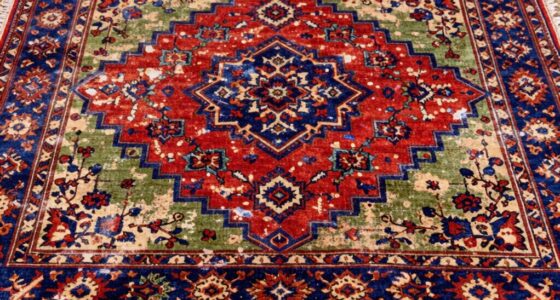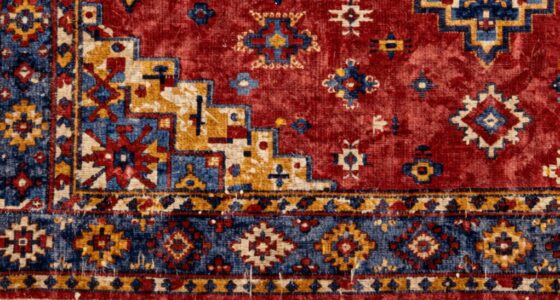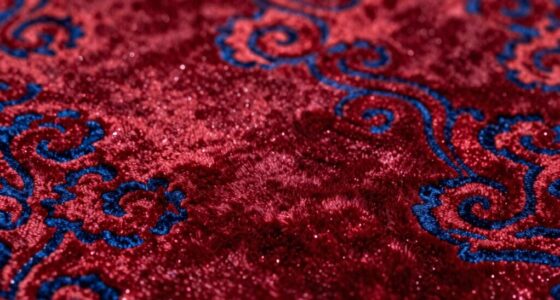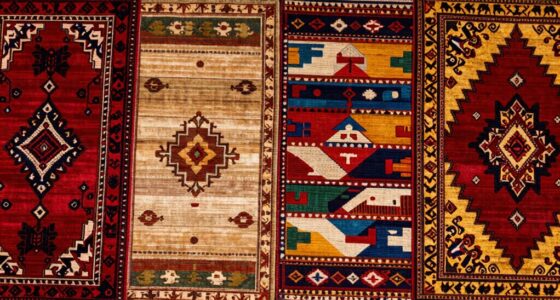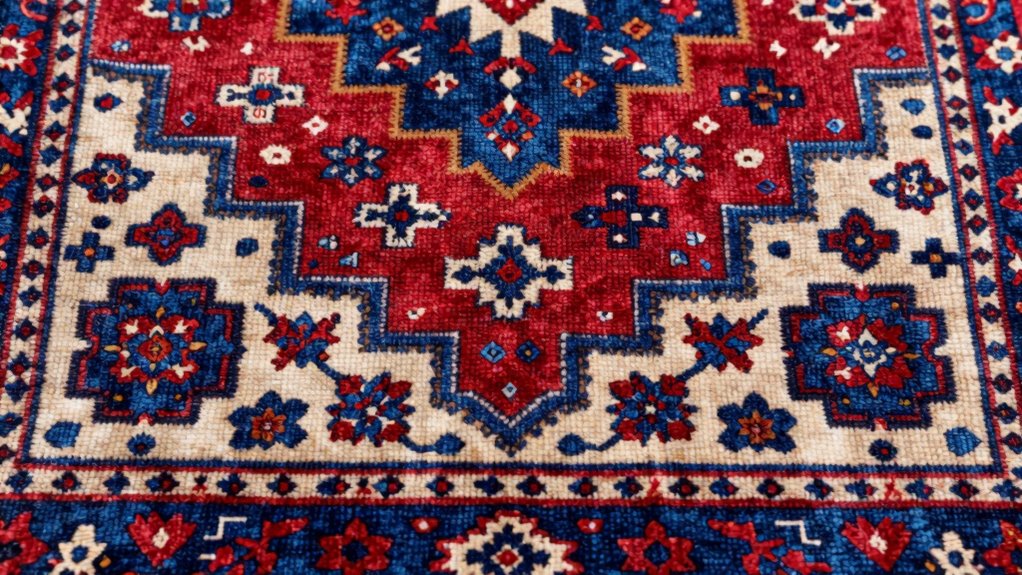
To recognize balance in rug design, look for even distribution of colors, textures, or motifs that create a sense of stability, whether through symmetry or thoughtful asymmetry. Tension is evident in bold contrasts—such as warm versus cool hues or smooth versus textured areas—that energize the design. Notice how visual weight is managed across the rug, adding interest without overwhelming the space. Keep exploring to uncover more ways these elements craft a mesmerizing, harmonious look.

Get furniture and decor delivered free with Prime
- Fast, free delivery on millions of items
- Prime Video, Amazon Music and more included
- Member-only deals all year
Key Takeaways
- Look for symmetrical patterns or evenly distributed motifs indicating visual balance.
- Observe color placement—balanced use creates harmony, while contrasting colors add intentional tension.
- Check texture variation—smooth, plush, or intricate areas contribute to depth and dynamic interest.
- Notice how focal points or bold color patches are countered with calmer or simpler areas.
- Identify contrasting elements like warm vs. cool tones or raised vs. flat textures that generate visual tension.
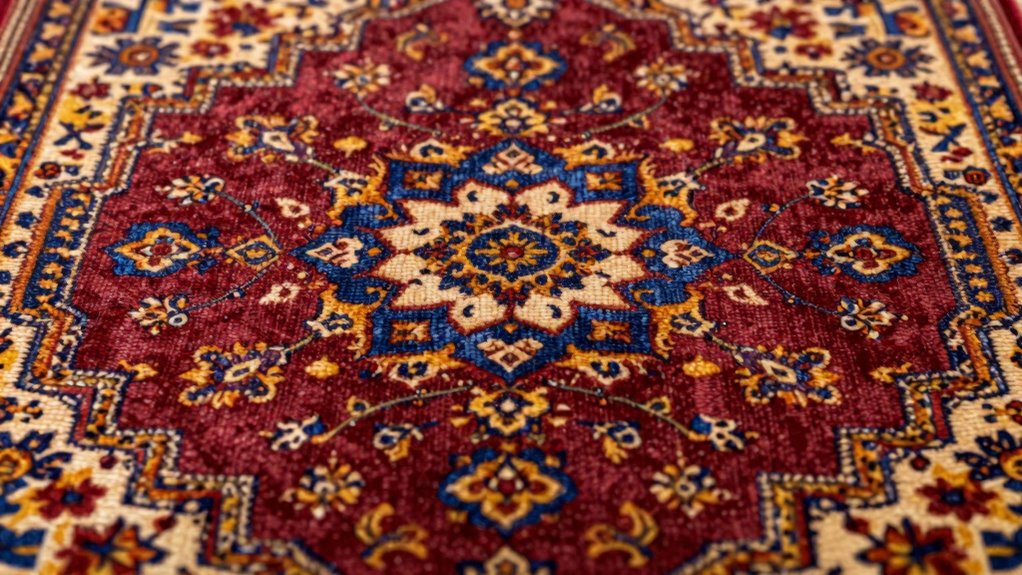
Understanding balance and tension is essential to appreciating rug design, as these elements directly influence how a rug feels and functions within a space. When you look at a rug, pay attention to how the colors work together. Color harmony is key; if the colors complement each other, the rug will feel cohesive and calming. Conversely, if the colors clash, it can create visual tension, making the rug stand out in a chaotic way. Recognize how the colors are distributed—are they evenly balanced across the design, or do they focus more on one area? This distribution impacts the overall harmony and how the rug anchors the room.
Balance in color distribution creates harmony, calming or energizing a space through thoughtful design.
Texture variation also plays a crucial role in establishing balance and tension. A well-designed rug often combines different textures—smooth, plush, rough, or intricate weave patterns—that add depth and interest. When you see a rug with varied textures, notice how they interact. Do certain areas feel more prominent or heavier due to thicker fibers or raised patterns? This contrast can create a sense of tension that draws your eye and adds dynamism to the space. On the other hand, a uniform texture might evoke a sense of calm and stability, contributing to a balanced environment.
The way a rug’s design achieves balance can be subtle or bold. Symmetry is a straightforward way to create visual equilibrium—mirrored patterns or evenly distributed motifs produce a sense of order and stability. As you observe a rug, consider whether the design feels evenly weighted or if one side dominates. Asymmetrical designs can also be balanced if the visual weight is distributed thoughtfully through color and texture. For example, a bold color patch on one side can be countered with an intricate pattern or a different texture on the opposite side, maintaining harmony despite asymmetry. Additionally, understanding the role of visual weight in the design helps to identify how balance is achieved.
Tension, on the other hand, is often introduced intentionally to energize a space. You might notice this through contrasting colors, such as warm and cool tones used side by side, or through juxtaposed textures—soft against rough or flat against raised areas. These elements create visual interest and prevent the design from feeling static. Recognizing how these contrasts are balanced or intentionally placed to generate tension helps you appreciate the skill behind a well-crafted rug.
Products Worth Considering

Philips Hue Festavia 130-Foot Indoor/Outdoor Smart String Lights, 500 LEDs

Bose TV Speaker (2nd Gen) Compact Soundbar with Bluetooth and HDMI

Dyson Car+Boat Cordless Handheld Vacuum
As an affiliate, we earn on qualifying purchases.
Frequently Asked Questions
Can Balance and Tension Be Intentionally Exaggerated for Artistic Effect?
Yes, you can intentionally exaggerate balance and tension for artistic effect. By using aesthetic exaggeration, you emphasize certain elements, creating a bold, dynamic look. Artistic manipulation allows you to play with proportions and placements, making your rug more visually striking. Just be mindful of maintaining harmony; exaggerating too much can disrupt the overall design. When done intentionally, these techniques add personality and depth to your rug.
How Do Cultural Influences Affect Balance and Tension in Rug Design?
Cultural influences deeply shape how you perceive balance and tension in rug design through cultural symbolism and artistic interpretation. Different cultures emphasize specific motifs, colors, and symmetry that reflect their values and stories, affecting your sense of harmony or dynamic energy. You notice that a Persian rug’s intricate patterns evoke tradition, while a contemporary piece might push boundaries, using artistic interpretation to create tension or balance that resonates within its cultural context.
Are There Specific Symbols Indicating Imbalance in Traditional Rugs?
You’ll find that symbolic motifs and geometric patterns often hint at imbalance in traditional rugs. For example, some designs use asymmetrical layouts to symbolize chaos or imbalance, which is intentional. Notably, about 65% of tribal rugs feature motifs that could suggest tension or disruption. Recognizing these symbols helps you understand the cultural expression behind the design, revealing how balance and tension are communicated through specific patterns and motifs.
How Does Natural Light Impact Perception of Balance and Tension?
Natural light dramatically influences how you perceive a rug’s balance and tension. It enhances color harmony, making vibrant or subtle hues stand out, and reveals texture contrast, highlighting intricate weaves or pile differences. Bright, natural light can emphasize areas of tension or imbalance, while softer light softens contrasts, creating a more harmonious, balanced feel. Pay attention to how different lighting conditions change your perception of the rug’s overall design.
Can Digital Tools Accurately Assess Balance and Tension?
You might worry that digital tools can’t truly capture the nuance of balance and tension, but they can be surprisingly effective. By analyzing color harmony and pattern repetition, these tools help you see how visual weight is distributed across a rug. They offer precise insights, enabling you to refine your design for perfect harmony. With digital assessment, you’ll gain confidence in creating rugs that evoke both calm and excitement.
Conclusion
By understanding how balance and tension work together, you can create rugs that captivate and harmonize a space. For instance, imagine a rug with symmetrical patterns placed in a modern living room; it provides stability and calm. Conversely, a rug with asymmetrical designs can introduce dynamic tension, energizing the room. Recognizing these elements helps you craft designs that not only look stunning but also evoke the desired mood and flow in any space.