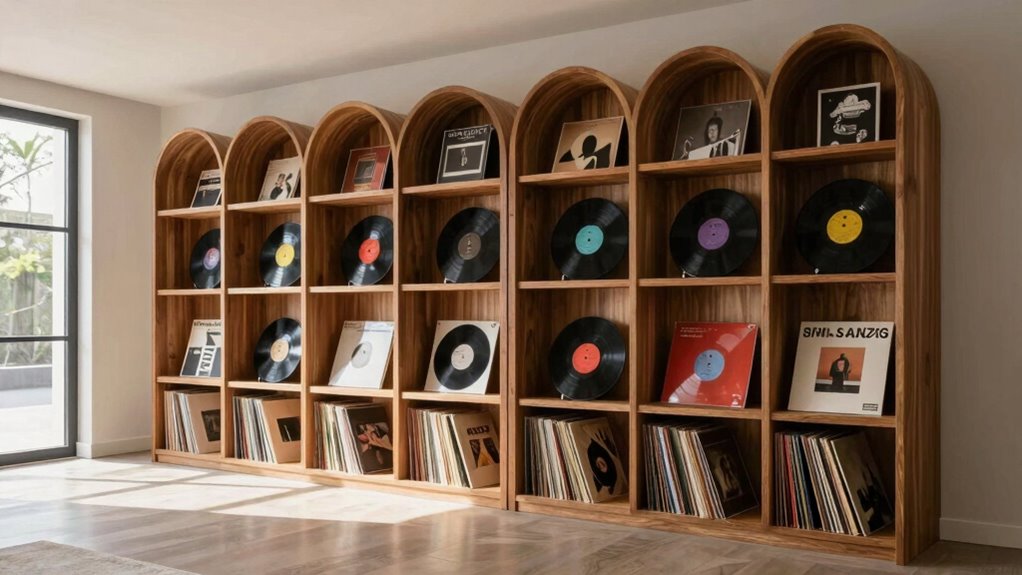

You can make record storage a key part of your room’s architecture by designing custom shelves that follow the room’s lines, blending function with style. Use materials like warm woods or sleek metals to frame your collection, turning storage into a visual feature. Incorporate lighting to highlight your records without overpowering the space. By integrating these elements seamlessly, your collection becomes a reflection of your personality. Keep exploring to discover how this transforms your room into a true design statement.
Get ready for Prime Big Deal Days — try Prime free
Exclusive member deals on October 6–7, plus fast free delivery. Cancel anytime.
As an affiliate, we earn on qualifying purchases.
Key Takeaways
- Integrate custom shelving that follows room lines for seamless, cohesive storage solutions.
- Use materials like warm woods, metals, and glass to blend storage with the room’s aesthetic.
- Design modular units that adapt to collection growth, ensuring both functionality and visual harmony.
- Incorporate lighting to highlight records, enhancing their role as architectural focal points.
- Embed storage within the room’s architectural features to create a unified, curated environment.
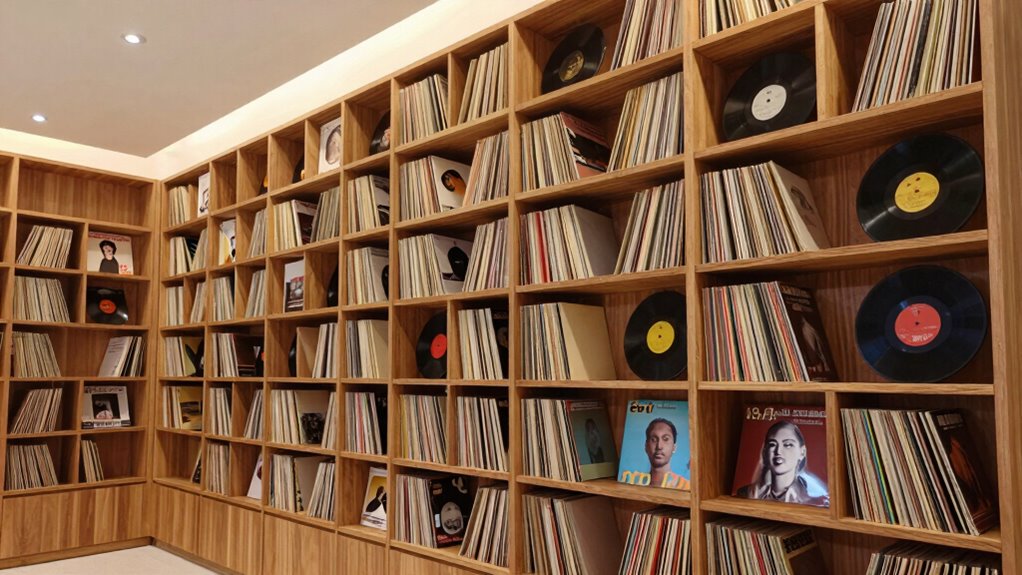
Imagine transforming a space into a dynamic archive where every surface and structure serves a purpose: this is the essence of record storage as room architecture. When you approach your vinyl collection with this mindset, you don’t just find a place for your records—you design a space where your collection becomes an integral part of the room’s identity. Instead of hiding your records in closets or on cluttered shelves, you can incorporate storage solutions that elevate their presence, blending function with aesthetic appeal.
Think about custom shelving that follows the lines of your room, creating a seamless flow between your living space and your collection. Open racks, built-in units, or wall-mounted displays can serve as focal points, showcasing your vinyl collection as both art and music. These structures don’t just hold records; they frame them, turning storage into a visual statement. The materials you choose—warm woods, sleek metals, or minimalist glass—can reflect your style while providing practical support for your collection. By designing dedicated storage solutions, you guarantee your vinyl collection isn’t just stored but celebrated.
Incorporating your vinyl collection into the room’s architecture also involves considering accessibility and organization. Modular storage units allow you to adapt as your collection grows, maintaining a cohesive look. Drawer systems and vertical racks can optimize space while keeping your records easy to browse. When you integrate these solutions into the room’s design, you create a harmonious environment where music, aesthetics, and functionality coexist. Your collection becomes a part of the room’s narrative, inviting you to explore and enjoy it daily. Additionally, understanding how biodiversity and sustainable practices influence material choices can help you select eco-friendly options that support conservation efforts.
Lighting plays a vital role in this architectural approach. Spotlights or under-shelf lighting highlight your records, emphasizing their texture and artwork. Proper lighting not only enhances the visual appeal but also provides practical illumination, making it easier to select a vinyl without disturbing the ambiance. The key is balance—your storage solutions should complement the room’s overall design, not overpower it. When thoughtfully implemented, they transform a simple storage area into a curated gallery that reflects your personality and passions.
custom wall-mounted record shelves
As an affiliate, we earn on qualifying purchases.
As an affiliate, we earn on qualifying purchases.
Frequently Asked Questions
How Does Record Storage Impact Room Acoustics?
Record storage impacts room acoustics by influencing sound absorption and echo control. When you choose materials like wood or foam for your storage, they help absorb sound waves, reducing echo and making the space quieter. Properly integrated storage also prevents sound reflections, creating a balanced acoustic environment. By considering how your record storage interacts with the room, you enhance sound quality and overall comfort, ensuring a better listening experience.
What Materials Are Best for Integrating Storage and Design?
You should choose shelving materials that blend vintage vinyl storage with your room’s design, like warm wood or sleek metal. These materials create a seamless look and add character, making your storage feel like a natural part of the space. Wood offers a timeless, cozy vibe, while metal provides a modern edge. By selecting the right materials, you turn record storage into both a functional and stylish architectural feature.
Can Record Storage Be Easily Removed or Repositioned Later?
Yes, removable units offer great repositioning flexibility, making it easy for you to adjust your record storage later. You can easily detach or move these units without hassle, allowing you to change your room’s layout whenever you want. This flexibility helps you keep your space fresh and functional, and it’s ideal if you anticipate needing to reconfigure your storage or want to update your decor over time.
How Does Storage Design Affect Room Lighting?
Storage design profoundly influences your room’s lighting by enhancing or blocking ambient lighting. Sleek, integrated storage with reflective surfaces can amplify natural light, making the space feel brighter. Conversely, bulky or dark storage aesthetics may cast shadows, reducing light flow. When you choose storage that complements your lighting plan, you create a balanced atmosphere, ensuring your room feels open and inviting while maintaining functional organization.
Are There Safety Considerations for Built-In Record Storage?
Built-in record storage must prioritize safety, as neglecting fire safety or structural integrity can turn your space into a disaster zone. Make sure that fire-resistant materials are used and that there are proper ventilation options to prevent smoke buildup. Double-check that the structure can support the weight of the records without compromising the room’s stability. Ignoring these considerations could lead to catastrophic consequences, like a house of cards collapsing in a gust.
Conclusion
So, next time you think about storage, don’t just hide your records away. Instead, make them part of your room’s architecture, turning chaos into design. Ironically, what’s meant to keep things out of sight can become the very feature that pulls your space together. Who knew that embracing your collection could actually make your room look more intentional? Sometimes, the best way to store your records is to let them be the centerpiece—literally.
NFL season / tailgating Picks
team gear
As an affiliate, we earn on qualifying purchases.