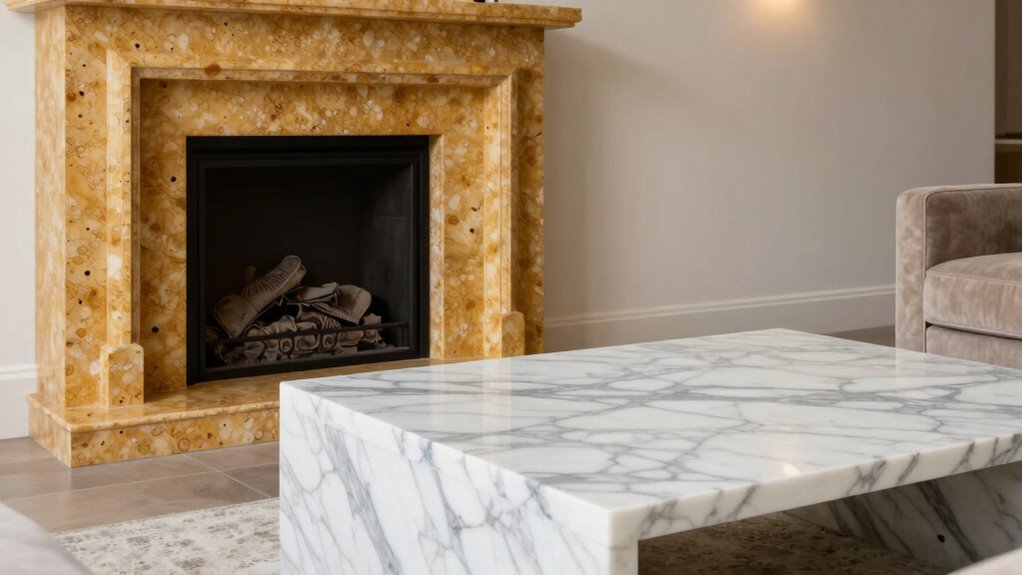

Travertine and marble each bring a unique vibe to your space. Marble’s polished surface and elegant veining create a luxurious, timeless atmosphere that feels refined and sophisticated. In contrast, travertine’s natural textures and earthy tones add warmth and rustic charm, making your space welcoming and cozy. Choosing between them impacts your room’s personality markedly. If you want to explore ways to maximize each material’s character, keep exploring how they can transform your interior design.
Key Takeaways
- Marble’s polished surface and elegant veining evoke a sophisticated, luxurious atmosphere, ideal for formal and high-end spaces.
- Travertine’s natural textures and matte finish create a warm, rustic, and relaxed ambiance perfect for casual or traditional settings.
- The historical significance of marble adds a sense of grandeur and timeless elegance to a room’s personality.
- Travertine’s earthy tones and porous surface foster a cozy, inviting vibe with rustic charm.
- Material choice influences the room’s overall mood, with marble emphasizing modern elegance and travertine emphasizing rustic comfort.
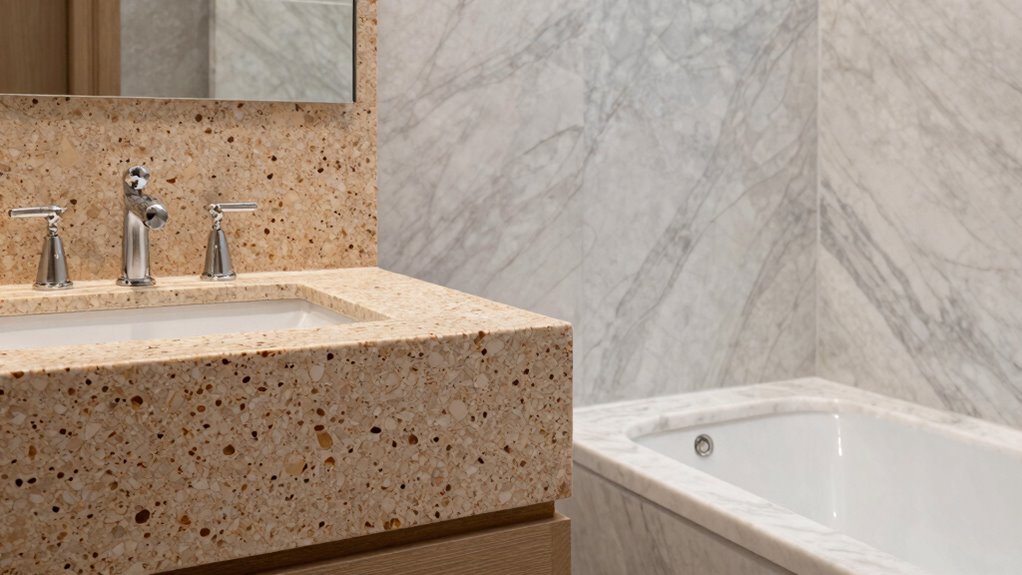
When it comes to elevating your room’s aesthetic, incorporating travertine and marble can make a significant difference. These natural stones don’t just add beauty; they carry a rich historical significance that can deepen the character of your space. Marble, with its roots tracing back to ancient Greece and Rome, has long symbolized luxury and refinement. Its timeless appeal can evoke a sense of grandeur, making your room feel both historic and sophisticated. Travertine, on the other hand, was used in ancient Roman architecture and now offers a more rustic, earthy vibe. The history embedded in these materials can give your space a sense of connection to the past, enriching its personality and making it more meaningful. Additionally, understanding the environmental impact of these stones can help you make more sustainable choices in your design. Choosing between travertine and marble also involves considering their environmental impact. Marble is a metamorphic rock formed from limestone under heat and pressure, and its extraction involves quarrying that can disturb local ecosystems if not managed responsibly. However, marble can be sustainable if sourced from eco-conscious suppliers that prioritize minimal environmental disruption. Travertine comes from sedimentary deposits, often found near hot springs, and its quarrying is generally less invasive. Still, the environmental footprint depends on the specific quarrying practices, so it’s worth researching suppliers committed to sustainable extraction methods. By understanding these impacts, you can make choices that align with your values, ensuring your stylish room doesn’t come at an unnecessary environmental cost. Additionally, the durability of these stones can influence their longevity and overall value in your project. The cost of each material can vary significantly depending on quality and sourcing, which is also an important factor in your decision-making process.
Incorporating travertine and marble adds historical charm, elegance, and a timeless connection to the past to your space.
Both stones also have different maintenance requirements that can influence your long-term satisfaction with the material. Marble’s polished surface and intricate veining create an elegant, high-end atmosphere that commands attention and admiration. It can transform a bathroom into a spa-like retreat or a kitchen into a luxurious culinary space. Proper sealing and regular cleaning are essential to maintain its pristine appearance and prevent staining over time. Travertine’s matte finish and natural textures lend a warm, inviting feel. Its porous surface, often filled and honed, adds character and a touch of rustic charm, perfect for creating cozy, relaxed environments. Whether you want a sleek, modern look or a more natural, earthy ambiance, these materials give you versatile options to craft a room that reflects your personality. Ultimately, your choice depends on the vibe you want to establish. Marble exudes timeless elegance and a sense of history, while travertine offers a more grounded, approachable aesthetic. Both materials can elevate your space, but understanding their historical significance and environmental impact helps you select the one that best aligns with your style and values. By doing so, you create a room that’s not only beautiful but also meaningful and responsible.
marble bathroom vanity countertop
As an affiliate, we earn on qualifying purchases.
As an affiliate, we earn on qualifying purchases.
Frequently Asked Questions
Which Material Is More Eco-Friendly, Travertine or Marble?
Travertine is generally more eco-friendly than marble because it involves less energy-intensive quarrying and processing, reducing its environmental impact. If you prioritize sustainability practices, choosing travertine supports lower carbon emissions and less water usage. Marble’s higher energy demands and more intensive extraction make it less eco-friendly. So, if environmental impact is your main concern, travertine is the better choice for a sustainable and stylish space.
How Do Travertine and Marble Compare in Terms of Cost?
In regard to cost comparison, travertine is generally more affordable than marble, making it a popular choice for budget-conscious projects. Its material affordability means you can get a beautiful, natural stone look without overspending. Marble, on the other hand, tends to be pricier due to its luxurious appearance and rarity. If you’re balancing style and budget, travertine offers a cost-effective option, whereas marble provides a high-end, elegant vibe.
Can These Stones Be Used Outdoors Effectively?
Yes, you can use travertine and marble outdoors effectively. Both stones offer excellent outdoor durability and weather resistance when properly sealed and maintained. Travertine’s natural porosity helps it withstand temperature fluctuations, while marble’s dense structure resists weather elements. You’ll enjoy their timeless beauty and resilience, creating inviting patios or pathways that stand up to the elements while enhancing your outdoor spaces.
What Are the Maintenance Requirements for Travertine Versus Marble?
You need to stay on top of maintenance for both stones. For travertine, regularly sealing it with appropriate techniques helps prevent staining, and routine cleaning with pH-neutral cleaners keeps its surface looking fresh. Marble requires similar care; sealing is vital, especially in high-traffic areas, and cleaning routines should avoid acidic substances that can etch the surface. Proper maintenance ensures both stones stay beautiful and durable over time.
How Do These Materials Influence Room Acoustics?
Imagine your room’s atmosphere transforming with the touch of stone. Travertine’s porous surface absorbs sound, reducing echoes, creating a cozy, intimate space. Marble’s polished reflection characteristics bounce sound waves, amplifying brightness and liveliness. You’ll notice this effect in your acoustics—travertine dampens noise, marble enhances clarity. Choosing between them shapes your room’s vibe, whether tranquil or vibrant, making every conversation and moment feel just right.
Conclusion
As you consider your space, it’s almost like travertine and marble are quietly guiding your choices, each revealing a different personality just when you need it. You might find that a travertine accent unexpectedly warms your room, while a marble centerpiece suddenly elevates the entire vibe. Sometimes, it’s the subtle coincidence of these materials aligning perfectly with your vision that makes your space truly memorable. Trust that your design choices will naturally reflect the personality you want to create.