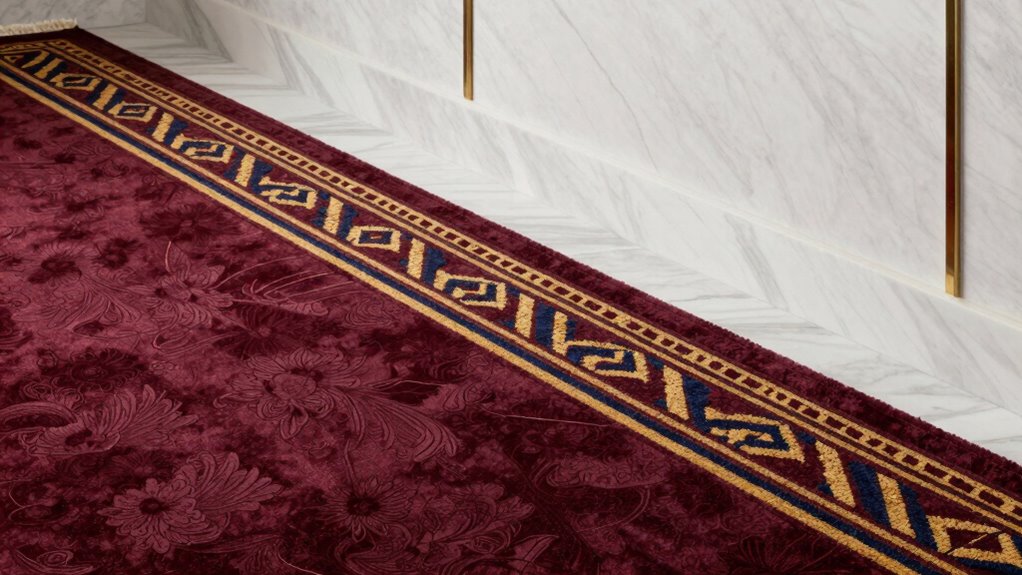
Matching rug borders to your architecture can instantly elevate your room’s style and make it feel truly custom. Choose borders that complement your architectural features, like moldings or trims, and coordinate colors and patterns for harmony or contrast. Keep borders simple for a clean look or bolder for a statement. Thoughtful placement and scale ensure the rug enhances space and architecture. To discover tips for creating a cohesive, personalized room, continue exploring these design strategies.
Key Takeaways
- Rug borders enhance architectural style by reflecting historical influences and cultural symbolism, creating a cohesive room aesthetic.
- Selecting borders that complement architectural details like moldings or finishes helps unify and elevate interior design.
- Proper border placement and scale emphasize focal points, making the space feel custom and thoughtfully curated.
- Coordinating border colors and patterns with furniture and textiles ensures visual harmony within the room.
- Using borders strategically to frame rugs creates a seamless connection between flooring, walls, and architectural features.
How Rug Borders Enhance Your Architectural Style
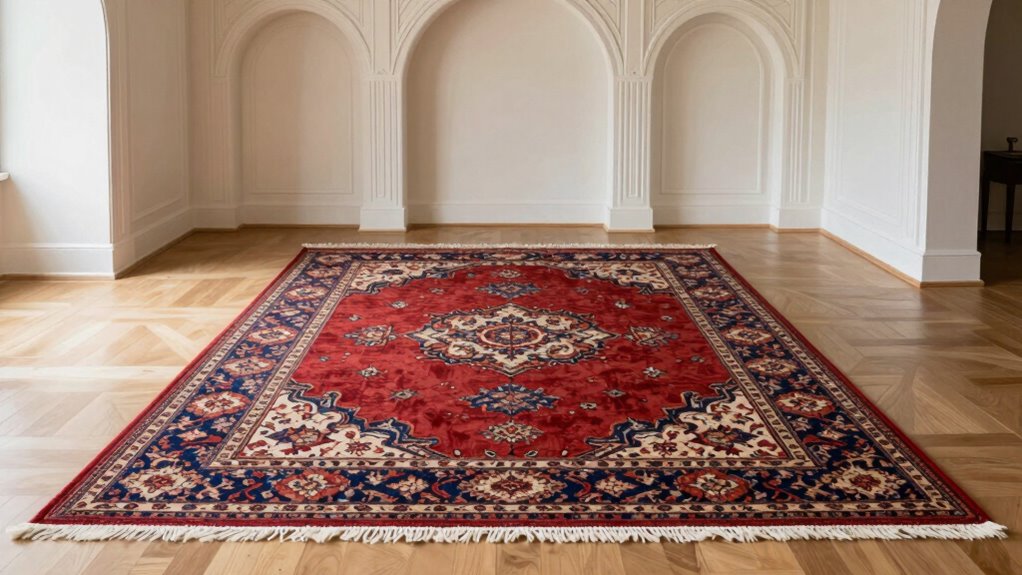
Have you ever noticed how rug borders can subtly influence the overall feel of a space? These borders carry rich historical influences that reflect different eras and regions, adding depth to your decor. They often incorporate cultural symbolism, conveying stories or traditions through intricate patterns and motifs. When you choose a rug with a border that echoes your architectural style, you create a harmonious connection between the floor and walls. For example, a border inspired by Persian art can evoke a sense of elegance in classical interiors, while geometric designs may complement modern architecture. By selecting borders rooted in meaningful history and culture, you enhance your room’s character and make your space feel thoughtfully curated. Design harmony between your rug and architecture can significantly elevate the overall aesthetic.
Choosing the Best Rug Border for Your Architectural Elements
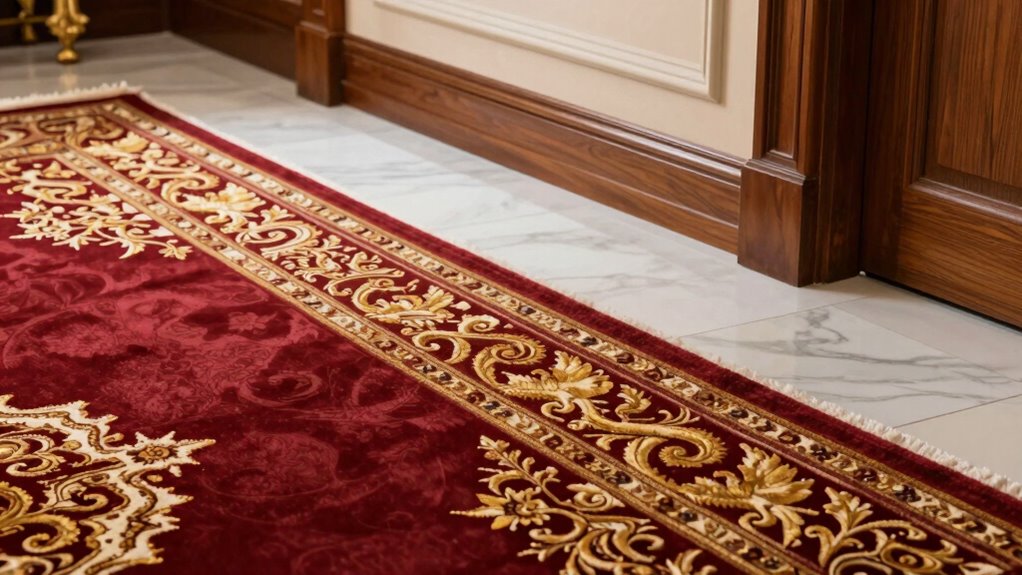
When selecting a rug border, you want to consider how it complements your architectural style, whether modern, traditional, or eclectic. Coordinating colors and patterns can create harmony or add contrast, depending on your goal. Additionally, choose border materials and textures that enhance the overall feel and durability of your space. Incorporating design elements that reflect current trends or timeless styles can also elevate your room’s aesthetic.
Complementary Architectural Styles
Choosing a rug border that complements your architectural style can substantially enhance the overall harmony of a space. If your architecture emphasizes architectural symmetry, opt for a border that mirrors this balance, creating a cohesive look. For example, classical or traditional styles often pair well with intricate, ornate borders that reflect their detailed craftsmanship. On the other hand, modern or minimalist designs benefit from simple, clean-lined borders that support style blending without overwhelming the space. Matching the border to your architectural elements ensures that the rug feels integrated rather than separate. This thoughtful pairing draws attention to the room’s design principles, reinforcing the architectural identity and making your space feel intentional and polished. Incorporating energy-efficient design principles into your decor choices can also contribute to a more sustainable and environmentally friendly home.
Color Coordination Strategies
Selecting the right rug border color plays a crucial role in harmonizing your rug with your architectural elements. To achieve this, consider these strategies:
- Use color contrast deliberately—pick a border that either complements or contrasts with your walls and furniture to create visual interest.
- Balance pattern mixing by choosing a border that echoes the patterns in your space, ensuring it neither clashes nor blends in too much.
- Focus on cohesive color palettes—select border colors that harmonize with key architectural features, such as moldings or trim, for a unified look.
Border Material and Texture
The material and texture of your rug border can considerably enhance how it interacts with your architectural elements. Opting for different fabric patterns, like intricate or minimal designs, influences the visual flow. Border thickness also plays a crucial role; a thicker border creates a bold statement, while a thinner one offers subtle elegance. Consider textures such as smooth silk or textured wool to add depth and contrast, aligning with your room’s style. Additionally, understanding color temperature and its effect on visual harmony can help in selecting the most cohesive border material.
Tips and Examples for Matching Rug Borders With Architectural Features
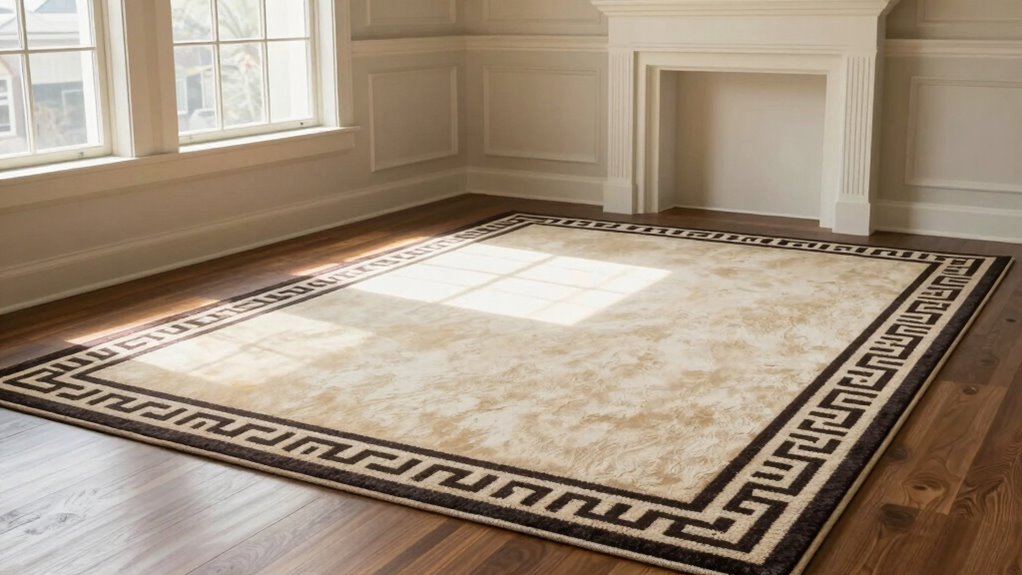
Matching rug borders with doorways and molding can create a seamless look in your space. You should consider the style and details of architectural features to choose complementary borders. By paying attention to these elements, you’ll enhance your interior’s harmony and visual appeal. Incorporating design principles can help you select borders that balance with your room’s architecture for a cohesive appearance.
Harmonizing Rug Borders With Doorways
When you aim to create a seamless passage between your rug and architectural features like doorways, paying attention to the borders is essential. Properly matching rug borders with doorway passages enhances the room’s flow and highlights architectural focal points. To achieve this:
- Choose rug borders that echo the door frame’s color or style to create visual harmony.
- Align the rug’s edge with the doorway threshold, ensuring smooth links without abrupt stops.
- Use borders that complement architectural details nearby, such as moldings or trim, to unify the space.
These steps help your rug work with doorways as architectural focal points, making your room appear more cohesive and custom-designed. Subtle border choices can dramatically improve how your space feels and flows.
Complementing Architectural Molding
Architectural moldings add character and depth to a room, and choosing rug borders that complement these features can elevate your space’s design. When selecting area rugs, look for borders that echo the style of your moldings—be it ornate, simple, or modern. For example, a rug with a subtle, clean border pairs well with sleek crown molding, while a detailed border complements intricate wall decor or decorative trim. Matching rug borders to architectural features creates visual harmony and makes your room feel cohesive. Pay attention to the colors and patterns of the moldings and wall decor, ensuring the rug enhances rather than clashes. This thoughtful approach highlights your room’s architecture and adds a polished, custom look.
Common Mistakes to Avoid When Pairing Rug Borders and Architecture
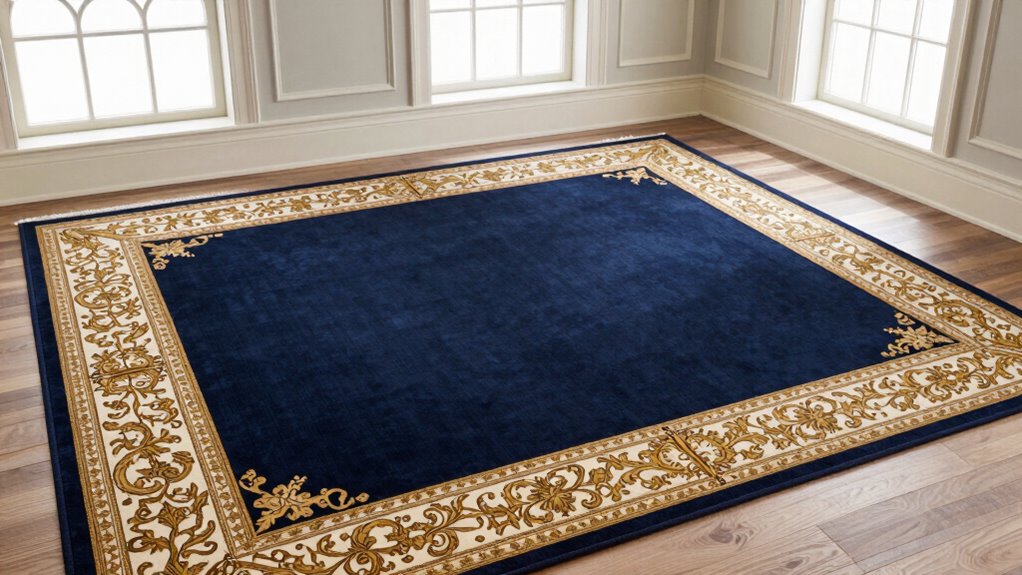
Pairing rug borders with architecture can elevate a space, but overlooking certain pitfalls often leads to visual discord. One common mistake is choosing borders with misaligned proportions, which can make the room feel unbalanced. Avoid conflicting styles, such as pairing ornate borders with minimalist architecture, as this creates visual chaos. Finally, neglecting to take into account the overall room scale can result in a mismatch that distracts rather than enhances. Be mindful of these pitfalls:
Pair borders with architecture carefully to avoid imbalance, style clashes, and scale mismatches.
- Ignoring proportion harmony between border and space
- Mixing incompatible design styles
- Overlooking the room’s architectural scale
A thorough understanding of interior design basics, such as how mood boards and narratives can help visualize how different elements come together, can aid in creating a cohesive look.
Design Strategies for a Cohesive Look With Rug Borders and Your Space
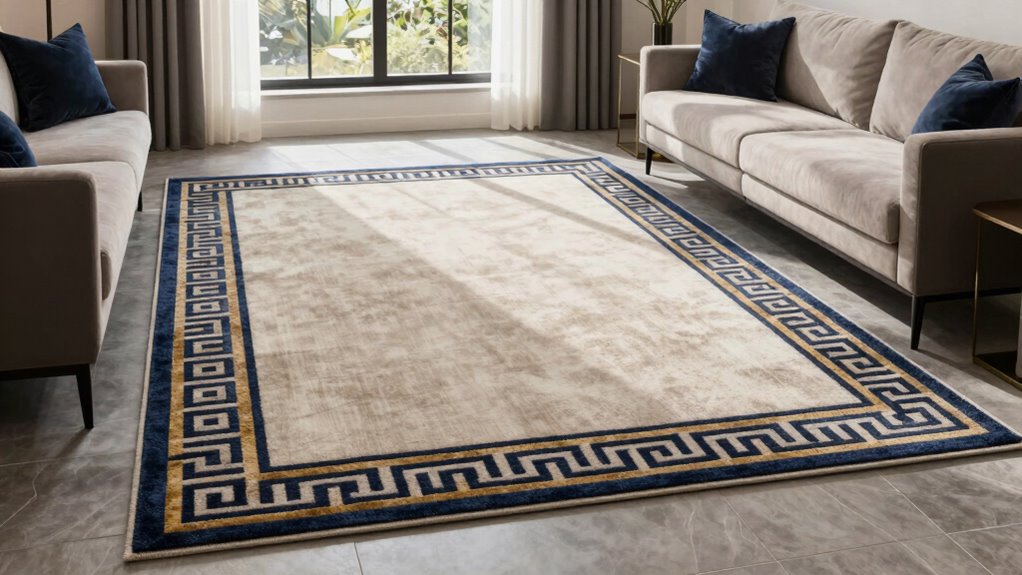
Creating a cohesive look with rug borders and your space starts with understanding how to balance design elements effectively. Focus on coordinating your interior color palettes so the rug border complements wall colors and furniture. Proper furniture placement enhances the border’s impact, anchoring the room’s style. Use the table below to visualize ideas:
| Interior Color Palettes | Furniture Placement |
|---|---|
| Match border tones to walls | Place larger furniture near borders |
| Use contrasting colors for accents | Keep furniture away from edges for emphasis |
| Stick to neutral palettes | Arrange seating to highlight the border |
| Incorporate bold colors sparingly | Balance symmetry for harmony |
| Use monochrome schemes | Position rugs centrally for focus |
This approach ensures your space feels unified, with rug borders acting as a seamless design element. Understanding interior color palettes and how they influence overall harmony can help you achieve a polished look.
Final Tips for Perfectly Matching Rug Borders to Your Home’s Architecture
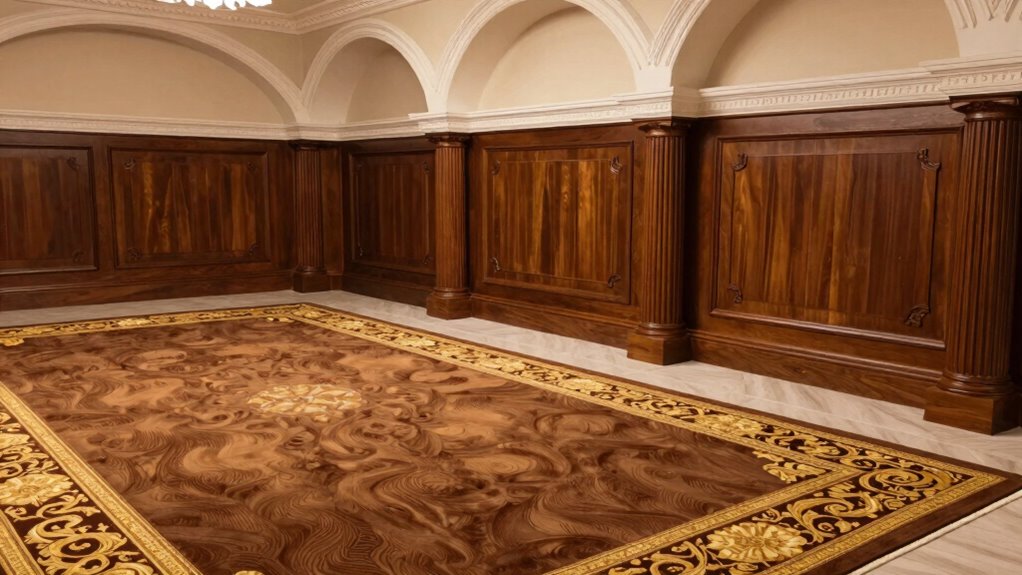
To guarantee your rug borders enhance your home’s architectural style, start by examining the structural features and design themes of your space. Consider the textile patterns and furniture styles to create harmony. Incorporate traditional practices in selecting border styles that complement your overall decor, ensuring a cohesive look.
- Match border colors and patterns with existing textiles—if your furniture features intricate textile patterns, opt for borders with subtle designs.
- Align border styles with architectural details—classic moldings pair well with traditional borders, while sleek, modern borders suit contemporary spaces.
- Balance scale and proportions—large borders work with spacious rooms, and smaller borders complement cozy areas.
Frequently Asked Questions
Can Rug Borders Influence a Room’s Perceived Size?
Yes, rug borders can influence how big a room feels. By choosing a border with high color contrast, you draw attention to the edges, making the space seem more defined. Additionally, pattern variety in the border can add visual interest without overwhelming the room, creating an illusion of depth. These design choices help you manipulate perceived size, making your room appear larger or cozier depending on your goals.
Are Certain Rug Border Styles Better Suited for Specific Architectural Periods?
Think of rug border styles as fashion statements for different architectural eras. You’ll find that certain border craftsmanship, like intricate detailing for historical design periods, perfectly complements the architecture of that time. For example, ornate borders suit Victorian spaces, while simpler lines work well with modern settings. Matching border styles to architectural periods helps create harmony, making your room feel thoughtfully curated and timeless.
How Do Rug Borders Impact the Overall Ambiance of a Space?
Rug borders considerably impact your space’s ambiance by enhancing color coordination and adding texture contrast. A bold border can create a lively, energetic vibe, while a subtle one offers calmness and sophistication. You’ll notice how the border’s design and texture contrast complement your room’s style, making it feel more cohesive and inviting. By choosing the right border, you actively shape the mood and personality of your space.
Is Professional Consultation Recommended for Complex Architectural and Rug Border Matching?
Like Picasso blending colors, professional consultation is highly recommended for complex architectural and rug border matching. You need expert guidance to guarantee decor matching harmonizes seamlessly with your space’s unique features. An expert can help you navigate intricate details, prevent mismatched elements, and elevate your room’s style. Trusting a professional ensures a cohesive, polished look, transforming your room into a sophisticated, artful haven that reflects your personal taste and architectural elegance.
Can DIY Rug Border Customization Improve Architectural Harmony Effectively?
Yes, DIY rug border customization can improve architectural harmony if you use effective techniques. Focus on color coordination to guarantee the border complements your room’s palette. Use simple DIY techniques like painting or adding trim to create a seamless look. Take your time, measure carefully, and choose materials that match your existing decor. When done well, your customized rug border will enhance your space’s overall cohesion and style.
Conclusion
By carefully matching rug borders to your architectural features, you create a seamless harmony that transforms your space into a tailored masterpiece. Think of your room as a symphony, where every element plays in tune. When you choose the right borders, your home becomes a canvas painted with cohesive beauty. So, trust your instincts, avoid common pitfalls, and let your design choices weave together like a perfectly crafted tapestry.