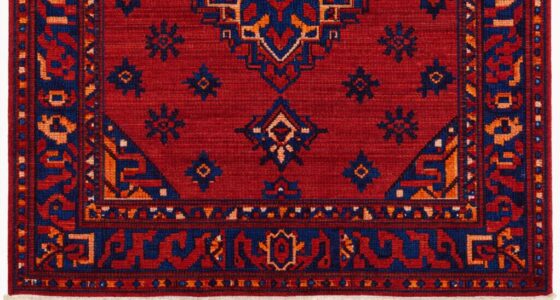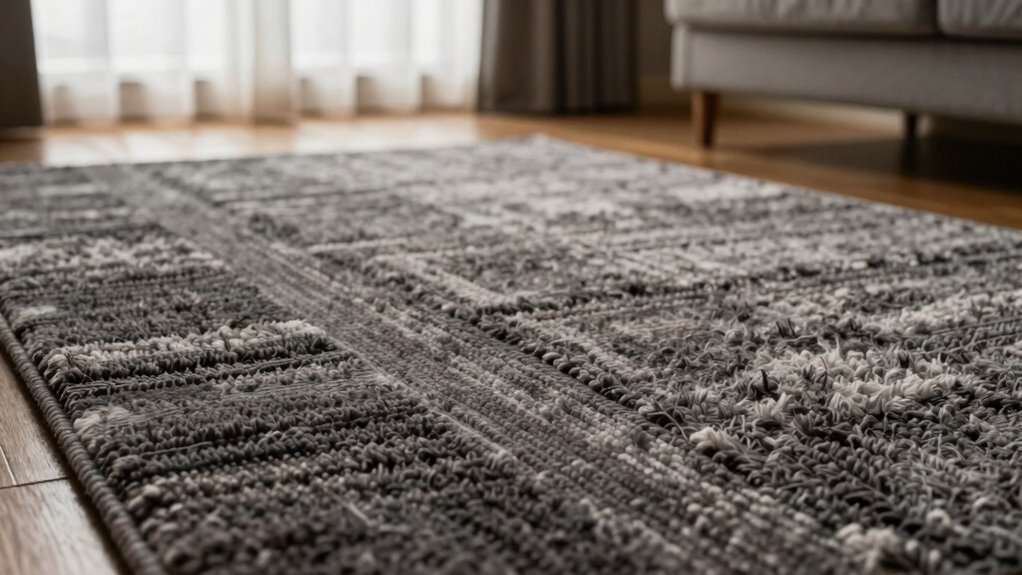

Your rug’s fiber content affects how it performs in different rooms by influencing durability, appearance, and maintenance needs. For high-traffic areas, synthetic fibers like nylon or polyester resist stains and wear better, while natural fibers like wool offer a cozy look but may need gentler care. Choosing the right fiber helps your rug stay beautiful and functional over time. Keep exploring to discover how different fibers can match your space perfectly.

Get furniture and decor delivered free — and shop member deals
- Fast, free delivery on millions of items
- Access to Prime Big Deal Days deals on October 6–7
- Prime Video, Amazon Music and more included
Key Takeaways
- Fiber type affects durability, making some materials better suited for high-traffic areas like hallways.
- Natural fibers like wool provide warmth and softness, ideal for bedrooms and living rooms.
- Synthetic fibers are more stain-resistant and easier to clean, suitable for kitchens and children’s rooms.
- Fiber properties influence color retention and vibrancy, impacting aesthetic quality in different spaces.
- The maintenance needs of each fiber type determine longevity and performance based on room usage.
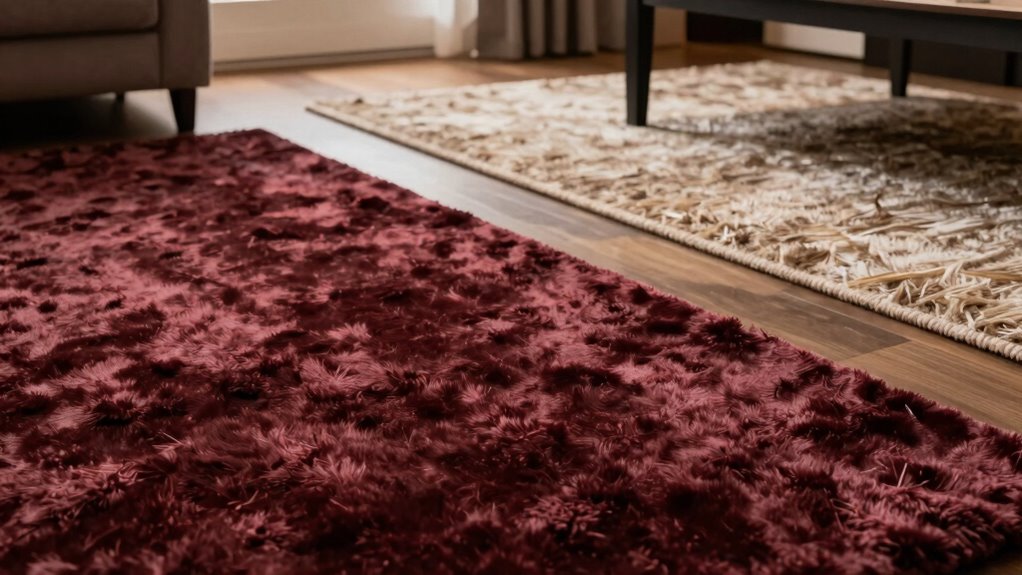
Have you ever wondered how the fibers in your rug influence the way a room looks and feels? The type of fiber used in your rug plays a vital role in defining its overall performance and how well it fits into your space. Different fibers offer distinct textures, durability, and visual effects, which directly impact your room’s ambiance. For example, wool rugs tend to have a warm, cozy appearance, making them ideal for living rooms or bedrooms, while synthetic fibers like nylon or polyester often come in vibrant colors and are easier to clean, making them suitable for high-traffic areas or spaces prone to spills.
The fiber type in your rug shapes its look, feel, and suitability for different spaces and lifestyles.
Color coordination is another key factor affected by fiber content. Certain fibers hold dyes better than others, influencing how well the rug’s color matches your existing decor. Natural fibers such as wool and silk often yield richer, more nuanced hues, helping you achieve a harmonious look. Conversely, synthetic fibers can be manufactured in bold, bright shades that add a pop of color or a modern touch to your room. When selecting a rug, think about how its fiber content will interact with your room’s color scheme and contribute to the overall aesthetic. This guarantees that the rug enhances rather than clashes with your furniture, walls, and accessories.
Cleaning maintenance is also heavily influenced by the fiber content. Some fibers are more resistant to stains and easier to clean, making them ideal for busy households. For instance, nylon and polyester rugs typically withstand dirt and spills better and can often be cleaned with simple methods like vacuuming or spot cleaning. Wool rugs, while luxurious, may require more delicate care, such as professional cleaning or specific cleaning products to prevent damage. Knowing the cleaning requirements of your rug’s fiber helps you plan upkeep routines and avoid premature wear or discoloration. It’s essential to match the fiber’s durability with your lifestyle—if you have children or pets, choosing a fiber that’s easy to maintain will save you time and frustration.
Ultimately, understanding how your rug’s fiber content affects its performance in different rooms allows you to make smarter choices. You’ll find that the right fiber enhances your space’s visual appeal through effective color coordination and simplifies maintenance, keeping your room looking fresh and inviting longer. Selecting a rug isn’t just about style—it’s about considering how the fibers will perform in your daily life, guaranteeing your space remains comfortable, attractive, and functional. Recognizing the fiber content of your rug can help you select the most suitable material for your specific needs. Additionally, being aware of the durability of different fibers ensures your investment lasts over time, especially when considering the wear resistance in high-traffic areas. Properly understanding these factors can also help you determine the stain resistance of your rug, which is crucial for maintaining a clean and neat appearance.
As an affiliate, we earn on qualifying purchases.
Frequently Asked Questions
How Does Rug Fiber Affect Allergy Symptoms in Different Rooms?
Your rug fiber markedly impacts allergy symptoms in different rooms because certain fibers, like wool, can trap allergy triggers and increase fiber allergenicity. In bedrooms, where you spend a lot of time, choosing hypoallergenic fibers like nylon or polypropylene can reduce allergy symptoms. In living areas, synthetic fibers are easier to clean and less likely to harbor dust mites or pet dander, helping minimize allergy triggers and improve overall comfort.
Are Synthetic Fibers More Durable in High-Traffic Areas?
Synthetic fibers are generally more durable in high-traffic areas due to their fiber strength analysis and durability comparison. You’ll find that materials like nylon and polyester withstand wear and tear better than natural fibers. They resist crushing, staining, and fading, making them ideal for busy spaces. So, if you want a rug that lasts longer in high-traffic zones, synthetic fibers are your best bet, providing the resilience you need.
Can Fiber Type Influence Sound Absorption in Rooms?
Yes, fiber type influences sound absorption in rooms. Denser fibers typically offer better acoustic properties because they trap more sound waves, reducing echo and noise. When choosing a rug, consider fiber density—thicker, denser fibers enhance sound absorption, creating a quieter environment. Synthetic fibers may differ from natural ones in this aspect, so selecting the right fiber type based on your room’s needs can considerably improve overall sound quality.
How Does Fiber Content Impact Cleaning and Maintenance?
Think of your rug’s fiber content as the armor shielding it from dirt and stains. The right fibers boost cleaning ease and fiber longevity, making maintenance smoother. Synthetic fibers often resist stains better, but natural fibers may need more careful care. Choosing the right fiber means your rug stays beautiful longer and is easier to clean, saving you time and effort while keeping your space fresh and inviting.
Do Natural Fibers Resist Stains Better Than Synthetic Ones?
Natural fibers typically resist stains better than synthetic ones due to their natural durability and ability to repel some liquids. However, synthetic resilience means synthetics often handle spills and stains more effectively over time. You’ll find that natural fibers may require more careful maintenance, while synthetics tend to be easier to clean and more stain-resistant, making them practical choices for high-traffic or spill-prone areas.
Conclusion
Understanding how rug fiber content affects performance in different rooms helps you make smarter choices. Did you know that nylon rugs, known for durability, can last up to 10 years longer than wool in high-traffic areas? By selecting the right fibers for each space, you guarantee your rug stays beautiful and functional longer. So, next time you shop, remember: fiber choice isn’t just about looks—it’s about lasting performance where you need it most.
Halloween Picks
halloween
As an affiliate, we earn on qualifying purchases.