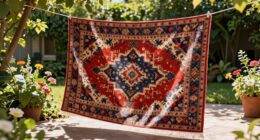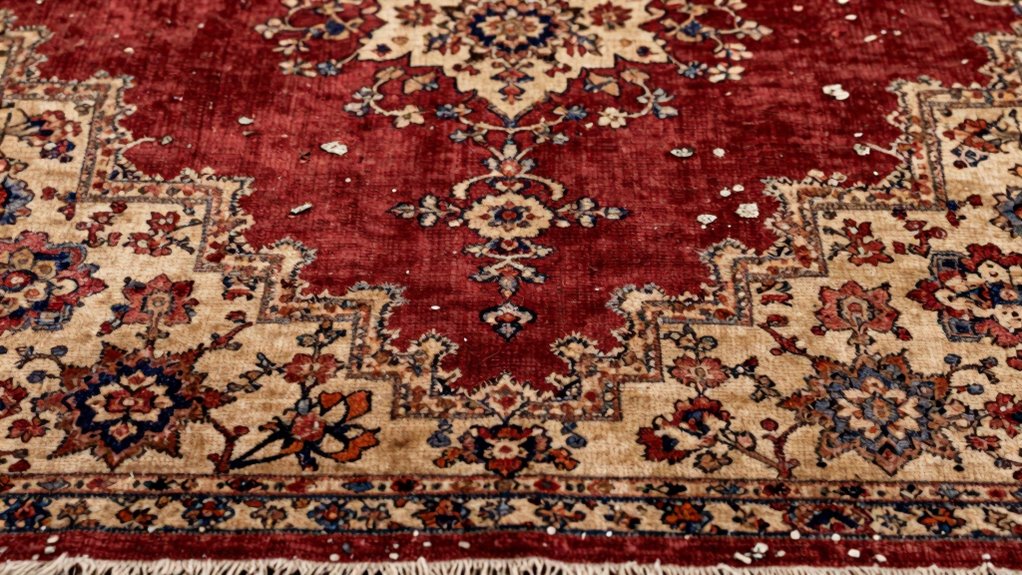

As a rug ages, natural wear and fading develop, revealing its history and use. Wear highlights areas of frequent foot traffic, while fading from natural dyes gives the rug a softer, more harmonious look. Patina forms a gentle glow over time, emphasizing craftsmanship and adding character. These elements work together to authenticate the rug and create a unique personality. If you keep exploring, you’ll discover even more about how these features enhance its beauty and value.
Key Takeaways
- Aging enhances rug character through natural dye fading, wear patterns, and patina development, adding authenticity and visual appeal.
- Wear reveals usage history, highlighting areas of frequent foot traffic and contributing to the rug’s unique story.
- Patina forms a subtle glow and texture over time, emphasizing craftsmanship and making the rug more visually interesting.
- Vintage patterns and colors fade harmoniously, accentuating original details and increasing the rug’s charm and value.
- The interaction of age, wear, and patina creates a distinctive personality that reflects history, authenticity, and aesthetic richness.
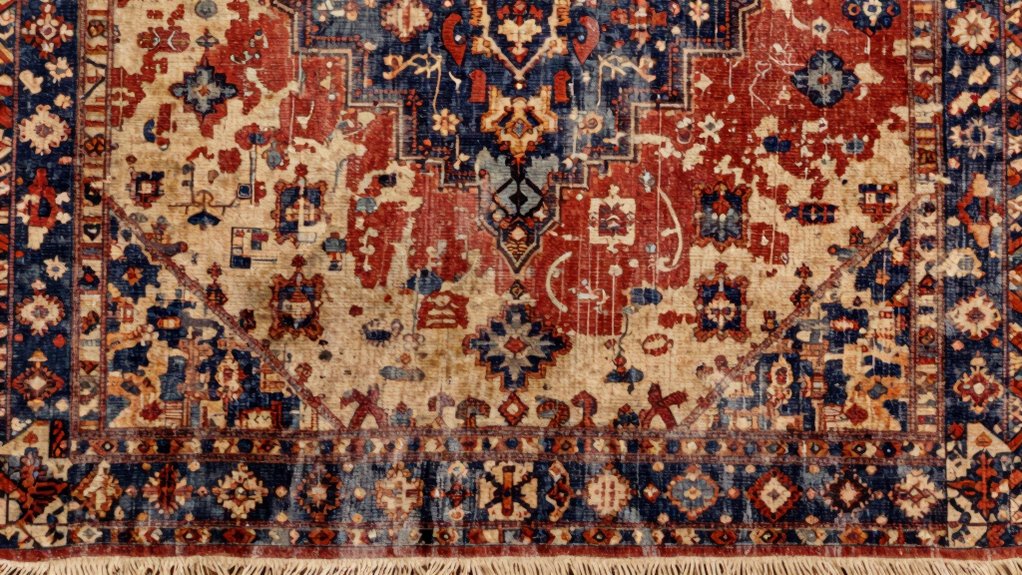
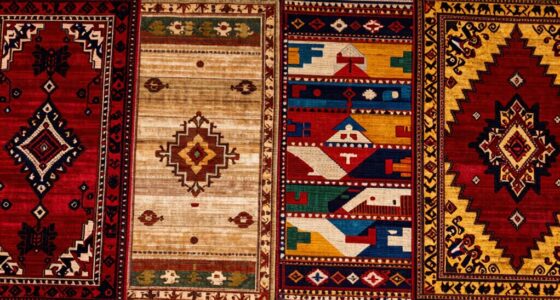
Understanding the age, wear, and patina of a rug can considerably enhance your appreciation and valuation of it. When you examine a vintage rug, you’ll notice that its age often brings a certain charm, especially when paired with its vintage patterns. These patterns, often intricate and distinctive, tell stories from different eras and cultures. As rugs age, their colors tend to fade naturally, a process known as dye fading, which adds character rather than diminishes appeal. This fading isn’t a flaw; it’s a sign of authenticity and history, giving the rug a softer, more subdued palette that can make it even more mesmerizing.
As you look closer, you’ll see that wear patterns develop over time, especially in frequently walked areas. This wear isn’t just superficial; it reveals how the rug was used and loved, adding depth to its story. The worn sections might feel thinner or smoother, and the fringes may be frayed, but these signs of use aren’t negatives—they’re proof of the rug’s life and longevity. When combined with a patina—a natural sheen that develops with age—these signs create a unique, textured look that cannot be replicated with new rugs. The patina often gives the rug a gentle glow, highlighting the craftsmanship and the passage of time. Recognizing the natural aging process can deepen your appreciation for the subtle beauty in each rug.
Vintage patterns often become more appealing as the rug ages, partly because of the overall aesthetic that develops through dye fading. The colors, once vibrant, now have a muted, harmonious tone that can enhance vintage or antique decor. This aged appearance creates a sense of authenticity and history, making the rug a focal point in a room. You might notice that the patterns, though slightly faded, retain their original details, which become more noticeable and appreciated as the colors soften. Furthermore, understanding the craftsmanship involved in creating traditional rugs can increase your admiration for their durability and design intricacies.
The interaction between age, wear, and patina is subtle but powerful. These elements combine to give each rug a distinctive personality, telling a story of generations past. Instead of viewing dye fading and wear as flaws, you start to see them as part of the rug’s character and allure. Recognizing that these features are part of the authentic aging process helps deepen your appreciation for the craftsmanship and history embedded in each piece. When you understand this relationship, you’ll value each imperfection and nuance, recognizing that they contribute to the rug’s overall beauty and worth. Ultimately, age, wear, and patina aren’t obstacles—they’re the keys to understanding and appreciating a rug’s true history and value.
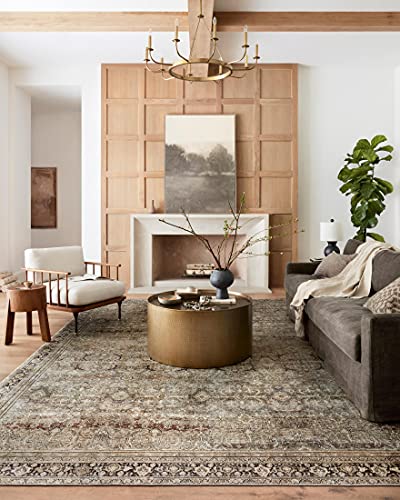
Loloi Layla Olive/Charcoal 2'-6" x 9'-6" Runner Rug
- Design Style: Blends traditional, Moroccan, boho styles
- Suitable Rooms: Living room, bedroom, dining, kitchen, office
- Pile Type: Low pile, soft and durable
As an affiliate, we earn on qualifying purchases.
As an affiliate, we earn on qualifying purchases.
Frequently Asked Questions
How Can I Accurately Date an Antique Rug?
To accurately date an antique rug, examine its rug weaving style and technique, which reveal its era and origin. Look for signs of dye fading, which occur over time and can indicate age. Authentic antique rugs often show natural dye variations and wear patterns. Consult a rug expert or appraiser who can analyze these features closely, helping you determine the rug’s age based on craft details, dye quality, and overall patina.
Does Rug Wear Affect Its Value Positively or Negatively?
Rug wear, in the world of authenticity, is your rug’s badge of honor—or so some say. Wear patterns can boost a rug’s charm and suggest genuine age, but too much damage can hurt its value. Think of it as a delicate dance; a little wear adds character, but excessive wear might make collectors question its integrity. So, keep an eye on wear patterns—they’re the secret to rug authenticity and value.
What Are the Best Methods to Preserve a Rug’s Patina?
To preserve your rug’s patina, focus on color conservation by avoiding harsh cleaning agents and direct sunlight, which can fade its hues. Regular gentle vacuuming helps prevent dirt buildup that accelerates wear. For areas showing wear, consider professional wear restoration to maintain structural integrity without compromising the rug’s aged appearance. These steps help sustain the rug’s character, ensuring its beauty and value last through time.
Can Rug Wear Tell Us About Its History or Origin?
Your rug’s wear can reveal its history or origin, hinting at stories woven into its fibers. As fiber deterioration and dye fading occur over time, they expose areas of heavy foot traffic or specific usage patterns. These clues help identify the rug’s age and cultural background. But beware—each mark and fade holds secrets, waiting for you to decode the journey it’s endured through years of use and care.
How Does Cleaning Impact a Rug’s Aged Appearance?
Cleaning can markedly impact a rug’s aged appearance by reducing dirt buildup, which can obscure its true colors and details. However, over-cleaning or harsh methods may accelerate color fading and wear, diminishing its patina and character. When you clean your rug carefully and gently, you preserve its unique aged charm, allowing its history and beauty to shine through without compromising its authentic, time-worn look.
Conclusion
As you watch your rug age and develop wear and patina, it’s like witnessing a living tapestry telling its story. These changes deepen its character, turning it from a simple floor covering into a cherished artifact. Embrace the signs of time—they’re the brushstrokes of authenticity, adding richness and soul. In the end, your rug’s journey through age and wear makes it not just a piece of decor, but a treasured heirloom woven with history.