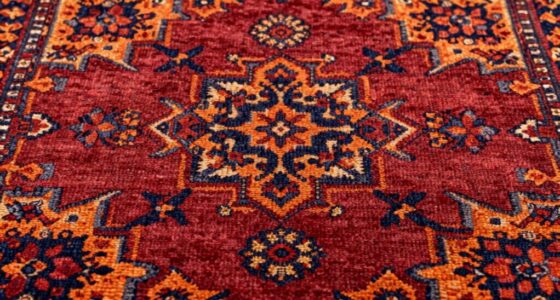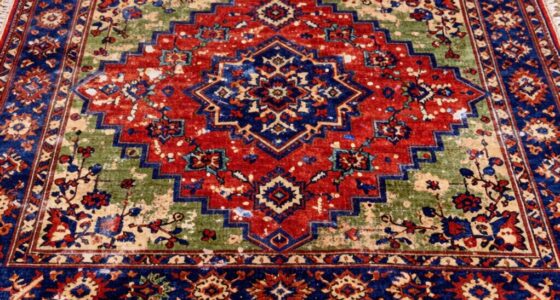
Tribal rugs showcase bold patterns and symbolic motifs that express identity and storytelling, crafted with intricate hand-spun wool. Village rugs are more functional, featuring softer colors and local motifs for everyday use, often woven collaboratively. Workshop rugs are mass-produced, with vibrant, standardized designs meant for commercial sale, reflecting a shift toward uniformity. Court rugs display luxurious materials, complex patterns, and symbols of power, highlighting craftsmanship for prestige. Explore further to uncover the rich cultural stories behind each style.
Key Takeaways
- Tribal rugs represent cultural identity with symbolic motifs, intricate designs, and traditional hand-spun materials.
- Village rugs are practical, with regional symbols, softer colors, and communal weaving techniques for everyday use.
- Workshop rugs are mass-produced, featuring standardized, decorative patterns, vibrant synthetic dyes, and commercial craftsmanship.
- Court rugs are luxurious, highly detailed, and symbolize prestige, often made with fine materials and elaborate motifs.
- Each rug type reflects specific cultural values, weaving methods, and social functions, from practical to ceremonial purposes.
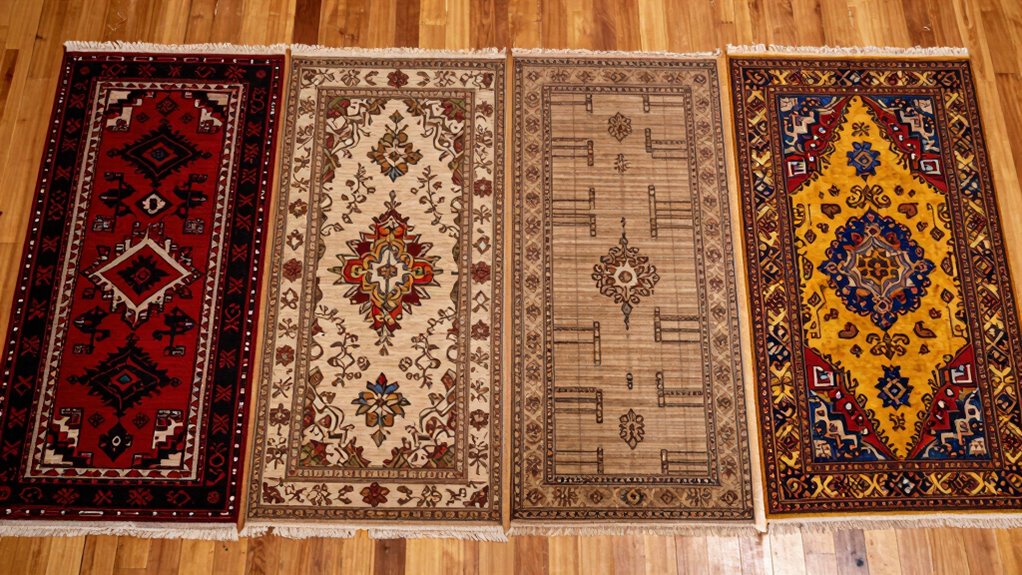
Rugs from tribal, village, workshop, and court origins each carry unique histories and craftsmanship that reflect their cultural contexts. These differences are especially evident when you look closely at their cultural symbolism and weaving techniques. Tribal rugs often serve as expressions of identity and heritage. You’ll notice bold patterns and symbolic motifs that tell stories, mark significant events, or represent spiritual beliefs. The weaving techniques in these rugs tend to be intricate but practical, often using hand-spun wool and simple knotting methods that have been passed down through generations. The designs are deeply rooted in their community’s traditions, making each piece a reflection of collective memory and cultural values. Additionally, weaving techniques play a crucial role in showcasing the skill and cultural significance embedded within each rug.
Tribal rugs showcase bold patterns and symbolic motifs, reflecting community identity, heritage, and ancestral storytelling.
Village rugs, on the other hand, carry a more localized character. They are typically made for everyday use, but their designs still showcase regional symbolism. You might see softer color palettes or specific motifs that distinguish one village from another. The weaving techniques here tend to be more refined than tribal rugs, with a focus on durability and functionality. Villagers often incorporate natural dyes derived from local plants, which give the rugs their characteristic hues. These rugs also reveal a sense of community, as they are often woven collaboratively, blending individual styles into a cohesive pattern that symbolizes the village’s identity.
Workshop rugs are a different story altogether. These are usually produced in specialized craft settings, often for commercial sale rather than local use. Their weaving techniques are more standardized, emphasizing symmetry and uniformity to meet market demands. The designs tend to be less symbolic and more decorative, often mimicking traditional patterns but with a more polished finish. The colors are typically vibrant and consistent, thanks to the use of synthetic dyes or carefully controlled natural dyes in a workshop environment. These rugs reflect a shift toward mass production but still preserve some cultural elements, albeit in a more commercialized form.
Court rugs, meanwhile, are symbols of prestige and power. They’re crafted with exquisite weaving techniques that demonstrate high skill and artistry. The designs are often elaborate, featuring complex patterns, intricate borders, and luxurious materials like silk or fine wool. These rugs serve as status symbols and are rich in cultural symbolism, often incorporating motifs that denote authority, spirituality, or social hierarchy. Their craftsmanship is meticulous, with attention to detail that elevates them beyond everyday rugs. Overall, each type of rug embodies its cultural symbolism through distinctive weaving techniques, making each piece a testament to the unique traditions and history of its origin.
As an affiliate, we earn on qualifying purchases.
Frequently Asked Questions
How Do Rug Prices Vary Between Different Regions?
You’ll notice rug prices vary widely across regions due to regional craftsmanship and market price variations. In areas with a rich tradition of handmade rug-making, prices tend to be higher because of skilled artisans and quality materials. Conversely, regions with mass-produced rugs or lower craftsmanship standards often offer more affordable options. Your choice depends on the craftsmanship quality you seek and the market price variations in each region, influencing the overall cost.
What Are the Main Materials Used in Each Rug Type?
You’ll find that each rug type uses specific materials rooted in traditional weaving practices. Tribal and village rugs typically feature wool, often dyed with natural dyes derived from plants and minerals, giving them vibrant, lasting colors. Workshop and court rugs may incorporate silk or cotton, also using natural dyes, but tend to have finer, more intricate designs. These materials highlight craftsmanship and cultural heritage across different regions.
How Long Does It Take to Produce Each Type of Rug?
It can take an eternity—seriously, sometimes months—to produce each type of rug through rug weaving, depending on complexity and size. Tribal and village rugs, rich in cultural significance, might take several months, while workshop and court rugs often require less time due to their more standardized methods. Your patience pays off, as each rug embodies a unique story, craftsmanship, and cultural history.
Are Some Rugs More Durable Than Others?
Some rugs are more durable than others due to their weaving techniques and the materials used. For example, workshop rugs often feature tighter weaves, making them more resilient, while tribal and village rugs may prioritize cultural significance of designs over durability. Your choice depends on where you’ll use the rug. If you want longevity, look for rugs with sturdy weaving techniques and designs that reflect their cultural importance, ensuring lasting quality.
How Can I Identify Authentic Tribal or Court Rugs?
To identify authentic tribal or court rugs, look for signs of authentic craftsmanship like intricate patterns and natural dyes. Genuine pieces often have slight imperfections, reflecting handcrafted skill. Research their cultural significance, understanding symbols and motifs specific to their origin. Feel the quality of the materials—authentic rugs use high-quality wool or silk. These details confirm their authenticity, revealing the rich cultural traditions and craftsmanship behind each piece.
Conclusion
Now that you’ve explored tribal, village, workshop, and court rugs, you see how each tells a different story—like a rugged mountain trail versus a polished courtroom floor. While tribal rugs embody tradition and boldness, court rugs exude sophistication and authority. Whether you favor the earthy charm of village pieces or the craftsmanship of workshops, each rug offers a unique glimpse into culture and history. Choose one that speaks to you, blending beauty with story in your space.