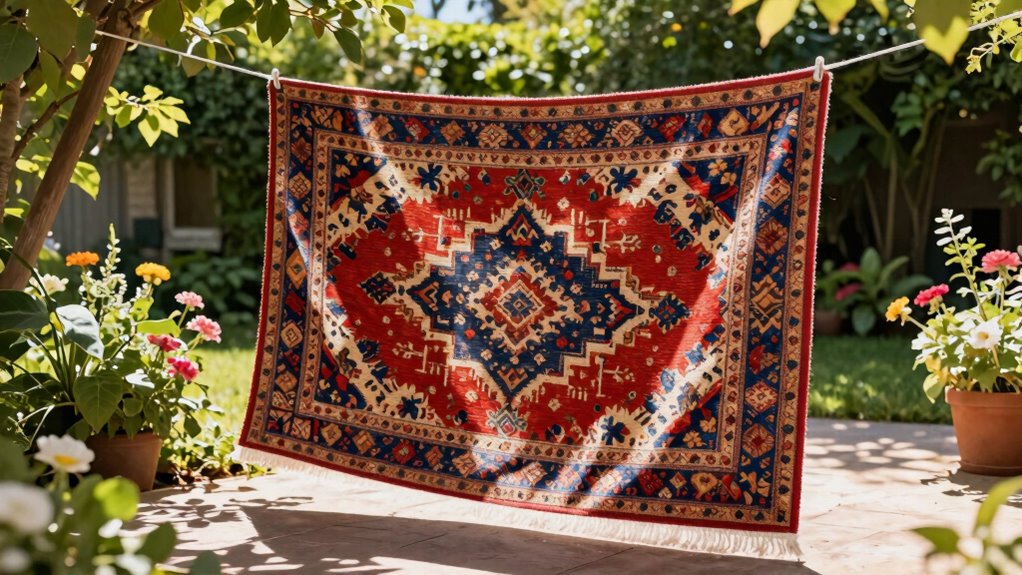

To air out stored rugs properly, pick a sunny, breezy day and shake the rug vigorously outdoors to dislodge dust and debris. Hang or lay it flat on a clean surface, flipping or rotating it halfway through to guarantee even exposure to sunlight and fresh air on both sides. This process helps remove odors, kills mold spores, and prevents pests. For more tips on keeping your rug fresh and pest-free, keep exploring.

Get furniture and decor delivered free with Prime
- Fast, free delivery on millions of items
- Prime Video, Amazon Music and more included
- Member-only deals all year
Key Takeaways
- Shake the rug vigorously outdoors to dislodge dust, debris, and pests before airing.
- Hang or lay the rug in a sunny, breezy area for natural disinfecting and odor removal.
- Rotate or flip the rug to ensure even exposure and thorough airing on both sides.
- Use natural deterrents like cedar chips or lavender sachets to prevent pest infestations during airing.
- Ensure proper ventilation to reduce moisture, mold, and mildew buildup, promoting a healthier environment.
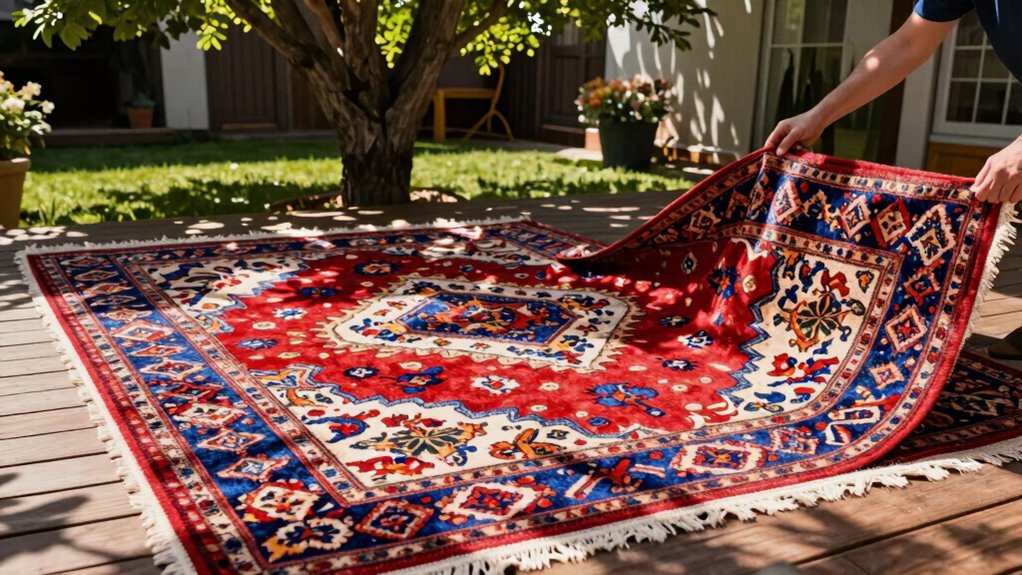
When you’re ready to reuse stored rugs, airing them out properly is essential to remove dust, odors, and any potential allergens. This step not only helps restore the rug’s freshness but also guarantees that it’s safe to use again. Before you start, consider the storage conditions where the rug has been kept. Ideal storage involves a dry, cool, and well-ventilated space, preferably off the ground and away from direct sunlight. If your rug has been stored in a damp or poorly ventilated area, it’s likely collected dust, mold, or mildew, which can cause health issues or damage the fibers. Proper airing helps eliminate these problems and revitalizes the rug, making it more pleasant and safe to walk on.
Pest prevention is another critical aspect when airing out stored rugs. Rugs stored for long periods are susceptible to pests like moths, beetles, or rodents, especially if stored in less-than-ideal conditions. When you unroll or lift the rug, inspect it carefully for any signs of pest activity—tiny holes, larvae, or shed skins. To prevent pests from establishing themselves, it’s a good idea to shake out the rug vigorously outdoors. This dislodges dust, loose fibers, and any lurking pests. Additionally, consider using natural pest deterrents like cedar chips or lavender sachets around the storage area or directly on the rug if you plan to store it again. These natural repellents make the environment less attractive to pests and help keep your rug pest-free in the long run. Ensuring proper ventilation during airing is crucial to effectively eliminate moisture and odors, which also deters pests from settling in. Proper air circulation enhances the drying process and prevents mold growth. Incorporating regular inspections during airing can help catch any pest activity early before it becomes a larger problem.
When airing out the rug, choose a sunny, breezy day if possible. Sunlight acts as a natural disinfectant, helping to kill bacteria and mold spores, while fresh air aids in removing stale odors. Shake the rug thoroughly to loosen dirt and debris, then hang it over a sturdy clothesline or lay it flat on a clean, dry surface outdoors. Allow it to air for several hours, flipping or rotating as needed to ensure even exposure on both sides. If the rug is too large to move outside, place it in a well-ventilated room with open windows and fans to promote air circulation. Proper airing out not only refreshes your rug but also reduces the likelihood of mold growth and pest infestation, ensuring a healthier environment for your home. Regularly airing your rugs can also extend their lifespan by preventing the buildup of dust and moisture. This process helps any residual dust particles settle or be blown away, leaving your rug fresh and clean.
As an affiliate, we earn on qualifying purchases.
Frequently Asked Questions
How Long Should I Air Out a Rug Before Reuse?
You should air out your rug for at least 24 to 48 hours before reuse. Use proper cleaning techniques, such as shaking it out and vacuuming thoroughly, to remove dust and debris. Make certain of good ventilation by placing the rug in a well-ventilated area or outdoors. Proper storage solutions, like rolling the rug and keeping it in a dry, cool place, help maintain its freshness and prevent musty odors during air-out time.
Can Airing Out Eliminate All Odors From Stored Rugs?
Airing out your rug can help reduce many odors, but it might not eliminate all traces, especially if odor absorption has deepened. While fresh air can diminish chemical fumes and lessen surface smells, stubborn odors hide in fibers, requiring additional cleaning. To truly refresh your rug, consider combining airing with thorough cleaning methods. This way, you’re more likely to enjoy a clean, fresh scent without lingering chemical fumes.
Is It Necessary to Vacuum the Rug Before Airing Out?
Yes, vacuuming the rug before airing it out is necessary. It helps with vacuum maintenance by removing loose dust and debris, which improves air circulation and dust removal. This step guarantees you’re not trapping dirt deeper into the fibers when you air out the rug. Plus, it prepares the rug for a more effective airing, helping eliminate odors more efficiently and making it look and smell fresher when you’re ready to reuse it.
What Weather Conditions Are Best for Airing Out Rugs?
Airing out your rug is like giving it a breath of fresh air in the right conditions. You should aim for days with low indoor humidity and some sun exposure, ideally with clear skies. Avoid damp, humid days, as they can trap moisture and cause mold. Sunny, breezy weather helps eliminate dust and odors, ensuring your rug dries thoroughly and stays revitalized for reuse.
How Often Should I Air Out Stored Rugs?
You should air out stored rugs every few months to prevent mustiness and mold. Regular rug cleaning helps maintain freshness, and following proper storage tips guarantees they stay in good condition. When airing out, take the rugs outside on a dry, sunny day, and give them a good shake or vacuum first. This routine keeps your rugs clean, fresh, and ready for reuse, extending their lifespan effectively.
Conclusion
Remember, a clean rug is a happy rug, so don’t skip airing it out before reuse. Let it breathe in fresh air, shake out dust, and give it time to revive. As they say, “A stitch in time saves nine,” and in this case, airing out now guarantees you trouble later. With a little effort, you’ll make certain your rug stays fresh, inviting, and ready to brighten your space once again.
Halloween Picks
halloween
As an affiliate, we earn on qualifying purchases.