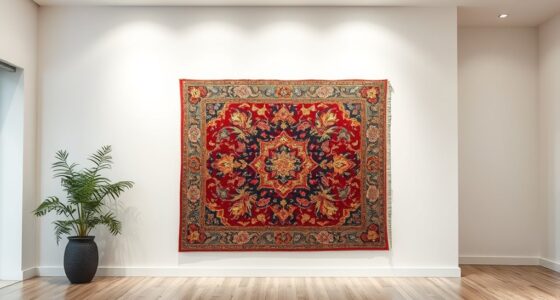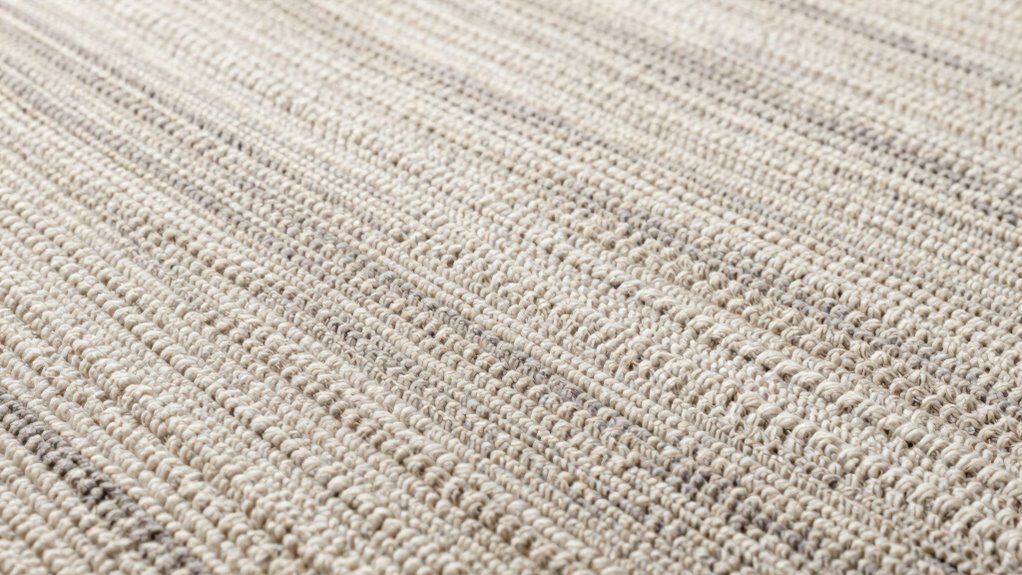

To perform the 10-second test, quickly place your hand over a small section of the rug to feel its texture. A hand-knotted rug feels dense, firm, and sturdy, with a slightly textured surface, while a hand-tufted tends to be softer and less tightly woven. You can also look at the back for uniform knots and craftsmanship details. If you want to spot the subtle differences easily, continued tips can give you even more insight.
Key Takeaways
- Place your hand quickly over a small rug section to feel if it’s dense and firm (hand-knotted) or soft and plush (hand-tufted).
- Examine the back of the rug for tiny, uniform knots indicating a hand-knotted construction.
- Look for intricate patterns and tightly woven knots characteristic of hand-knotted rugs.
- Check for a fuzzy or less dense surface and visible backing, signs of a hand-tufted rug.
- Assess overall craftsmanship and consistency for irregularities, which may suggest a non-hand-knotted rug.

RIDA HANDLOOM Area Rug Hand Knotted Modern Oushak Rug for Living Room,Dining Room,Office,Bedroom,Hand Knotted Oushak Rug,9×12 feetCream, Light Gray
- Crafted by Skilled Artisans: Hand-knotted for quality and elegance
- Vibrant Multicolor Design: Rich hues and intricate patterns
- Versatile Size: Suitable for multiple living spaces
As an affiliate, we earn on qualifying purchases.
As an affiliate, we earn on qualifying purchases.
What Are the Main Differences Between Hand-Knotted and Hand-Tufted Rugs?
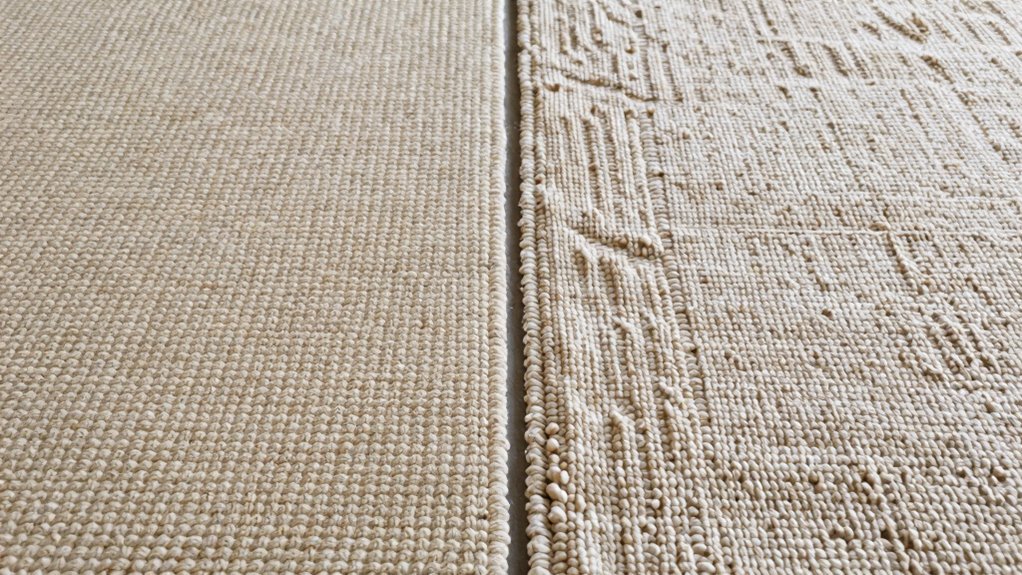
While both hand-knotted and hand-tufted rugs are crafted by skilled artisans, they differ markedly in construction and quality. Hand-knotted rugs feature a complex process where individual knots are tied into the foundation, resulting in higher knots per inch and greater pile density. This makes them more durable and intricate. In contrast, hand-tufted rugs are created using a tufting gun that quickly inserts yarn into a backing, producing a lower pile density. This method speeds up production but generally results in a less durable rug with fewer knots per inch. The higher knot count and dense pile of hand-knotted rugs contribute to their luxurious feel and longevity, setting them apart from the quicker, less detailed hand-tufted options. Additionally, the construction techniques used significantly influence the overall quality and appearance of these rugs.
How to Perform the 10-Second Test to Tell the Difference?
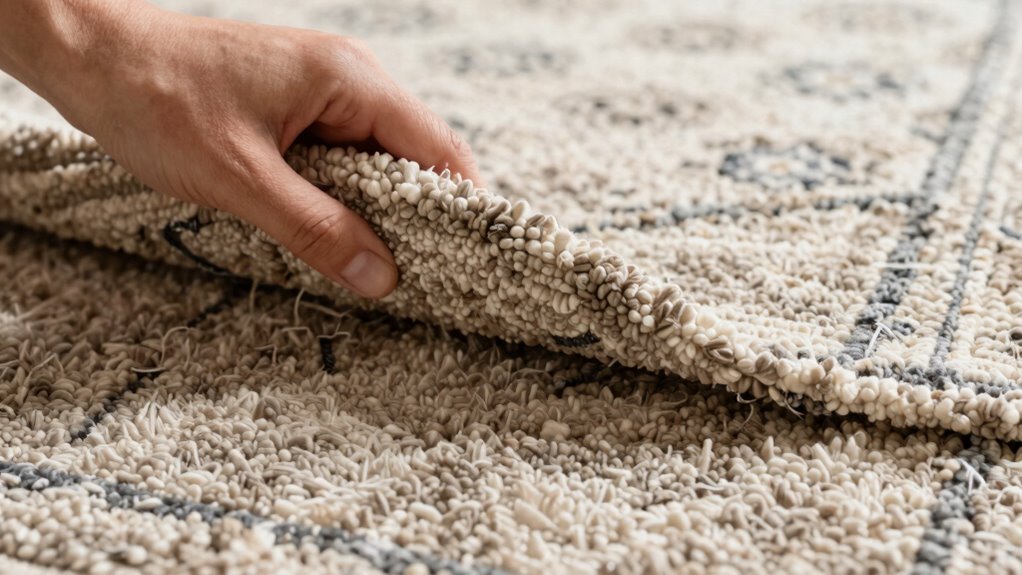
To perform the 10-second test, gently place your hand over a small section of the rug and quickly assess its texture and density. Focus on the craftsmanship details—hand-knotted rugs feel dense, with a slight give, while hand-tufted ones are softer and less tightly woven. Look for subtle irregularities that hint at craftsmanship. Use this table to guide your rug inspection:
| Characteristic | Hand-Knotted | Hand-Tufted |
|---|---|---|
| Density | Higher, tightly woven | Lower, looser pile |
| Texture | Firm, substantial | Soft, plush |
| Craftsmanship details | Precise, intricate knots | Less detailed, tufted loops |
This quick test helps you distinguish quality and craftsmanship differences efficiently. Additionally, understanding the fabrication techniques behind each rug type can further aid in identifying authentic craftsmanship.
Visual Clues That Help You Recognize a Hand-Knotted Rug
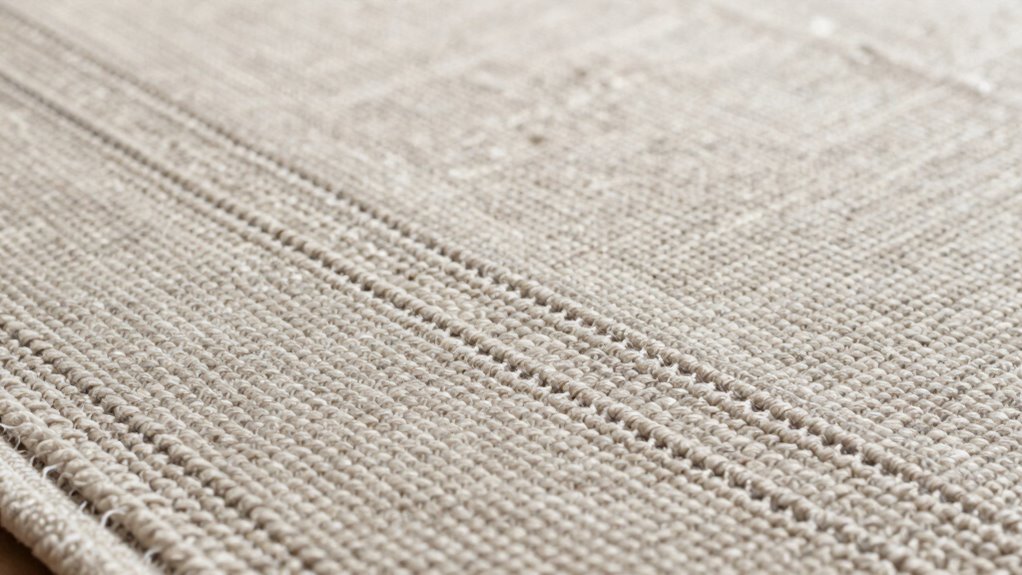
When inspecting a rug after performing the 10-second test, look closely for visual details that reveal its craftsmanship. One key sign is the knots visible on the surface; hand-knotted rugs typically display tiny, uniform knots that form intricate patterns. These knots create slight variations in the pile, giving the rug a rich, textured appearance. Additionally, examine the backing pattern—hand-knotted rugs often have a clear, detailed design visible through the rug’s backside, matching the front pattern closely. The knots are tied securely, resulting in a stable, durable structure. If the knots appear loose or the backing pattern seems irregular or faint, it’s likely not a hand-knotted rug. These visual clues help you confidently identify authentic hand-knotted craftsmanship.
Signs That Indicate a Rug Is Hand-Tufted Instead of Hand-Knotted
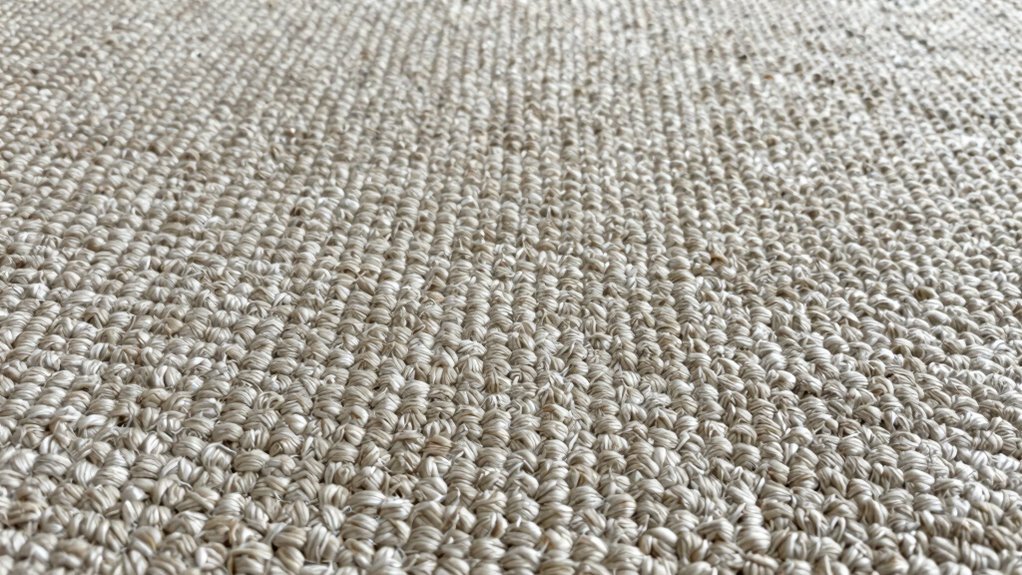
If you’re trying to tell a hand-tufted rug apart from a hand-knotted one, look for certain telltale signs. Hand-tufted rugs often have a softer, less dense feel because of their rug construction, which involves pushing yarn through a backing material. Material differences are also key; tufted rugs usually use synthetic fibers like polyester or acrylic, while hand-knotted rugs tend to feature natural fibers such as wool or silk. You might notice a visible backing or a more uniform, sometimes slightly fuzzy surface. Unlike hand-knotted rugs, tufted ones lack the intricate, tightly woven knots. Additionally, examining the rug construction techniques can provide further clues to help you quickly identify whether a rug is hand-tufted or hand-knotted, saving you time and ensuring you know what you’re buying.
Quick Tips to Verify Rug Authenticity and Quality on the Spot
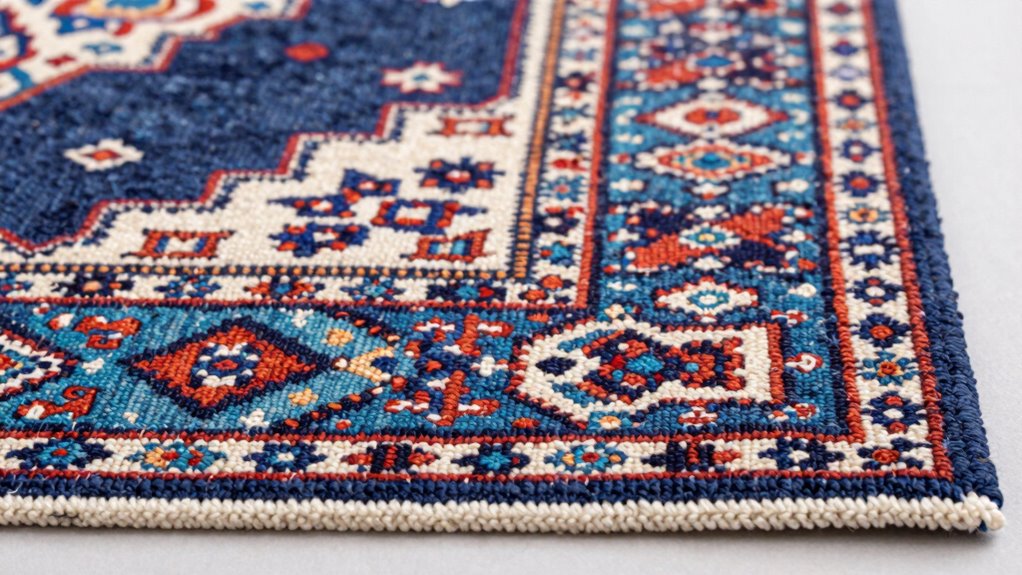
You can quickly verify a rug’s authenticity and quality by inspecting its knots and craftsmanship. Genuine hand-knotted rugs display tight, uniform knots that reflect meticulous rug craftsmanship. Check the back of the rug; authentic pieces have a clear, detailed pattern with consistent knot density, indicating material authenticity and skilled work. Feel the pile; high-quality rugs feel dense and sturdy, not loose or flimsy. Look for irregularities—hand-tufted rugs often have visible glue or backing that’s less refined. Use these quick tips to identify true craftsmanship and authentic materials on the spot:
- Examine knot uniformity and density
- Check the rug’s backing for consistency
- Feel the pile’s density and firmness
- Look for glue or visible backing signs
- Consider the overall craftsmanship to ensure it aligns with mastering R sounds in speech therapy techniques for clarity and precision
Frequently Asked Questions
Can Lighting Conditions Affect the 10-Second Test Results?
Lighting conditions can definitely distort your decision during the 10-second test, impacting visual clarity. When lighting is low or uneven, you might struggle to see subtle differences, leading to mistaken judgments. Bright, balanced lighting enhances your eyesight, sharpening details and helping you accurately distinguish between hand-knotted and hand-tufted rugs. So, make certain proper lighting to enhance your visual clarity and improve your chances of making the right call quickly.
Are There Specific Rug Styles More Likely to Be Hand-Tufted?
Certain rug styles are more likely to be hand-tufted, especially those with bold decorative patterns and varied material textures. You’ll notice that hand-tufted rugs often feature intricate designs and plush, textured surfaces, making them stand out from hand-knotted rugs. If you see a rug with vibrant colors and a softer, more uniform texture, it’s probably hand-tufted. Recognizing these features helps you identify the style quickly.
How Does Rug Age Influence the Test’s Accuracy?
Rug aging can make the test less accurate because fiber degradation over time affects the texture and appearance. As rugs age, fibers may become worn or frayed, making it harder to distinguish hand-tufted from hand-knotted styles quickly. You might find that the test’s effectiveness diminishes with older rugs, so consider inspecting the rug’s construction details carefully, especially if the fibers look worn or uneven.
Is the 10-Second Test Reliable for All Rug Sizes?
The 10-second test’s reliability varies with rug size, especially because larger rugs may have more complex manufacturing techniques that aren’t easily distinguishable quickly. Smaller rugs allow you to examine the knotting or tufting more clearly within the time frame. For larger rugs, you might miss subtle differences, so don’t rely solely on the test. Instead, consider other factors like material, backing, and craftsmanship to accurately determine if it’s hand-knotted or hand-tufted.
Can a Rug’s Backing Material Reveal Its Crafting Method?
You can often get clues about a rug’s crafting method by examining its backing material. Hand-knotted rugs typically have a sturdy, woven backing that aligns with their intricate craftsmanship, while hand-tufted rugs usually feature a less refined backing that reveals the quick, more automated process. Paying close attention to the backing material helps you distinguish between the two methods, giving you a better sense of quality and origin.
Conclusion
Now that you know the 10-second test, you can confidently spot a hand-knotted rug from a hand-tufted one. It’s tempting to think all beautiful rugs are handcrafted, but many are machine-made fakes. Trust your eye for details and signs like knot density or backing quality. With a little practice, you’ll quickly determine authenticity, proving that sometimes, quick tests reveal more truth than you might expect. Happy rug hunting!