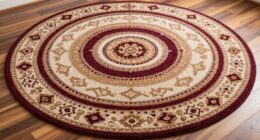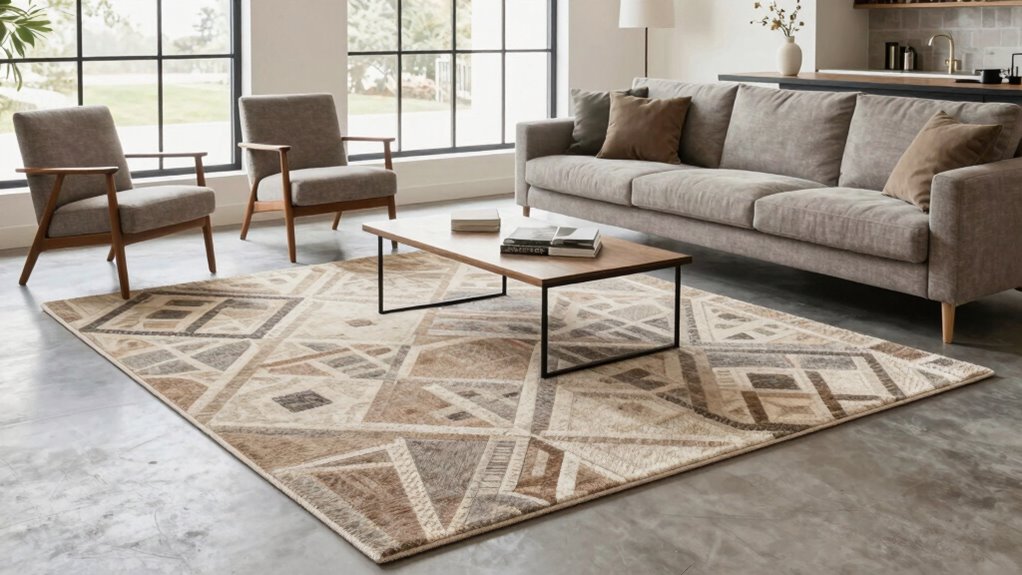

To avoid guessing your rug size, use a simple designer formula: extend the rug 6 to 12 inches beyond your furniture edges, ensuring furniture sits comfortably on it. Measure your room accurately, visualizing different sizes with painter’s tape to find the perfect fit. This approach creates balance and harmony in your space. If you want to discover these expert tips for flawless rug sizing, keep exploring the details below.

Get furniture and decor delivered free — and shop member deals
- Fast, free delivery on millions of items
- Access to Prime Big Deal Days deals on October 6–7
- Prime Video, Amazon Music and more included
Key Takeaways
- Measure your room’s length and width accurately before choosing a rug size.
- Use painter’s tape to visualize how different rug sizes will fit your space.
- Extend the rug 6 to 12 inches beyond furniture edges for proper placement.
- Ensure front legs of furniture sit on the rug for a cohesive look.
- Avoid guesswork by applying a simple formula: rug size should complement furniture and room proportions.
Why Standard Rug Sizes Often Don’t Fit Your Room

Standard rug sizes often don’t match the dimensions of your room because they’re designed to fit generic spaces. This mismatch can disrupt your furniture arrangement, making pieces look awkward or unbalanced. When a rug is too small, it doesn’t anchor your furniture properly, creating a disjointed look. Conversely, a rug that’s too large might overwhelm the space or cover too much of your floor. Additionally, standard sizes may not align with your room’s unique shape, affecting color coordination and overall style. To achieve a cohesive look, you’ll need to take into account your specific room dimensions rather than relying on standard options. Customizing rug size ensures your furniture and decor work harmoniously, making your space feel well-designed and inviting. Considering room proportions can help you select a rug that complements your entire layout effectively.
How to Measure Your Room for the Perfect Rug Size

Wondering how to find the right rug size for your space? Start by measuring your room’s dimensions carefully, noting the length and width. Consider your furniture arrangement—figure out where your main pieces will sit and how much floor space you want the rug to cover. To guarantee proper color coordination, choose a rug size that complements your furniture layout and enhances the room’s balance. For example, a larger rug can unify your seating area, while a smaller one might define a cozy nook. Use painter’s tape to outline potential rug sizes on the floor, helping you visualize how each fits. Accurate measurements and thoughtful placement ensure your rug enhances your room’s style, making it look cohesive and inviting. Additionally, understanding standard rug sizes can help you select the most appropriate dimensions for your space.
A Designer’s Simple Formula for Rug Size and Placement

To simplify rug placement, many designers rely on a straightforward formula: select a rug size that extends at least 6 to 12 inches beyond the edges of your furniture. This approach helps create visual balance in your space, making everything feel cohesive. When arranging a rug, focus on ensuring the furniture sits comfortably on the rug’s surface, with enough rug to anchor the entire setup. For a living room, a common rule is to have the front legs of sofas and chairs on the rug, with the remaining furniture partially on it. This not only enhances visual balance but also makes the room look more intentional. Using this simple formula guarantees your rug complements your furniture and space without guesswork. Proper rug sizing ensures a harmonious and polished look that aligns with your room’s overall design.
Common Mistakes When Choosing Rug Sizes (And How to Avoid Them)
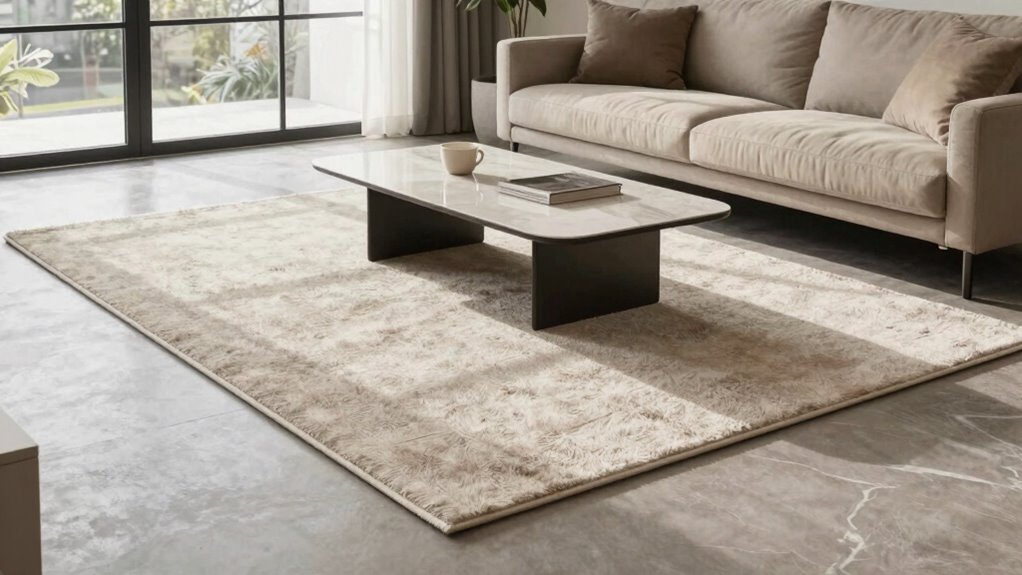
Choosing the wrong rug size is a common mistake that can disrupt the balance and flow of your space. When selecting area rugs, avoid these pitfalls: 1. Placing a rug too small, leaving furniture legs off the rug and making the room feel disjointed. 2. Going too large, where the rug overwhelms the space and hides furniture details. 3. Ignoring furniture placement, which should anchor the rug and create visual harmony. A well-chosen rug ties the room together, emphasizing your furniture layout. Pay attention to the size and placement of your furniture, ensuring the rug complements rather than competes with your decor. Additionally, considering space planning and the overall room proportions can help you select an appropriate rug size. Avoid these mistakes to create a balanced, inviting space that feels cohesive and thoughtfully designed.
Applying the Formula: Examples for Different Room Types

Applying the rug size formula helps you select the perfect size for any room, ensuring your space looks balanced and well-designed. For living rooms, choose an area rug that fits under all your furniture, with the furniture placed on the rug’s edges. This creates a unified look and anchors the seating area. In dining rooms, select a rug large enough so that chairs stay on the rug even when pulled out, which means adding extra inches beyond the table. For bedrooms, opt for an area rug that extends beyond the bed, providing a soft landing when you get up. Correct furniture placement on the rug enhances the room’s proportion and flow, helping you avoid overcrowding or awkward gaps. The formula simplifies these choices, making your room feel cohesive and polished. Additionally, understanding networking hardware and infrastructure concepts can help you better plan your space and ensure your furniture and accessories are arranged effectively.
Frequently Asked Questions
Can Custom Rug Sizes Be More Cost-Effective Than Standard Options?
Custom rug sizes can be more cost-effective than standard options if you need a specific fit for your space. By choosing custom measurements, you avoid unnecessary material waste and guarantee a perfect match, leading to potential cost savings. While custom rugs might seem pricier upfront, they eliminate the need for resizing or additional adjustments later, making them a smarter investment for a tailored look at a better value.
How Do Rug Shapes Influence Size Selection Beyond Rectangular Rugs?
Did you know that round rugs are 25% more versatile in small spaces? When choosing area rugs, your shape influences how you define a room. Round rugs soften angular furniture and create cozy zones, while irregular shapes add visual interest. Beyond rectangular options, consider round or oval rugs to enhance flow and balance in your space. Selecting the right shape helps you maximize your area rugs’ impact and style.
What Are the Best Rug Sizes for Open-Concept Spaces?
For open-concept spaces, choose an area rug that anchors each zone, typically 8×10 or 9×12 feet, to create defined areas. You can also layer smaller rugs to add texture and interest. Make certain the rug size fits comfortably under key furniture pieces, with enough space around edges for visual balance. This approach helps your space feel cohesive and inviting, making rug layering a stylish way to enhance the openness.
How Does Furniture Arrangement Impact Rug Sizing Decisions?
Your furniture arrangement directly impacts rug sizing decisions because you need to create cohesive furniture grouping and achieve visual balance. Position your rug so that key pieces like sofas and coffee tables sit comfortably on it, establishing a unified look. Properly sized rugs anchor your furniture, making the space feel intentional and balanced. Avoid tiny rugs that break apart furniture groupings or oversized ones that overwhelm the room.
Are There Specific Rug Sizes Recommended for High-Traffic Areas?
Think of high-traffic areas as the beating hearts of your home; they need durable, practical solutions. For these spots, opt for a 5×8 or 6×9 area rug to protect your floors and withstand wear. In narrow spaces like hallways, a rug runner is perfect, measuring around 2-3 feet wide and as long as the corridor. This way, your space stays stylish and resilient.
Conclusion
Now that you know the designer’s secret formula, choosing the perfect rug becomes effortless—no more guessing games or settling for awkward fits. With your newfound precision, your room will transform from average to breathtaking, like a blank canvas suddenly bursting with life. Trust the formula, measure confidently, and watch your space become a masterpiece of style and comfort. Say goodbye to rug-sizing chaos and hello to flawlessly designed rooms you’ll love for years.
Halloween Picks
halloween
As an affiliate, we earn on qualifying purchases.