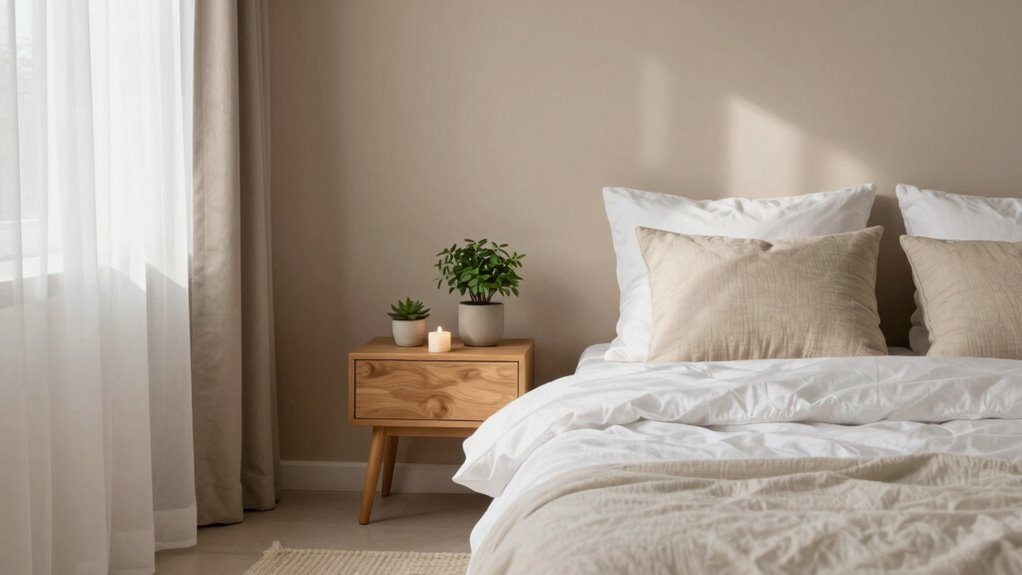

A wellness bedroom feels finished when you focus on simplicity and purposeful design. Use a calming color palette and keep surfaces clutter-free to create a serene atmosphere. Incorporate natural materials, gentle lighting, and minimal decor to enhance relaxation without overwhelming the space. Balanced furniture and thoughtful accessories add personality without clutter. If you pay attention to these elements, you’ll create a peaceful retreat that’s both inviting and harmonious—more tips await to help you perfect your space.

Get furniture and decor delivered free with Prime
- Fast, free delivery on millions of items
- Prime Video, Amazon Music and more included
- Member-only deals all year
Key Takeaways
- Maintain a balanced, uncluttered space with intentional decor and minimal accessories.
- Use a cohesive, calming color palette to create harmony and visual serenity.
- Incorporate natural materials and textures for warmth and sensory comfort.
- Layer lighting thoughtfully to enhance relaxation without overwhelming the room.
- Ensure furniture and decor serve a purpose, fostering a functional and tranquil environment.

Creating a wellness-focused bedroom finish involves more than just choosing calming colors; it’s about designing a space that promotes relaxation, reduces stress, and supports your overall well-being. A room that feels finished, not overdone, balances simplicity with thoughtful details, ensuring it invites rest rather than distraction. Your sleep environment plays a key role here. It should feel like a sanctuary—peaceful and uncluttered—so you can unwind easily. When you focus on creating a calming color palette, you set a soothing tone that’s conducive to restful sleep. Soft, muted shades like gentle blues, warm beiges, or muted greens help create an atmosphere that feels cozy and inviting without overwhelming your senses. These colors act as a visual cue for relaxation, making it easier to segue into sleep mode.
Create a peaceful sanctuary with calming, muted tones that promote relaxation and restful sleep.
A finished wellness bedroom isn’t about filling every inch with décor; it’s about intentional choices. Keep surfaces clear and avoid clutter, which can subconsciously increase stress. Storage solutions that hide away everyday items help maintain a clean, streamlined look that feels calming. The furniture should be simple yet functional, with smooth lines that don’t clutter your space. Avoid overly ornate or bulky pieces that can make the room feel cramped or chaotic. Instead, opt for a minimalistic approach, where each piece serves a purpose and contributes to the overall serenity. Incorporating natural materials enhances the sensory comfort and connection to the environment, fostering a sense of peace. Paying attention to spatial balance ensures your room remains open and inviting rather than crowded or overwhelming. Additionally, integrating smart lighting options allows you to customize the ambiance effortlessly, supporting your relaxation routines. Incorporating biophilic design elements, such as plants or natural textures, can also help strengthen that sense of harmony with nature in your space. Using air quality improving devices can further elevate your environment, making it healthier and more refreshing.
Lighting is another pivotal element in achieving a finished feel. Incorporate layered lighting—soft bedside lamps, dimmable overhead lights, and perhaps candles—so you can adjust the ambiance to suit your mood. Harsh, bright lights disrupt your sleep environment, so aim for warm, gentle illumination that encourages relaxation. Additionally, consider the textures and materials in your space. Soft bedding, plush rugs, and natural fabrics add comfort without creating visual clutter. These elements provide sensory comfort, making your space feel cozy and well thought out.
Finally, the key to making your wellness bedroom feel finished is restraint. It’s easy to add decorative items to personalize the space, but too many can tip it into overdesign. Select a few meaningful accessories—perhaps a piece of artwork or a plant—that complement your calming color palette and enhance the peaceful atmosphere. When you keep your décor intentional and minimal, your bedroom becomes a true retreat—balanced, serene, and perfectly suited to support your well-being.
calming bedroom color palette decor
As an affiliate, we earn on qualifying purchases.
As an affiliate, we earn on qualifying purchases.
Frequently Asked Questions
How Do I Choose Calming Colors for My Wellness Bedroom?
To choose calming colors for your wellness bedroom, focus on colors rooted in color psychology, like soft blues, gentle greens, or warm neutrals, which promote relaxation. Use subtle paint techniques such as matte finishes or light washes to create a soothing atmosphere. Avoid bold or overly vibrant hues, and instead, opt for shades that evoke tranquility, helping you feel more relaxed and comfortable in your space.
What Lighting Options Promote Relaxation in a Wellness Bedroom?
You should opt for soft, warm lighting options that promote relaxation, such as dimmable lamps, fairy lights, and warm-toned bulbs. Incorporate biophilic lighting to mimic natural daylight, and use ambient illumination to create a calm, soothing atmosphere. These choices work together to soften the space, reduce stress, and encourage rest, making your wellness bedroom a true sanctuary. Prioritize gentle, layered lighting for ultimate relaxation.
How Can I Incorporate Natural Elements Without Clutter?
You can incorporate natural elements by choosing nature-inspired decor like plants, stones, or wooden accents, which add warmth without cluttering your space. Opt for minimalist design elements, such as simple planters or sleek furniture, to maintain a clean, peaceful look. Keep surfaces clear and limit decor to a few meaningful pieces, ensuring your room feels relaxed and harmonious. This approach balances natural beauty with a serene, uncluttered environment.
What Are Simple Ways to Add Personal Touches Without Overdecorating?
Think of your space as a quiet garden, where each detail blooms with purpose. You can add personal touches by hanging a few personal photo displays or meaningful art pieces, like gentle whispers of your story. Keep it simple—avoid clutter—by choosing select items that truly resonate with you. These touches bring warmth and personality without overwhelming, like delicate petals adding charm without overshadowing the entire garden.
How Do I Maintain a Clutter-Free Wellness Bedroom?
To keep your wellness bedroom clutter-free, use smart storage solutions like under-bed bins, floating shelves, or decorative baskets. Regularly declutter by sorting items into keep, donate, or discard piles, making it easier to maintain order. Establish a daily routine of tidying up, and limit unnecessary decor. These decluttering tips help create a peaceful, inviting space, ensuring your wellness bedroom remains serene and free of clutter.
Conclusion
So, there you have it—your wellness bedroom’s secret sauce. Just remember, overdoing it turns serenity into chaos faster than you can say “zen.” Keep it simple, avoid clutter, and let the space breathe. After all, a finished bedroom isn’t about stuffing every trendy item in sight; it’s about creating a sanctuary you actually want to be in. Now, go on, make that room so peaceful even your alarm clock will envy it.
Halloween Picks
halloween
As an affiliate, we earn on qualifying purchases.