
To keep your rug looking its best, rotate it every 3 to 6 months in high-traffic or sunlit areas, and every 6 to 12 months elsewhere. Pay attention to signs like uneven fading or wear, and adjust the schedule as needed. Be gentle when turning it, and avoid forcing or twisting. For more tips on creating an effective rotation plan and avoiding common mistakes, keep exploring these helpful ideas.
Key Takeaways
- Rotate rugs every 3-6 months in high-traffic or sun-exposed areas.
- Softer fibers like silk require more frequent rotation, about every 3-6 months.
- Sturdier materials such as wool or synthetic fibers can be rotated every 6-12 months.
- Adjust rotation frequency based on signs of wear, fading, or pet activity.
- Regular monitoring helps determine if more frequent or less frequent rotations are needed.
Why Rotating Your Rug Matters for Its Longevity
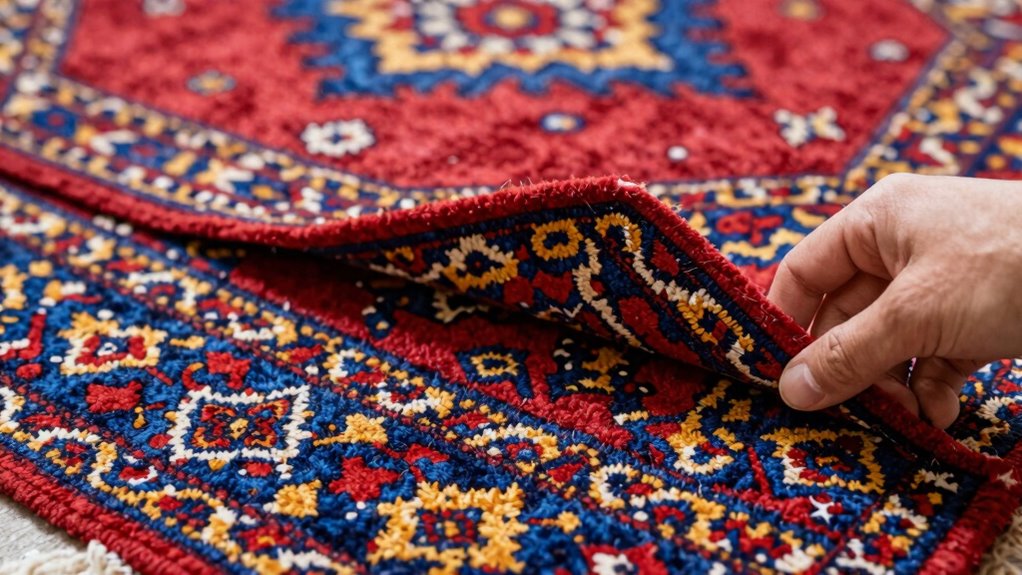
Rotating your rug regularly is essential because it helps prevent uneven wear and tear that can shorten its lifespan. When you rotate your rug, you guarantee that foot traffic and furniture don’t wear down one area faster than others. This practice also supports ideal vacuuming frequency; by changing the position, you can clean all sections thoroughly, reducing dirt buildup that can degrade fibers over time. Additionally, regularly shifting your rug helps with stain prevention by minimizing the chances of stains settling in one spot, making them easier to clean if spills occur. Consistent rotation distributes pressure evenly, preserving the rug’s appearance and structure. Proper rug maintenance is key to maximizing its durability and beauty. Overall, this simple step extends your rug’s life and keeps it looking fresh longer.
How to Know When It’s Time to Rotate Your Rug?
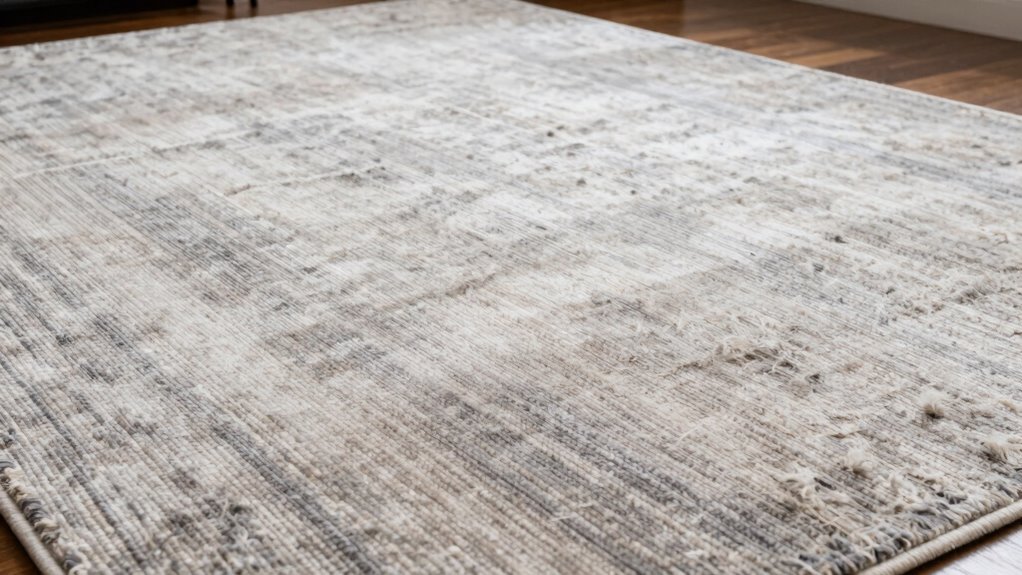
Knowing when to rotate your rug is key to maintaining its appearance and durability. Watch for signs like uneven rug color fading, which indicates frequent foot traffic in specific areas, or noticeable pet hair accumulation that doesn’t brush away easily. These clues suggest it’s time to turn your rug to ensure even wear. Use the table below to help gauge the right moment to rotate: smart home automation can also assist in monitoring and managing such household tasks effectively.
Factors That Affect How Often You Should Turn Your Rug
How often you should turn your rug depends on factors like traffic patterns and how much you use it, as high-traffic areas wear out faster. The rug’s material durability also plays a role—softer fibers may need more frequent rotation. Additionally, exposure to sunlight can cause fading unevenly, influencing how often you should flip or rotate your rug. Proper maintenance practices can extend the lifespan of your rug and keep it looking its best.
Traffic Patterns and Use
High traffic areas and frequent use can cause uneven wear on your rug, making it necessary to turn or rotate it more often. Heavy foot traffic accelerates color fading in the most walked-on sections, leading to a patchy appearance. If you have pets, their claws and scratching can cause localized damage, prompting more frequent adjustments. High-traffic zones also experience more dirt and debris buildup, which can wear down fibers unevenly. To maintain the rug’s look and longevity, consider rotating it every few months if it’s in a busy area. This helps distribute wear evenly and prevents persistent damage from pet activity or constant use, keeping your rug looking fresh and balanced longer. Additionally, understanding the role of fiber type and construction can help you determine the best rotation schedule for your specific rug.
Rug Material Durability
The durability of your rug’s material plays a crucial role in determining how often you should rotate it. For rugs made of sturdy fibers like wool or synthetic materials, you can typically rotate them less frequently, perhaps every 6 to 12 months. Softer, more delicate fabrics such as silk or certain natural fibers may require more frequent turning, around every 3 to 6 months, to prevent uneven wear. Proper rug maintenance, including regular cleaning, can extend the lifespan of your rug and influence how often you need to rotate it. Additionally, understanding the material durability helps tailor your maintenance schedule to best preserve the rug’s appearance and function over time. Keep in mind that the rug’s material affects its wear pattern, so adjusting your rotation schedule accordingly helps maintain its appearance and integrity over time.
Exposure to Sunlight
Exposure to sunlight substantially influences how often you should rotate your rug, as prolonged exposure can cause uneven fading and deterioration. UV damage accelerates color fading, leaving some areas duller than others. To minimize this, consider these factors:
- Direct sunlight causes faster UV damage, increasing the need for rotation
- Using window treatments can reduce UV exposure and protect your rug’s colors
- Rotating more frequently in sunny rooms helps prevent uneven fading
- Light-colored rugs are more prone to visible color fading from sun exposure
- Sunlight exposure can be managed by adjusting your rug placement and rotation schedule for optimal preservation
Easy Tips for Rotating Different Types of Rugs
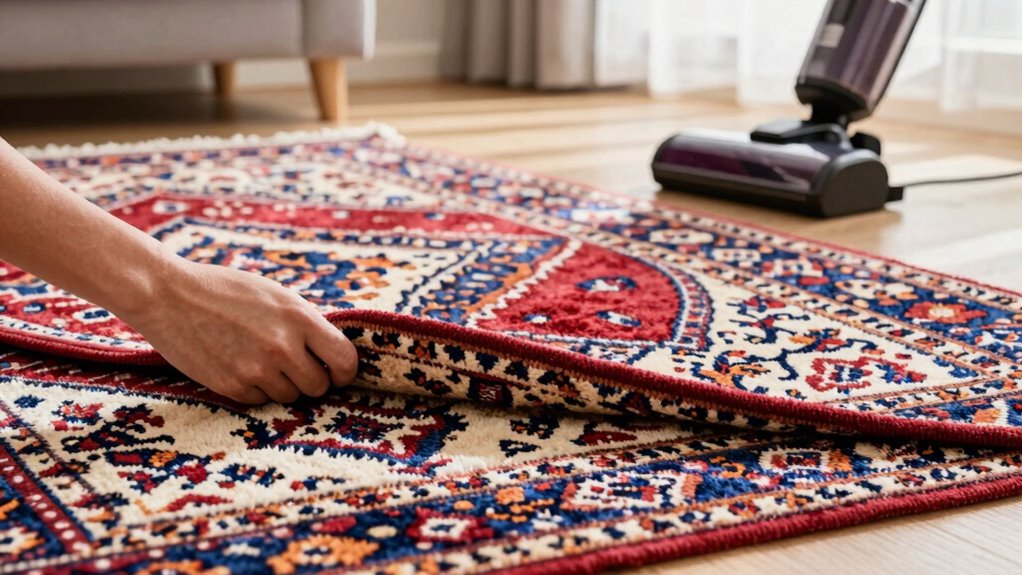
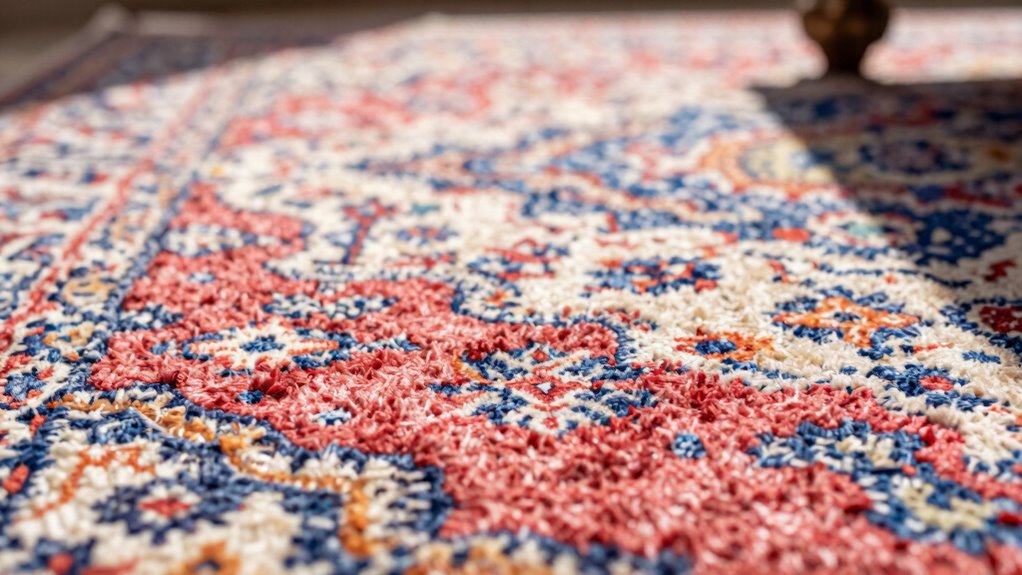
Rotating different types of rugs regularly helps maintain their appearance and prolong their lifespan. For instance, if you have a Persian rug, turning it every few months prevents uneven wear and preserves its intricate design. For shag or plush rugs, rotating helps distribute foot traffic evenly and avoids flattening in high-traffic areas. When considering decorating styles, keep in mind that some rugs, like vintage or antique pieces, require gentle handling and specific cleaning techniques to avoid damage. For modern or low-pile rugs, routine rotation is simpler and helps prevent fading from sunlight exposure. Always check manufacturer care instructions before rotating, and use the appropriate cleaning techniques to keep your rugs looking fresh. Regularly switching their position ensures your rugs stay beautiful and durable over time. Incorporating gentle cleaning methods can further help preserve delicate rugs during rotation.
Creating a Rug Rotation Schedule That Fits Your Lifestyle
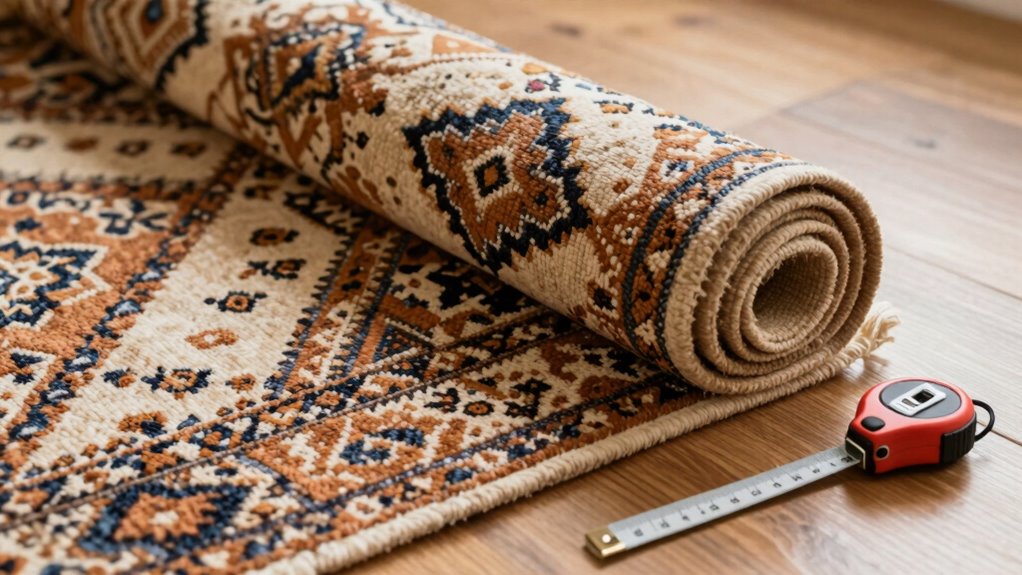
Start by evaluating how often your space actually needs freshening up, considering how much foot traffic and sunlight it gets. Then, create a flexible schedule that fits your routine, so rug rotation feels manageable and consistent. Adjust your plan as needed to keep your rugs looking their best without feeling overwhelmed. Additionally, understanding home organization strategies can help you develop a system that seamlessly integrates rug rotation into your daily routine.
Assess Your Space Needs
To create an effective rug rotation schedule that suits your lifestyle, you first need to assess your space needs carefully. Consider how frequently high-traffic areas require attention, and whether specific spots are more prone to wear or staining. Think about the type of area rug you have—some materials need more frequent rotation for ideal carpet care. Also, evaluate sunlight exposure, as it can cause uneven fading. Additionally, identify rooms where furniture leaves imprints or causes uneven wear. Incorporating insights from auditory processing skill assessments can help determine how environmental factors influence rug wear and maintenance needs.
Establish a Flexible Schedule
Creating a flexible rug rotation schedule means tailoring it to your daily routine and the specific needs of your space. Consider your rug placement and how often certain areas get high foot traffic, which can cause uneven color fading. If a section of your rug faces direct sunlight or is frequently stepped on, you may want to rotate it more often to prevent uneven wear. Flexibility is key—you might rotate every few months or adjust based on visible signs of wear. By establishing a schedule that aligns with your lifestyle, you ensure your rug stays vibrant longer. Regular rotation helps distribute the effects of color fading evenly, maintaining your rug’s appearance and extending its lifespan without adding unnecessary hassle.
Common Mistakes to Avoid When Rotating Your Rug
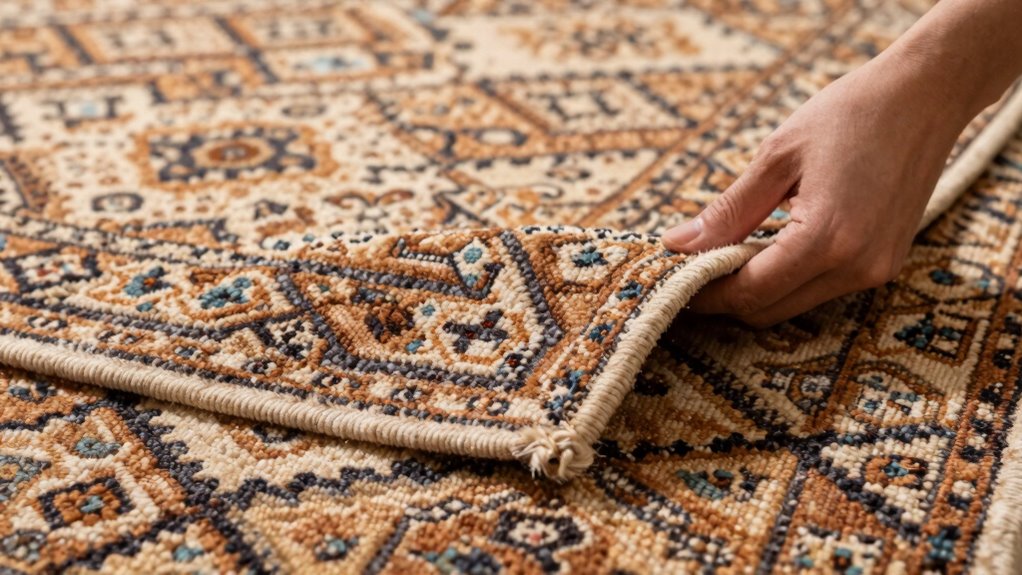
One common mistake people make when rotating their rug is doing it too infrequently, which can lead to uneven wear and fading. To avoid this, you need a consistent schedule, but also be mindful of specific errors that can harm your rug’s appearance and safety. For example, neglecting stain prevention measures can cause permanent damage if spills aren’t cleaned promptly before rotation. Failing to consider pet safety might result in accidents or damage if pets aren’t kept off the rug during handling. Additionally, turning the rug improperly—like forcing it or twisting—can cause fibers to loosen. Lastly, ignoring the rug’s material and texture may lead to over-rotation in certain areas, accelerating wear. Keep these pitfalls in mind to protect your rug’s longevity and appearance.
Extra Tips to Keep Your Rug Looking Its Best Longer
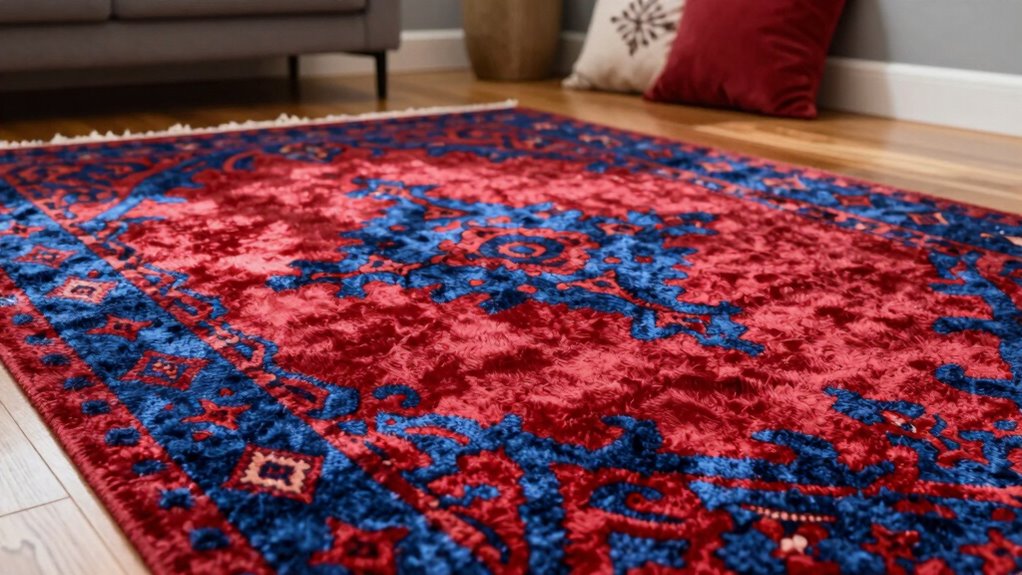
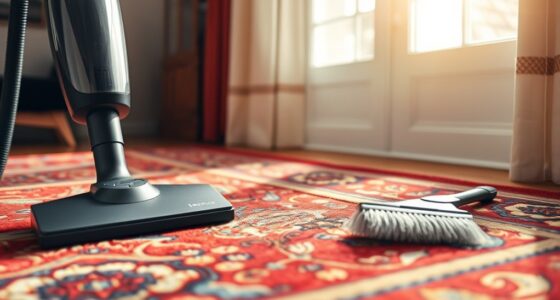
Implementing regular vacuuming is one of the simplest ways to keep your rug looking its best longer. It helps prevent dirt from settling into decorative patterns, preserving their vividness. To boost odor control, sprinkle baking soda on the rug before vacuuming, letting it sit for 15 minutes to absorb odors and dirt. Rotate your rug periodically to ensure even wear, especially in high-traffic areas, which maintains its appearance and prolongs lifespan. Avoid harsh cleaning chemicals that can damage fibers or fade colors. Using a rug pad can also prevent slipping and reduce wear. Finally, address spills immediately with gentle blotting instead of rubbing, which preserves the rug’s texture and keeps its decorative patterns sharp. Understanding proper deep-sky imaging techniques can also inspire creative ways to showcase your home décor. These tips help your rug stay vibrant and fresh longer.
Frequently Asked Questions
Can Rotating a Rug Prevent Fading Caused by Sunlight?
Rotating your rug can help prevent uneven fading caused by sunlight exposure, but it doesn’t fully protect against UV damage. To effectively shield your rug from fading, use UV protection treatments or window coverings that block harmful sunlight. Regularly turning the rug distributes UV exposure more evenly, reducing intense fading in one spot. Combining rotation with UV protection offers the best defense against sunlight-induced fading.
How Does Furniture Placement Affect Rug Rotation Frequency?
Your furniture placement influences how often you should rotate your rug. If heavy furniture is arranged unevenly, certain areas experience more wear, so you’ll need to turn the rug more frequently to promote even wear and maintain rug stability. Strategically rearranging furniture can help distribute foot traffic evenly, reducing the need for frequent rotations. Keep an eye on high-traffic spots, and adjust your rotation schedule accordingly for the best results.
Is It Necessary to Vacuum Before Rotating Your Rug?
Vacuuming before rotating your rug is like giving your space a quick check-up. It’s essential to maintain a healthy cleaning schedule and remove dust and debris that can get trapped in fibers. You should vacuum regularly, ideally once a week, especially in high-traffic areas. Before rotating, a quick vacuum guarantees dirt isn’t spread around or pushed deeper. Staying consistent keeps your rug fresh and prolongs its lifespan.
What Tools Are Best for Safely Rotating Large Rugs?
To safely rotate large rugs, use a rug puller or sliders to minimize strain and avoid damage. These tools help you move the rug smoothly, preventing tears or stretching. Remember, a good rug pad benefits from regular rotation, extending its lifespan and maintaining even wear. For extra care, consider professional rug rotation services periodically, ensuring your rug stays in top condition and looks fresh over time.
Should You Rotate Rugs More Often in High-Traffic Areas?
You should rotate rugs more often in high-traffic areas because “a stitch in time saves nine.” Regularly changing their position helps balance wear distribution caused by traffic patterns. By doing so, you prevent uneven fading and fiber breakdown, extending your rug’s lifespan. Keep an eye on foot traffic and rotate accordingly—typically every 3 to 6 months—to maintain its beauty and durability.
Conclusion
By rotating your rug regularly, you’ll extend its lifespan and keep it looking fresh. For instance, if you notice high-traffic areas fading faster, switching the rug’s position can even out wear. Imagine rotating a living room rug every six months—your furniture marks fade, and it stays vibrant longer. Just stay consistent with your schedule and avoid neglecting corners, and your rug will continue to enhance your space for years to come.