
Colors in your home do more than look good—they influence your mood and health through subconscious messages and emotional symbolism. For example, blue calms your mind, perfect for bedrooms, while red energizes spaces like kitchens or gyms. Choosing the right hues can reduce stress, boost happiness, and even improve sleep. If you want to learn how to harness color therapy effectively, discover how specific shades can support your well-being and daily balance.
Key Takeaways
- Colors in interior design influence emotional responses and mental well-being through subconscious cues.
- Cool hues like blue and lavender promote relaxation, calmness, and better sleep quality.
- Warm colors such as red and orange energize spaces, boosting motivation and activity levels.
- Thoughtful color choices can reduce stress, foster tranquility, and support emotional health.
- Understanding color symbolism helps create environments that enhance mood, health, and overall well-being.
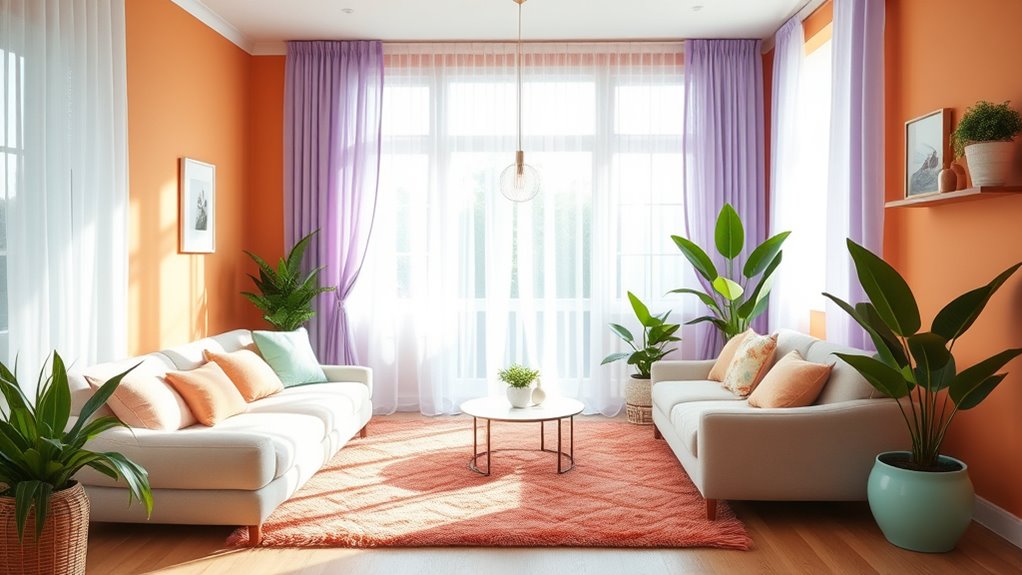
Have you ever wondered how the colors in your home can influence your mood and well-being? The truth is, colors aren’t just aesthetic choices; they carry psychological effects that can shape how you feel and behave. When you select hues for your living space, you’re tapping into a language of symbolism that influences your subconscious. For example, blue often symbolizes calmness and stability, making it a popular choice for bedrooms or relaxation areas. On the other hand, red can evoke energy and passion, which might be ideal for creative spaces or lively gathering spots. Understanding the psychological effects of different colors helps you create environments that promote your desired mood and health.
Colors act as visual cues that trigger emotional responses based on their inherent symbolism. The color symbolism behind each hue taps into collective associations—like green representing growth and balance, or yellow signifying happiness and optimism. When you choose a color for your walls or decor, you’re not just decorating; you’re communicating a message to your brain and emotions. This subconscious messaging can either bolster your mood or, if misused, create tension or discomfort. For instance, overly bright or harsh colors might overstimulate you, leading to anxiety or restlessness, while softer shades tend to promote relaxation and comfort. So, your choice of color can directly impact your mental state and overall health.
Colors communicate subconscious messages that influence your mood, comfort, and overall well-being through their symbolic meanings.
Furthermore, different colors can influence your energy levels and even your sleep patterns. Bright reds and oranges might energize you, perfect for workout rooms or kitchens where activity is high. Conversely, muted blues and lavenders tend to be calming, ideal for bedrooms or quiet spaces where rest is essential. The way you use color symbolism and understand their psychological effects allows you to design interiors that support your daily routines and emotional balance. It’s about aligning your environment with your needs—boosting motivation, reducing stress, or fostering tranquility. Color psychology is a fascinating field that provides insights into how hues can be strategically employed to enhance your well-being.
In essence, mastering the psychological effects of colors enables you to craft interiors that do more than look good; they make you feel good too. When you consciously apply color symbolism, you influence your mood, mental health, and even physical well-being. It’s a powerful tool that, when used thoughtfully, transforms your home into a space that nurtures your happiness and health. So next time you pick a paint or select decor, think about the message you want your colors to send—because they do more than beautify; they shape your everyday experience.

PRESTIGE Interior Paint and Primer in One, Blue Sky, Semi-Gloss, 1 Gallon
Ultra premium paint and primer in one
As an affiliate, we earn on qualifying purchases.
As an affiliate, we earn on qualifying purchases.
Frequently Asked Questions
Can Specific Colors Improve Mental Health in Interior Spaces?
Yes, specific colors can improve your mental health through color psychology and mood enhancement. Bright, calming hues like blue and green promote relaxation and reduce stress, while warm tones like yellow and orange boost energy and positivity. By thoughtfully selecting colors for your interior spaces, you can create an environment that supports your emotional well-being, making you feel more balanced, focused, and uplifted every day.
How Do Personal Color Preferences Influence Therapy Effectiveness?
Your personal preferences and cultural influences greatly shape how effective color therapy is for you. When you choose colors that resonate with your tastes and cultural background, you’re more likely to feel comfortable and open to the therapy. This emotional connection enhances the positive impact, making the experience more meaningful. So, tailoring colors to your preferences and cultural context ensures the therapy works best for your mental and emotional well-being.
Are There Any Safety Concerns With Certain Color Schemes?
You might be surprised, but safety concerns with color schemes often stem from color symbolism and cultural associations. Bright reds or intense yellows could evoke agitation or anxiety in some individuals, especially if they symbolize danger or warning in certain cultures. To keep your space safe and harmonious, consider how specific hues might impact mood and health, and choose colors that promote comfort and well-being without unintended negative connotations.
How Long Does It Take to Notice Mood Changes From Color Therapy?
You might notice mood changes from color therapy within a few days to a couple of weeks. Your color response times vary based on individual sensitivity and the intensity of the hues used. During emotional adjustment periods, you may experience subtle shifts or more noticeable improvements in mood. Consistent exposure and mindful awareness help accelerate this process, allowing your mind and body to adapt more smoothly to the new color environment.
Can Color Therapy Be Combined With Other Interior Design Methods?
You can definitely combine color therapy with other interior design methods. Incorporate color layering to create depth and influence mood subtly, and use texture integration to enhance sensory experience. By blending these techniques, you make your space more harmonious and supportive of your well-being. This approach allows you to personalize your environment while maximizing the psychological benefits of color therapy, making your space both beautiful and emotionally nurturing.

COHOSEGE Glass Soap Dispenser Set 2 Pack,16 Oz Dish Soap Dispenser for Kitchen Sink,Red Kitchen Accessories and Kitchen Decor,Red Decorations and Kitchen Utensils for Kitchen
EXTRA-VALUE SET PACKAGE INCLUDES HANDS & DISHES :The kitchen soap dispenser set with label can be used for…
As an affiliate, we earn on qualifying purchases.
As an affiliate, we earn on qualifying purchases.
Conclusion
By choosing the right colors for your space, you can transform your environment into a sanctuary that boosts your mood and promotes well-being. Think of color therapy as a gentle whisper from the hues around you, guiding your emotions and health like a soothing song. When you harness the power of colors thoughtfully, your home becomes more than just a place to live—it’s a vibrant canvas that nurtures your mind and body every day.

LEMOMO Lilac Blackout Curtains 52 x 84 inch/Lavender Curtains Set of 2 Panels/Thermal Insulated Room Darkening Bedroom Curtains
Made of high quality durable 100% polyester fabric, our blackout curtains are super smooth, soft and free from…
As an affiliate, we earn on qualifying purchases.
As an affiliate, we earn on qualifying purchases.

Sunset LED Lamp Projector, 21 Colors Changing App & Remote Control Mood lighting, Music Sync Ambiance Lighting, Sunset Lamp for Bedroom, Living Room, Aesthetic Room Decor, Birthday Gifts for Women
【Keep the Sunset at Home】Beautiful sunsets are fleeting, and with this led lights, you don't have to travel…
As an affiliate, we earn on qualifying purchases.
As an affiliate, we earn on qualifying purchases.