

To layer bedding for comfort without bulk, start with a breathable fitted sheet made of cotton or linen. Add a lightweight, soft flat sheet and top it with a thin duvet or comforter that offers warmth without weight. Incorporate decorative covers and lightweight throws for texture, keeping things simple and coordinated in calming colors. Focus on quality and fewer layers to maintain a sleek, cozy vibe. Want to discover more ways to achieve this perfect balance?

Get furniture and decor delivered free with Prime
- Fast, free delivery on millions of items
- Prime Video, Amazon Music and more included
- Member-only deals all year
Key Takeaways
- Use lightweight, breathable fabrics like cotton or linen for sheets and blankets to maintain comfort without bulk.
- Layer only essential pieces, such as a fitted sheet, a light duvet, and a decorative cover, avoiding unnecessary layers.
- Choose thin, high-quality comforters or duvets that provide warmth without adding volume.
- Incorporate soft, plush accents sparingly to add coziness without overwhelming the bed’s sleek appearance.
- Maintain a cohesive color scheme with muted tones to create a calm, visually balanced, and inviting bed.
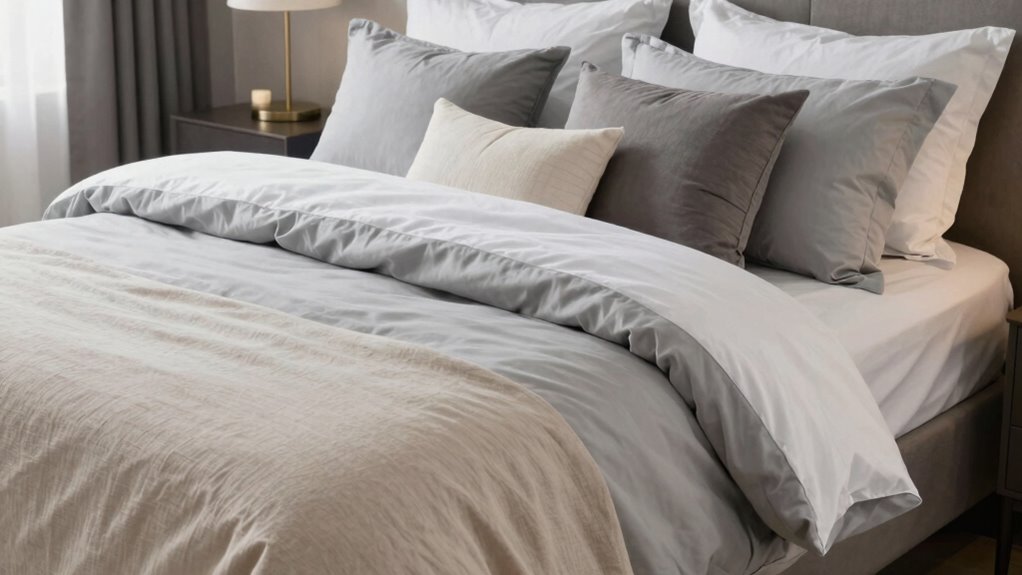
Creating a comfortable bed starts with understanding how to layer your bedding effectively. You want a cozy setup that feels inviting without turning your bed into a bulky mound. The key lies in selecting the right combination of layers, paying attention to color schemes and material choices. When you choose your color palette thoughtfully, it sets the tone for the entire sleep space. Stick to a harmonious or calming color scheme—muted tones like soft grays, pastels, or neutral shades work well for creating a serene atmosphere. Avoid overly bright or contrasting colors that can make your bed look chaotic or overwhelming. Instead, opt for a cohesive look by coordinating your sheets, blankets, and decorative pillows within a complementary color palette. This not only looks visually appealing but also helps you feel more relaxed as you prepare for sleep.
Material choices are just as *essential* as color schemes in achieving a balanced, non-bulky bed. Lightweight, breathable fabrics like cotton, linen, or bamboo are perfect for the layers closest to your skin because they keep you comfortable and prevent overheating. For the top layers, consider using softer, plush materials like microfiber or fleece, but use them sparingly to avoid adding unnecessary bulk. Using breathable fabrics helps maintain a healthy sleep environment by allowing air circulation and moisture control. Instead of piling on heavy quilts or thick comforters, choose a thin, insulating duvet or a cozy throw blanket that can be added or removed based on the season or your comfort preference. When layering, keep in mind that fewer, well-chosen pieces often feel more comfortable than multiple bulky layers. Additionally, choosing layering techniques can also help you achieve the perfect balance between comfort and sleekness. Start with a fitted sheet made of a breathable material, then add a flat sheet if you prefer, followed by a light blanket or duvet. For extra warmth without bulk, a thin, high-quality comforter or a duvet insert can be layered with a decorative cover that complements your color scheme. You can also incorporate a lightweight throw or a few decorative pillows to add texture and visual interest without making your bed look or feel heavy. Remember, the goal is to create a balanced, inviting sleeping space that adapts to your needs without sacrificing simplicity or comfort. By thoughtfully selecting your color schemes and material choices, you’ll find it easier to achieve a layered bed that feels cozy and inviting, but remains sleek and manageable.
lightweight breathable cotton fitted sheet
As an affiliate, we earn on qualifying purchases.
As an affiliate, we earn on qualifying purchases.
Frequently Asked Questions
What Are the Best Lightweight Materials for Layering Bedding?
You should opt for lightweight materials like silk comforters and memory foam toppers. Silk comforters are breathable and luxurious, providing warmth without bulk. Memory foam toppers add comfort and support without making your bed heavy. Combining these allows you to create a cozy, layered bed that feels plush yet remains lightweight. These materials keep you comfortable and prevent your bedding from becoming bulky, ensuring a sleek, restful sleep surface.
How Do I Prevent My Bedding From Shifting Overnight?
To prevent your bedding from shifting overnight, secure your layers by using fitted sheets and mattress toppers that grip well. Arrange decorative pillow setups strategically to keep them in place, and consider tucking in edges neatly. Seasonal bedding swaps can also help, as switching to lighter, more stable materials minimizes movement. Additionally, using non-slip pads under your mattress or bedding can keep everything steady throughout the night.
Can Layering Bedding Improve Sleep Temperature Regulation?
Layering your bedding can markedly enhance sleep temperature regulation, influencing your sleep cycle deeply. As you add or remove layers, you create a dynamic system that adapts to your body’s needs, preventing overheating or chilling. This thoughtful layering provides a buffer, maintaining consistent warmth or coolness throughout the night. By carefully managing your bedding layers, you set the stage for more restful, uninterrupted sleep, optimizing your sleep cycle naturally.
What Are Tips for Maintaining a Neat Layered Bed Appearance?
To keep your layered bed looking neat, regularly straighten your decorative pillows and arrange them symmetrically for a tidy appearance. Use a bed skirt to conceal the box spring and create a clean, polished look. Smooth out the duvet or quilt, ensuring it lies flat. Fluff your pillows daily, and tuck in sheets and blankets carefully to maintain that crisp, inviting presentation.
How Often Should I Change or Wash Layered Bedding?
You should change or wash your layered bedding weekly, especially if you use seasonal bedding or have allergies. Think of your bedding as a filter; over time, dust and allergens build up. I once neglected weekly washing, and I woke up congested — switching to a weekly routine improved my allergies considerably. Regular cleaning keeps your sleep environment fresh, reduces allergic reactions, and extends the life of your bedding.
Conclusion
By mastering the art of layering, you create a cozy sanctuary that whispers comfort like a well-loved story. Think of your bed as a blank canvas—each layer adding depth and warmth, yet remaining light enough to breathe. When you balance textures and tones, you craft a restful retreat that feels just right, like a gentle lullaby. Remember, a thoughtfully layered bed isn’t just for sleeping; it’s your personal haven, your nightly ode to comfort.
Halloween Picks
halloween
As an affiliate, we earn on qualifying purchases.