To connect with nature indoors, incorporate biophilic design elements like plants, natural light, and ventilation into your spaces. These features boost your mood, reduce stress, and improve overall well-being. By using natural materials and maximizing sunlight, you create a healthier environment that supports your physical and mental health. Embracing these strategies makes your space feel more inviting and calming. If you want to discover practical ways to transform your environment, there’s more to explore.
Key Takeaways
- Incorporate indoor plants and natural elements to enhance air quality and create a calming environment.
- Maximize natural light through strategic window placement and open layouts to improve mood and productivity.
- Use natural ventilation to promote fresh airflow and reduce indoor pollutants.
- Select non-toxic, sustainable materials that support a healthier, ecologically friendly indoor space.
- Design spaces that foster a connection with nature, promoting mental clarity, stress reduction, and overall well-being.
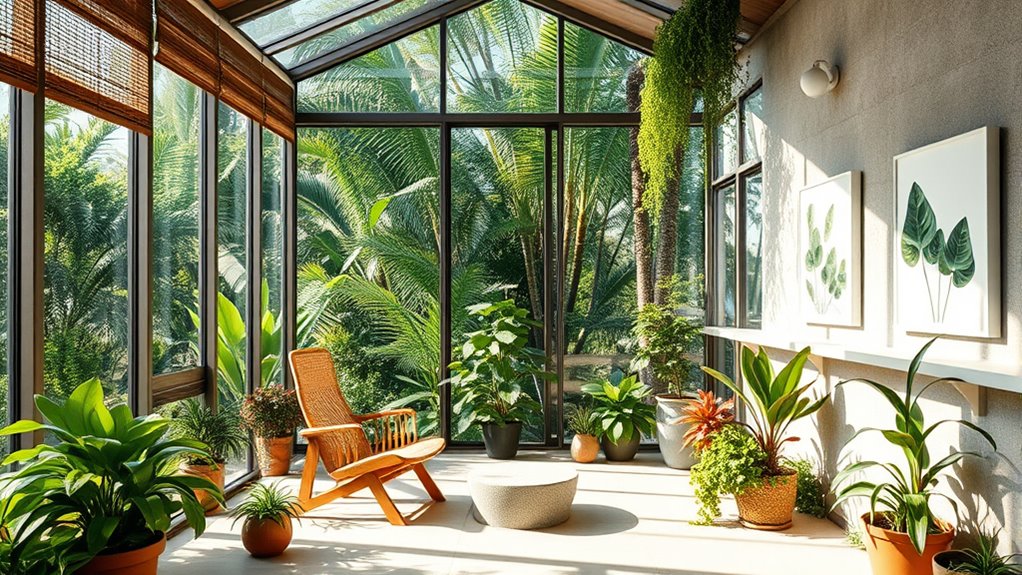
Have you ever wondered how incorporating natural elements into built environments can boost your well-being? When you embrace biophilic design, you’re creating spaces that foster a deeper connection with nature, promoting mental clarity, emotional stability, and physical health. One of the most impactful ways to achieve this is by focusing on indoor air quality. Breathing fresh, clean air inside your home or workspace isn’t just about comfort; it’s essential for your overall health. Using plants, natural ventilation, and non-toxic materials can drastically reduce indoor pollutants, mold, and allergens. Plants like pothos, snake plants, or peace lilies act as natural air filters, improving oxygen levels and removing harmful toxins. Proper ventilation ensures a steady flow of fresh air, diluting indoor pollutants and preventing stuffiness. When your indoor air quality improves, you’ll notice better concentration, fewer headaches, and increased energy levels, all of which contribute to your overall wellness. Enhancing indoor air quality is a key component of biophilic design that supports long-term health benefits.
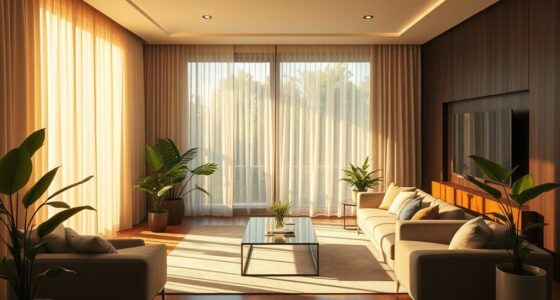
Alongside air quality, natural light optimization plays an essential role in biophilic design. Sunlight has a profound effect on your mood, circadian rhythms, and productivity. By designing your space to maximize natural light, you help regulate your sleep-wake cycle, leading to better rest and a more alert mind during the day. Large windows, skylights, and open floor plans allow sunlight to flood your space, reducing the need for artificial lighting and creating a warm, inviting atmosphere. When you harness natural light, you also reduce energy consumption, making your environment more sustainable. Positioning workspaces near windows can boost your focus and creativity, while softer, diffused light in living areas fosters relaxation. Furthermore, natural light enhances the appearance of your interior, highlighting textures and colors that mimic outdoor environments, further strengthening your connection with nature.
Frequently Asked Questions
How Does Biophilic Design Impact Mental Health?
Biophilic design boosts your mental health by promoting nature therapy, which helps reduce stress and anxiety. When you incorporate natural elements like plants, sunlight, and water features into your space, you create a calming environment that encourages relaxation. This connection to nature can improve your mood, focus, and overall well-being, making it easier to manage daily stressors and feel more balanced and energized throughout your day.
What Are Cost-Effective Ways to Incorporate Nature Indoors?
Forget expensive green walls; you can easily bring nature inside without breaking the bank. Opt for affordable plant options like pothos or succulents that thrive on neglect. Get creative with DIY natural decor—think homemade terrariums or repurposed wooden planters. These simple, budget-friendly choices boost your space’s natural vibe and mental well-being, proving you don’t need a fortune to enjoy the calming benefits of nature indoors.
Can Biophilic Design Improve Productivity at Work?
Yes, biophilic design can boost productivity at work by enhancing office aesthetics and increasing employee satisfaction. When you incorporate natural elements like plants, natural light, and organic materials, you create a more inviting environment. This connection with nature reduces stress, sharpens focus, and fosters creativity. As a result, your team feels more engaged and motivated, leading to better performance and a healthier, more productive workspace overall.
Are There Specific Plants Best Suited for Indoor Environments?
Yes, you should choose air purifying plants like snake plants or pothos for your indoor space. These low-maintenance greenery options thrive in low light and require minimal watering, making them perfect for busy environments. They improve air quality and add a natural touch to your workspace. Incorporating such plants helps you connect with nature indoors, boosting your well-being and creating a calming atmosphere.
How Do Lighting Choices Affect Biophilic Design?
Lighting choices markedly impact your biophilic design by shaping the ambiance and enhancing natural elements. Opt for warm color temperatures to mimic sunlight, creating a cozy, inviting atmosphere that fosters relaxation. Using layered lighting, like task and ambient lights, highlights plants and natural features, making your space feel more connected to nature. Good lighting not only boosts wellbeing but also emphasizes the organic textures and colors in your indoor environment.
Conclusion
By embracing biophilic design, you beautifully bridge the boundary between built environments and natural wonder. This purposeful pairing promotes peace, enhances productivity, and nurtures your well-being. As you incorporate lush greenery, natural light, and organic textures, you invite vitality and vibrancy into your space. Ultimately, fostering a flourishing, functional, and fulfilling environment becomes effortless, empowering you to thrive through thoughtful, tactile touches of nature indoors.