To balance humidity properly, use a hygrometer to monitor levels between 30-50%. When humidity is low, run a humidifier, but keep it clean and filled with fresh water to prevent mold. If humidity is high, use a dehumidifier, especially in damp areas like basements, and set it around 40-45%. Regular maintenance and awareness of environmental changes help prevent health issues and property damage. Discover more tips on maintaining ideal humidity for your home.
Key Takeaways
- Monitor indoor humidity regularly with a hygrometer to maintain levels between 30-50%.
- Use humidifiers to add moisture during dry conditions, especially in winter or dry climates.
- Employ dehumidifiers in damp areas like basements to control excess moisture and prevent mold growth.
- Clean and maintain devices regularly to prevent bacteria, mold, and contamination buildup.
- Adjust device settings based on environmental changes and use technology for precise humidity management.
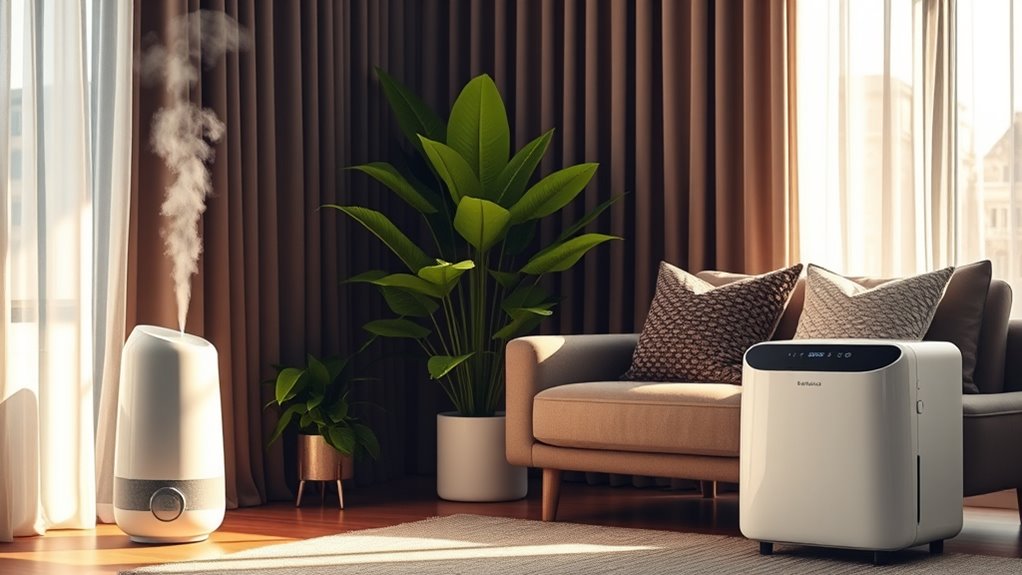
Maintaining proper humidity levels in your home is essential for comfort, health, and preserving your belongings. When humidity is too low, your indoor air quality can suffer, leading to dry skin, irritated sinuses, and increased vulnerability to respiratory issues. Conversely, excessive humidity creates a perfect environment for mold growth, which can damage your home and pose health risks. To keep these problems at bay, you need to understand how to use humidifiers and dehumidifiers effectively, ensuring your indoor environment stays balanced.
Proper humidity levels are key to a healthy, comfortable home and preventing mold growth.
Using a humidifier helps add moisture to the air when humidity levels are too low, especially during winter months or in dry climates. When operating a humidifier, you should monitor the humidity with a hygrometer and aim to keep indoor humidity between 30-50%. This range supports good indoor air quality and reduces the risk of mold development. Over-humidifying, even unintentionally, can increase moisture levels beyond that safe zone, creating condensation on windows and walls, which fosters mold growth. To prevent this, always clean your humidifier regularly to avoid bacteria or mold buildup, and avoid filling it with unclean water.
Dehumidifiers, on the other hand, are your go-to tools when humidity levels climb too high. Excess moisture in the air not only worsens indoor air quality but also encourages mold spores to settle and grow on surfaces such as walls, ceilings, and furniture. Running a dehumidifier in damp areas like basements or bathrooms helps maintain ideal humidity, reducing mold prevention concerns. You should set your dehumidifier to maintain indoor humidity around 40-45%. Like with humidifiers, regular maintenance is key—clean filters and empty water tanks frequently to ensure the device works efficiently and doesn’t become a source of mold or bacteria.
It’s crucial that you regularly check humidity levels using a hygrometer, particularly during seasonal transitions when indoor moisture can fluctuate rapidly. Properly balancing humidity not only improves indoor air quality but also minimizes mold risks, which thrive in damp environments. Additionally, understanding AI technology and its role in monitoring environmental conditions can help you manage humidity more effectively. Properly balancing humidity helps you create a healthier living space. Ensuring your humidifier and dehumidifier are properly maintained and used appropriately helps you create a healthier living space. By controlling moisture levels, you’re actively reducing mold prevention concerns and enhancing your home’s overall comfort. Remember, the goal is to keep humidity within a safe, comfortable range—neither too dry nor too moist—so your home remains a safe, healthy environment for you and your family.

TempPro TP50 Digital Hygrometer Indoor Thermometer Room Thermometer
- Wellness Indicator: Displays air condition levels
- High Accuracy & Fast Updates: ±2-3%RH and ±1°F, updates every 10 seconds
- Record Tracking: Displays high and low temperature and humidity
As an affiliate, we earn on qualifying purchases.
As an affiliate, we earn on qualifying purchases.
Frequently Asked Questions
How Often Should I Clean My Humidifier or Dehumidifier?
You should clean your humidifier or dehumidifier at least once a week to maintain proper maintenance schedule and prevent mold or bacteria buildup. If you notice any signs of dirt or mineral deposits, increase the cleaning frequency. Regular maintenance helps guarantee your device works efficiently and keeps your air healthy. Don’t forget to empty, rinse, and disinfect the tank thoroughly during each cleaning session to keep it in top condition.
What’s the Ideal Indoor Humidity Level for Health?
Sure, because everyone’s goal is to turn your home into a tropical rainforest or a desert, right? The ideal indoor humidity for health is around 30-50%, which actually helps improve air quality and prevents mold growth. Keep it in that sweet spot, and you’ll enjoy fewer allergies, better breathing, and a healthier environment. Too high or low, and you might just be inviting mold or dry skin to the party.
Can Using Both Devices Harm My Home Environment?
Using both devices can harm your home if they aren’t compatible or if they cause a humidity imbalance. If you don’t monitor humidity levels, you might overshoot the ideal range, leading to mold or dry air. Make sure your humidifier and dehumidifier are compatible with your space and use a hygrometer to keep humidity levels steady. Proper management prevents damage and keeps your indoor environment comfortable and healthy.
How Do I Know if My Device Is Working Properly?
Imagine you’ve set your dehumidifier, but your basement still feels damp. To check if it’s working properly, monitor its performance indicators like humidity levels, aiming for around 50%. Confirm the device is calibrated correctly; if readings seem off, reset or recalibrate it. Regularly clean filters and vents. If humidity remains inconsistent, professional maintenance might be needed to keep your device functioning effectively.
Are There Specific Rooms That Need More Humidity Control?
Certain rooms, like children’s rooms, often need more precise humidity control to keep the environment comfortable and safe. You should monitor room-specific humidity levels with a hygrometer, especially in bedrooms and living areas where you spend a lot of time. Use humidifiers or dehumidifiers accordingly to maintain ideal humidity, typically between 30-50%. This helps prevent issues like dry skin, allergies, or mold growth, ensuring a healthier, more comfortable home.
Conclusion
Maintaining the right humidity levels is essential for comfort and health. By using humidifiers and dehumidifiers correctly, you create a balanced environment that protects your home and well-being. Remember, isn’t it worth taking a few simple steps to guarantee your air is just right? When you pay attention to your indoor humidity, you’ll breathe easier and feel more comfortable every day. So, why not make balancing humidity a priority today?