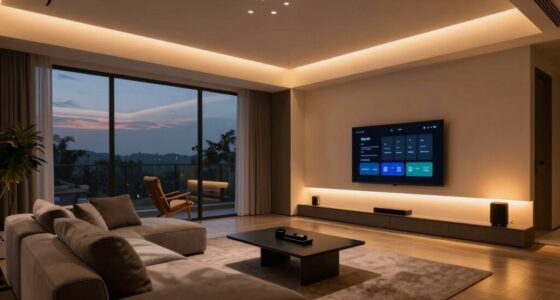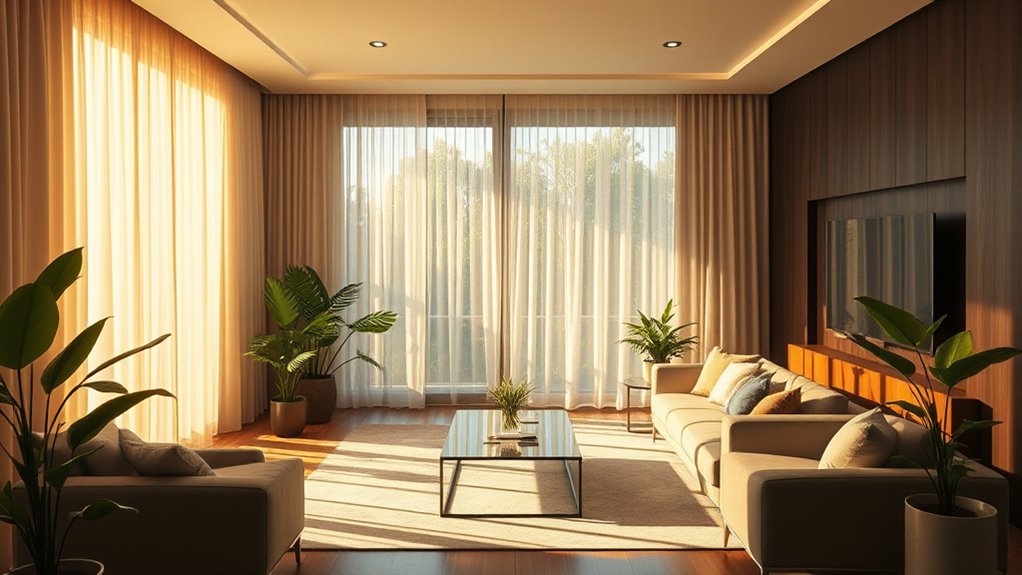

Aligning your home’s lighting with natural rhythms through circadian lighting can boost your sleep quality, mood, and overall health. By adjusting light to mimic the sun’s daily patterns—bright and bluish in the morning and softer warm tones in the evening—you signal your body when to wake up and wind down. This synchronization supports your internal clock and enhances well-being. Keep exploring to discover how smart lighting can make this progression seamless and effective.

Get furniture and decor delivered free with Prime
- Fast, free delivery on millions of items
- Prime Video, Amazon Music and more included
- Member-only deals all year
Key Takeaways
- Use lighting systems that adjust color temperature throughout the day to mimic natural sunlight progression.
- Start mornings with bright, bluish light to energize and suppress melatonin, then soften tones in the evening.
- Incorporate automatic or scheduled lighting to maintain consistent alignment with natural daily rhythms.
- Opt for lighting that supports sleep, mood, and alertness by reflecting natural daylight patterns.
- Proper circadian lighting enhances sleep quality, boosts mood, and promotes overall well-being through biological synchronization.

Have you ever wondered how lighting can influence your daily rhythm? It’s more powerful than you might think. Our bodies are naturally tuned to the cycle of daylight and darkness, which helps regulate essential functions like your sleep cycle and mood regulation. When your home’s lighting aligns with these natural patterns, you can experience better sleep, improved mood, and greater overall well-being. Circadian lighting is designed to mimic the sun’s natural progression, shifting in brightness and color temperature throughout the day to support your body’s internal clock.
During the morning, bright, bluish light signals your brain that it’s time to wake up and get moving. This type of lighting helps suppress melatonin, the hormone responsible for sleepiness, so you feel alert and energized. As the day progresses, the lighting gradually softens and warms in tone, encouraging your body to wind down. This *shift* cues your body to prepare for rest, reinforcing your sleep cycle with natural cues. When your lighting follows this pattern consistently, it becomes easier to fall asleep at night and wake up refreshed in the morning.
Morning light signals wakefulness; warm tones in the evening help your body wind down naturally.
The impact of circadian lighting extends beyond just sleep. Mood regulation is closely tied to light exposure. Bright, well-timed light can elevate your mood and boost your energy levels, especially during darker months or in environments with limited sunlight. Conversely, poor lighting choices—like harsh or inconsistent lighting—can disrupt your internal clock, leading to feelings of fatigue, irritability, or even depression. By adjusting your home lighting to match your natural rhythms, you help maintain a healthy balance, reducing stress and promoting emotional stability. Additionally, understanding the importance of net worth can motivate you to make smarter investments in wellness technologies, such as circadian lighting systems.
Implementing circadian lighting at home isn’t complicated. Many modern lighting systems allow you to set schedules or change the color temperature automatically. You can start your day with energizing, daylight-mimicking light, then switch to softer, warmer tones as evening approaches. This not only supports your sleep cycle but also helps your body stay in sync with the natural world, even if you’re indoors most of the time. Consistency is key: sticking to a routine with circadian lighting reinforces your body’s internal timing, making it easier to rest well and feel alert when you’re awake.
In essence, paying attention to how your lighting influences your daily rhythm empowers you to take control of your health and mood. When your home’s lighting aligns with natural patterns, you’re supporting your sleep cycle and mood regulation, leading to more energized days and restful nights. It’s a simple change that can profoundly impact your overall well-being, helping you feel more connected to your body’s innate timing and rhythms.
As an affiliate, we earn on qualifying purchases.
Frequently Asked Questions
How Much Does Circadian Lighting Installation Typically Cost?
The cost of circadian lighting installation usually ranges from $500 to $2,500, depending on factors like the size of your space, the complexity of the lighting system, and the quality of fixtures. You’ll want to take into account cost factors such as the type of bulbs, smart controls, and wiring. To get an accurate estimate, consult a professional who can assess your home’s needs and provide tailored options within your budget.
Can Circadian Lighting Be Integrated With Existing Smart Home Systems?
Imagine your smart home as a symphony, with lighting automation playing a harmonious tune. Yes, circadian lighting easily integrates with existing smart home systems, allowing seamless control. You can synchronize lighting automation with natural rhythms, creating a healthier environment. Most systems support compatibility, so you won’t need to overhaul your setup—just a simple connection. This integration enhances convenience and comfort, making your home smarter and more attuned to your daily cycle.
Are There Health Risks Associated With Circadian Lighting?
There are some health risks with circadian lighting, especially if you’re light sensitive. Poorly designed systems can cause sleep disruption or discomfort. If you notice headaches, eye strain, or trouble sleeping, it’s wise to adjust the lighting settings or consult a specialist. Ensuring the lighting mimics natural rhythms safely helps you avoid these risks and supports your overall health and well-being.
How Long Does It Take to See Benefits From Circadian Lighting?
You may start noticing the benefits of circadian lighting within just a few days. As you adjust your lighting, your body begins to realign with natural rhythms, leading to noticeable sleep improvements. The key is consistent lighting adjustment; the more faithfully you follow the changes, the quicker you’ll experience better sleep quality. Keep at it, and you’ll likely see positive results in your sleep and overall well-being sooner than you expect.
Is Circadian Lighting Effective for Shift Workers?
Yes, circadian lighting can be effective for shift workers. It helps regulate your sleep cycle by mimicking natural light, which can improve alertness during night shifts and support better rest after work. You’ll notice enhanced focus and less fatigue as your body adapts to irregular hours. Incorporating tailored lighting in your workspace and home can make a significant difference in managing shift work’s challenges.
Conclusion
By aligning your home’s lighting with natural circadian rhythms, you can boost your mood, improve sleep, and enhance overall well-being. For instance, imagine waking up to gentle, warm light that mimics sunrise, helping you start your day refreshed. In the evening, dim, cooler tones signal your body to wind down. Embracing circadian lighting creates a seamless flow between day and night, making your home a sanctuary that supports your natural biological clock.
Fall Picks
fall essentials
As an affiliate, we earn on qualifying purchases.