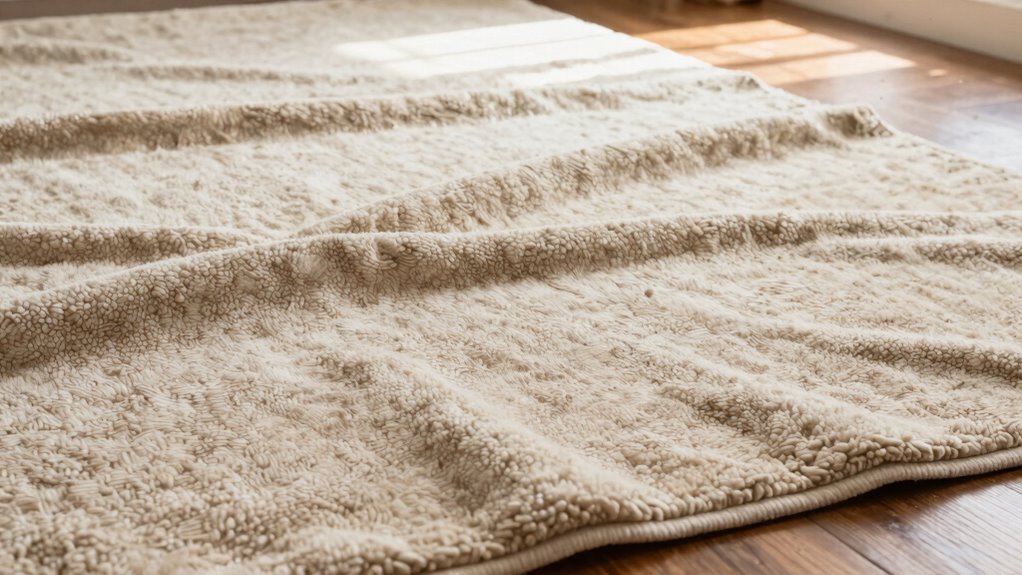

Rug rippling usually happens because of poor installation, loose or soft padding, or environmental changes like humidity and temperature shifts. If the rug isn’t stretched tightly during setup or if the edges aren’t secured properly, wrinkles and waves can form over time. Using the right padding and taking care of your environment help prevent this. For more tips on fixing and avoiding rippling, keep exploring how proper techniques and maintenance can keep your rug flat and smooth.

Get furniture and decor delivered free — and shop member deals
- Fast, free delivery on millions of items
- Access to Prime Big Deal Days deals on October 6–7
- Prime Video, Amazon Music and more included
Key Takeaways
- Improper installation, such as insufficient stretching or securing, can cause ripples to form over time.
- Using soft or thin padding allows shifting, leading to rippling and unevenness.
- Environmental changes like humidity and temperature fluctuations cause flooring expansion and contraction, affecting rug flatness.
- Heavy foot traffic can loosen edges and cause the rug to shift, creating ripples.
- Regular re-stretching and using non-slip pads help maintain a smooth, flat rug surface.
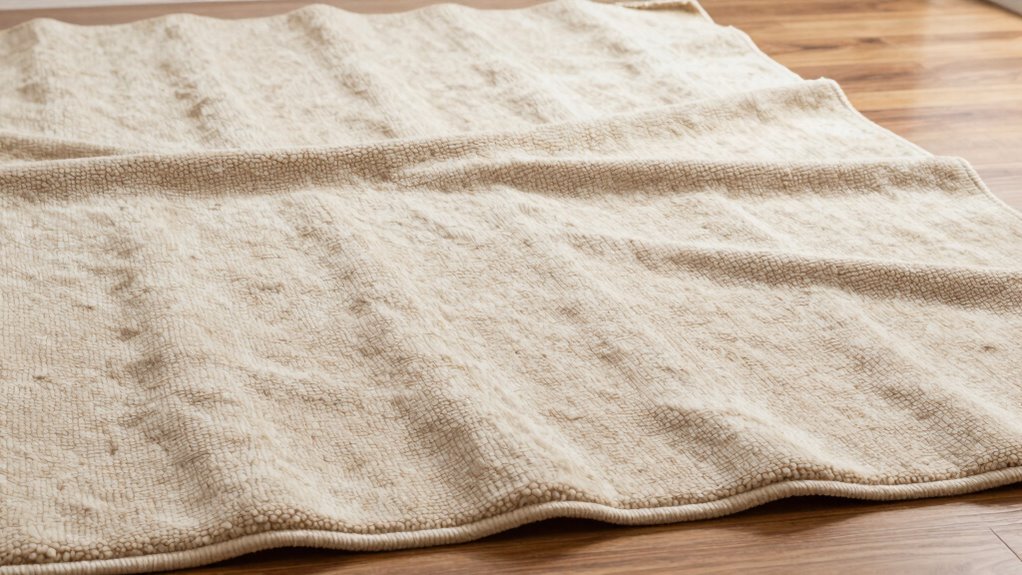
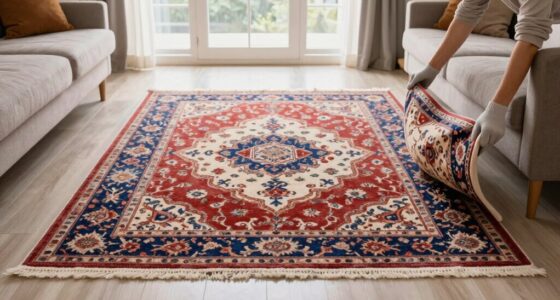
Rug rippling can be a frustrating problem, but understanding its causes is the first step toward preventing it. When you notice your area rug curling or forming waves, it’s often linked to how the rug was installed or the type of carpet padding used underneath. Poor installation techniques can leave the rug loose or uneven, making ripples more likely. If the rug isn’t stretched tight during installation or isn’t secured properly, gravity and foot traffic will cause it to bunch up or ripple over time. Ensuring a smooth, tight fit from the start is essential. This might mean using proper tools, like a power stretcher, and following best practices for secure placement.
Proper installation and securing your rug are key to preventing ripples and ensuring a smooth, flat surface.
Your choice of carpet padding also plays a significant role. Thin or overly soft padding can allow the rug to shift and develop ripples more easily. Conversely, thicker, denser padding provides better support and stability, helping the rug lay flat. When selecting padding, consider not just comfort but also its ability to keep the rug in place. High-quality padding reduces movement, minimizes bunching, and extends the lifespan of your rug. If you’re unsure, consulting with a flooring professional can help you choose the right padding for your specific rug and flooring type.
Environmental factors like humidity and temperature fluctuations also contribute to rippling. Wood floors expand and contract with changes in moisture levels, which can cause the rug to loosen or tighten and develop ripples. To prevent this, maintain consistent indoor humidity and avoid extreme temperature swings. Additionally, heavy foot traffic and frequent movement can loosen the rug’s edges or cause it to shift, leading to ripples. Using non-slip rug pads or adhesives at the edges can help keep your rug securely in place and prevent waves from forming. Proper installation techniques, combined with adequate padding, are crucial for long-term stability. If your rug has developed ripples over time, you may need to re-stretch or tighten it. Professional rug stretching services can do this effectively, ensuring the rug remains smooth and flat. Regular maintenance and careful placement can also help prolong the appearance and comfort of your rug. Paying attention to environmental conditions and implementing preventative measures can significantly reduce the likelihood of ripples forming in the future.
As an affiliate, we earn on qualifying purchases.
Frequently Asked Questions
Can Rug Rippling Occur on All Carpet Types?
Yes, rug rippling can occur on all carpet types, whether they have nylon, polyester, or wool fibers. The rippling often results from improper installation or loose fibers, which can be exacerbated by age or wear. Rug adhesives help keep the carpet flat, but if the fibers loosen or the backing wears out, ripples can form. Proper installation and maintenance are key to preventing rippling across all carpet types.
How Long Does It Take for Rippling to Develop?
Rug rippling can sneak up like shadows in a room, taking a few weeks or months to appear. It’s a slow dance of fiber distortion and uneven rug stretching, where the fibers forget their straight line and bow out. You might not notice it at first, but over time, the ripples grow, whispering that the rug’s tension has loosened. Regular checks can catch this early, before ripples become a permanent feature.
Is Professional Installation Necessary to Prevent Rippling?
Professional installation isn’t always necessary, but it greatly reduces the risk of rippling. Your best bet is to rely on experts because their professional expertise guarantees installation accuracy, which minimizes wrinkles and ripples. They know how to stretch and secure the rug properly, preventing issues that might develop over time. If you want a smooth, lasting finish, investing in professional installation is a smart choice to maintain your rug’s appearance.
Can Underlay or Padding Reduce Rippling?
Think of rug padding as a shock absorber for your floor; it can markedly reduce rippling. When you use high-quality rug padding and proper installation techniques, your rug stays flat and smooth, like a calm lake. Padding provides extra grip and cushioning, preventing wrinkles from forming over time. So, yes, underlay or padding is a practical way to minimize rippling, making your rug look flawless and extending its lifespan.
Are There DIY Methods to Fix Rippling After It Occurs?
Yes, you can try DIY repair for rug rippling with some quick fixes. Start by flipping the rug and smoothing out the ripples with your hands. Use a hot iron over a damp cloth to gently press the ripples flat, being careful not to damage the fibers. You might also weigh down the edges with heavy books overnight. These simple methods can often restore your rug’s appearance without professional help.
Conclusion
To keep your rug smooth and avoid rippling, regular maintenance and proper installation are key. While it might seem like a hassle, taking the time to stretch and secure your rug will save you from future frustration. Don’t be tempted to ignore minor ripples—they can worsen over time. Remember, a well-maintained rug not only looks better but also lasts longer, so investing a little effort now guarantees your space stays neat and inviting.
Fall Picks
fall essentials
As an affiliate, we earn on qualifying purchases.