Choosing between low‑VOC and zero‑VOC paints can be confusing, but understanding their true meanings helps you improve indoor air quality. Low‑VOC paints emit fewer chemicals, while zero‑VOC options are formulated to release almost no VOCs, though some chemicals may still be present. Labels and certifications can guide safer choices, but not all products are equal. To protect your health, it’s essential to learn what these labels really indicate—if you keep exploring, you’ll gain the knowledge to make better decisions.
Key Takeaways
- Zero‑VOC paints contain no detectable VOCs, but both low‑VOC and zero‑VOC labels depend on specific regional standards and limits.
- Low‑VOC paints emit fewer VOCs than standard paints but may still contribute to indoor air pollution.
- The lack of standardized labeling can mislead consumers about actual air quality benefits of low‑VOC versus zero‑VOC options.
- Both types can impact air quality depending on formulation, additives, and off-gassing over time.
- Choosing certified, low-emission paints and proper ventilation are crucial to minimizing air quality costs.
What Do Low‑VOC and Zero‑VOC Paint Labels Really Mean?

Understanding what low-VOC and zero-VOC labels really mean can be confusing because regulations and definitions vary. These labels often hinge on specific limits for volatile organic compounds, but the thresholds differ by jurisdiction. Chemical interactions also play a role, as certain compounds may be present but not classified as VOCs, complicating label accuracy. Regulatory challenges mean manufacturers sometimes label products as low or zero-VOC to appeal to eco-conscious consumers, even if the paint contains trace amounts of VOCs. This lack of standardization can mislead buyers about actual emissions. It’s essential to recognize that “zero-VOC” doesn’t necessarily mean completely free of VOCs, but rather below a set limit. Always check the specific standards in your region to understand what these labels truly signify. Additionally, media literacy skills can help consumers interpret these labels more critically.
How Do VOC Levels Affect Indoor Air Quality and Your Health?
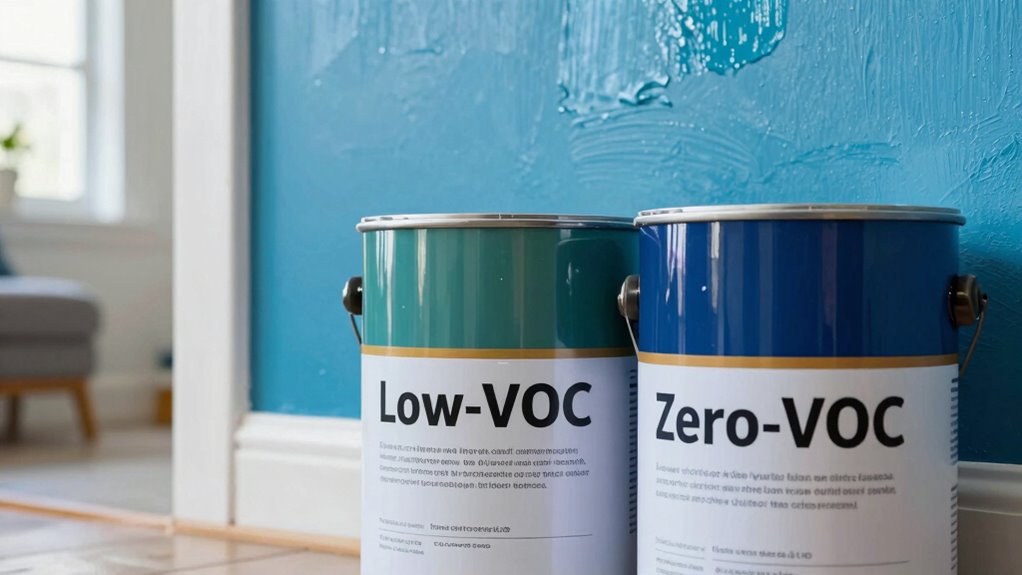
Since VOCs can off-gas into your indoor air, high levels of these compounds can quickly impact your health and comfort. Poor air quality caused by elevated VOCs can lead to headaches, dizziness, and irritation of your eyes, nose, and throat. Over time, prolonged exposure may harm your respiratory health, increasing the risk of asthma and other breathing issues. Children, the elderly, and those with preexisting conditions are especially vulnerable. Even low VOC levels can accumulate, reducing indoor air quality and making your living space less healthy. Using paints with lower VOC content helps minimize these risks, keeping the air you breathe cleaner and safer. Protect your health by understanding how VOC levels influence your indoor environment. Air purifier effectiveness is also crucial in maintaining good indoor air quality.
What Are the Key Differences Between Low‑VOC and Zero‑VOC Paints?
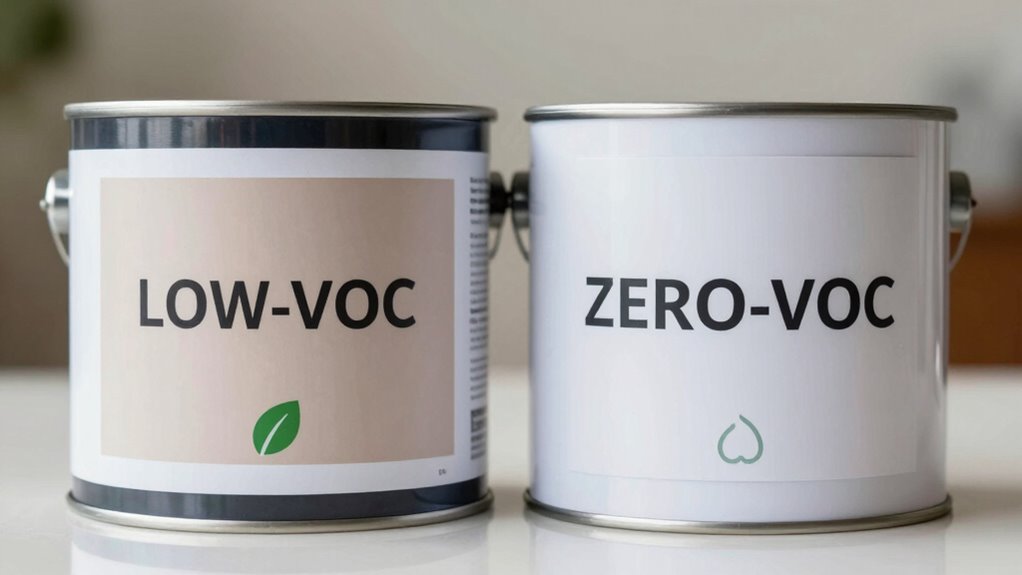
When choosing paint for your home, knowing the differences between low‑VOC and zero‑VOC options can help you make healthier choices. Low‑VOC paints emit fewer volatile organic compounds, but still contain some chemicals, which can impact air quality. Zero‑VOC paints, on the other hand, are formulated to contain no detectable VOCs, making them a safer choice for indoor air. In regards to paint durability, both types can offer comparable performance if formulated well, but some zero‑VOC paints may require more coats for similar coverage. When it comes to color selection, zero‑VOC paints often provide a broader palette, allowing you more freedom to match your decor preferences. Additionally, understanding indoor air quality factors can guide you toward choosing paints that contribute to a healthier home environment. Ultimately, understanding these distinctions helps you choose a product that balances health considerations with your aesthetic and functional needs.
Are Zero‑VOC Paints Truly Free of Harmful Chemicals?

You might assume zero‑VOC paints are completely free of harmful chemicals, but their chemical makeup can still include other additives. Off-gassing concerns remain, as some substances may release fumes over time. Checking certifications and standards helps confirm these paints meet safety claims, but it’s crucial to verify what’s truly in the formula. Additionally, understanding the innovative European cloud solutions can inspire safer choices in other areas of technology and sustainability.
Chemical Composition Differences
Zero‑VOC paints are often marketed as completely free of harmful chemicals, but their chemical composition can still contain substances that raise concerns. While they lack traditional volatile organic compounds, their chemical makeup may include alternative solvents or additives that serve to improve durability or ease of application. These additives can have additive effects, meaning they might interact with other chemicals in the paint or your environment, potentially creating unforeseen health risks. For example, some zero‑VOC formulas still contain small amounts of residual chemicals or stabilizers that aren’t classified as VOCs but could cause irritation or long-term health issues. By focusing solely on VOCs, you might overlook other chemical components that influence overall safety, making it essential to understand the full composition before choosing your paint.
Off-Gassing Concerns
Although zero‑VOC paints are marketed as safer options, they can still release chemicals into the air after application, a process known as off-gassing. This off-gassing can impact indoor safety by releasing volatile compounds that may cause respiratory irritation or other health issues. From an environmental impact perspective, even zero‑VOC paints may contain residual chemicals that slowly off-gas over time, contributing to indoor and outdoor pollution. While these paints are designed to minimize harmful emissions, they aren’t entirely free of chemicals that can affect air quality. Additionally, color fidelity can be compromised by residual chemicals, affecting the overall appearance of painted surfaces. Understanding off-gassing helps you better assess the true safety of zero‑VOC paints, ensuring healthier indoor environments and reducing potential long-term exposure to airborne chemicals.
Certification and Standards
While zero‑VOC paints are marketed as safer options due to their low chemical emissions, it’s important to examine the certification and standards that back these claims. Paint labeling can be misleading, as some products labeled “zero‑VOC” may still contain trace amounts of harmful chemicals. Regulatory standards set benchmarks for what qualifies as zero‑VOC, but these vary by country and organization. Always check if a product meets recognized certifications from agencies like Green Seal or GREENGUARD, which enforce strict limits on emissions and chemical content. Relying solely on marketing claims can give a false sense of safety. By understanding the certification and standards behind the labels, you ensure you’re choosing genuinely low‑harm options that support better indoor air quality. Additionally, understanding Free Floating concepts helps consumers make more informed choices about environmental impact.
How Do Standards and Certifications Help Identify Safer Paints?

Standards and certifications play an essential role in helping you identify safer paints. They set clear benchmarks for chemical safety and environmental impact, simplifying your decision-making process. Here are three ways they assist you:
- Verify low emissions: Certifications ensure paints meet strict limits on harmful VOCs, reducing indoor air pollution.
- Assess chemical safety: Standards evaluate the presence of hazardous substances, helping you avoid paints with toxic ingredients.
- Promote environmental responsibility: Certified paints often have a lower environmental impact, supporting sustainability goals.
- Build consumer confidence: Recognized certifications serve as a trusted quality assurance that the paint adheres to safety and environmental standards.
How to Choose Safer, Low‑VOC, or Zero‑VOC Paints for Your Home
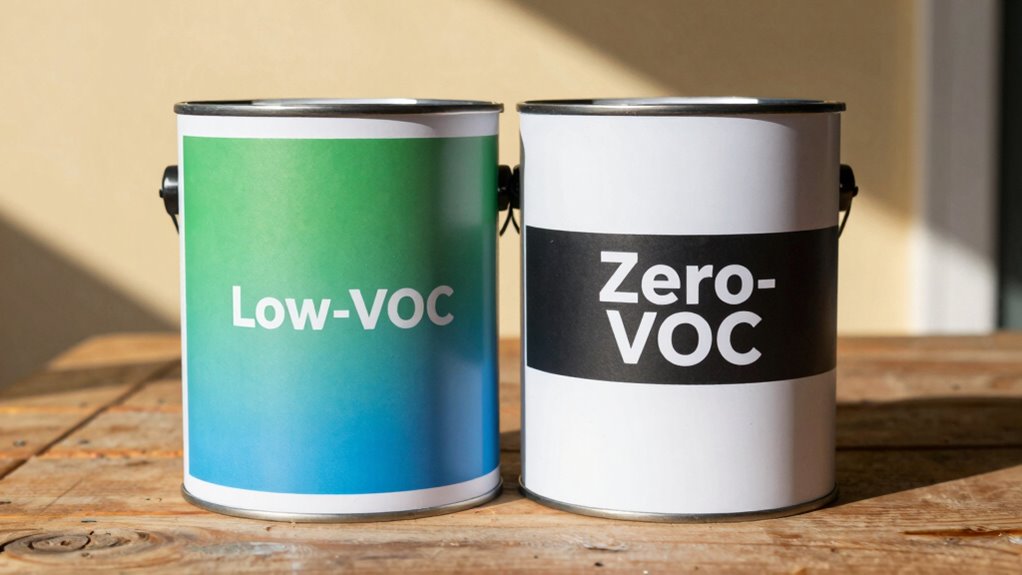
Choosing the right paint for your home involves more than just picking a color; you need to contemplate its chemical safety and environmental impact. Look for paints labeled as low‑VOC or zero‑VOC, which emit fewer harmful chemicals. Check the product’s safety data sheets and third-party certifications to verify its chemical safety. Consider the environmental impact by choosing paints with eco-friendly ingredients and minimal volatile organic compounds. Avoid paints with vague labels or those claiming to be “green” without transparency. Prioritize brands that provide clear information about their ingredients and manufacturing processes. Additionally, selecting paints with non-toxic ingredients can further reduce indoor air pollution. By doing so, you protect your indoor air quality and reduce your ecological footprint. Making informed choices ensures your home remains healthier and safer for everyone living in it.
Debunking Myths About VOCs and Zero‑VOC Paints
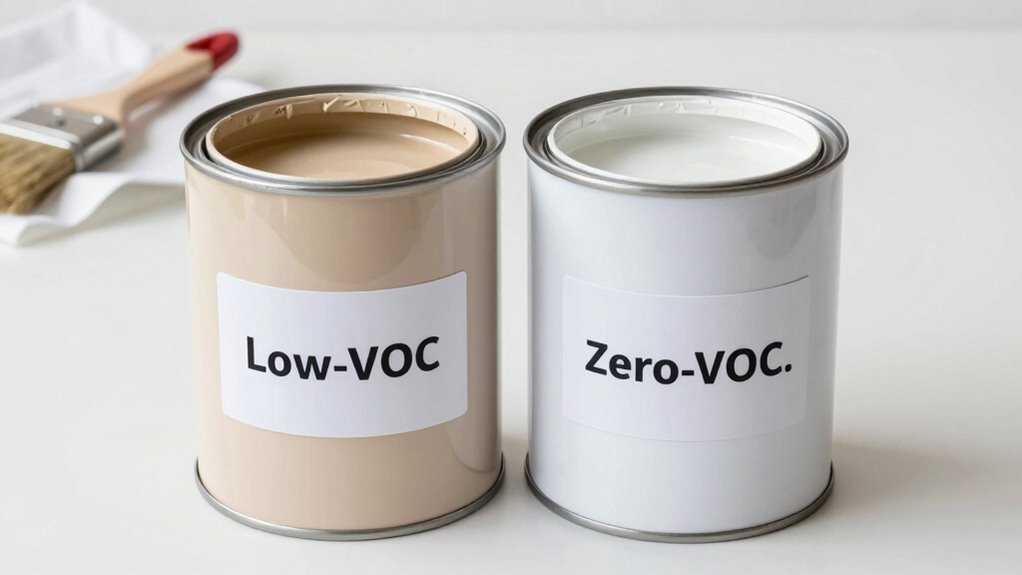
Many people assume that zero‑VOC paints are completely free of harmful chemicals, but this isn’t entirely true. The term “zero‑VOC” mainly refers to the VOC measurement, which is based on standardized paint formulation testing. However, these paints can still contain low levels of volatile compounds that might affect air quality. To understand the myths better: 1. Zero‑VOC doesn’t mean chemical-free; it indicates VOC measurement within strict limits. 2. Paint formulation varies by brand, so ingredients can differ even among zero‑VOC options. 3. VOC content isn’t the only factor impacting indoor air quality; other chemicals may be present. Additionally, understanding the Vetted – Witbeck Vacuums can help you find effective cleaning tools that improve overall air quality. Knowing the specifics of paint formulation and VOC measurement helps you make better choices for healthier indoor environments.
Practical Tips for Reducing VOC Exposure During Painting Projects

To minimize your exposure to VOCs during painting projects, taking practical steps before, during, and after is essential. Start by ventilating the space well—open windows and use fans to improve indoor air circulation. Wear a mask designed to filter paint fumes, especially if you’re sensitive to indoor air pollutants. Choose low- or zero-VOC paints to reduce the amount of VOCs released. During painting, avoid staying in the room for extended periods and keep doors and windows open. After finishing, continue ventilating the area for several hours to disperse residual paint fumes. Cleaning brushes and rollers outside or in a well-ventilated area helps prevent indoor air contamination. Additionally, understanding paint chemistry can help you make better choices for safer products. These steps help protect your indoor air quality and reduce health risks associated with VOC exposure.
Why Understanding Paint Labels Is Key to a Healthy Home
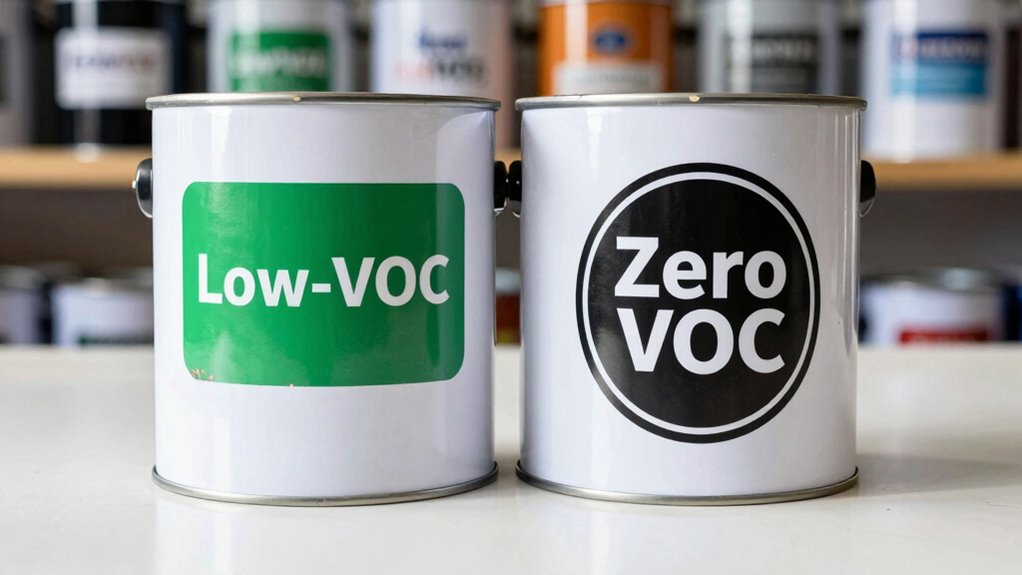
Understanding paint labels helps you choose safer options for your home. By reading labels carefully, you can gauge VOC levels and their potential health effects. This knowledge empowers you to pick paints that support a healthier living environment.
Reading Paint Labels Carefully
Reading paint labels carefully is essential because it allows you to identify the VOC content and other potentially harmful ingredients. By checking labels, you can make informed choices that promote a healthier home environment. Look for labels that specify low or zero VOC levels, and pay attention to certifications that guarantee eco-friendly pigments. Here are three key tips:
- Check for VOC content and avoid high levels that can affect indoor air quality.
- Read ingredient lists to spot potentially harmful chemicals and select paints with natural or eco-friendly pigments.
- Understand how paint application techniques may influence VOC release, and choose products suited for safer application.
Being diligent with labels ensures you select paints that support both environmental and personal health.
VOC Levels and Health
Knowing the VOC levels in your paint helps you protect your health and improve indoor air quality. High VOC paints release fumes during application, which can cause headaches, respiratory issues, and other health problems. Choosing low or zero-VOC options minimizes these risks, especially during paint application when fumes are most concentrated. Understanding paint labels guarantees you select products with safe VOC levels, reducing harmful exposure. Additionally, VOC content can influence your color selection, as some vibrant or darker shades may contain higher VOCs. By paying attention to VOC levels, you create a healthier environment for yourself and your family. Being informed about paint labels allows you to make smarter decisions that support better air quality and overall well-being in your home.
Choosing Safer Paint Options
Choosing safer paint options starts with carefully examining the labels on the cans. Look beyond just VOC levels; consider the environmental impact and paint durability. Labels often highlight eco-friendly ingredients, low emissions, and long-lasting quality. To make an informed choice, focus on:
- Certifications like Green Seal or GREENGUARD, which indicate low environmental impact.
- Ingredients list to avoid harmful chemicals and choose natural or non-toxic options.
- Durability claims to ensure your paint withstands wear without needing frequent reapplication, reducing waste.
Frequently Asked Questions
Can Zero-Voc Paints Still Contain Other Harmful Chemicals?
Yes, zero-VOC paints can still contain chemical additives that improve durability or application. These additives may emit odors or volatile compounds, though usually at much lower levels than traditional paints. While zero-VOC paints minimize harmful emissions, they aren’t completely free of chemicals. Always check the label for specific ingredients, and verify proper ventilation during and after painting to reduce exposure to any odor emissions.
Are There Environmental Benefits to Choosing Zero-Voc Over Low-Voc Paints?
Choosing zero-VOC paints offers notable eco-friendly benefits, especially for indoor air quality. You’ll reduce harmful emissions, making your home safer and healthier for your family and the environment. Zero-VOC paints emit fewer volatile organic compounds, helping improve air quality and decrease pollution. By opting for zero-VOC, you actively support sustainability and create a more eco-conscious living space, ultimately benefiting both your health and the planet.
How Do Paint Formulations Vary Between Brands Claiming Zero-Voc?
When comparing brands claiming zero-voc, you’ll notice variations in chemical differences and formulation standards. Some brands might use alternative solvents or binders to meet zero-voc criteria, but others may still contain trace amounts of VOCs. Always check the product labels and safety data sheets, as formulation standards can differ markedly, affecting both environmental impact and indoor air quality. Knowing these differences helps you make more informed, healthier choices.
Do Zero-Voc Paints Perform Better or Worse Than Traditional Paints?
Zero-VOC paints generally perform comparably to traditional paints regarding application durability and color consistency. You might notice slightly different drying times or texture, but these variations usually don’t affect the overall finish. Since zero-VOC formulas focus on fewer harmful chemicals, they often provide a healthier indoor air quality. When choosing, consider your specific project needs, but rest assured, zero-VOC options can deliver reliable, high-quality results.
What Are the Long-Term Health Effects of Exposure to Low-Voc Paints?
Exposure to low-VOC paints can impact your respiratory health over time, with studies showing indoor air quality improvements reducing asthma and allergy risks. About 25% of indoor air pollution comes from paints, and prolonged exposure may cause headaches, dizziness, or more serious respiratory issues. By choosing low-VOC options, you lower the risk of long-term health effects, protecting your lungs and overall well-being.
Conclusion
By understanding what low-VOC and zero-VOC labels really mean, you can make smarter choices for your home’s air quality. Don’t let confusing labels mislead you—research and certifications matter. When you pick safer paints, you’re protecting your health and creating a healthier environment. So, next time you choose paint, ask yourself: are you truly making the best choice for your family’s well-being? Your home and health will thank you for it.