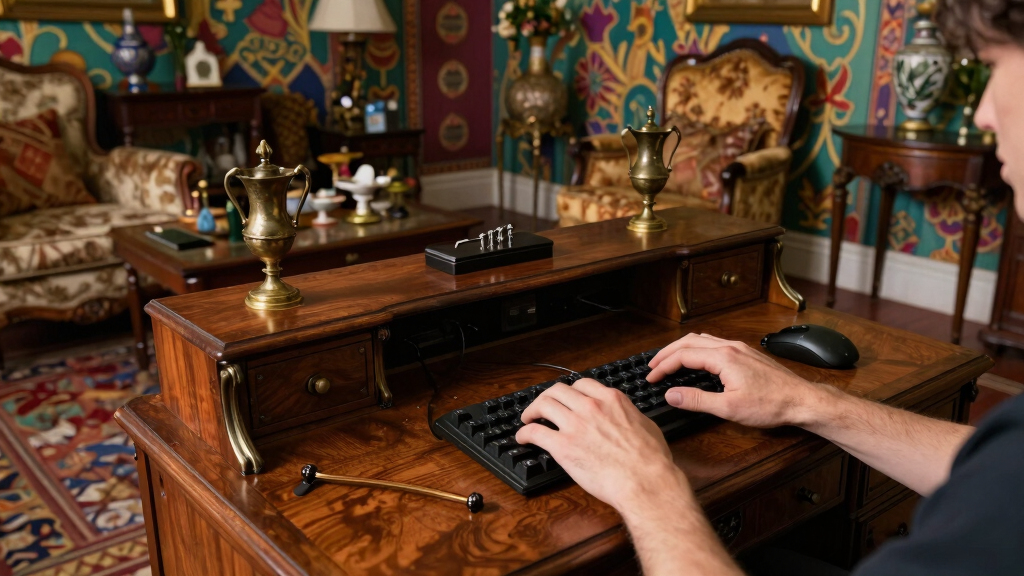

TL;DR

Get furniture and decor delivered free — and shop member deals
- Fast, free delivery on millions of items
- Access to Prime Big Deal Days deals on October 6–7
- Prime Video, Amazon Music and more included
This article presents a tour of Truman Capote’s notable homes, revealing his love for ornate design and diverse locations. The photos and details highlight his lifestyle and creative spaces.
Truman Capote’s residences across the world and in New York are being showcased in a new photo collection, revealing his taste for ornate interiors and diverse locations. The images and descriptions highlight his homes in Brooklyn, Palm Springs, Sagaponack, and Europe, offering a rare glimpse into the spaces where the legendary writer created some of his most iconic works.
The collection includes photos of Capote’s Brooklyn Heights home, a bright yellow brick residence where he wrote Breakfast at Tiffany’s and In Cold Blood. The house, later sold for $12 million, features a distinctive spiral staircase and was rented from Broadway designer Oliver Smith.
Capote’s European escape in the 1950s took him to Portofino, Italy, where he enjoyed seaside living, according to reports from The New York Times. He sought solitude to focus on writing, away from New York’s distractions, as Gerald Clarke noted in his biography.
The author’s Palm Springs home, purchased in 1968, was a private retreat with a high-walled pool area, where Capote hosted gatherings with celebrities, politicians, and socialites. His love for rustic, textured interiors was evident in his Sagaponack beach house, which he described as “run-down comfort,” emphasizing raw wood and unfinished textures.
Why Capote’s Homes Offer Insight into His Creative Life
This collection of Capote’s residences underscores how his environment influenced his work and personal style. His homes reflect his love for ornate, eclectic design and his desire for privacy and inspiration. Understanding his spaces helps contextualize his literary achievements and social persona, offering fans and scholars a deeper appreciation of his life beyond the page.
As an affiliate, we earn on qualifying purchases.
Historical and Personal Context of Capote’s Residences
Truman Capote moved frequently throughout his life, seeking environments that fostered his creativity and offered privacy. His Brooklyn Heights home, where he spent significant time writing, was a central space in his life during the 1950s. His European travels in the 1950s provided a temporary escape from New York’s social scene, while his Palm Springs and Sagaponack homes served as retreats for relaxation and social gatherings. These residences reflect his evolving tastes and the importance of environment in his creative process.
“Capote went to Europe because he couldn’t concentrate on writing in New York at the time.”
— Gerald Clarke
Remaining Questions About Capote’s Homes and Their Role
Details about the current status of Capote’s residences, especially their condition or ownership, remain unclear. It is not confirmed whether any of the homes are preserved as museums or private residences open to the public. The full extent of how these spaces influenced his later work or personal life is also still being studied.
Future Plans for Exhibiting or Preserving Capote’s Residences
It is expected that more detailed exhibitions or restorations of Capote’s homes may be announced, especially as interest in his life and work continues. Scholars and fans may gain access through upcoming tours or publications that further explore his personal spaces and their impact on his writing. No official plans have been confirmed at this time.
Key Questions
Are any of Truman Capote’s homes open to the public?
There are no publicly confirmed open-to-the-public tours of Capote’s homes at this time. Some properties may be privately owned or preserved as private residences or historical sites.
What is the significance of Capote’s European travels?
Capote’s European trips, especially to Italy and Spain, were motivated by his need for solitude to focus on writing, as noted by biographer Gerald Clarke. These travels influenced his worldview and possibly his literary work.
How did Capote’s residences reflect his personality?
His homes, with their ornate, eclectic, and textured interiors, reflected his love for artistic detail and comfort. They also served as private retreats that nurtured his creativity and social life.
Will there be a public exhibition of Capote’s homes?
There are no official announcements yet, but increased interest in his life suggests future exhibitions or publications may feature his residences more prominently.
Source: Architectural Digest
Halloween Picks
halloween
As an affiliate, we earn on qualifying purchases.