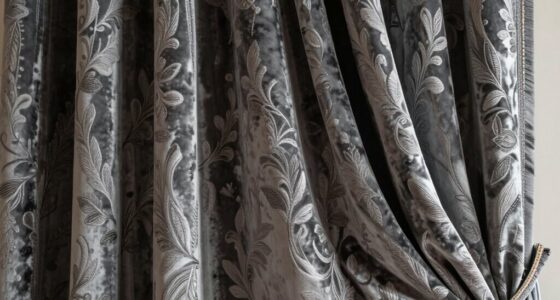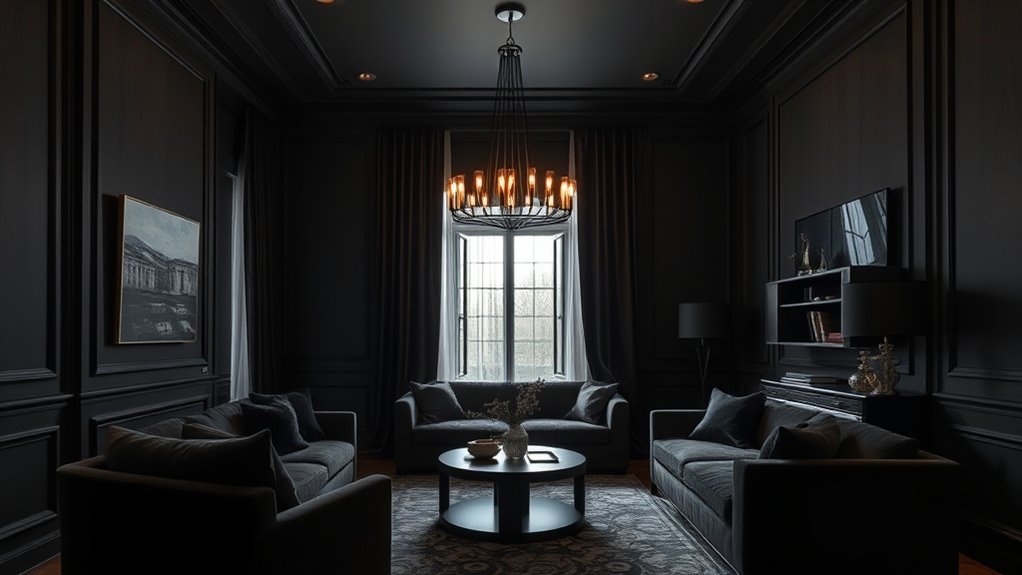

Working with dark palettes adds depth and drama to your interior, creating a stylish, modern look. Use layered lighting—ambient, task, and accent—to highlight rich colors and add dimension. Pair dark walls with metallic accents and light furniture or textiles for contrast and interest. Incorporate textures like velvet or shaggy rugs to enhance richness. Balancing these elements thoughtfully will make your space feel cozy yet sophisticated. Keep exploring to discover how to master creating striking, balanced dark interiors.
Listen free for 30 days with Audible
Thousands of audiobooks and originals — cancel anytime.
As an affiliate, we earn on qualifying purchases.
Key Takeaways
- Use layered lighting, including warm, dimmable ambient and accent lights, to enhance depth and highlight rich dark hues.
- Pair dark walls with metallic accents and lighter furnishings to create contrast and visual interest.
- Incorporate textures like velvet, matte finishes, and shaggy rugs to add tactile depth and prevent monotony.
- Reflect light with mirrors and light-colored accessories to brighten the space and balance darkness.
- Carefully select color combinations, balancing warm or cool tones with dark palettes for a dramatic yet harmonious atmosphere.

Have you ever wondered why dark palettes are gaining popularity in interior design? It’s because they create a sense of depth and sophistication that’s hard to achieve with lighter colors. When working with dark hues, your success hinges on smart lighting techniques and effective color pairing strategies. Lighting plays an essential role in transforming a dark space from gloomy to inviting. Incorporate layered lighting—think ambient, task, and accent lights—to highlight the richness of the colors and add dimension. For example, wall-mounted sconces or inset LED strips can cast warm glows that soften the intensity of the dark walls, making the room feel cozy rather than oppressive. Avoid harsh overhead lighting, which can create unflattering shadows and diminish the room’s warmth. Instead, opt for warm, dimmable lights that you can adjust based on the mood you want to set. Using sound techniques can also enhance the atmosphere by influencing how the space feels emotionally and physically. Color pairing strategies are equally indispensable when working with dark palettes. You want to create contrast and visual interest without overwhelming the space. Consider pairing deep charcoal or navy with metallic accents like gold or brass; these add a touch of elegance and reflect light beautifully. Alternatively, combine dark walls with lighter furniture or textiles—think plush cream or soft blush—to break up the darkness and prevent the room from feeling too enclosed. Textures matter, too. Velvet cushions, shaggy rugs, or matte finishes on furniture can add tactile contrast that enhances the depth of the space. When selecting colors, keep in mind the mood you want to evoke. Warm tones, such as terracotta or burnt orange, work well to create a cozy, inviting atmosphere, while cooler shades like slate or emerald can lend a calming, sophisticated vibe. Don’t forget about the importance of balance. Dark interiors can feel dramatic but might also seem overwhelming if not carefully curated. Use light-colored accessories or artwork to add pops of brightness and prevent the space from feeling too heavy. Mirrors are your friends; they reflect light and make the room appear larger and more open, counteracting the absorption effect of dark colors. When you integrate these lighting techniques and color pairing strategies thoughtfully, your dark palette won’t just look dramatic—it’ll feel welcoming and uniquely styled. With a balanced approach, you can harness the allure of deep hues while maintaining a space that’s both stylish and comfortable.
dimmable layered lighting for interiors
As an affiliate, we earn on qualifying purchases.
As an affiliate, we earn on qualifying purchases.
Frequently Asked Questions
How Do I Prevent Dark Palettes From Making a Room Feel Smaller?
To prevent dark palettes from making a room feel smaller, use color contrast wisely by incorporating lighter shades on ceilings, trim, or furniture to create a sense of openness. Increase natural light and add mirrors to reflect it, enhancing visual expansion. Keep the space uncluttered, and select furniture with sleek lines to avoid overwhelming the room. These strategies help balance depth and drama while maintaining a spacious feel.
What Lighting Options Suit Dark-Colored Interiors Best?
Investing in the idea that dark interiors need dim lighting isn’t entirely true. You should use accent lighting to highlight architectural features or artwork, creating contrast that adds depth. Bright, layered lighting with warm tones helps prevent the space from feeling too closed in. Incorporate color contrast by mixing warm and cool light sources, which enhances the richness of your dark palette and keeps the room feeling inviting and dynamic.
Can Dark Palettes Work in Small or Low-Ceiling Spaces?
Dark palettes can work in small or low-ceiling spaces if you use clever color pairings and texture contrasts. Light-colored accents, reflective surfaces, and layered textures help open up the room and add visual depth. Keep the palette cohesive but varied with different textures to prevent a cramped feel. Incorporate mirrors or glossy finishes to reflect light, making the space feel larger and more inviting despite the dark hues.
How Do I Balance Dark Tones With Other Design Elements?
Think of dark tones as the backbone of your room’s personality. To balance them, you’ll want contrast accents that pop and create visual interest. Incorporate texture layering with plush fabrics, matte finishes, and reflective surfaces to add depth. By blending these elements thoughtfully, you achieve harmony and avoid a gloomy vibe, making your space feel both sophisticated and inviting. This balance transforms darkness into a mesmerizing design feature.
What Are Some Budget-Friendly Ways to Incorporate Dark Colors?
You can incorporate dark colors on a budget by trying DIY paint ideas, like creating an accent wall or using painter’s tape for geometric designs. Add fabric accent options such as dark-colored throw pillows, curtains, or upholstery to deepen the look without repainting. These simple, affordable updates instantly introduce drama and depth, making your space feel cozy and sophisticated without a hefty price tag.
Conclusion
Embracing dark palettes in your interiors is like wrapping your space in a cozy, velvet night. They add depth and drama, transforming any room into a stunning sanctuary. Don’t be afraid to experiment and let your personality shine through. With the right balance, your dark-themed space can feel as inviting as a warm fire on a cold evening. So go ahead—dare to create a bold, moody haven that truly reflects your style.
NFL season / tailgating Picks
team gear
As an affiliate, we earn on qualifying purchases.