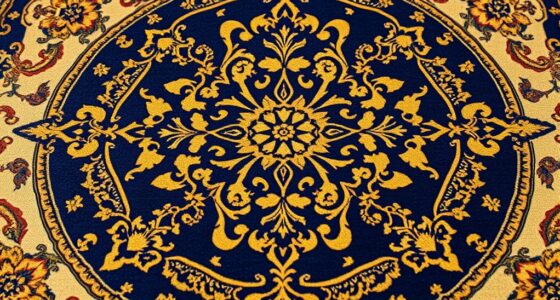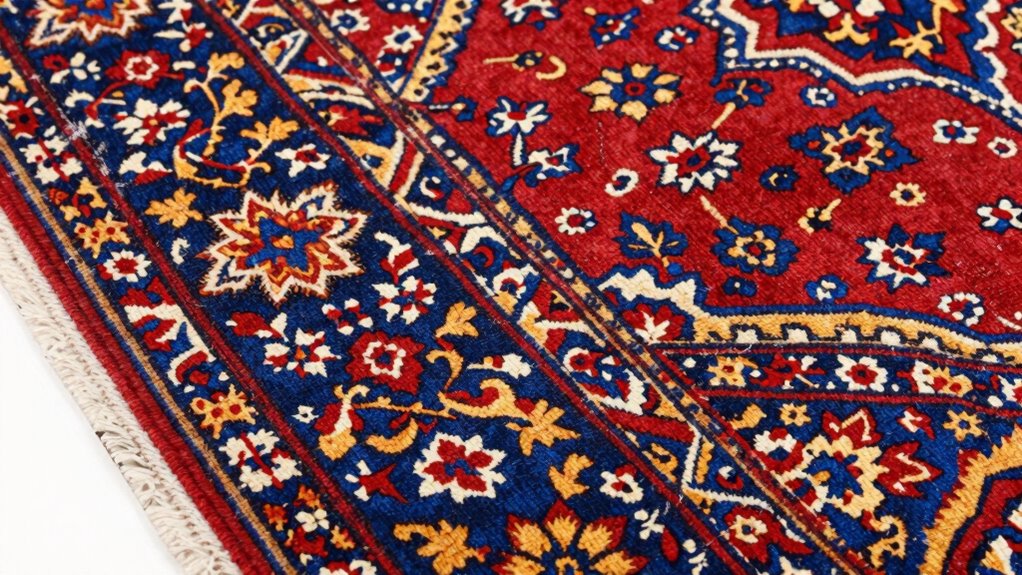

Restoration helps you preserve your rug’s overall appeal and market value by maintaining its original colors, knot density, and craftsmanship. Proper techniques prevent further damage and guarantee the rug stays authentic and culturally significant. With expert care, you can boost its desirability among collectors and keep its timeless beauty intact. Rushing or improper methods can harm its value, so understanding this process is key to making the most of your rug’s longevity and worth.
Key Takeaways
- Restoration preserves the rug’s integrity and aesthetic appeal, maintaining or increasing its market value.
- Proper restoration safeguards dye stability, ensuring vibrant, authentic colors that enhance collectibility.
- Maintaining original knot density through restoration upholds craftsmanship and authenticity, boosting value.
- Cultural and historical preservation during restoration sustains the rug’s significance and collector appeal.
- Correct techniques prevent damage, ensuring long-term durability and protecting the rug’s desirability and worth.

Have you ever wondered how restoration can impact the value of your rug? When you invest in restoring a piece, you’re not just repairing visible damage—you’re preserving its overall integrity and appeal. One essential aspect of this process is maintaining dye stability. Over time, dyes can fade or bleed, especially if they aren’t stable or properly sealed during restoration. When a professional restores your rug, they pay close attention to dye stability, guaranteeing that the colors remain vibrant and true to the original. This preservation of color enhances the rug’s appearance and helps retain or even boost its value. A well-restored rug with stable dyes attracts collectors and buyers who seek pieces that will stand the test of time without losing their charm.
Professional restoration preserves dye stability, ensuring vibrant colors that enhance your rug’s value and timeless appeal.
Another critical factor in restoration is knot density, which directly influences a rug’s quality and collectibility. Knot density refers to the number of knots per square inch, and a higher density generally indicates finer craftsmanship. During restoration, skilled artisans carefully work to preserve or replicate the original knot density, ensuring that the rug maintains its intricate pattern and texture. If knot density is compromised or poorly restored, the rug’s overall value diminishes because it no longer reflects the craftsmanship that makes it desirable. By restoring a rug with attention to knot density, you help uphold its authenticity and quality, making it more appealing to collectors and enhancing its market worth. Additionally, understanding the importance of preservation can guide restorers in maintaining both the aesthetic and cultural significance of the piece. Proper restoration techniques also involve a deep understanding of the materials and dyes used, which is crucial for safeguarding the rug’s original characteristics over time. Furthermore, employing appropriate restoration methods ensures that the process respects the rug’s age and cultural context, thereby preserving its historical value.
Restoration also involves cleaning, repairing, and sometimes reweaving damaged areas. When done properly, these processes can greatly improve the rug’s appearance and structural integrity without sacrificing its original characteristics. Proper restoration methods respect the rug’s age and cultural significance, which are key factors that influence its collectibility. In addition, employing proper cleaning techniques can prevent further deterioration and help maintain the rug’s original vibrancy. If restoration is rushed or improperly executed, it can lead to further damage or a loss of authenticity, decreasing the rug’s desirability and value. Additionally, understanding the importance of dye stability ensures that restorers take necessary precautions to prevent color fading or bleeding over time.
In essence, restoration is about more than just fixing visible flaws; it’s about safeguarding the rug’s original beauty, craftsmanship, and historical significance. When done correctly, it preserves dye stability and knot density—key indicators of quality—and guarantees that your rug remains a valuable, collectible piece. Whether you’re looking to sell or simply want to enjoy the beauty of your rug for years to come, investing in professional restoration can make all the difference in maintaining or increasing its worth and appeal.

COCONIX Fabric & Carpet Repair Kit | Fix Tears, Holes, and Burns on Fabric and Carpet Upholstery, Rugs, and Clothing | Easy Application with Customizable Colors
- Customizable Color Mixing: Create matching colors for repairs
- Flexible Finish: Maintains flexibility after drying
- Ideal for Small Repairs: Suitable for tears, holes, burns
As an affiliate, we earn on qualifying purchases.
As an affiliate, we earn on qualifying purchases.
Frequently Asked Questions
How Does Restoration Affect a Rug’s Authenticity?
Restoration can impact a rug’s authenticity if not done ethically. When you follow restoration ethics, you guarantee that the rug’s original design and materials are preserved, maintaining authenticity. Proper restoration respects the rug’s history, avoiding over-restoration or adding false details. By prioritizing authenticity preservation, you protect the rug’s value and cultural significance while enhancing its appearance, making sure it remains true to its original craftsmanship.
What Are Common Restoration Techniques for Antique Rugs?
You often find that common restoration techniques for antique rugs include re-dyeing areas to improve dye stability and reweaving or patching sections to match knot density. Skilled restorers carefully match colors and knot density, making sure the rug retains its original charm. These methods help preserve the rug’s integrity, but if overdone, they can impact value. Always consult a professional to ensure restorations enhance without compromising authenticity.
Can Improper Restoration Decrease a Rug’s Value?
Think of your rug as a priceless painting; improper restoration is like a careless brushstroke that damages its true beauty. Yes, it can decrease a rug’s value, especially if restoration myths lead you to overestimate its benefits. Poor techniques may lower its worth more than leaving it untouched. Restoration costs might seem tempting, but misguided efforts can diminish your rug’s collectibility, making expert guidance essential to preserve its true value.
How Do Collectors Distinguish Between Original and Restored Rugs?
You can distinguish between original and restored rugs by examining color preservation and restoration ethics. Look closely at areas with inconsistent or overly fresh colors, which may indicate restoration. Expert collectors also consider the craftsmanship and signs of repair, such as new fibers or uneven patterns. Trustworthy restorations follow strict ethics, preserving the rug’s authenticity, while questionable efforts can diminish its value. Your keen eye helps identify genuine pieces from restored ones.
Is Restoration More Suitable for Vintage or Antique Rugs?
Restoration suits vintage rugs best, like a gentle hand guiding a delicate masterpiece. You focus on color preservation and fiber reinforcement to breathe new life into these pieces. Antique rugs, with their historical charm, often benefit from subtle repairs that maintain their authenticity. Proper restoration enhances their beauty without overshadowing their age, ensuring they remain treasured heirlooms. It’s a fine balance between renewal and respect for history.
Conclusion
Restoration breathes new life into worn rugs, much like a gentle hand guiding a fading masterpiece back to its former glory. While it can enhance value, it also weaves a delicate balance—preserving history without erasing its story. Think of it as a dance between past and present, where every stitch and color breathes hope into the fibers. Ultimately, your choice to restore shapes your rug’s future, turning a faded relic into a vibrant heirloom.