
You now realize that tech placement is essential to interior planning because it affects how comfortably and efficiently you use your space. Thoughtful positioning enhances aesthetics, reduces clutter, and makes your environment more functional. Properly integrated devices streamline your daily tasks while maintaining a stylish look. When tech is carefully placed, your home or workspace feels more harmonious and inviting. Keep exploring to uncover how to master this balance and elevate your space even further.
Key Takeaways
- Thoughtful tech placement enhances both aesthetics and functionality within interior spaces.
- Integrating devices seamlessly supports a clutter-free, modern, and cohesive design.
- Proper positioning improves ergonomic comfort and user accessibility.
- Planning for future tech updates ensures adaptability and minimizes disruptions.
- Aesthetic integration of technology elevates overall interior harmony and visual appeal.
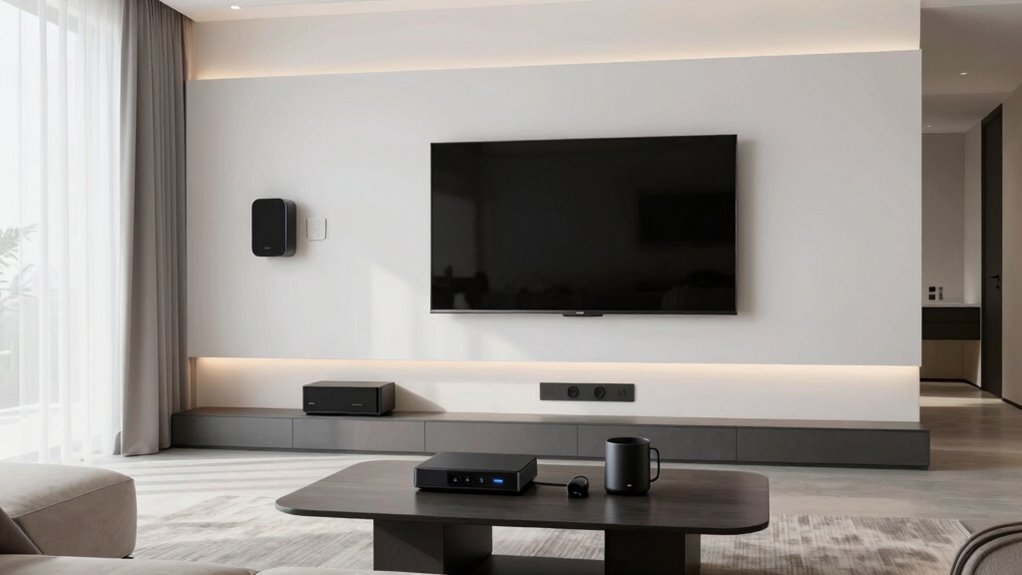
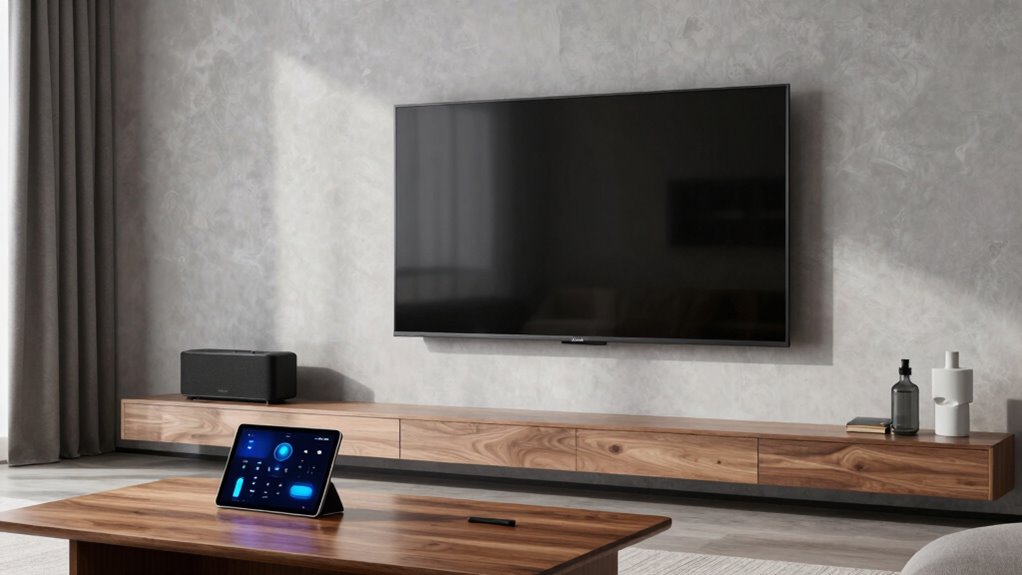
Have you ever wondered how the placement of technology can transform a space? It’s no longer just about adding gadgets here and there; it’s about thoughtfully integrating them to enhance your environment. When you consider smart home integration, you realize that technology isn’t just a convenience—it’s a way to create a seamless, intuitive living experience. Proper placement of devices like smart thermostats, lighting, and security systems can make a significant difference in how easily you control your home and how comfortable you feel. Instead of cluttered counters or awkwardly placed remotes, smart home tech is now embedded into the architecture, making everything accessible yet unobtrusive. This deliberate placement elevates your space from merely functional to beautifully integrated, where technology supports your lifestyle without overwhelming it. Incorporating biodiversity-friendly design into technology placement can also promote eco-friendly living by integrating sustainable materials and energy-efficient devices.
Thoughtful placement of smart devices transforms your space into a seamless, intuitive living environment.
Similarly, in workspaces, tech placement plays a vital role in establishing an ergonomic workspace. The way you position your monitor, keyboard, and other tech tools directly impacts your comfort and productivity. When technology is thoughtfully arranged, you avoid strain and fatigue, making long hours at your desk more manageable. An ergonomic workspace isn’t just about furniture; it’s about strategic placement of devices to promote good posture and ease of use. For example, placing your monitor at eye level, within arm’s reach, minimizes neck strain. Wireless devices reduce clutter, but their placement still matters—ensuring they’re within easy reach without causing chaos on your desk. This careful arrangement boosts efficiency, reduces discomfort, and keeps your work environment tidy. Paying attention to tech placement can also help in future-proofing your workspace, allowing for seamless upgrades as technology advances. Additionally, paying attention to cable management can significantly improve both safety and aesthetics in your space. Proper cable management also helps maintain a clutter-free environment, which is crucial for mental clarity and focus.
Furthermore, understanding the importance of wireless technology can assist in creating a cleaner, more adaptable setup that reduces physical clutter and simplifies device updates. Incorporating technology into interior planning also means thinking about future needs. As tech evolves, the placement should allow for easy updates and expansions. You want your space to be adaptable, with built-in wiring or accessible outlets that make adding new devices simple. This foresight prevents the need for disruptive redesigns later on. Additionally, the aesthetic aspect is key—tech should blend seamlessly with your decor, not stand out like afterthoughts. Whether it’s concealed wiring, built-in speakers, or integrated lighting, smart placement ensures your tech complements your interior design, creating harmony rather than chaos.
Ultimately, placing technology thoughtfully in your space isn’t just a trend; it’s a necessity for modern living. It enhances comfort, efficiency, and style, making your environment smarter and more functional. By considering how and where you position your tech, you craft a space that truly works for you—whether it’s a cozy home or an ergonomic workspace. Technology’s role in interior planning is about creating a cohesive, effortless experience that aligns with your lifestyle and aesthetic preferences.
As an affiliate, we earn on qualifying purchases.
Frequently Asked Questions
How Do Tech Needs Influence Overall Interior Design Aesthetics?
Tech needs heavily influence your interior design aesthetics by encouraging seamless integration of devices like smart lighting and concealed speakers. These elements enhance your space’s visual appeal while providing convenient functionality. You’ll find that smart lighting creates ambiance without clutter, and concealed speakers keep your environment sleek and modern. This balance of technology and design guarantees your space looks stylish and remains highly functional, reflecting your preferences effortlessly.
What Are the Best Hidden Tech Solutions for Modern Interiors?
You should consider hidden gadgets like discreet smart speakers and concealed charging stations to keep your space sleek. Smart fixtures, such as integrated lighting and hidden door controls, blend seamlessly into your interior. These solutions maintain aesthetic appeal while offering advanced functionality. By incorporating hidden tech, you create a modern, clutter-free environment that enhances convenience and style without sacrificing the overall design.
How Does Tech Placement Impact Room Functionality and Flow?
Tech placement directly impacts your room’s functionality and flow by ensuring smart storage and cable management, keeping clutter out of sight. When you position devices thoughtfully, you make your space more accessible and organized, allowing for easy movement. Good tech placement prevents tripping hazards and streamlines daily routines, making your room more efficient. Ultimately, strategic placement enhances both the aesthetic appeal and practicality of your interior, creating a seamless environment.
What Emerging Technologies Are Shaping Future Interior Design Trends?
You’re likely to see smart materials and virtual reality shaping future interior design trends. Smart materials adapt dynamically, delivering seamless style and sustainability, while virtual reality immerses you in your designs before they come to life. These emerging technologies transform how you plan and personalize spaces, making designs more interactive, intuitive, and innovative. Embracing these advancements guarantees your interiors are smarter, more sustainable, and perfectly suited to your evolving lifestyle.
How Can Tech Integration Enhance Energy Efficiency in Interiors?
Tech integration enhances energy efficiency by enabling smart lighting and automated climate control systems. You can program smart lighting to adjust based on natural light or occupancy, reducing unnecessary energy use. Automated climate systems optimize heating and cooling, maintaining comfort while conserving power. By incorporating these technologies, you not only lower energy bills but also contribute to sustainability, creating a more efficient and eco-friendly interior environment.
Conclusion
As you embrace modern interior planning, remember that tech placement isn’t just about gadgets—it’s about creating a seamless experience, like a well-orchestrated symphony. You’ll find yourself marveling at how your space adapts effortlessly, almost like a vintage radio tuning into the perfect station. So, stay ahead of the curve, and let technology become your trusted artisan, transforming your home into a haven that’s as smart as it is stylish.