
To style a mirror across from a window without creating harsh glare, angle the mirror slightly or position it a few inches away from the wall to soften reflections. Use sheer curtains or light-filtering blinds to diffuse incoming sunlight, reducing direct bounce. Complement the setup with strategic lighting, like wall sconces or lamps, to balance brightness. Incorporate a decorative frame to add personality and blend the mirror into your decor seamlessly. Keep exploring for more tips on perfecting your space.
Key Takeaways
- Angle the mirror slightly or tilt it to diffuse reflected light and reduce glare.
- Use a decorative frame to soften the mirror’s appearance and balance reflections.
- Position the mirror a few inches away from the wall to prevent direct harsh reflections.
- Incorporate sheer curtains or light-filtering blinds to soften incoming sunlight.
- Add diffusing accessories or plants around the mirror to break up reflected light and create visual interest.
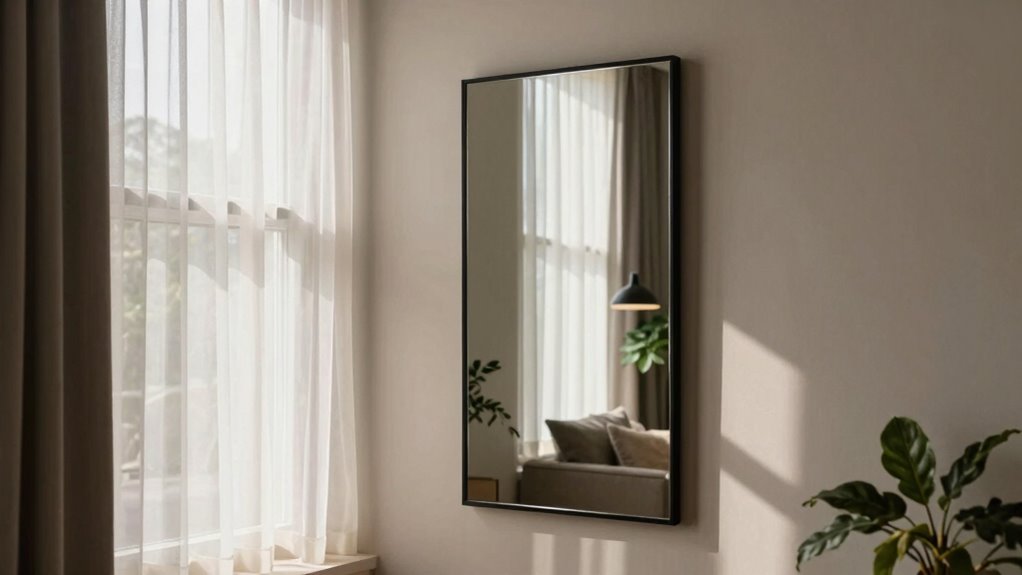
Placing a mirror across from a window can enhance natural light and make your space feel larger, but styling it effectively requires some thought. The key is to maximize the lighting enhancement without creating harsh reflections that can be uncomfortable. To do this, start by selecting a decorative frame that complements your room’s style. A well-chosen frame adds personality and can soften the overall look, making the mirror a cohesive part of your decor. Opt for materials like wood for warmth, metallic finishes for modernity, or ornate designs for a touch of elegance. The right frame not only elevates the mirror’s appearance but also helps diffuse the light and reduce glare.
A decorative frame enhances your mirror’s style, diffuses light, and reduces glare for a harmonious, inviting space.
Next, consider the placement of your mirror. If it’s directly facing the window, you might notice intense reflections during the day, which can create glare or harsh bounce that’s unpleasant. To prevent this, angle the mirror slightly or position it a few inches away from the wall. This subtle shift can dramatically lessen the direct bounce of sunlight, resulting in softer, more natural illumination. You can also experiment with hanging the mirror higher or lower to catch indirect light, which helps distribute brightness evenly throughout the room.
Lighting enhancement is essential, so think about how your mirror interacts with the existing light sources. If the sunlight is too harsh, adding sheer curtains or light-filtering blinds to the window can help soften incoming rays. This way, the mirror reflects diffused light instead of direct sunlight, reducing glare. Additionally, incorporating ambient lighting—like wall sconces, table lamps, or LED strips—can balance the illumination during different times of day. When positioned thoughtfully, these light sources can complement the natural light, creating a harmonious glow that’s inviting and comfortable.
Finally, choosing the right placement can also influence the light reflection pattern, ensuring that the mirror enhances rather than disrupts the room’s ambiance. Keep the mirror’s surface clean and streak-free, ensuring it reflects light clearly and beautifully. Regular cleaning prevents dust and smudges from dulling the reflection, maintaining the lighting enhancement you’re aiming for. It’s also beneficial to consider the room’s overall layout, as this can impact how light is reflected and dispersed. Understanding the natural light sources in your space can help you position the mirror for optimal effect, especially when considering factors like light diffusion. Ultimately, consider the overall layout of your space—placing furniture or decorative accessories around the mirror can draw attention to it without overwhelming the room. A well-styled mirror with a decorative frame, placed thoughtfully across from a window, becomes a focal point that amplifies natural light while avoiding harsh bounce, making your space brighter, larger, and more inviting.
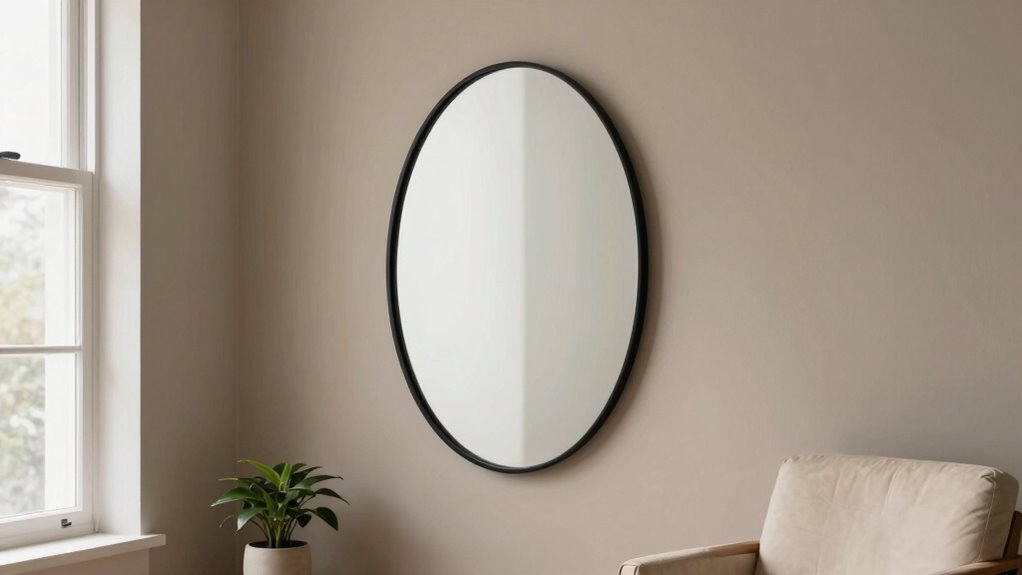
decorative mirror with light-diffusing frame
As an affiliate, we earn on qualifying purchases.
As an affiliate, we earn on qualifying purchases.
Frequently Asked Questions
Can I Use a Mirrored Backsplash Instead of a Wall Mirror?
Yes, you can use a mirrored backsplash instead of a wall mirror. It creates a sleek, reflective surface that enhances light and space. To avoid harsh bounce, consider using reflective paint or mirror decals around the backsplash for a softer reflection. These options give you flexibility in style and installation, helping you achieve a bright, open feel without the glare or discomfort caused by direct reflections.
What’s the Best Mirror Shape for Small Rooms?
A decorative mirror with a simple, rounded shape is your best choice for a small space. It reflects light, enlarging the room, and adds a soft, welcoming touch. Opt for an oval or circular mirror to create a sense of flow and avoid overpowering the room’s proportions. This shape enhances your small room’s charm while providing functionality and style, making your space feel more open and inviting.
How Do I Prevent Glare From Sunlight on the Mirror?
To prevent glare from sunlight on your mirror, focus on sunlight control and glare reduction. You can install sheer curtains or blinds to diffuse direct sunlight, reducing harsh reflections. Position the mirror slightly angled or away from the window to minimize glare. Using textured or frosted glass can also help, as it diffuses light. Regularly adjust these elements throughout the day to keep glare at bay and maintain a comfortable, well-lit space.
Should I Add Decorative Frames to the Mirror?
Yes, adding decorative frames can elevate your mirror’s style and create a striking focal point. Consider mirror accents that complement your room’s decor, enhancing its charm without overwhelming the space. A well-chosen frame can also subtly redirect light, reducing glare and harsh reflections. The right decorative frame transforms your mirror from a simple reflection into an eye-catching piece, making your room feel more inviting and thoughtfully curated.
What Lighting Options Work Best Around a Mirror?
You should use a combination of ambient lighting and task lighting around your mirror. Ambient lighting creates a soft glow that minimizes glare and harsh shadows, while task lighting provides focused illumination for activities like grooming. Consider wall sconces or LED strips on either side of the mirror to evenly light your face without creating unwanted reflections or bounce. This setup guarantees balanced, flattering light that enhances your space.
Conclusion
By thoughtfully positioning your mirror across from the window, you can brighten your space without harsh glare. Choose softer frames, add sheer curtains, or incorporate plants to diffuse the light and create a cozy ambiance. Remember, a little careful planning goes a long way—”A stitch in time saves nine.” With these tips, you’ll enjoy a beautifully balanced room that feels inviting and well-lit, without the harsh bounce of direct sunlight.