TL;DR
A home-decor DIY idea repurposes a duvet cover or top sheet as a patterned shower curtain. The project can be adapted with a sewn rod pocket, grommets or clips, but tub showers need a separate plastic liner and fabric needs regular washing and thorough drying.
A social-media DIY idea turns an unused duvet cover into a decorative shower curtain, giving renters and homeowners another way to personalize a bathroom without replacing shower doors or undertaking a renovation. The fabric can be hung with a sewn rod pocket, grommets and rings, or clips, but a separate plastic liner is needed for a tub shower to keep water off the bedding.

Get furniture and decor delivered free with Prime
- Fast, free delivery on millions of items
- Prime Video, Amazon Music and more included
- Member-only deals all year
The first step is choosing a cover that suits the shower’s dimensions. A typical shower curtain is 72 inches long, but the right size depends on the height of the rod and the space being covered. A taller shower or a rod mounted near the ceiling may call for a longer, larger duvet, while a twin-size cover may be more suitable for a compact stall. The fabric should not drag on the floor.
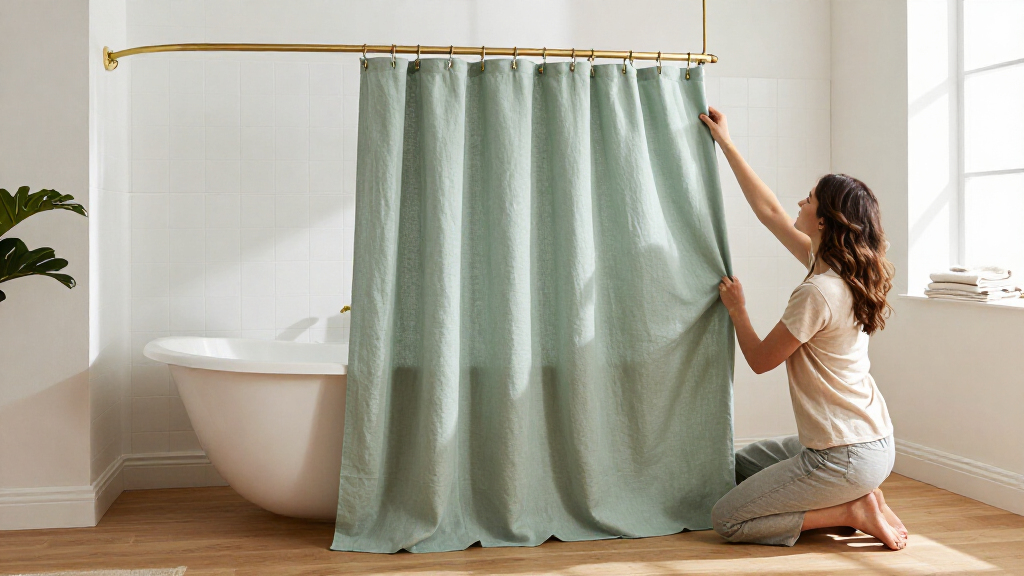
There are several ways to attach the fabric. One option is to fold roughly four or five inches of fabric over the top and sew a seam to form a pocket for the rod. Another is to make openings along the upper edge and fit them with grommets, then hang the cover with shower rings or hooks. Spare fabric can also be used to make ties through the grommets. Those who prefer not to cut or sew can follow an example shared by Instagram user Chloe.rey: she used a long top sheet, folded it to the desired length and hung it with cafe clips.
The materials depend on the method and bathroom setup. A sewing machine, needle and thread, scissors, or a grommet kit may be useful, along with rings or hooks. For a tub-style shower, the fabric should be paired with a plastic shower liner. A rod is also needed if the bathroom does not already have one. The idea may take less than two hours to complete, according to the DIY account, though the time will vary with the chosen attachment method and any alterations.
A fresh look for your shower from spare bedding
A duvet cover or top sheet can add pattern and personality to a bathroom. Fit, water protection and regular care matter.
Choose a hanging method
Match the approach to your tools and sewing comfort.
Fold the top edge and sew a seam for the rod.
Fit openings with grommets, then hang with rings or hooks.
Fold a long top sheet to length and hang it with cafe clips.
Measure before altering
The right cover depends on rod height and shower dimensions.
- Check the length and width against your shower.
- Choose a longer cover for a high rod or a smaller one for a compact stall.
- Test the hanging height so the fabric does not touch the floor.
- Decide whether you need a rod or plastic liner.
Keep water and fabric in mind
The bedding provides the decorative layer; it is not a waterproof liner.
- Use a separate plastic liner with a tub shower.
- Keep the liner and fabric positioned to contain splashes.
- Wash the fabric regularly.
- Let it dry thoroughly and ventilate the bathroom.
- Polyester may repel water better than cotton, but is not waterproof.
A Removable Update for Rentals
For renters, a fabric cover offers a low-commitment decor change that does not require removing built-in doors or spending on a bathroom renovation. It can also be changed more easily than a permanent fixture: a different cover can shift the room’s look when tastes change, and secondhand bedding may keep the material cost down. That flexibility is the practical appeal behind the decorative one.
The approach also turns an item that might otherwise sit unused in a linen closet into something with a new purpose. A duvet cover’s print, color and texture can make the bathroom feel less standardized than a conventional curtain. But it remains a fabric item in a wet room, not a waterproof replacement for a liner. The distinction matters: the outer cover supplies the look, while the liner helps contain moisture in a tub shower.
Care is part of the trade-off. The fabric should be washed regularly and allowed to dry thoroughly, and the bathroom needs adequate ventilation to reduce the risk of mold. Polyester is suggested as a potentially more water-repellent choice than cotton, but the available information does not establish that any particular fabric will prevent mildew or remove the need for a liner and routine drying.
Products Worth Considering

Levoit Core 300S-P Smart Wi-Fi Air Purifier

Philips Hue Amarant Outdoor Smart Light Bar, Black

Roborock F25 GT Gen 2 Cordless Wet-Dry Vacuum Mop
As an affiliate, we earn on qualifying purchases.
From Spare Bedding to Bathroom Decor
The idea builds on the ordinary function of a shower curtain: it provides privacy and helps keep water within the shower area. Standard curtains often use simple colors or familiar patterns, while repurposed bedding opens up a broader range of prints and materials. The DIY is presented as an inexpensive alternative to buying a new curtain, rather than a new product launch or a change to bathroom fixtures.
People can look for covers at secondhand shops or online marketplaces such as Etsy, or use bedding they already own. The choice of fabric and hanging approach affects how much work is involved. A sewn pocket requires sewing, while grommets call for cutting and fitting hardware; the top-sheet example used clips and folding instead. Any cover should be measured against the specific shower before it is altered, especially when a rod is unusually high or the space is narrow.
“She used an extra-long top sheet from her linen closet, folded it so it would not touch the floor, and hung it with cafe clips.”
— Instagram user Chloe.rey
Fit and Fabric Need Checking
The idea is a DIY suggestion, not a tested product standard. There is no specific measurement for every shower, so buyers and makers need to check the cover against their own rod height and stall dimensions before cutting or sewing. It is also not clear how well different duvet fabrics will hold up to repeated exposure to bathroom humidity, washing or contact with water.
The report does not provide a detailed cost comparison, independent testing of mold resistance, or evidence that the project will take the same amount of time for every person. Polyester is described as more water-repellent than cotton, but that does not make it waterproof. A liner remains recommended for a tub-style shower, and adequate ventilation and drying are still needed.
Measure Before Making Changes
Anyone trying the project can begin by measuring the shower and deciding whether the space needs an additional rod or a plastic liner. Then choose a cover with enough length and select an attachment method that matches available tools and sewing experience. Test the hanging height before cutting fabric or installing grommets, since those changes may be difficult to reverse.
After installation, keep the liner and fabric positioned to contain splashes, wash the cover regularly and let it dry completely between uses. There is no formal rollout or scheduled next milestone reported; the next steps depend on individual DIY choices and how the fabric performs in each bathroom.
Source: rss
Key Questions
Can a duvet cover work as a shower curtain?
It can be repurposed as the decorative fabric layer, provided it fits the shower and can be hung securely. For a tub-style shower, use a separate plastic liner to keep water off the fabric.
How can the fabric be hung?
Options include sewing a folded top edge into a rod pocket, adding grommets and using rings or hooks, or using clips on a folded sheet. The simplest method depends on the fabric and the hardware available.
What size duvet cover should I choose?
Measure the shower and the rod height before choosing. A typical shower curtain is 72 inches long, but taller rods may need a longer cover, while compact stalls may suit a smaller one.
How should a fabric shower curtain be cared for?
Wash it regularly, let it dry thoroughly and keep the bathroom well ventilated to reduce mold risk. Polyester may be more water-repellent than cotton, but it is not a substitute for a liner.
Source: hunker.com